
Author Archive
Note: This article was published with the numerals superimposed over each piece of equipment shown in the photograph at the bottom of the story. Most of the equipment is self-evident but item #1 is the small instrument on top of the front right wine barrel. Item #2 is barely visible peeking out of the red-colored cylinder sitting on the small stainless steel tank to the right of the winemaker.
High & low tech gear employed in ancient art
 Rarely does a wine drinker reflect on how fresh grapes evolve into a pleasurable bottle of wine. Or, who the magician is that makes it happen. We are simply too focused on the wine itself.
But without skilled alchemists working in Fauquier County wine cellars, locally made wines would not grace our dining tables.
There are more than 30 winemakers in the county domiciled in 23 different wineries. Let’s sneak down in the cellar and see how they do it.
#1 Refractometer: $40
This instrument is used to measure the Brix—or percent of sugar—in a grape. One Brix equals about one percent sugar. In the vineyard, a few drops of squeezed grape juice are placed on its glass plate and then observed through the eyepiece to determine the amount of sugar therein. Harvest decisions are largely based on achieving a certain percentage of sugar in the fruit. In Virginia, it’s typically between 21 and 25 Brix.
#2 Hydrometer: $30
A simple but critical device that monitors the rate of fermentation and alcohol levels in wine. It allows winemakers to figure the specific gravity of wine (the relative “weight” of liquid compared to plain water). Most wines are vinified to dryness (no sugar) and the tool is used to determine when that goal is achieved.
#3 Wine thief: $70
A simple hand vacuum that is inserted into a barrel to exact a sample of wine. The thumb is placed on an opening at the top of the thief to create a vacuum and remove a few ounces of the nectar. The device has been in use for centuries.
#4 Oak Barrel: $500 to $1,200
A hollow, cylindrical vessel made of oak staves and bound by metal hoops. It is an integral part of the production of fine wine, both whites and reds. The inside of a barrel is “toasted” to enhance the wine with an array of subtle flavors and aromas. Barrels are from France (most expensive), Hungary and America (often using Virginia White Oak). The ideal size of a barrel is 60 gallons and holds 300 bottles of wine.
#5 Stainless steel tank: $4,000 to $60,000
An important innovation dating to the 1960s that permits the fermentation and aging of wine in a temperature controlled environment. The tanks are particularly useful in white wine production that benefit from fermentation in the 50 to 60 degree range to enhance aroma and flavor. Tanks used locally range in size from a few hundred gallons to over 1,000. By comparison, tanks used in large California wineries can exceed 200,000 gallons.
#6 Pump: $4,000
Pumps are the work horse of a wine cellar. They are used to transfer wines from and between barrels and tanks in a process called “racking”. The process draws off wine from its “lees” (sediment of spent yeast cells and other detritus) to clean, empty tanks or barrels. Racking is ongoing until the day of bottling.
#7 Hoses: $4 a foot
Used in concert with pumps, hoses are everywhere present on the floor of a winery. Large and a bit unwieldy, they are the arterial system through which flows all wine in a cellar.
#8 Wine glass: $5 and up
The ubiquitous wine glass is the vessel of choice for all wine evaluation. It is fitting that from birth to consumption the wine glass plays a pivotal role in the production of wine and its enjoyment.
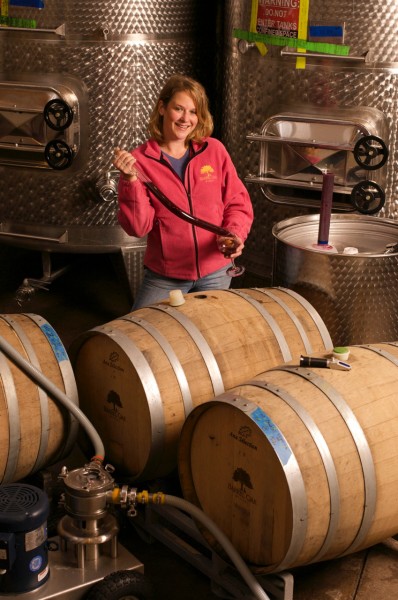
Sharon Roeder
Sharon Roeder is the winemaker at Barrel Oak Winery in Delaplane. Roeder shares winemaking responsibilities with Rick Tagg. Their collaborative efforts produce 9,000 cases of wine a year. Yep, that’s 108,000 bottles.
“We pour our heart and soul into every bottle and the reward is in the faces of the people who enjoy the fruit—literally—of our labor,” said Roeder.
Published in the 2015 Spring edition of inFauquier magazine.
One stop shopping for fine dining at home
 Characterizing the Croftburn Market as a butcher shop is like calling the Taj Mahal a building. Both are technically correct but belie the treasures held within.
The small Culpeper shop packs a big punch.
Quality locally raised and naturally fed beef, lamb and pork are available five days a week at the market. And if you leave without taking a tour of the rest of the store your dinner table will be disappointed.
The four-year-old business embodies farm-to-table freshness while supporting up a dozen local farms. The shop is a farmers market on steroids. It is opened 37 hours a week and features meats and a variety of other locally produced foodstuffs.
“We want to give people something different than what’s available in the grocery stores,” owner Andrew Campbell said. “It’s a store front for a number of local businesses instead of products just from our farm.”
Campbell conceived the idea for the market as an alternative to selling his farm beef exclusively to restaurants, farmers markets and other wholesale venues. The question was “how can we realize a little bit more from our animals” than simply selling wholesale.
The Campbell family operated a farm in the area for many years before opening the market. He realized there was a demand for naturally raised beef, chicken and pork that had not been raised on antibiotics, growth hormones, preservatives and other additives.
“The grocery stores sell meat that comes mostly from feedlots out west and fed all those additives because that’s what the U.S. system does to get weight on the animals quicker and keep them from getting sick. Our local meat is not raised in that manner.
“We grind fresh hamburger everyday and make a total of a dozen different sausages and also hot dogs; steaks and roasts are cut to order. The glass display cases are the first thing customers see when entering the shop. Proteins are our main focus.”
But not by protein alone does man survive so when your main entrée has been selected its time to swing to the right side of the store and select pastas, sauces or seasonally available fresh vegetables to accompany your repast.
And while animal protein takes center stage, fresh and fresh frozen fish is also available. And if hors d’oeuvres or snacks are on your grocery list, don’t forget to peruse the selection of cheeses, jerky, salamis, jams, jellies and more.
Local eggs, milk and other dairy products round out the food selections.
Libations
Most gourmands believe that good food should be accompanied by a good adult beverage. Such shoppers need to pivot left in the shop and head toward the wine and beer section.
“We try not to carry beer and wine that you can find elsewhere,” Campbell said. So while Bud Light is not on the shelves, a plethora of 75 different craft beers are. Virginia’s reputation for quality beer production has accelerated in the last decade and many of the best bottlings are sold at Croftburn; the rest of the selections are national and internationally known offerings.
 For lovers of the fermented grape, an estimated 75 different wines are for sale. Selections hail from Virginia, the U.S. and worldwide. Prices range from $9 to $30 a bottle but average in the $9 to $13 range. Campbell uses the quality-to-value ratio in selecting the wines.
Often on Fridays beer tastings are featured and on most Saturdays wine tastings help shoppers make that all important buying decision; “What are we drinking with dinner?”
Customer loyalty
Asked what skills he has acquired since opening the shop Campbell said, “It’s been a learning experience. I did not have any retail experience coming into this. It’s been interesting to develop a product mix and figuring out what people want and give them something they can’t find elsewhere.”
He goes on the say the business has been emotionally rewarding too. “I take a lot of satisfaction in repeat customers. When someone is willing to come back to a place—not once or twice but regularly—to spend their dollars and feed their family the products they buy at our store, it gives me the satisfaction we are doing something right.”
For shoppers who have not had a chance to taste Croftburn Market’s meats, Campbell invites them to the Gnarly Hops and Barley Fest in Culpeper on April 25. “We’ll be there grilling our sausages and brats.”
The shop is located at 16178 Rogers Rd, Culpeper. It is closed Mondays and Tuesdays. For complete information on their product line and operating hours visit: http://www.croftburnmarket.com/
John’s pick of the month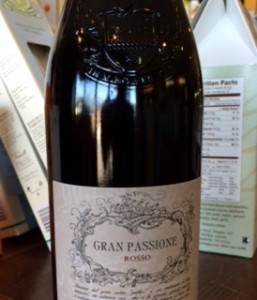
Gran Passione Rosso
$12.95
One of the more popular red wines at Croftburn Market is this Italian delight. It is a deeply-colored blend of Merlot and Corvina produced in the Veneto region. It is full-bodied, displaying a fine balance between silky tannins and structured acidity. On the palate, generous flavors of red and black fruit predominate.
The wine is created by drying a portion of the grapes in the sun and fermenting the raisins to release the wine’s unique flavors. It is a perfect accompaniment to the prime cuts of beef or pork that are available in the shop.
Published in the March 19, 2015 edition of the Culpeper Times.
Virginia vineyards struggle to meet growing demand
Reaching unanimity on any subject today is rare. We live in a world of diversity, nay controversy. But there is one fact that’s undisputed in the Virginia wine industry: There are not enough Virginia wine grapes to meet the rising tide of the Old Dominion’s vinous success.
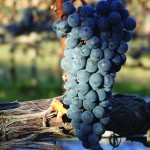 To be certain, it’s a good problem to have. But if not addressed, it could stymie the growth of the Nation’s fifth largest wine producing state. It may also create a dependence on out-of-state fruit.
In 1975, Farfelu Vinyards received the first winery license in the state. While it’s no longer in operation it started a floodtide of wineries. Today, 275 winery licensees dot the state’s landscape.
In the process of achieving such explosive growth, it catapulted the Commonwealth to the fifth largest wine producing state in the Nation.
Not bad for a state known more for battlefields than vineyards.
Let’s do the 2013 numbers:
Sold 6.25 million bottles of wine
Employed more than 4,700 people
Collected $1.8 million in wine litre taxes
Generated over 1.6 million tourist winery visits
Contributed almost $750 million to the Virginia economy
Harvested 6,862 tons of fruit from 3,088 acres of vineyards
By any measure, the industry is emblematic of the word success and demonstrates what science, talent, and passion can bring to bear on making quality wine.
Wine cognoscenti no less esteemed than Bartholomew Broadbent (listed as #48 in the 2013 Into Wine 100 Most Influential People in the U.S. Wine Industry) opined, “Virginia is capable of producing balanced, Old World-style wines—the types that made Napa what it was 25 years ago. Virginia’s reputation is ripening.”
It’s a commonly heard refrain from national and international wine critics and consumers alike. But as the industry is poised to rise to the next level, the engine driving its success could begin to stall.
Without an increase in Virginia grapes Virginia wine is threaten.
What is Virginia?
Federal and state law permits up to 25 percent of out-of state-fruit to be bottled and labeled Virginia wine. If the fruit comes from a specific Virginia American Vinicultural Area—such as Monticello—and is labeled as such, 85% of the fruit has to originate from that AVA. Virginia has seven designated AVAs.
In 2011, the state’s premier wine competition, the Virginia Governor’s Cup, revamped its rules requiring all entries be made from 100% Virginia fruit, further increasing the importance of the regional character of the competing wines.
Moreover, all entries require an affidavit with a certification of the 100% requirement, including the growers’ names, location, as well as information on alcohol, acidity and residual sugar.
The message was clear: Virginia wine counts.
Yet in 2013, grape production dropped 670 tons from 2012: 6,862 tons versus 7,532 tons, respectively. The loss was a combination of insufficient vineyard acreage growth and weather related pressures such as spring frosts, persistent rains and the ever present animal depredation.
Overall, 2013 was considered a fair vintage quality-wise, it was typical of the unplanned effects of Mother Nature combined with a paltry increase of only 114 new vineyard producing acres statewide.

Tom Kelly
“There is absolutely a grape shortage in Virginia. It’s moderately severe and likely to get more severe as time goes on if it’s not addressed,” said Tom Kelly. Kelly serves as President of the Virginia Vineyards Association and owns Kelly Vineyard Services, a consultant firm.
Kelly said farmers are planting more grapes but it takes time for those grapes to come into production. A new vineyard takes three to five years of growth before measurable fruit can be harvested.
Kelly goes on to explain that one reason for the supply shortage is that many wineries are coming on line and not planting vineyards at a rate that satisfies their share of wine production.
A winery producing 1,000 cases of wine a year but only growing enough fruit to produce 100 cases will contract for the additional grapes elsewhere; either in-state or out-of-state. The small amount of acreage such a winery might plant is referred to as a “billboard vineyard”; the vines signal it’s a winery but the fruit contributes little to its wine production.
The supply problem is well-acknowledged in the industry. “We have determined we need to grow grape acreage by 200 acres a year for the next five years in order to meet projected growth,” said Kelly.
Why not more grapes?
With the industry having met with success over the last 40 years, why isn’t the grape supply keeping pace with demand? The simple answer is the amount of money and labor required to plant and nurture the vines.
One of the major reasons Virginia wine has attracted wide attention is that beginning in the early 1980s, the growing of Vitis vinifera grapes accelerated dramatically; the species produces 99 percent of all wine worldwide. Prior to then, mostly hybrids and native grapes dominated the paltry number of tasting rooms.
Attempting to sell wine labeled Niagara, Delaware, Catawba, Baco Noir or even Vidal Blanc and Seyval Blanc was a challenge. Most wine drinkers had simply never heard of wine with such strange sounding names.
Then science was brought to bear to grow wine in the state that the world loved: Chardonnay, Viognier, Cabernet Sauvignon, Cabernet Franc, Merlot and Petit Verdot to name a few. All of these Vitis vinifera grapes put the Commonwealth on the wine map. But there was a price to pay.
“A vineyard costs in the neighborhood of $20,000 an acre to install. And that does not include the land,” said Kelly. “And it does not end up in the black until about year seven.” Even then, profitability is low.
Simply put, the delicious Eurasian grapes are more at home in climes less brutal than Virginia’s. As a result, it takes an enormous amount of farming to successfully bring in each year’s harvest.
Many a Virginia winegrower struggles to produce clean fruit in a frost inclined, rainy, fungi-laced, cold winter and humid summer environment. One could not be blamed if they viewed their hard earned fruit as grapes of wrath.

Tony Wolf, VA State Viniculturist
“Many would say it’s cheaper to buy grapes as to try to grow grapes, said Tony Wolf. Wolf is director and professor of viniculture at Virginia Tech and has been instrumental in advancing the state’s grape culture.
Last year’s winter “caused a dip in production and it has intensified into a more systemic problem. The capacity of wineries is out stripping the capacity of Virginia grape growing acreage, said Wolf.
“It’s a big enough problem that has made getting more vineyards into the ground one of their number one priorities.”
He goes on to state, “There is a lot of land that can be planted. We launched an online vineyard evaluation tool about a year ago. It allows the user to go in and look at a parcel of land and produce a report that gives the land a grade for the suitability for grape growing.”
A shortage of available land is not necessarily the problem. “As I look around, I see a lot of forested land. It isn’t going to be cheap but there is some good land that could be planted,” said Wolf.
The cost and difficulty of farming the fruit has also led to a growing phenomenon called “custom crush”. The concept permits new wineries to contract with larger ones to secure grapes and make wine that in turn is sold through the new winery’s tasting room.
The problem is obvious. As such operations proliferate, the shortage of grapes is exacerbated. It’s a legal and above board operation that simply diverts fruit that was previously available on the open market.

John Delmare
Other unforeseen market actions can also accelerate supply and demand problems. John Delmare, owner of Rappahannock Cellars in Huntly, offers one explanation.
“The problem was masked because 300 acres of Kluge grapes in Charlottesville were being sold into the marketplace each year. Then Trump took over and they started keeping a large portion of their fruit. The industry went, ‘Oh my gosh, not enough fruit here! People began losing contracts.”
A similar situation happened with the former Sweely Estate Winery. Steve Case, of AOL fame, purchased Sweely in 2011 and re-opened it as Early Mountain Vineyards, “and all of a sudden it put long term contracts on a couple of vineyards. Overnight some wineries lost big contracts,” said Delmare.
It’s a multitude of reasons contributing to the problem and people are starting to plant as a result of the pressure, “But it’s too little too late. I’ve heard we are 300 to 500 acres short of grapes statewide. I would argue that over the next 10 years we need to plant 1,500 acres to meet demand,” said Delmare.
His assessment is on point. Planting more vines is the only long term way to solve the problem. In the short run, the solution points to going out-of-state to meet the shortfall.
In-state versus out
With supplies getting tighter each year, the cost of grapes has begun to rise. “In the last three years, grape prices on average have gone up a total of about 35 percent. We’ve finally crossed that magic point where somebody can actually plant grapes and make money at it,” said Delmare.
Thirteen years ago, Delmare was paying $1,300 to $1,500 a ton for Cabernet Franc. Today, quality red fruit can command $2,200 to $2,400 a ton. Rising prices will help spur future plantings.
In the interim, fruit from California, Oregon and especially Washington State are legally ending up in bottles of Virginia wine. It’s a simple matter of financial survival for many wineries. With typical investments of $2 to $5 million for a new winery, owners cannot let production fall short of capacity without jeopardizing their businesses.
Fruit is the engine that drives profitability and it makes little difference to the bottom line if its grapes are from Virginia or elsewhere. Owners are in broad agreement that ideally only Virginia fruit will be used to make their wine but necessity demands importing fruit from elsewhere. Much of that fruit is from Washington State.

Chris Pearmund
Many wineries are loathe to admit they use grapes grown outside of the Old Dominion but it’s not an unheard of practice elsewhere. “In Maryland, there are more grapes grown out-of-state than in-state,” said Chris Pearmund, owner of Pearmund Cellars in Broad Run.
Last year, the Maryland Grape Growers Association reported only 40 percent of its grapes were used to produce the state’s wines; 60 percent of the remaining fruit came from across its borders.
“Seventy-five percent of foods in a grocery store won’t even tell you what country the food came from. Go to a restaurant and you would rarely know where that food came from either,” said Pearmund, explaining how many industries operate.
In Virginia, “We have taught the consumer to ask ‘Where do your grapes come from?’ Now we are getting bit by that.”
If one accepts that Virginia wine produces a particular style of wine that is directly attributed to grapes grown in Virginia, “and you cannot make that style of wine from grapes from other sources, it will affect the character and style. And yes, Virginia does have a distinctive terroir,” said Pearmund.
He goes on to say, “We’ve planted 38,000 grape vines on 28 acres this year at an out-of-pocket cost of well over a million dollars to purchase the land and plant the vines. Our needs are going to be met by planting this vineyard but it takes three to four years to get there.”
“The industry is a slow, slow turning boat. We need about 500 more acres to fulfill Virginia’s needs, said Pearmund. In the interim, an increasing number of wineries are seeking fruit elsewhere.
Westward Ho
 Lisa Kendall’s business, Kendall Farms, is a success story by any measure. Her father was a grape grower in Washington State and she took over his operation a decade ago. In 2005, she sold the vineyards and focused solely on selling grapes and juice. Today, Kendall has 30 Washington State growers selling her fruit.
“Virginia was my first customer. I thought, ‘Washington ships all kinds of produce why can’t we ship grapes?’ I connected with a winery in Virginia and shipped them fresh grapes,” said Kendall.
It was a nascent business that blossomed like a spring vineyard. “Virginia is one of our biggest customers today. We’ve had a huge increase in business from there since 2006. I worked hard to build awareness that Washington State fruit was for sale,” said Kendall.
Demand for her fruit from across the US today is dramatic. West Coast fruit is grown in what is often described as a Mediterranean climate. Conversely, Virginia and many other states host a Continental climate. The net effect is that grape growing on the West Coast is easier that on the East Coast.
Evidence of this is reflected in the numbers. California produces over 90 percent of American wine consumed in the states. Last year, the Golden State shipped 215 million cases of wine for distribution within the Unites States and 258 million cases for both domestic and international distribution.
By comparison, Virginia bottled 521,000 cases, almost all of which was consumed within its borders; a mere drop in the Nation’s wine bottle.
These figures, coupled with a growing demand for Virginia wine, set the stage for importing out-of-state fruit. “We serve 40 states and have 350 customers. Virginia is one of our biggest customers. I have a lot of connections in Virginia. We ship them red grapes and white juice.
“I have 27 customers in Virginia and sold them 500 tons of fruit and bulk wine this year. I believe Virginia will be dependent on out-of-state wine for the foreseeable future. Due to weather conditions it’s just not in the cards; the rain, the hurricanes, et cetera. We don’t have that in Washington. We are known for our consistency of weather here,” Kendall underscores.
She goes on to state that Virginia “will become more dependent on out-of-state fruit because there are wineries going in all the time. Things are looking great here. Hopefully, we meet the need that Virginia has. We’re glad we can help.”
Further south in California, a similar story is heard from Mike Colavita, owner of F. Colavita and Sons, another grape supplier. While smaller than Kendall’s business, he too sees “an increase in fruit headed towards Virginia.”
In 2014, he shipped 35 tons of fruit to six Virginia wineries, doubling sales within the last few years. He goes on to explain that the growth is driven to some degree because of “Mother Nature. Like last winter when a lot of vines got hurt. I was a supplement.”
He reinforces that wineries across the U.S. want to use their own state’s fruit. “But when their crops fail I can keep them in business, explains Colavita.
Most of his fruit comes from the Del Ray and Lodi areas. “I think a combination of western grapes and eastern grapes makes an excellent wine. Your lower sugar and higher acid wines and our higher sugar and lower acid ones makes a really balanced wine with good flavor,” said Colavita.
There is no definitive way to know how much fruit from outside Virginia is finding its way into the state’s wine cellars but it’s likely less than a 1,000 tons, but growing. By comparison, there was a total of 6,862 tons of fruit produced within state in 2013.
Honesty
With an apparent increasing dependency on fruit from elsewhere, the question arises as to how the phenomenon is marketed to the consumer. Since legally up to 25 percent of out-of-state wine can reside in a bottle of wine labeled and sold as Virginia, is there any need to enlighten the public of the blend?

Brian Roeder
“If we muddy the waters about the source of our fruit, we go right back to where we were seven, eight, nine years ago when critics said ‘this is mighty good wine but is it Virginia?’, said Brian Roeder, owner of Barrel Oak Winery in Delaplane.
Roeder is a straight-spoken winery owner who takes the subject head on.
“Everything we’ve done, especially the rules around the Governor’s Cup, has been designed to put that question to rest. I believe it’s going to damage, potentially, some or even a significant amount of the success we’ve had.
“At Barrel Oak we disclose the source of our fruit and customers don’t care because it’s about the experience at the winery. For wineries trying to position themselves for national and international distribution this could be a problem.
“We’ve never had to go out-of-state until this year. We’ll call our wine American or simply won’t say Virginia if the fruit is from elsewhere. Those are the two options. We will change our labels with wines made from out-of-state fruit,” emphasizes Roeder.
He goes on to say that a system should be developed that creates a marketplace for available Virginia grapes. “The process is still being done haphazardly, where somebody knows somebody who knows somebody, and through that network they try to find fruit.
“It’s been proposed, but not put in place, that an online marketplace be established where every farmer can post what they have available and that a winery owner can go and find and purchase it. That tool alone would probably provide at least one, two or three hundred additional tons into the marketplace,” said Roeder.
But he states it would still not be adequate to fulfill the industry’s needs. “The opportunity to expand is going to have to be tied to out-of-state fruit for quite sometime. Ultimately, it isn’t important to most consumers. But the issue of honesty is going to be very important to our reputation and to the critics who write about Virginia wine,” said Roeder.
Government support

Annette Boyd
Echoing the mantra heard around the state, Annette Boyd, director, Virginia Wine Board Marketing office, said, “Yes, there is a grape shortage. I think it’s predominately because we are selling everything we make. We need a couple of really nice years, nice harvests under our belt to see production to pop.”
No one would challenge that wish but Virginia is Virginia. “We are hopeful production numbers will increase this year. Everybody is really excited about the harvest,” said Boyd.
Indeed, word from around the state is that the quantity and quality of the 2014 harvest is very good. But what can be done at the state level to further assist the industry?
“Both the Virginia Wine Board and the Virginia Vineyards Association are evaluating what they can do to stimulate an interest in people growing grapes. But we can’t grow grapes directly. It’s a big investment and you need farmers who understand the risk and are willing to make the investment,” said Boyd.
The Board is funded through the General Assembly from excise taxes the wine industry pays to the state. One hundred percent of the tax revenues—$1.8 million—comes back to the Virginia Wine Board. One third of those funds go to research and two-thirds to support marketing efforts.
“I hear rumors of an increasing amount of out-of-state fruit all the time. The wineries that are choosing to bring in fruit are open about it. For everyone that chooses that path I know of five who say ‘I’m not. I want to use my estate fruit and I’m not choosing to do that even if that means capping production.’”
“Conversations are happening about incentivizing farmers. It’s something they want to do,” said Boyd.
“We are a product of our own success. We are in this predicament because sales are out pacing production. We are looking forward to getting more people interested in growing grapes. It’s happening. It takes time,” said Boyd.
The Future
No less a luminary than Winston Churchill once said, “Success is not final, failure is not fatal: it is the courage to continue that counts”. Clearly, the determination of Virginia winery owners, winegrowers, and winemakers to further grow the industry will dictate how the current grape supply issue is resolved.
But with 40 years of continual advancement, it’s a safe bet that Virginia wine will continue to see its industry prosper. For it’s often through adversity that success is achieved.

Nature’s Bounty
Published in the Winter 2015 edition of The Business Journal.
Local emergency care couple face own medical crisis
On February 11, Tommy and Heather Brown joyfully welcomed their son Alexander Wesley into the world. But within two hours, the baby boy was being transported to the University of Virginia Medical Center with life threatening lung and heart aliments.

Alexander Wesley Brown
The Browns experience health crises daily but it always involves others. Tommy Brown is an emergency room technician at the Culpeper Regional Hospital and Heather is a 911 dispatcher in Orange. They both volunteer with the Culpeper Rescue Squad.
Juggling the demands of competing medical emergencies is second nature to the hard working couple. But little prepared them for the emotional and financial crisis that occurred when their son was born with major health issues.
Alexander’s birth appeared normal at first. Heather came to almost full-term at 38 weeks gestation but delivered caesarian section; she had incurred some liver and bladder issues during her pregnancy but has recovered her health. Her son weighed a respectable six pounds 14 ounces at birth.
But shortly after transfer to the hospital nursery, respiration tests showed the baby’s oxygen saturation levels were in the 70 percent range; normal is mid-90s. Dr. Williams, the attending pediatric physician, quickly determined the condition could not be treated in Culpeper.

Alexander & Heather
Fortunately for Alexander, the world famous University of Virginia Medical Center was an hour’s ambulance ride away. A Neonatal Transport Team was called into action. The team operates with three professionals and is on-call around the clock.
Tommy Brown accompanied his son on the swift drive to Charlottesville. His mother followed the next day.
Diagnosis

Alexander Wesley Brown
Once in the highly specialized world of UVA pediatrics, it was determine that the baby had been born with a hole in his lungs and they were prematurely developed. The diagnosis was pulmonary hypertension. The resultant cardiac pressure had also enlarged his heart.
He was placed on an extracorporeal membrane oxygenation machine, or ECMO; commonly referred to as a heart-lung machine. The equipment provides cardiac and respiratory support for patients whose heart and lungs cannot function on their own.
Under the care of the professional staff at UVA, Alexander has improved significantly but is not yet ready for discharge.
While his enlarged heart has returned to normal size his lungs are still a problem. He has been taken off the ECMO machine but is still on a ventilator. The doctors are in the process of weaning him off that machine.
“It’s a slow process until he can use his lungs on his own. They need to open up so he doesn’t need machine support to breathe,” said Heather Brown.
As is often the case with difficult medical conditions, an additional problem developed. Alexander is now having difficulty digesting food and may have developed protein intolerance. The parents are hopeful that condition will resolve soon and they can all return home.
“If he stays the path and gets on his own, it’s a minimum of another week at UVA,” said Heather Brown. “He needs to be able to breathe on his own. And then they need to be sure he doesn’t have any additional issues.
“They started feeding him Sunday and they checked his stomach and he hadn’t digested anything.” Once the stomach issues are resolved baby Alexander will be released.
“We have to give a big thanks to the Culpeper Hospital Family Birth Center and to Dr. Williams. He identified Alexander’s problem quickly. If he didn’t transfer him when he did, my son probably would not have made it,” Tommy Brown said.
Coping
The Brown’s have been living in Charlottesville since February 12. They are staying at a hotel five minutes from the hospital. They are on leave from their jobs and spend 10 hours a day with their son. They are grateful for the support their employers, family and friends have provided them during their ordeal.
“Our employers have been very understanding,” Heather Brown said. “They have supported us. My co-workers made dinners for my family and Tommy’s co-workers sent a care package down to the hotel. Our employers have been great.”
Both parents of the couple have been helping with their other two children, ages four and eight. “They’ve been getting the kids down here regularly to see us,” Heather Brown said.
As their son’s medical condition continues to improve, the looming financial costs of the ordeal will begin to face them.
While they do know their insurance plans will cover some of the medical costs, they have not had any contact with the companies regarding specific coverage. “The ambulance ride alone cost $10,000,” said Tommy Brown. “And the EMCO machine was $3,000 a day. We’ve already spent over $2,000 on hotels and meals.”
Fundraiser
One of the couple’s good friends, Christy Hoeffer, has created a fundraising website for people to make contributions to help cover current and future medical costs. The site is http://www.gofundme.com/. The search code is: Healing Baby Alexander.
The site has already generated $3,920 from 49 donors. On the site Hoeffer states, “You may know Heather and Tommy Brown. They are the most selfless people I have ever had the pleasure to know. Please keep Alexander in your prayers and if there is anything you can contribute or do for them it is appreciated.”
Anyone interested in helping the Browns are encouraged to support the fundraising effort. It is a fitting way to repay these two Culpeper citizens who have given much to the local community.

Alexander & Tommy
Published in the February 26, 2014 edition of the Culpeper Times.
Carson Ashley embodies full service land use consulting
Visit the Carson Ashley web site and a dizzying array of services is displayed under its “Services” banner; 37 to be precise.
If it has anything to do with civil engineering, land planning or land surveying the firm has it covered. And in the off chance a client need is not listed, don’t panic. The company would likely amend the list to 38 offerings.

Jim Carson
“We provide a high degree of customer service. Our firm is not a ‘hired gun’ environment. Our clients trust us and we trust our clients. We work together and we fight for them,” said Jim Carson, managing partner of the firm.
The corporate philosophy is central to the reason the Warrenton firm has thrived for 40 years. Carson is the third owner of the company. He purchased it on Christmas Eve 1997 and joined forces with Rick Ashley to continue providing land use services to the Piedmont and Northern Virginia areas.
So how did an up and coming entrepreneur continue the legacy of an established firm? Rely on the forces that helped achieve its original success.
After he purchased the firm “I did not have a dime to my name. Everything was in the business. I thank Mr. Harris, the previous owner, and his employees who continued to work at the firm,” said Carson. Harris retired in 2002.
Today, the company has 16 employees dedicated to “helping property owners avail themselves of the maximum potential of their property within government regulations.”
The firm handles approximately 100 projects annually with 85 of them being relatively short-lived smaller jobs. The profile tracks closely to the “80-20 Rule” that 20 percent of a firm’s business contributes 80 percent of its revenue.
The company is focused on front-end development of land use but can span the entire gamut of “soup to nuts” property fulfillment. Clients range from individual families to holders of large subdivisions. Size doesn’t matter. Achieving landowner goals does.
Unraveling the land development process highlights how involved each stage can be—or not. A small project might simply require quickly dividing a family plot into two parcels. Larger commercial jobs spanning hundreds of building lots can evolve into a decade-long effort.
“We completed a rezoning last month for about 200 building lots. It involved taking a piece of ground without plans and figuring how to fit 200 lots on it and then carrying the project all the way through the public process to get it approved,” said Carson.
Large projects start off with an initial surveying of the land, then creating a plan as to how the subdivision will look. From there it proceeds to engineering the plan, preparing construction drawings and obtaining county approvals.
Those steps lead to securing work permits, platting the sites, obtaining bonds, construction stakeout and bond release work.
The required interface with county governments underscores the level of professionalism that is brought to bear in successfully bringing a major subdivision to fruition.
Perhaps the old colonial British saying of “slowly, slowly catchee monkey” might best describe the process. Patience is victor in this industry.
The economy
 Few business stories can be told today without addressing the moribund economy of the last several years. If lost business produces heartaches, then its surprising local intensive care units haven’t seen long waiting lines.
It’s been a painful time for men and women who own their own businesses. Carson Ashley is no exception.
“The economy really crushed the real estate business. And we are very much vested in real estate,” said Carson. “The bulk of our work was impacted by the real estate and housing slow down.
“The housing slow down affected our residential business and the commercial segment was affected by the tightening of lending; in large part because of the uncertainty in the market. Even if somebody had a great idea, they wouldn’t pull the trigger because of the uncertainty of things,” opines Carson.
Reading the 2007 recession tea leaves, Carson assumed it would take two or three years for the economy to bottom out, recovering by 2011. That prognostication slipped by two years. “And I didn’t have plan for those two years,” said Carson.
He goes on to say his firm is still not fully out of the doldrums. “It has stabilized. As I look into the future I see people doing stuff. But I personally don’t see us going back to anything like 2006,” said Carson.
He goes on to explain the Northern Virginia economy is not going to be the huge engine driving the economy as in the past. “Federal Government spending and employment reductions are going to slow down things.”
Underscoring his typical optimistic life view, Carson thinks growth will occur but will not be robust.
He also notes an economic pattern based on long experience. “As things get hot, people get interested in doing projects and I get work in Northern Virginia, Winchester, Culpeper, Luray, Stephens City and all those places. When it contracts, I’m back to working jobs in Prince William and Fauquier.”
Today, he sees an expansion outward again and thinks more of his work will come from a widening geographic area.
Business acumen
“Carson learns the hard way. I don’t learn from books. OK, I do learn from books but I don’t take it home from books,” said Carson laughing.
Freely translated that means learn and absorb from multiple sources then execute based on both mind and heart. “As a business owner the hardest thing to do is be a business owner,” observes Carson.
He emphasizes that owners often get into a business they love, enjoy or one that inspires them. But the art of actually running a business is focused more on a global perspective and letting qualified employees perform the actual work.
The sooner one realizes employees can run the day-to-day operations “the better off you are. Running the business is your number one responsibility.”
It’s not easy to balance the two sides. Carson delegates but admits it’s hard to do. Letting others perform can result in possible mistakes or more often tasks getting done but perhaps not quite the way the boss would do it.
“But the result is the same. If you micromanage, you are not looking at the long term goals of the company. That’s why most businesses fail,” said Carson.
The most influential business book Carson read is The E Myth by Michael Gerber (an updated edition is titled The E Myth Revisted). The title refers to entrepreneurs who often are great idea people but poor business owners. Its theme is leaders need to free themselves from daily work tasks and focus on the long-term success of the companies they are piloting.
Easier said than done. “It’s hard, especially when it’s your business. You are passionate about it. You live it every minute of the day but you can’t work 90 hours a week,” said Carson.
From here to where
Looking back on 18 years as a business owner Carson characterizes his mind set today as “We are not done. We’ve achieved some great success then the recession sort of stripped it away. We are now rebuilding. It’s coming together.”
He humorously states his middle name is Perseverance and a biblical quote reflects his take on the recent past. “…but we glory in tribulations also; knowing tribulation worketh patience.” (Romans 5:3).
Moreover, he stresses customer service is paramount in today’s business environment, a concept seemingly lost on many firms. As the economy picks up steam he states, “We are getting more chances to exemplify customer service.”
“We have been successful because we got things done faster, better and smarter than many firms.
“We have very professional, qualified, capable, and experienced people. The work is coming back and we are able to put that talent to work for our clients. And that’s a good thing,” said Carson.
Published in the Winter 2015 edition of The Business Journal.

Orange Virginia inn pampers guests with a deft touch
 A unique Piedmont inn is attracting a growing clientele seeking a gracious lifestyle getaway.
And it’s obvious to many guests that reduced stress and declining blood pressures are collateral benefits that take effect shortly after checking in.
Could doctors soon be writing prescriptions for a two night day stay for their overworked patients? Let’s hope so.
If it all sounds a bit magical, perhaps it is.
The force behind The Inn at Willow Grove is the Scibal family. David and Charlene purchased the home in 2009. It was originally built in 1778 by Joseph Clark. Their son Matt is general manager.
The inn is a classic two-over-one Federal-style home and was in need of extensive repair when purchased. Following a multi-million dollar renovation it opened in 2010 as an upscale resort.
The 38 acre property showcases the manor house with four rooms and 10 separate cottages. Every room is beautifully appointed. The goal of the layout is to achieve a communal village effect. While the dwellings are clustered, a sense of privacy prevails as one walks the grounds.
To round out the entertainment offerings, two structures are devoted to weddings, fundraisers and musical events. One building is for small groups and the second is a rebuilt historic barn that seats 150.
Willow Grove has partnered with Comcast to produce a series of Xfinity concerts. Each intimate show focuses on music, food and wine discussions followed by a live show. Larger performances will be held this spring and fall.
Dining
 Dining at the inn’s restaurant is the highlight of a visit, but one doesn’t need to stay overnight to enjoy the unique experience. The restaurant is open to the public Wednesday through Sunday.
The restaurant, called Vintage, seats 65 guests and features contemporary American cuisine with a twist. “We try to do something different; a bit more whimsical and fun with our food rather than a normal eatery,” said Matt Scibal.
For lighter fare, the inn has a pub featuring local craft brews from award-winning Virginia microbreweries.
Last June, a new culinary team focused on creating a farm-to-table menu. “We try to produce dinners using products from local farms,” said Scibal. The menu changes four times a year.
Of particular interest to wine lovers is the impressive wine selection. The list features 120 different bottlings. Matt Scibal is the wine buyer. “I am the fortunate one who gets to taste a lot of wine. And like our food program, we’ve tried to draw from the wonderful Virginia wine region.”
Quality Old Dominion producers such as Linden, King Family, Barboursville, Jefferson Vineyards, Early Mountain and more are featured.
The list also includes wines from around the world but many of the offerings are California centric. Again, quality producers prevail such as Duckhorn, Cakebread, Caymus, Trefethen, Silver Oak and Opus One. A few 96 and 100 point wines are also represented.
The wine list received the coveted Wine Spectator Award of Excellence.
So what’s been the public’s reaction to the establishment? For starters, the web site Tripadvisor lists 227 “excellent” ratings out of a total of 245; and an additional 13 folks rated it “very good”.
To support those opinions, Culpeper County residents Betsy Walker and her husband Fred experienced the Inn’s magic. She came way with this observation, “It’s the place to go if you want the entire package. Good food, luxury accommodations and wonderful service…even your own butler.”
Inn philosophy
The Scibal family has traveled extensively. “We’ve always stayed in very nice accommodations. But we were often a little put off with the service. We don’t believe you have to be very wealthy to have a five star experience; it doesn’t have to be stuffy.
“We want our service to be genuine, considerate and comfortable. We feel we can pull that off and still have a five star experience. We are cutting edge. We like to meld the old and the new and create something interesting,” said Scibal.
And as sons might often be heard to say, “My mother is the creative genius behind the whole property.”
Thanks Mom.
For information on lodging, dining and more visit: http://innatwillowgrove.com/
John’ Pick of the month
2010 Opus One
96 points
$295
OK, few of us have the courage…or wallet to order a wine this expensive. But it’s emblematic of the depth of the wine list at Willow Grove. And if you were staying at the beautiful inn and enjoying quality food and service, might temptation overcome you? The wine is fairly priced for a restaurant selection; Total Wine sells it for $235.
Let’s listen in on what world famous wine critic Robert M. Parker Jr. had to say about the selection: “A glorious perfume of sweet charcoal, truffle, black currants and spice box soars from the glass of the saturated purple-colored 2010 Opus One. The gorgeous aromatics are followed by a beautifully knit, full-bodied red blend displaying lots of spicy black currant fruit, medium to full body, velvety tannins, and not a hard edge to be found. The texture, length and richness are all impressive.”

Published in the February 12, 2015 edition of the Culpeper Times.
Arterra Wines and Hawkmoth Arts launch unique Delaplane venture
Business alliances are increasingly seen as avenues to success. The power of two creates synergy and multiplies the entrepreneurial spirit needed to make a business go.

Sandy and Jason Murray
It’s even more forceful if the duo is a husband and wife team sharing the same vision. Jason Murray and Sandy Gray-Murray embody such a venture.
On February 7, the experienced and talented couple will open a winery and art gallery in northern Fauquier County. Local art and wine lovers will now have a venue to indulge both passions under one roof.
Jason Murray brings an in-depth vineyard and winemaking background to bear on the new business. Prior to his winemaking profession, he worked for Loudoun County in its cooperative extension office. In that capacity, he became familiar with dozens of Northern Virginia vineyards and the best practices they employed to produce quality fruit.
He then served as winemaker at Château O’Brien for 11 years before deciding to build his owner-driven career. His reputation for creating full-bodied red wines is well established.
“I developed a niche in the high-end red wine market in the Virginia wine industry,” said Murray. “I really like ripe fruit and do what I can to unlock and express that fruit.”
That isn’t hubris talking. After tasting Murray’s red wines at Chateau O’Brien’s a few years back, Bartholomew Broadbent—listed in the 2013 edition of IntoWine as #48 of the 100 Most Influential People in the U.S. wine industry—said, “I don’t believe these wines. Every one of the reds are to another level.”
Murray built that reputation on a background of education and hard work. He has a BA and Masters in Horticulture and has perfected the rarest of wine talents: native yeast fermentations combined with minimalist cellar practices.
The techniques increase the cost of a bottle of wine but produce rich, deep-bodied wines. Such fermentations must be closely monitored to prevent off-flavors. Most wineries use commercial yeasts to protect against serious problems in the cellar.
All of Arterra’s dry wines will be produced from native yeast; yeast that clings to the fruit when it is harvested. The process can take up to a year to complete. Murray is not a man in a hurry when it comes to making wine.
Enter art
Sandy Gray-Murray was an art teacher in Maryland where the couple lived while Jason Murray commuted to work at Château O’Brien. In 2009, she quit work to devote herself to raising their two sons. The couple then moved to Hume to be closer to Jason’s winemaker’s job.
During this period, Sandy Gray-Murray developed a business centered on winery influenced art. Her work encompasses paintings, mirrors, drawings, ceramics and oak barrel art. Having no retail space to sell her art, she worked the winery festival circuit.
The inherent shortcomings of selling delicate artwork in the robust atmosphere of wine festivals led to the idea of opening a gallery. Realizing the challenge of generating enough foot traffic to sustain a stand-alone gallery led to the concept of merging the age-old forces of wine and art.
Arterra Wines and Hawkmoth Arts were born.
The Hawkmoth is a small insect similar to a hummingbird. Its flight and feeding habits embody balance and precision; exactly the traits the Murrays’ art and wines strive for.
Securing a USDA farm loan, the couple purchased 75 acres off Route 17 in Delaplane. The former owners of Naked Mountain Winery, Bob and Phoebe Harper, owned the land for use as a future vineyard but it was never planted. They sold it to the Murrays based on its intended use.
“The property was larger than we were looking for but was perfect for growing grapes,” said Jason Murray. The site is heavily wooded but has nine acres of cleared land for a vineyard that will be planted this spring.
In the interim, wine grapes are sourced from two quality grape producing Virginia vineyards.
A combination art gallery and winery was built on the property. It is a custom crafted timber frame structure. The first floor features the art gallery and wine tasting bar. The lower level is a full-service wine production cellar. The cross-marketing opportunities of the dual businesses are self-evident.
 For the next few years, Jason Murray will produce 800 cases of wine annually with an ultimate production of 1,200 cases. These numbers are very much in the boutique winery category and reflect an emphasis on quality wine production. The wines will retail in the $29 to $49 range.
The featured wines are Chardonnay, Cabernet Franc, Malbec, Petit Verdot, Tannat and a Blueberry Apple dessert wine.
“We are excited to differentiate ourselves as not just another winery but one that comes from a depth of experience,” said Jason Murray. “This is a wine-focused business, not an events business or a gimmick. It’s strictly based on the idea of craftsmanship. Guests will interact with the owners and craftsmen.”
Arterra Wines and Hawkmoth Arts are located at 1808 Leeds Manor Road, Delaplane. They will be open Friday, Saturday and Sunday year-round. Visit them at http://www.arterrawines.com/ and http://hawkmotharts.com/ for more information on their wines and art.

Published in the Wednesday, January 21, 2015 edition of the Fauquier Times.
Local winery joins ranks of Virginia’s growing wine culture

Magnolia Vineyards
Six months ago the Old Dominion saw another winery open; this time near the village of Amissville. There are now 275 licensed wineries scattered across the state with more on the way.
It’s a remarkable story given that 50 years ago finding a vintner in Virginia was like seeing a rose blooming in the snow. Now an arboretum of wineries carpets the state reinforcing that Virginia is for lovers. Of wine, that is.
One marker for most of the establishments is the passion brought to bear before and after the winery sign goes up. After all, often there’s not big money in producing and selling wine.
There is, however, big gratification in transforming fruit from the vine into a glass of joy.
This preamble is by way of saying Glenn and Tina Marchione, owners of Magnolia Vineyards, are emblematic of the ardor seen throughout the industry. And their guests are thankful for it. They currently produce 500 cases a year with an ultimate goal of 2,500 cases, or 30,000 bottles.
The dream

Tina & Glenn Marchione
The Marchione’s are both of Italian decent. In 2006, they journeyed to Italy and visited Glenn’s relatives, toured a winery and became smitten with the idea of opening their own winery.
Fortunately, they are both fiscally conservative and in the ensuing years created a virtual blueprint on how to pursue such a dream. Being employed full-time in Northern Virginia as IT professionals helped bankroll their vision.
“We did everything in stages. We spent one and a half years looking for the property. If the winery didn’t work out, it would be our retirement property,” said Glenn Marchione. The step-by-step planning process is still the hallmark of their growth strategy.
In 2008, they purchased 25 acres on Viewtown Road followed by an additional contiguous 25 acre acquisition. The setting met the requirements of a winery while fulfilling their desires for the home they had built.
The couple planted the first vineyard block themselves with help from volunteers. Then an eight foot high deer fence encompassing 20 acres, including the seven acre vineyard, was installed.
Newbie winery owners are quick to learn only one audience loves wine grapes more than wine drinkers: wildlife. Fencing is mandatory for survival.
So how do two wannabe winemakers make the leap into the professional ranks? Surround yourself by people in the know and hit the books to gain the technical skills to change grapes into wine.
In the Marchiones’ case, it was Jim Law (Linden Vineyards) and Doug Fabbioli (Fabbioli Cellars) who helped set the stage for opening a winery. Both men are well known in the Virginia industry for producing quality wine and furthering the state’s vineyard and winemaking culture.
After studying under these two leaders, the couple used excess cellar capacity at Narmada Winery and Fabbioli Cellars to produce their own first wines.
The Future
Today, their tasting room is opened on weekends and features seven wines; all clean and flavorful. The tasting room is located in the basement of their home and the wines are made in the nearby three car garage. But given the systematic, goal oriented approach to building the business, all that will change in the years ahead.
“It’s likely I will start designing the winery and tasting room over the winter and open it in two years,” said Glenn Marchione. The site will be on a high piece of ground with views of the Blue Ridge Mountains.
The couple will also continue building their investment with the purchase of tanks, presses and other equipment integral to winemaking. “We don’t like carrying a lot of debt so we paid for as much as we could, including the land.
“But we want to make sure people like our wines before we build a separate structure. Then it’s the point of no return,” said Glenn Marchione.
So what has been the reaction to the wines? “It’s been very, very positive and quite satisfying for us. The positive response further drives the passion,” said Glenn Marchione. Nonetheless, it’s a pursuit that comes with some angst.
“At times it feels like everything is on the line financially. This is the most rewarding and scariest thing I’ve done in my entire life. People think it’s going to be romantic. But for anybody thinking about doing it, I would tell them to ‘Think again!’” said a laughing Glenn Marchione.
“We like the social aspect of it; sharing our passion, sharing our stories and sharing good wine,” said Tina Marchione.
In the not too distant future, if all goes well the wine-loving couple will devote full-time to making and selling their wines. Some might call that “retirement” unless they are aware of just how much work it will be. But fun too.
Magnolia Vineyards is opened Saturdays and Sundays, 11:30 a.m. to 5:30 p.m. Visit them at http://www.magnoliavineyards.com/
John’s Pick of the Month
Magnolia Vineyards
2012 Cabernet Franc Reserve 
$22
Cabernet Franc is Virginia’s red grape. It grows well in our climate and produces an excellent wine. Generally considered a blending grape elsewhere it has earned its right as a stand alone varietal in the Old Dominion (for a wine to be labeled by its grape name it must contain at least 75 percent of the specified fruit).
Aged for nine months in French and American oak, the wine is invitingly fruit forward with a dash of Cabernet Sauvignon and Merlot blended in. The result produces a soft aroma of allspice followed by berry and raspberry notes on the palate with a spicy pepper finish. The bottling would be a perfect mate for a hearty roasted chicken and vegetable dinner enjoyed on a cold winter’s night.
Published in the December 11, 2014 edition of the Culpeper Times.
Nestled might best describe Winding Road Cellars, located in Markham. Opened a little over a year ago, the small, picture perfect winery is situated behind a slight rise and—nestled—between two diminutive hills with a view of an expansive pond.
The setting engenders an immediate, “Oh, this should be fun,” reaction. And, of course, it is.
The dream come true winery is love’s labor’s found for Scott and Linda Culver. It began several years ago when Scott Culver decided to take up the hobby of home winemaking. He found a local winemaker who was willing to sell him juice.
“One day I left the house with an empty five-gallon carboy and returned home several hours later with an oak barrel and 60 gallons of juice,” said Culver. His first problem was the realization he had to remove a basement window to install the barrel in his nascent winery and then gravity siphon the juice into the barrel.
“The wine turned out so well one thing led to another and I got the bug,” said Culver.
Let that be a warning to those interested in pursuing winemaking. The hobby can pop from mild interest to passion faster than a cork flying from a champagne bottle.
But the hobby was a productive counterpoint to Culver’s career. He had spent 20 years with the Fairfax County Police Department and went on to second careers as director of security for a large Virginia bank and then a law enforcement position with the Federal government.
He is still employed full-time but anticipates “retiring” to work at the winery within three years. “I always knew I would never retire and do nothing at all. I’ve always had the bug to do something for myself,” explains Culver.
Since winemaking held its fascination, the idea of opening a commercial winery began to crystallize after working part-time for several years at a local winery. The winery owner became Culver’s mentor and “because of the enjoyment we had visiting other wineries, it triggered going commercial,” said Culver.
Today, the winery has evolved from a home basement operation to a stand-alone tasting room and cellar facility located behind the Culver’s residence.
The transition from his lengthy daily commute in Northern Virginia to a two-minute walk to the winery will further incentivize the vintner to move onto his next career.
Winery & vineyard
 The winery and tasting room is housed in a new attractive farmhouse styled building with an inviting front porch, emblematic of what might be found at the end of a winding road. The interior is all spacious polished pine that creates a relaxed feeling as one heads to the tasting bar in the back center of the room.
There are six wines on the tasting menu: Vidal Blanc, Chardonnay, Chambourcin, Cabernet Franc, Cabernet Sauvignon and a semi-sweet Chambourcin dessert wine.
On the back side of the property a five acre vineyard is planted in seven varietals including a small block of Pinot Noir, a grape that is notoriously hard to grow in Virginia. Culver will likely make wine from the temperamental berry only for his family’s personal use.
As is typical for a new winery, all the current wines have been produced off-site in the early going. The first estate bottling will be released soon. It’s an undisclosed blend of three reds and will be called Tribute.
Total annual production is around 700 cases a year and the Culvers do not see their dream growing exponentially. “I’m happy in trying to create a very small, intimate boutique winery. I don’t have any grandiose plans to compete with large wineries,” said Culver.
Linda Culver mans the tasting room during the week when her husband is at work. The winery embodies one of her life long dreams. “When we first got married I thought it would be a wonderful experience to work side by side with my husband. Now we are living that dream and it’s much better than I though it would be.”
Winding Road Cellars is located at 4280 Leeds Manor Road in Markham and is opened Thursday through Monday, 11 a.m. to 5 p.m. Visit them at http://windingroadcellars.com/.
John’s Pick of the Month
Winding Road Cellars
2010 Chardonnay
$27
Chardonnay is one of the most ubiquitous wines on the planet and for good reason. It tastes great. And so it is with Winding Road’s Chardonnay. This medium-to full- bodied white showcases nice tropical notes on the palate and is framed by a creamy mouth feel with a soft butter finish. Thanksgiving dinner offers an opportunity to enjoy a wide range of wines and this clean, bright Chardonnay would make a boom companion to the repast.
Published in the November 20, 2014 edition of the Culpeper Times.
It’s been said that experience trumps knowledge. But when a person possesses both, success typically follows.

Old House Vineyards
This summer, Andy Reagan joined Old House Vineyards as its full-time winemaker. And if past is prologue, look for the 14 year-old winery to further advance its reputation for quality wines.
Reagan’s 20 years of winemaking includes stints at both Old Dominion and out-of- state wineries. In the process, he has amassed a closet full of medals; over 300 alone during his seven years with Jefferson Vineyards in Charlottesville.
“Finding wine talent today is hard,” said Pat Kearney, owner of Old House. “When we heard Andy was available, he was what we were looking for.”
Kearney explains he had been using winemaker interns from France for years, assisted by a consultant, and was pleased with where they had taken his wines. “I had a connection with the French. My consultant was invaluable to our success.
“But when the opportunity to bring a dedicated, full-time winemaker on board, I made the decision to hire Andy.”
Reagan began his career working for his sister at an upstate New York winery as a teenager and subsequently made wine at several wineries, including one producing 30,000 cases a year. A typical Virginia winery produces 2,000 to 5,000 cases annually.
But Kearney’s goal is not about churning out mass-produced wines. His wants to slowly grow his small production of high-end bottlings. “Often guests say they have enjoyed every wine in our tasting line up, not just one or two. I want to further that reputation.”
In the beginning
Andy Reagan
Reagan recalls his first year in the business was 1992 as a 17-year-old high school student working during his summer break. “I had a blast and wanted to keep doing it,” said Reagan.
One invaluable job experience unfolded while working at a large out-of-state winery. “They were making so many wines I had to fully learn the chemistry side of winemaking. I super honed my lab skills while working there,” he said.
Most wine lovers are not aware that producing wine is working with a living product. Unwanted organisms can create havoc during the process. Knowing how to quickly identify problems and make necessary corrections is integral to being a successful vintner.
Over time, the Norfolk native sought employment farther afield than Virginia to grow his experience. “But every time I tried to move out of Virginia I started to quickly miss the state and the people who work here. There is a certain type of special person who lives in Virginia,” states Reagan.
Asked if there is a secret to making award winning wines, Reagan said, “Paying attention to detail makes clean, balanced wines. But producing good fruit in the vineyard and using quality equipment is important.
“When I was interviewing for this job I was impressed with the quality and amount of French oak barrels Pat had. Oak ageing plays an important role in quality wine and costly barrels are critical to its success.”
So will more gold medals be raining down on Old House Vineyards in the future? “We’ll see,” says Reagan, “That’s up to the consumer. I hope so.”
Distillery
Pat Kearney and his wife Allyson make up the Kearney perpetual motion machine. Proof is in their next venture to be launched early next year. A distillery is sited next the winery and will produce brandy, grappa, vodka, gin and whiskey among other libations.
“We are just an adult Disneyland out here,” said Allyson laughing.

Old House still
John’s Pick of the month
Old House Vineyards
Bacchanalia
$23
The Bacchanalia were Roman festivals celebrating Bacchus, the Roman god of wine. And as one pours a glass of Old House Bacchanalia and takes in its dark ruby color and rich aromas, celebration is an appropriate thought. The wine is an eclectic blend of Chambourcin, Cabernet Franc, Petit Verdot and Tannat and is a perfect match for any beef entrée on a crisp fall evening.
Published in the October 23, 2014 edition of the Culpeper Times.
Horizon Real Estate, Inc. led by experience with a smile
When seeking a real estate firm to help sell or buy a home, a client seeks out a knowledgeable agent who is attentive to their needs. After all, it’s likely the biggest financial transaction of their life. Optimistic business acumen makes good things happen quickly.

Loni Colvin
And making good things happen is the hallmark of Warrenton real estate broker Loni Colvin. Goal setting is not a dry business term to Colvin but rather the mantra she lives by. “I never feel like I hate getting up in the morning and coming into the office,” said Colvin. “I love helping people.”
As a result, over the years a cavalcade of individuals and couples have felt that love and gotten into a home on its cresting wave. The energy driving this successful real estate entrepreneur is not about to let up either. “I don’t ever want to retire,” said a laughing Colvin.
The native of Kentucky catapulted out of the Bluegrass state in 1989 and hasn’t slowed since. It’s been a trajectory of success with several businesses now a memory as she accumulated experience and moved on to bigger challenges.
In the beginning
After arriving in the D.C. area, Colvin worked for a Roy Rogers restaurant as general manager while doing cleaning on the side. Her fiancé, now husband, suggested she start a cleaning service and she took the advice. “It’s because of him that all of this other stuff has happened,” Colvin said.
As the cleaning service evolved it led to snowplowing. She had contracts with the town of Warrenton for a couple of years and her cleaning business blossomed with 14 daytime employees and a smaller staff working nights cleaning office buildings in Prince William County and elsewhere.
The business success led to the idea of starting a property management company. She obtained her real estate license 2000 and began focusing on real estate. She eventually closed the cleaning business to devote full time to selling real estate.
What happened next was as assured as the sun rising. She met with immediate success and in 2001 was named Rookie of the Year by the Greater Piedmont Area Association of Realtors.
She was subsequently recognized for her performance with multiple awards with names such as Platinum and Chairman’s Club. Over the course of the next several years, Colvin worked at three different real estate firms, gaining more experience with each passing year.
In 2006, she sold $26 million worth of properties, earning the distinction of being placed in one company’s Hall of Fame.
“I remember the broker telling me I had achieved a big thing. I was in the top 2 ½ percent of the nation’s real estate agents,” said Colvin.
In 2009, her peers installed her as the President of the Greater Piedmont Area Association of Realtors. But there was no resting on her laurels. Hard work, some disappointment and greater success lay ahead.
Industry structure
Titles used in real estate can be a bit confusing. Who does what and why? Let’s recap the meaning of the most frequently used industry titles:
Real estate agent: Simply anyone who earns a license to sell real estate. State requirements differ but in every state the person must take a minimum number of classes and pass an exam to earn a license.
REALTOR®: An agent that is a member of the National Association of Realtors®. The person must uphold the standards of the association and its code of ethics.
Real estate broker: An individual who has pursed education beyond the agent level and passed a state’s broker license exam. Brokers can work alone or can hire agents to work for them.
Real estate associate broker: A person who has taken additional classes and earned a broker’s license but chooses to work for a broker.
In Colvin’s case, after gaining extensive experience as a real estate agent she elected to purse a broker’s license. The move set the stage for her next career step.
On her own
In 2008, after eight years in the industry, Colvin obtained her broker’s license and struck out her own and founded Horizon Real Estate, Inc. To paraphrase Charles Dickens, it was the best of times and the worst of times. Yes, she now headed up her own agency but she launched it at the onset of a severe recession.
Timing is everything. “It was the worst of times. My building fees were overwhelming but I made through that period,” said Colvin. She started with one employee and three agents in a snail’s paced economy. Today, the office, located at 26 N. 5th St., is home to three administrative employees and 25 agents.
“I looked at the companies that had closed and merged and had no clue of being a broker myself. But I have a great group of agents at my office. We all worked together. It’s wonderful,” said the always expecting the best Colvin.
She is also poised to open a second office in Front Royal in October. The office will initially be staffed by two agents but if the past is prologue, look for her to attract additional agents into her sphere of success.
In 2009, she became certified as a real estate instructor and launched yet another business teaching potential agents. Given her track record, being a student in one of her classes is key to launching a new career. It is a 60 hour course conducted to fit a student’s schedule. To date, 20 students have graduated from the school and she has brought an additional instructor on board.
Most recently the energizer broker opened a title company appropriately called Sunshine Title & Settlement. It recorded the first of many deeds to come in early September and adds another entity to her growing number of businesses.
Ever looking beyond today, Colvin has plans to open another agency when her work schedule permits. It is already licensed and ready to go and will operate under the name Ches-Bay Real Estate in Hartfield. “Today Warrenton, tomorrow Virginia” might be her mission statement.
Model for success
The mark of a successful executive is to envision their company five years into the future. If they focus on the here and now, stagnation can set in. To underscore the philosophy Colvin said, “I don’t look at how much I’m earning. I’m looking to grow the business. As long as I’m still going forward that’s an accomplishment.”
Colvin’s advice for a successful career is for people “to figure out what they want to do and what they enjoy” because then it’s not a job. Goal setting is paramount for her. And while she won’t elaborate, it’s obvious her goal oriented work ethic is alive and well with bigger things to come. “I will never retire because I’m having too much fun.”
Her advice to those looking to advance is to “follow your heart” and don’t listen to other people. “When I started out I didn’t have deep pockets. You have to believe in yourself and believe in what you are doing,” she said.
Another critical element to her success is “I’m honest. I’m fair. I treat everybody the way I want to be treated. You can’t get what you’re not willing to give.” When managing her employees if there is a problem in a business relationship she meets with the individual and asks, “Tell me what you think I need to be doing to help you succeed.”
One of her pet peeves is a lack of commitment. She emphasizes she doesn’t ask 100 percent from an employee but “if you’re not giving 60, 70 percent then you’re not moving forward.”
When a new agent joins the company, Colvin knows it’s her responsibility to help them succeed. “They’ve come here because they believe in Horizon. I am going to help them. I can’t let them down,” said Colvin.
When asked how she would summarize what she has achieved Colvin said, “I love laughing. I pray a lot. I’m always positive. I wake up every day and thank God for what I’ve got and for everything that’s coming in that day. And if it’s a bad day, I say ‘OK’ its’ been bad but let’s get on with the new.”
If one were to check a thesaurus for the word success, one of the synonyms might likely be Loni Colvin.
Published in the Fall 2014 edition of the Piedmont Business Journal.
Summit Community Bank leader seeks to personalize financial services
Community banks play a valued role in a local economy. The institutions are typically operated by local or regional owners and focus on the needs of businesses and individuals living where it’s located. Think Wall Street comes to Main Street.
The banks help keep local economies growing by providing a host of financial services. When lending decisions are made by people who know their community needs, the entire citizenry benefits.
“I love being here. I love being able to know most of my clients on a first name basis,” said Trisha Hwang, branch manager and assistant vice president of Summit Community in Warrenton.
Hwang connects deeply with her customers and is rewarded by getting to know their children and helping their families achieve financial goals “much more so than I could if working in a larger bank.”
Hwang has a resume of management experience that dates to her first job at 16 when working in the fast food industry. Her position today is enhanced by growing up in a small town in western Kentucky and subsequently working retail in Ohio where she met her husband.
In 2003, the couple moved to Loudoun County and Hwang landed a job in a large bank. Banking provided more predictable and stable work hours than retail management and it enriched her experience by working for a large financial institution.
What happened next is typical for a person on the move. In 2008, a headhunter called. Was she interested in a position at the Summit Community bank in Warrenton? Say what? She accepted the job.
“It’s been a wonderful experience having been able to work in both worlds—a larger bank and smaller community bank,” said Hwang.
She reminisces on the old chestnut that the grass is greener on the side. “Some things run more effectively in a larger bank and some more effectively in a smaller one. At the end of the day, it’s a question of are you happy where you work,” said Hwang.
And this banker is happy. Very.
Hwang manages a staff of three; a customer service representative and two customer service tellers. The bank also employs a commercial lender with an assistant and a chief banking officer also with an assistant at the same location at 250 Lee Highway.
Summit Community history
Summit Community Bank is headquartered in Moorefield, W. Va. and dates its founding to 1883 as the South Branch Valley National Bank.
South Branch Bancorp was formed in 1987 and in 1999 changed its name to Summit Financial Group. Today, the bank has 15 community banking locations; nine in W. Va. and six in Va.
 When the Warrenton office opened in 2005, the bank’s initial objective was “getting our name out, having a face with that name and making sure people knew us. We don’t do a lot of advertising like larger banks do. But today we are a force to be reckoned with,” said Hwang.
“We have really great products. We show people what we can do for them. One of our mottos is ‘We put ourselves in your shoes’. If you are sitting on the other side of the desk from me, I want to know what I can do for you.”
While Summit Community is a local institution, its services are national in scope. It is a full service bank offering checking and savings accounts, money markets, home equity lines of credit, insurance, investments, and retirement planning. “You name and we do it.”
“There is an assumption that because we are a smaller community bank we don’t offer investment advice, retirement planning or mortgages, but we do,” said Hwang.
She underscores the bank has grown during a difficult economy and has fewer loans going into default. “We try to work with those customers because we understand everybody has gone through a difficult time as some point in their lives. We believe in offering a helping hand.”
She also sees signs the local economy is starting to right itself. Compared to 2008, more personal savings accounts are being opened because she thinks people are beginning to set aside some of their earnings for the proverbial rainy day.
But is the economy finally back? “It depends on who you are talking to and it depends on the month. Some months I attend ribbon cuttings and it’s great to see the new businesses open. But at the same time I see firms going out of business too,” said Hwang.
Building the bank
All successful companies seek to create and build solid customer relations and banking is no exception; perhaps more so than for many firms. “I regularly visit businesses in our area,” said Hwang. “I take clients to breakfast or lunch and talk about our product offerings; checking and savings with no minimum balances or monthly fees and more.”
She seeks to educate on not only Summit Community offerings but banking issues in general. “When I return from an appointment my staff is eager to know, ‘How did it go? Did you get the account?’ but I tell them that’s not what it’s about. It’s more about building the relationship,” said Hwang.
To reinforce her point, Hwang recalls a business customer who made an appointment to discuss opening an account. “He told me he remembered me giving a presentation to a local group a few years earlier. He became a customer because of that initial contact. I plant seeds in this business. You might not need us today but you could later on. Being friendly and accessible to everyone pays offs,” said Hwang.
During a typical off-site meeting, the banker spends about 15 minutes discussing her product line and “package account” of services, including no charge for ATM usage at other financial institutions. Summit even refunds such fees incurred at other banks. The perks of many of the bank services is attractive.
Her secret to signing new accounts is to listen to the potential client before discussing her product line and asking questions to better understand actual needs. “Often they simply want to be heard,” underscores Hwang.
Hwang takes the time to educate on the merits of her offerings and not try to force a sale. Selling the customer may come later when their comfort level with the bank is secure. One particular attractive product is a savings plan earning one percent interest. “The national average is .2 percent so our rate is a big deal,” said Hwang.
Knowledge coupled with friendly patience pays off. In today’s world, no one wants to listen to a pressurized sales pitch. The days of the iconic Willie Loman in Death of a Salesman are gone.
Additionally, while the bank has a plethora of products it’s important not to treat each in an in-depth fashion. If she has 10 things to share with a promising client, she will not attempt to discuss all of them. Understanding where an interest lies will lead to deeper and more fruitful discussion of the bank’s services that are actually needed.
After six years with Summit Community, Hwang’s sales philosophy is not to product- push but rather provides for immediate needs and waits for satisfied customers to return for additional services.
“I deal in a down-to-earth way with clients. What’s best for them today may not work six months from now,” said Hwang. If a solid relationship is established in the beginning, customers will likely return to explore ways to address new financial challenges.
If all this sounds like common sense being brought to bear in a complex industry, then it’s easier to understand why this bank is climbing steadily toward the summit of success.
Published in the Fall 2014 edition of the Piedmont Business Journal.
Warrenton Huntington Center scores high marks for students and owner
Donna Isler’s love of learning is in her DNA. Her great, great grandfather was the first black lawyer in Washington, D.C. Her grandfather was head of the Linguistics Department at the University of Michigan and her father led the Orthodontics Department at Howard University.
“Education is in my blood,” said Isler. Education, coupled with a driving work ethic that created five tutoring centers in 10 years. “I’ve always believed in providing every student the best education possible.”
The Jamaican native knows first-hand those who are not able to receive an education because of the cost. Being able to help others is “extremely important” to her.
Early in her career the speech language pathologist worked at D.C. General Hospital and for the Fairfax County school system. But the entrepreneurs lurking in her and her husband wanted to build a business of their own. “It was the combination of my passion for education and his desire to own a business that we ended up choosing Huntington,” said Isler.
With over 37 years experience in premier student tutoring, Huntington Learning Centers is a pioneer in the field. It has a proven model in supplemental education for those committed to building a successful franchise business.
“What we really liked about Huntington is the founders are actively involved in the business,” said Isler. “We see them every year at various meetings.”
Each franchise is independently owned and operated and is provided corporate support in teacher training and student instruction methodology.
In 2005, Isler opened her first center in Manassas and subsequently opening centers in Fredericksburg, Lake Ridge, Stafford, and Warrenton. She has 15 full-time administrative staff and employs 25 to 32 part-time certified school teachers at each location.
Success is demanding
The firm’s growth has been steady but demanding. “Five centers is a lot to manage,” said Isler. In the tutoring industry customer service is extremely important. “It’s not as easy as I would have anticipated.” Hiring and training staff, while still teaching whenever she can, requires a full-time commitment.
Her favorite aspects of the job are administering student evaluations and working with parents. The evaluations are critical to a student’s performance since it identifies strengths and weakness prior to developing a specialized program of instruction.
“It’s an academic x-ray,” Isler explains. “It pinpoints the areas to work on and focuses on an enrichment program of remedial study skills.” The emphasis is often on building reading, comprehension and math skills.
All of the instruction is individualized with recommendations to parents on what can be done at home to reinforce classroom instruction. One typical technique Isler uses is assigning students the task of reading a newspaper then writing a summary of what they read. “Writing is the active form of reading,” she emphasizes.
Each center has 38 to 70 students depending on the time of year. There is no set time limit for the length of individualized instruction. Typically, during the school year a student will attend four to six hours a week. During the summer program it runs 12 to 16 hours.
“When school is out Huntington is in,” said Isler. “It’s the perfect time for students to build their skills for the upcoming school year.” Mid-June to mid-April is the busy time of the year. Issuance of second semester report cards—when detention notices go out—also see an increase in student enrollment. Alarmed parents want help immediately.
While 90 percent of the student body is kindergarten through 12th grade, adult instruction is provided, often in building English language skills and the study of foreign languages, mostly French and Spanish. “Our oldest student was 67,” said Isler.
Business strategies
Operating a small business is fraught with challenges. The moribund economy of the last several years has taken a toll on many local businesses. One negative impact unique to the DC area was the government shutdown in 2013.
With government and military families laid off during the shutdown, parents were worried about spending money for tutoring. It’s difficult to make such an investment when concerned about paying household bills.
School closures due to snow days in 2014 also saw a reduction in the number of Huntington students.
“We’ve had to get creative on how to cut expenses and while working with parents so they can continue” sending their children to the centers.
Active involvement with the business community is key in building the firm. Isler uses grassroots marketing to increase student enrollment. This includes providing promotional literature to appropriate restaurant, retail and medical offices that highlight the importance of tutoring.
Often customers have free time while waiting for appointments or services and can educate themselves on the benefits of a Huntington student experience. The firm’s newsletter “Huntington News for Parents” is a vehicle for driving business to the company while providing useful information to parents of school-age children.
Additionally, newspaper advertising, Google Adwords, direct mail and parent referrals help strengthen the business. It’s a multi-channel approach employed on a daily basis. “Yes, it’s a franchise firm but it operates as a small business” and it is up to Isler and her staff to build enrollment.
In the course of ten years, Isler has learned two important lessons: listening to her staff and learning from past mistakes. When things don’t go right one needs to develop a more effective response to a problem to avoid repeating it.
As an example, working within the Huntington structure requires compliance to proven educational strategies the corporate firm has developed. “It’s like learning a new language and new ways of doing things. I can’t expect a new teacher to pickup up the Huntington system and perform at the same level as I do. Everybody has a different learning curve,” said Isler.
So she has to work closely with instructors to assure the classroom strategies are implemented. One mistake she learned from was retaining staff that was unable to accept the Huntington instructional format.
“It’s was hard letting go of teachers who could not adapt to our structure but it’s necessary to the success of student performance,” said Isler. In some cases teachers simply cannot implement the necessary curriculum given their previous training. “We must follow our program because it works,” said Isler.
Personal satisfaction
After ten years in building the business this passion-driven educator even now becomes emotional when enrolling a student. “I still cry during the initial conference” if parents are struggling with a child in need. “But it’s very gratifying. There’s nothing better than when a light bulb goes off and a student makes a learning connection. It’s the moment they get it and they understand it.”
Other collateral rewards unfold when a student comes to class excited about their first B on a school exam. Or a parent relates how their son wants to pickup a book and read it when he has never wanted to in the past.
So what might be some important lessons learned in achieving success? “First, don’t take on more than you can handle. I am married with three children. I still work on the weekends. It’s gratifying but hard work.”
Secondly, success is all about customer service. Meeting and greeting new parents and students is important. “It’s like inviting them into your kitchen and having a conversation. The family is bringing their child to us because of academic concerns. By the time they leave that are literally changing their child’s life,” said Isler.
The success of the center even extends to her daughters. All three of her children attend the Huntington center to further improve school performance.
“I truly believe in this business,” said Isler.
Published in the Fall 2014 edition of the Piedmont Business Journal.
High expectations need to be held in check when starting a small business. Only 44 percent survive after four years and the average life span is eight and a half years.
Yet this year, Battlefield Travel of Culpeper is celebrating 30 years of success and still going strong. The E. Davis St. firm’s secret? Consistently planning and providing successful travel experiences.

Cheryl Clear
“If we weren’t good at what we did, we wouldn’t be around for 30 years,” said owner Cheryl Clear. And there are no plans to close shop. “Battlefield will be around for considerably more years.”
That’s not hubris talking. Clear has a staff of four that have an accumulated six decades of experience in making vacation dreams come true. The key to the successful business is agents who are widely traveled.
“Our certified travel consultants have over 60 years combined experience,” said Clear. Traveling the world provides her clients vacation getaways to places the consultants often have firsthand knowledge of.
Experience combined with educational training further assures successful adventures. Clear is an Elite Cruise Counselor, Certified Travel Agent and holds certifications in various fields of travel. Her sheepskins are brought to bear with each client encounter.
Survival
While enjoying multiple decades of achievement, it doesn’t mean there haven’t been bumps in the road; sometimes big ones. “I purchased the agency in January 2001. Then 9/11 happened. It hit us really hard. I had to downsize,” said Clear.
The business had to relocate to smaller quarters and the only staff she retained was her receptionist. But perseverance prevailed and today her staff is back to the same size as when she assumed ownership.
Interestingly, and fortuitously, when the recession hit business actually increased. While the cruise segment of travel declined, Clear realized working professionals were more insulated from the impact of the recession and continued to travel worldwide. She focused on selling excursions to this market segment.
“Because we had been around so many years people knew who we were. We have a good reputation so we made more money than before the recession,” said Clear.
Reputation is golden. As a result, the business has ceased most forms of advertising. “Most of our marketing today is word of mouth. I found advertising did not make that much difference. Past performance is our best marketing tool,” said Clear.
The industry
There are two key benefits in employing a travel agency. First, except for airline ticketing fees, there typically are no extra charges levied by the agency above lodging and airfare costs. There is an hourly charge if a specific itinerary is requested.
Agents are usually compensated by the companies they use to book lodging. “It’s not going to save anybody to not go through a travel agent. Lodging and air fare will be the same,” said Clear.
Secondly, often an agent’s personal experience will be employed to plan a vacation. Imagine a relative going to Ireland and later sharing every step of the trip. It’s same with an agent. No muss. No fuss. Board the plane and fly off to happy times.
“One of my agents spent two weeks in Italy. There is not a whole lot about Italy that she can’t tell you,” said Clear.
She emphasizes her first question posed to a client is “What is your budget?” The answer will determine how the trip is assembled.
Clear also recognizes in the digital age vacations can be planned on a keyboard in the comfort of one’s home. But often it takes hours of research and the luck of the draw that a traveler has chosen well.
Conversely, an experienced agent frequently brings “boots on the ground” to the planning process. “We are not just selling trips. We are sharing our experiences. You can’t get that on the internet,” emphasizes Clear.
Today, one small trend Clear has observed is that Americans are turning more to domestic vacations. “I’ve noticed we are selling more Alaska and Hawaii trips and less of Europe,” said Clear.
Sounds like a good time to enjoy London, Paris or Dublin since there might be fewer tourists to compete with, eh?
Battlefield Travel is located at 163 E. Davis Street. Visit them in person or at battlefieldtravel@comcast.net. (540) 825.1393.
Published in the October 16, 2014 edition of the Culpeper Times.
Unicorn Winery in Amissville is on the market for $1.8 million. The sale includes 18.8 acres, a five bedroom brick residence and a turnkey winery with all equipment needed to produce over 2,000 cases of wine annually.
A one acre pond is nestled next the winery with a pond-side deck. It was the 55th winery established in Virginia. Today, there are 275 wineries in the state.
Proprietors Richard and Sandy LePage are the second owners of the winery that originally opened in 2000; the couple purchased the property in 2008.
An on-site six and a half acre vineyard is planted in five varietals and produces 60 percent of the tasting room wines. The remaining fruit is purchased from other Virginia vineyards.
 The winery is located on Old Bridge Road just north of the Culpeper County line in the Clevengers Corner area. The LePages built a covered stage on the back of the property—bordered by 650 feet of Rappahannock River frontage—and host many events there.
“Last year, we sponsored a fundraiser for Hospice that generated $14,000 for the organization,” said Sandy LePage. The setting is ideal for outdoor performances utilizing a sweeping natural amphitheater overlooking the river.
“The property is phenomenal, Mother Nature’s natural landscaping,” said Richard LePage. “We have no plans to leave the Piedmont region. We love the Blue Ridge Mountains and the foothills. We’ll stay in the area.”
Not only will they remain in the Piedmont, the sale of the winery comes with an offer for the LePages to manage it and train new owners, with the couple living either onsite or off; preferably on the property.
The river setting is dramatic and the hard-working couple often relaxes by setting up plastic Adirondack chairs in the middle of the shallow river and “enjoying a bottle of wine” after a day of working in the tasting room.
Interestingly, years ago, well-known Old Dominion vintner Chris Pearmund bottled his first wine with his name on the label. Pearmund was consulting for the winery at the time.
Challenges
So what precipitated the sale of the winery? “Our financial and working partners unexpectedly retired to Wyoming last May,” said Sandy LePage. The couple was the “right arm” of the LePages, running the winery whenever they attended festivals or were otherwise away from the operation.
“We don’t have them available anymore” and it’s become more work than passion for the LePages whose adult children have not shown an interest in running the business.
Another challenge was the closing of the Waterloo Bridge last year for safety reasons. The bridge was used by over 800 cars daily and provided access to winery guests coming from Northern Virginia.
“We’ve seen a drop in foot traffic since the closing,” said, Sandy LePage. She is working with GPS firms to create new coordinates for travelers.
While the real estate listing is being marketed as a full winery, the LePages will consider offers for purchase of the residence, winery or winery equipment separately. “We are flexible” and would negotiate any portion of the property in part or whole. The equipment includes wines presses, tanks, tractors, trucks and inventory.
Interested buyers can contact Horizon Real Estate in Warrenton for further details.
Published in the September 26, 2014 edition of the Fauquier Times.
