Author Archive
Winery sales often lengthy and complex
There are 259 wineries in Virginia producing 511,000 cases of wine annually. The industry has achieved dramatic success in both growth and reputation since the first tasting room opened in 1975.
Today, the quality and repute of Old Dominion wine is recognized nationally and around the world. Last year, Steven Spurrier, a renowned international wine authority said, “Virginia is a solid competitor in the global wine industry.” Such high praise is a commonly heard refrain.
And yet, there is an anomaly to the sanguine picture of a robust and healthy wine culture: Few wineries are profitable and most are difficult to sell.

Cabernet Franc Grapes
Indeed, notwithstanding advances in vineyard plantings and winemaking skills resulting in a commensurate increase in the production of fine wine, it still remains a challenge to actually make money in the business. If a winery isn’t turning a profit, potential buyers can be hard to conjure up.
With many of the state’s winery owners entering their retirement years, it is expected an increase in properties will go up for sale, especially if adult children do not share mom & dad’s dream. But selling even a marginally profitable business is a challenge. Typically, it takes three years or more to find a qualified buyer.
Rick Walden, owner of Virginia Estates, a Charlottesville real estate firm that specializes in selling farms, estates, vineyards and wineries says, “I’m just about the only guy in the state handling winery sales. How many are making money? I’m gonna go for zero.” He bluntly points up the narrow margins earned in a difficult business.
“There are probably thirty wineries for sale in the state but a lot of people do not want it advertised. They think its hurts their business. Last year, I wrote every winery in Virginia asking them if they were interested in selling,” says Walden. “I got twenty-five responses and now have $100 million in winery listings. I expect to sell five wineries in the next few months.”
While that prognostication seemingly runs counter to Walden’s profitability assessment, it does speak to the romance and lifestyle attraction of the business.
Others well placed in the industry, however, would disagree with his assessment and even plain speaking Walden later acknowledges some wineries do turn a small profit. “I had one guy call me and wanted a 20% return on his investment but from what I’ve’ve seen it’s more like one percent.” Other knowledgeable sources put the figure in the 5% range.
But profitable ventures are in the minority, with most industry observers saying less than fifteen percent of state’s wineries are making money.
When asked about the difficulty of growing wine grapes in Virginia, Walden responds with a quick, “Do you have a few days?”
“First, owners are biting their nails that bud break happens before a late spring frost comes along, like this year (2013), and cuts them off at the knees. Then, the stuff that survives gets beat to death by endless rains, and whatever does survive is ravaged by raccoons, turkeys, bear and deer.
“This year all of those animals were hungry because their food got frozen by an early frost so they came in and ate every last thing. The crop last year was hardly anything.”
Indeed, it was a tough 2013 harvest with frost and animal depredation taking its toll. But wineries across the state are making wine and it promises to be a decent vintage.
Walden closes with, “I don’t want to be a doomsayer, but buyers need to be aware of the real situation or sell $100 bottles of high quality wine.”
Romance, lifestyle & hard work
 For anyone visiting a winery, the lure of owning one is understandable. Verdant vineyards framed by mountain or lake views and decks on which to enjoy the serene settings. Such scenes are alluring to buyers who hail from congested urban areas.
In reality, potential buyers must pony up at least a million dollars—at a minimum—and then commit themselves to an inordinate amount of work to grow the fruit and make the wine. Perhaps the most demanding part of the business is hospitality. Weekends are spent greeting customers, pouring wines and extolling the virtuous aromas and flavors in the glass.
When reality clashes with the dream, the property goes up for sale.
Stephane Baldi, owner of Hume Vineyards in Hume, placed his winery on the market early last year after only three years in operation. His wine is produced off-site, a process known in the industry as “custom crush”.
He’s asking $2 million for his large home, a vineyard and a tasting room. It doesn’t include his small inventory or brand name which would need to be negotiated separately. At 44, Baldi is among the younger owners in the industry.
“I grew up in the Loire Valley in France surrounded by vineyards and wineries and I am a huge wine fan. I saw what was happening with Virginia wine and thought it was the right time to make a move and open a winery.

Stephane & Andrea Baldi
“But my wife and I still had full time jobs in DC. Then, two years ago, we had a child and the winery is now more of a constraint,” he says. “The challenge of living in Hume is difficult. I run two businesses—one based in DC—and need to drop off our child at daycare every day. It really doesn’t leave us time to do anything. We are still young enough and we’d like to have a life but it seems we spend our entire life in the car.
“This is something we wanted to do at a point in our lives. Now, it’s time to move on.” He admits he has not gotten much interest in the property, saying, “The bottom line is nobody knows how to sell a winery.”
Bob Schenkel, owner of Altillo Vineyards, runs a small operation in southwest Virginia, and is asking $1 million for his winery that opened in 2010 and produces about 700 cases a year. “I’ve invested about $1.4 million but I’m selling it for a million. We have never shown a profit. It’s an inordinate amount of work. I think there is going to be a lot of turnover in the industry. A lot people would like to sell.
“The profit seems to be in events and entertainment. Many of the wineries that seem to make a buck are doing events. There is an ocean of wine out there but down here the quality seems to be a race to the bottom,” he laments.
“South of Charlottesville, the wine is abysmal. It’s sweeter and cheaper. Wineries see that it sells at festivals and they cater to younger folks who simply want to get a buzz and listen to a rock band. I’d like to see a better effort to improve the quality and the reputation of Virginia wine. The state talks a good game but their actions are tearing down the long term reputation.”
Strong words from an owner who has been unable to make it in the industry.
Schenkel goes on to say, “Rick Walden is my agent but most of his buyers are interested in the Charlottesville or Northern Virginia area. I’ve had next to no selling activity. Only one person has looked at my property and it was not a serious inquiry. They knew nothing about winemaking.”
The market
Schenkel’s lack of enthusiasm that he will soon find a buyer is understandable. Mark Malick is a real estate agent in Leesburg that focus’ on winery sales and is co-owner of the winery, Maggie Malick Wine Caves, in Purcellville. His wife Maggie is the winemaker.
“Less than one percent of the population can afford a winery costing a million dollars or more. And what percentage of those people are actually looking for one? It’s a tough sell. Not many of these businesses are profitable.
“I try to talk people out of buying a winery before I talk them into it. I always try to get them to come out and see my winery and let them see everything that’s involved before we proceed. I basically try to pre-qualify them.”
Malick believes the number one factor in selling a winery is the owner’s age. The sellers “realize it’s time to move on, that it’s consuming them in both time and money.”
It’s common knowledge that virtually every new winery will labor for five to seven years before it begins to see a profit. But if committed and hard working owners stay the course, eventually some modest return on investment will likely emerge.
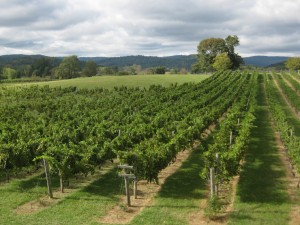
Parade Formation
The Virginia viticulture extension service states two people can operate a five acre vineyard on a part-time basis. “Technically that’s true,” explains Malick. “But they will have to work every weekend during the growing season.” And that does not include making or selling the wine.
Over time, the emotional glow of plump grapes hanging heavy in a vineyard can begin to fade.
One model that has a better than average chance for failure is a multi-million dollar operation that opens its doors and immediately begins making tens of thousands of cases of wine a year. Finding a home for such exuberant growth is not easy.
Two over-the-top examples of this wine hubris were the Kluge and Sweeley estates. Both ventures envisioned producing vast quantities of wine and selling it quickly. Both ended in foreclosures, costing the owners tens of millions of dollars.
But even businesses that have grown slowly and produce good quality wine are not ripe for a quick sale. Naked Mountain in Markham was on the market for over a decade. The owners eventually got $3 million—the original asking price—but patience played a role in finding a qualified buyer.
Malick explains successful people start small and grow slowly. “A lot of people bootstrap their winery, doing things as cheaply as possible and buying used equipment. They do all the work themselves in the early years,” he says.
Malick cites Fabbioli Cellars in Leesburg as a model for success. Doug Fabbioli is a respected vintner and consultant who built a small, thriving business producing quality wines. His success was the result of his winemaking skills and his understanding of the industry and sound business practices.
“If owners stick with the business and get above 3,000 cases a year, then they will begin to see profitability,” says Malick.
Seasoned professionals
Chris Pearmund and John Delmare have several decades of combined experience in the wine industry. Pearmund owns Pearmund Cellars in Broad Run and Delmare is the proprietor of Rappahannock Cellars in Huntly. Both wineries are profitable.
In trying to understand why a large percentage of the state’s wineries struggle to make money, Delmare’s analysis helps lift the veil of confusion. Start with the basics: 259 wineries statewide producing 511,000 cases.
“I estimate the top five producers together are making 200,000 cases. The next twenty wineries bottle an additional 150,000. That leaves 234 wineries generating some 160,000 cases, or an average of about 700 a year each,” says Delmare.
Conventional wisdom says it takes 3,000 to 5,000 cases to operate in the black. When you consider the financial investment, hard work and time the wine business consumes, those numbers are “frightening for the smaller producers” says Delmare.
If a small owner decides to back away from the business and sell out, he or she is faced with the hard reality of marketing a profitless business.
Last year, Pearmund tried unsuccessfully to sell his winery for $5 million but took it off the market. Today, it is back up for sale at for $4.5 million. Sotheby’s, a luxury real estate firm, is handling the sale. “The winery has been profitable every year it has been opened,” says Pearmund. Nonetheless, no buyer has yet come forward.
When asked how long it typically takes to sell a Virginia winery, Pearmund humorously replies, “It takes three bites to get to the center of a tootsie pop.” So how many bites does it take to get to the center of a cluster of grapes and see a buyer pop out?

Chris Pearmund
Even when a serious prospect does step forward, it doesn’t always go smoothly. A case in point is Pearmund’s sale of the Winery at La Grange in Haymarket to a Chinese corporation.
The sale was valued at $5.6 million but was a rocky real estate deal.
Shortly after the June 2012 transaction, Pearmund said, “My experience at La Grange has been the most difficult of my professional career. I devoted six years to its success and have little to show for it.”
He estimates that today, there are ten wineries for sale. “In Virginia, I would guess 95% or more of the wineries opened since 1980 are still opened, how fantastic! What other business category has that track record?”
But the statistic also points to a pending wave of winery sales as original owners approach their late retirement years and may have lost both the passion and energy to continue.

John Delmare
John Delmare believes the commonwealth’s industry is maturing beyond something more than a hobby. “As long as we are hobbyists, there are no sale opportunities per se. There is no business rationale for buying a winery,” he states.
He observes that many sold to date have been distress sales, sold for pennies on the dollar, such as Kluge and Sweeley. “It’s hard to point to sales that were true market transactions. Some sales are really real estate sales. The buyer simply wanted the property, not the winery.”
Delmare states his business is profitable but doesn’t believe a buyer would purchase it solely on its financial return. “There is a quantifiable return in buying a winery that is an emotional return on top of a modest financial one that makes such a deal worthwhile.”
He goes on to explain wineries have always been that way regardless of where they are located. He cites California as an example. For years that state’s wineries have had a 5 to 6% return on assets. “That’s a lot of risk for just 6% return. If you take fully loaded costs—not an owner working for free—I’ll take a stab and say maybe ten percent of Virginia wineries are legit businesses.”
In addressing the issue of Virginia wine being expensive, he says, “When someone comes out and buys a $30 bottle of wine you have sold them an experience. They are buying more than the wine. We are selling experiences in our tasting rooms. If we were just taking orders, we would all be in trouble.”
Moving on to the more controversial issue of hosting events, he says he doesn’t share the disdain some people voice over the practice even though he does not pursue that type of trade.

Wedding at Old House Vineyards
Often weddings, parties, fundraisers and the like are what enable heavily mortgaged wineries to make a profit. Some larger businesses have weddings booked three years in advance, ranging from twenty to over seventy a year. Given the significant capital investments in these wineries, entertainment and hospitality are important revenue streams.
Delmare thinks many of the larger operations think their wineries are worth $8 to $12 million but he doesn’t see buyers out there to command such prices. “We are just starting to scratch the surface on having a market that produces those kinds of sales.
He underscores that aging owners wanting to move on will be especially hard pressed to find takers. “True legitimate buyers are hard to find.”
Financing
Delmare thinks a bank would be skeptical fully financing a potential buyer of his own winery, even though he has not personally had a problem securing capital. A bank may look at the borrower’s capability to service and pay back a loan outside of the actual business itself.
Inventory and equipment loans are not that difficult to get, he states, with banks lending up to 80% of their value. For example, if he were to sell his winery, a borrower might be able to secure an 80% loan based on the underlying value of the land, wine inventory and equipment but may still have to come with a substantial amount of cash, upwards of 50% of the total purchase.
“If a winery is making a five percent return on assets, but the bank interest rate is six percent, you are losing money on your loan,” Delmare explains. “In addition, the higher the loan-to-value goes you get to the point there is not enough cash in the business to support the loan.
“In today’s market, a 6.5% loan is typical. A 75% loan-to-value will result in every penny the business is making going to service the loan. Banks won’t loan that way. Banks look at asset value—collateral that secures the loan. Then they want to know ‘Where is the cash coming from to pay us? If you are making $1 a year, we want your payments to be 75 cents so you have a little cushion if things don’t go well,’ ” says Delmare, explaining how banks think.
He goes on to say, “Any business is similar, and in some ways a winery may be easier to finance because it is so asset driven. We have a lot of real estate, a lot of inventory and a lot of equipment; all things a bank can use to secure their loan.” 
The banking discussion brings into relief that in addition to growing grapes, making wine and entertaining guests, potential buyers should have a custom fitted green eye shade hanging in the winery office. Sharp pencils are as important as sharp palates in this business.
The future
With the current growth rate of wineries, it is projected within five years there could be more than 400 tasting rooms dotting the Virginia landscape. While such proliferation seems questionable given the challenges of opening one, it also speaks to the intense romance and lifestyle involved.
Creating flavorful wines and earning accolades from guests while living in picturesque rural areas is a powerful draw to pursuing a less than viable business. But romance is not a bedmate to logic and numerous winery owners would not trade their chosen endeavor for a conventional business.
More future owners will likely follow their lead. Delmare underscores the increasing challenges ahead. “When I started my winery in the late nineties, it was the sixty-second one in the state. I paid $2,000 an acre for land that today is going for $10,000 to $20,000.
“My business grew twenty to twenty-five percent a year initially. Today, it’s about seven percent. It’s only gotten harder. Everything is more expensive and the barrier to entry is harder.
“There is both a looming grape and labor shortage. All of these things will make entry a little higher. Small operators will be scared out of it so growth will maybe slow in the next five years,” he says.
One path to sustainability for his winery is securing permanent control over his grape supply. To that end, he is working toward purchasing and planting additional vineyard acreage. “I’m not doing it to grow but to secure the future of my winery.”
“Construction costs and getting wine into a bottle are fifty percent higher today than when I started. I hit it at the right time when I got in.”
Perhaps the legendary Dale Carnegie unknowingly summarized the pursuit of the Virginia wine business when he said, “When dealing with people remember you are not dealing with creatures of logic but creatures of emotion.”
And a cadre of emotional winery owners may be in Virginia’s best long term interests.
Published in the Winter 2014 edition of the Piedmont Business Journal.
Amissville firm caught wall-to-wall trend early on
In 1951, when the post-World War II housing explosion was beginning to surge, the carpet industry sold six million square yards of wall-to-wall. Seventeen years later, almost 400 million yards adorned homes nationwide.

Among the first businesses to spot the consumer trend from hardwood floors and area rugs to foot comfy wall-to-wall was John Early. Forty-seven years later, the thriving family business is an icon in Culpeper, Rappahannock and Fauquier counties.
In 1954, Early began his career as a flooring installer and commuted daily to jobs in Northern Virginia to make a living. Even back then, the traffic was bad. He eventually decided to work out of his home in Amissville and spend less time on the road. At the time, there were only two furniture stores and one lumber company in the tri-country area selling carpeting.
Early began working for them. But he soon realized those businesses did not see the rising popularity of wall-to-wall. He quit the job and opened Early’s Carpets. “When we started out, everyone thought we were crazy because there was nothing out here but those three firms,” recalls his wife, Lorraine, who provided a succinct history of the company. “John couldn’t make a living on that income and in less than two years on our own we had our building up and grew from there.”
Three years later, the store was expanded to include a warehouse. In 2014, there are plans to expand again with a 3,500 square foot facility dedicated to its rug cleaning business. Starting a business from scratch in the rural Piedmont region—and consider how rural it was forty-seven years ago—had its challenges.
“Back then, we hand addressed and mailed 42,000 flyers twice a year” to help build the business, says Lorraine Early. Hand cramps must have been a common aliment during those early marketing efforts. Today, the successful business generates $2.5 million in sales annually, employing twelve people, including five family members and a fleet of a dozen vehicles.
Local touch
As the company grew, it became evident that John Early’s take on changing consumer demand was not his only ace on building the business. “Both John and I attended local high schools. We grew up with our customers. It was an asset to personally know a lot of them, including our teachers, friends and people in the banking business,” says Lorraine Early.
“It was a nice experience to go into the homes of these people. It was fun decorating and seeing the finished product. “When we started we didn’t have but seventeen dollars and some change in our savings. It was all done by hard work and faith in our local banks,” she says, explaining how bank financing worked in a gentler time.
As the business succeeded, carpet installation grew along with sales of oriental and area rugs, hardwood and ceramic flooring, window treatments, and carpet cleaning services. “Anything to do with flooring,” says Early. Trends tend to be cyclical, and today home decorating is moving back to hardwood floors and area rugs. Early’s is again well-positioned to capitalize on the shift.
Over time, it became obvious carpet cleaning could also generate additional income. For years, it was performed with small machines carried into the home. With the emphasis on today’s “Green Scene”, the Early’s purchased “mounted trucks”; a vehicle with high-power, environmentally friendly cleaning motors. Sucking up dirt and odors with these mechanical stallions made for happy homeowners.  Remodeling does not readily come to mind with carpet installation, but when water damaged is encountered, Early’s will tear out and replace floors, walls, door jams and ceilings. However, getting homes dried quickly is critical to avoiding such expensive restoration work.
“Our technicians go to school in Georgia to learn how to completely dry out a home. During training, the company floods an entire house and the students learn how to dry it out. If you don’t get to it quick, mold will set in. We have even refinished guns that were water damaged,” she says.
When hiring a new employee, the Early’s emphasize they are embarking on a career, not just a job. “We tell them it’s like going to college, but longer. There is a lot of product knowledge and studying to do. A person needs to stay up with it. “John and I use to do all the training ourselves but now we depend on our daughter and son-in-law to do it. Once trained, we want our employees to stay in the business. It takes five years of on-the-job training to become proficient in the flooring business,” Early explains.
Growth
When the company was in its early years, it was typical to get just two or three customers a week. “We’d have customers push the buzzer on the store front door. My children were just a few months old and people would have to wait till I got there from our home out back,” she remembers. Today, those few of customers have grown to several hundred visits a week.
The clientele is still primarily local people, but increasingly the Early’s are seeing buyers from the Gainesville and Hay Market area. “While we do some commercial work—mostly local churches, banks and other businesses—the bulk of our business is still centered on residential.” The firm does not pursue track housing contracts.
One couple who are relatively new to Culpeper County heard about Early’s reputation and chose them to install hardwood flooring and carpeting. “Oh, we were very happy with them. The workmanship was great and we were very satisfied with the product,” the homeowner commented.
The Early’s could, no doubt, fill several volumes with similar testimonials. While the internet is changing how business is generated these days, Lorraine Early doesn’t see it as a growing force in the family shop. “Yes, we do have some online sales but in this business you still have to measure and touch things. For the most part, our customers want to see us,” before making a buying decision.
“This type of business requires a lot of personal attention. You need to stay on top of things. Everybody wants to do computers but our work is a little different. It’s hands on but rewarding. The personal touch is important to our success.”
What has also helped the small firm grow is its depth of inventory. The warehouse has over 75 large rolls of carpet, 400 area rugs, 100 rolls of vinyl, and selections of hardwood and ceramic flooring to chose from. “When customers are working on a project and want to complete it, they can come in and often find what they need without having to order it.”
Recession’s impact 
In reflecting on the last six years, Lorraine Early says. “It’s been hard. There hasn’t been much improvement. I feel very fortunate our buildings are paid for but young people need to be trained and they need the jobs. Business comes in spurts and you get excited but then it drops back.
“We’ve had to do away with a lot of our employee benefits, except health insurance. We have kept it for all our employees. But paid holidays and vacations have had to go in order to afford the insurance.” While remodeling is often viewed as a bright side to a depressed economy, the Early’s don’t see it.
They do more advertising to keep their name in the market place. The benefits of growing a business when you are young and living in a rural area is the ability to attract customers you grew up with. Today, both the owners and their faithful customers are aging and younger newcomers moving into the area. “We need to keep our name our there so people know who we are.
There has been influx of new people and they don’t always know us.” One benchmark of the quality work provided by Early’s is repeat business. It’s not unusual for them to perform work on floorings that were installed thirty or forty years ago. “The quality of our work has really held up,” Lorraine Early says.
The family
At this stage of his career, one might call John Early, Installer Emeritus. He acts as the public face of the company, handling public relations and work site visitations, while monitoring customer satisfaction and quality control. At 79, is well positioned to know when a project needs a bit of fine tuning. His depth of experience also serves to train and mentor his younger employees.
Lorraine Early speaks with respect when she shares that her husband is a two time cancer survivor. “He’s had health issues that he shares it with people who are going through a lot of turmoil. He is still active and is a very determined man,” she says with pride.
Lorraine Early managed the sales force and the decorating side of the business for decades and still oversees it. However, back in 2000 she turned much of the daily in-store work over to her daughter, Sonja, who is the store manager and project scheduler.
Sonja’s husband, Solon Betts, is head installer. Son John handles in-home measuring assignments, and grandson, Ted, heads up cleaning and restoration. Grandson Cody, attends the itt Technical Institute in Chantilly, preparing for a career in computers. Meanwhile, he oversees the company’s computer applications. The Early’s have no plans to sell their business but if they ever did, the buyers would be family members. What they have built together will stay together as the family flagship.
For hours of operation and a full description of the company’s product line and services, visit http://earlyscarpetinc.com/  Published in the Winter 2014 edition of the Piedmont Business Journal.
Heating and air conditioning firm building on 78 year legacy
FDR was re-elected in a landslide. Gone with the Wind first hit the bookstores. And the cost to mail a letter was three cents. It was 1936, the year McCrea Equipment Company was founded.
To place that success in perspective, the average lifespan of leading U.S. companies has decreased from 67 years in the 1920s to just 15 years today. The Fauquier County firm is bucking the trend by building business the “McCrea Way. Quality service the first time, every time”.
“Mack” McCrea created the then heating and air conditioning wholesaler in the harsh economic environment of the mid-1930s, when unemployment raged at 16.9%; over twice what the US is experiencing today. When he died in 1965, three of his employees purchased the company’s stock.
One of those employees was George Lanhardt, who subsequently bought out the other partners in the early 80s. Since then, it’s been a family run business with Lanhardt’s son, Wayne, forging the company’s growth for nearly three decades.
Today, the firm has 215 employees—63 at the Warrenton location—and operates six companies in VA, MD, and PA. Wayne Lanhardt’s sons, Shane and Seth, are the firm’s next generation of leaders who are continuing the company’s performance by building a young, success-driven corps of managers. Their accomplishment is reflected in increased revenues generated during a depressed economy.
“We have a very strong team with a lot of guys in their 30s and 40s in management positions. The team is very forward thinking. We’ve made a successful transition from an older company. A lot of older companies stumble. In the end, it’s really about your people. That’s the strength of our organization,” says 36-year-old Shane Lanhardt, who runs the Virginia business and spent time sharing the firm’s story with the Piedmont Business Journal.
Unique business plan
Unlike many HVAC businesses, McCrea sets itself apart by being involved in all aspects of heating and air conditioning services. This includes new home installations, service and replacement, manufacturing of sheet metal, duct and piping materials, and providing energy analysis and audits. The firm is among the largest HVAC firms in the DC metro area.
In addition to the scope of the business enterprises, the firm had the prescient to see what was unfolding in the red-hot real estate market of a decade ago. “The housing market was booming during the nineties. It was almost uncontrollable growth. We were installing 10,000 units a year in new homes. But we knew the bubble was going to have to burst,” recalls Lanhardt.
And burst it did. But McCrea had positioned itself to survive the collapse. “We decided to create service and replacement companies and augment new home construction sales with more service and replacement work. In 2000, 95% of our business was in new home construction. Last year, that figure dropped to 60% with 40% service and replacement picking up the difference.”
Lanhardt goes on to say, “The housing market has recovered some but I don’t think we’ll ever see what it was doing back in the nineties. While we have done 40% more new work this year than last, I don’t think that pace will continue.”
The DC metro real estate market is among the most stable in the Nation but Lanhardt opines there is still “a lot of instability in the market. If you know your job is stable, then a decision to replace a $6,000 unit becomes easier. If not, you might pay $500 for a repair. There is a little trend of more people repairing and not buying the best systems because of instability,” Lanhartdt says.
One of the hallmarks of McCrea is not trying to sell customers something they don’t need or can’t afford. The business is based on volume sales and “we don’t want to make the most amount of money off each customer. Our philosophy is to provide good service, do a great job and provide value to people for their money,” emphasizes Lanhardt.
Building market share
One obvious advantage of building sales with a decades old business is a large customer base to draw upon. The firm has a 200,000 person customer file that receives a quarterly newsletter providing information on new developments in the industry, tips on reducing heating and cooling costs, special promotional offerings on service and installations and more.
“We keep in touch with our customers through our newsletter, Facebook and Twitter. Our industry is reactive so customers don’t normally plan to buy new. Their purchase is often dictated by the immediate need of a failed unit. Building brand so that former customers think of McCrea when facing an HVAC need is critical. There is no cold calling in this business. Word of mouth and branding are important,” says Lanhardt.
As in every industry, technological advancements have been dramatic in the last few decades. Today, an increasing source of new business is geothermal. It provides the highest energy efficiency but is expensive.
Lanhardt says, “The federal government gives a 30% tax credit back to dollar one on the installation costs on these systems. And there is no cap on that number. It is the most efficient unit you can buy. A geothermal unit can reduce utility costs by 70% to 80% a year.”
Significant savings are not limited to premier systems such as geothermal. Propane or oil systems that are upgraded to heat pumps with oil backup can generate 50% to 60% savings in utility costs from systems installed just a decade ago. Science and technology strikes again.
Nonetheless, technical advancements can possibly be trumped by commonsense. Lanhardt underscores old fashioned strategies such as raising window shades and pulling curtains back during the winter months will allow solar energy to hold heating costs down. Reverse actions in the summer permits a darken house to retain air conditioned cool air.
“Our newsletter regularly includes cost saving recommendations,” says Lanhardt.
Community involvement
The importance of giving back to the community that helped fuel its growth is evident in McCrea’s work with Fauquier Habitat for Humanity. Last January, the firm provided discounted HVAC units and no cost installation for two duplexes Habitat built.
The duplexes are a collective effort between Habitat and the Fauquier Family Shelter. The Shelter provides transitional housing for families in need. If they subsequently qualify, they are eligible in securing mortgages as permanent residents of the newly constructed duplexes.
Brenda Drerenberger, Executive Director of Fauquier Habit for Humanity, explains, “Shane is great to work with. He arranged for the manufacturer, Trane, to provide the deeply discounted units to Habitat and then donated McCrea’s labor costs to install them.
“The program is a hand up not a hand out. Each family must be employed and quality for a mortgage. They are also required to provide 400 hours of sweat equity. The program gives them an opportunity to step up in life and improve their future possibilities. But the lower we can keep construction costs the lower the family’s mortgage.”
Habitat has 200 volunteers that provide much of the construction labor but, by law, cannot install heating and air conditioning units. McCrea fulfills that need.
“I went to them this year and was not expecting them to be able to help again but they did,” says Drerenberger.
The firm also supports Habitat’s annual golf tournament and other Habitat projects in Virginia.
Given the business and community philosophy that drives McCrea Heating and Air conditioning, celebrating 100 years in business appears to be just a matter of time—2036 to be exact.
Published in the Winter 2014 edition of the Piedmont Business Journal.
Hume bed & breakfast brings 227 years of history back to life
In 1787, James Madison wrote the Virginia Plan, a document that outlined what would ultimately become the basis for the U. S. Constitution. It was also the year that Barbee’s Tavern—located at Barbee’s Crossroads but today known as the village of Hume— opened its doors to weary and thirsty travelers.
The tavern, with its wide pine flooring, American chestnut interior logs and three stone fireplaces, is once again providing shelter and relaxation for the weary. But overworked excursionists are guests rather than farmers and tradesmen.
And libations of hard cider, whiskey and rum have been replaced with Virginia wine, a beverage largely unavailable to the colonials.
 The Inn at Vineyards Crossing is a diamond centered on a necklace of local wineries. It opened just five months ago but guest reviews can be characterized as “raves”.
The world’s largest travel advisory website, Trip Advisor, already has posted twelve guest comments, all of them bestowing an “excellent” rating on the establishment. No small achievement in the demanding world of hospitality.
Typical comments from the website include, “Absolutely outstanding”; “Wonderful weekend with great food; “Best B&B I’ve been to”, and “Excellent on all fronts.” It’s impressive how social media can catapult a new establishment to success with minimal advertising. Resultant bookings have been good with occupancy rates building faster than anticipated.
The inn was also recently accepted into the Bed & Breakfast Association of Virginia. The Association’s quantifying criteria involves an onsite property inspection before an establishment can be listed on its website.
The forces behind the newest Fauquier County bed & breakfast are Philip Carter Strother and Steve Mills. Strother is a Richmond attorney and owner of Philip Carter Winery. Mills is an executive with a Washingto DC firm and co-owner of the B&B and an investor in the winery.
The day-to-day operation of the inn is in the capable hands of General Manager, Joshua Haugh, who is also the chef. Haugh has twenty-five years experience in the hospitality and culinary field and has seen duty at resorts in Hawaii, Canada, DC, New Jersey and Virginia. When asked why he accepted the position he says, “It looked like a great opportunity.” Indeed, for him and his guests.
Wine centric concept
Virginia is home to over 260 wineries, twenty-six in Fauquier County alone. The idea to open an inn centered on showcasing local wineries made for a sound business plan. Vineyards Crossing has partnered with five locals wineries, creating the necklace of establishments with the inn at its center.
The wineries are Rappahannock Cellars, Desert Rose, Philip Carter, Barrel Oak and Naked Mountain. It is anticipated additional wineries will be added in the future.
When guests arrive at the inn, they are greeted by Haugh and given a unique check-in experience. Luggage is conveyed to the guests’ room and then a wine tasting is conducted in the reception area. The inn has a license to pour and sell wines and features its five partner wineries on a rotating schedule.
Lodgers can pre-book a VIP tour at nearby Phillip Carter Winery. The tour is an educational and pleasure filled excursion of the winery’s vineyard, where the challenges and rewards of growing wine grapes in Virginia are discussed, followed by an in-depth presentation in the cellar on winemaking and bottling.
Guests then adjourn to a private tasting room to sample the full lineup of Philip Carter wines. The tour concludes with a picnic basket containing locally sourced meats and cheeses to be enjoyed in the winery or on its grounds in seasonable weather.
 The inn has five rooms for lodgers: The Commonwealth Suite, The Virginia Viognier room, The Grand Cru room, Barbee’s Crossroads room and The Cobbler Hunt Loft. The Commonwealth Suite offers a cozy bedroom with fireplace and separate sitting room. It also comes with a unique attraction; sleep here and your dreams will unfold in an original room of the National Historic Trust tavern.
All rooms have king size beds and private baths. Rates range from $189 a night to $269 for the historic Commonwealth Suite. There is no two night minimum stay except on Christmas, New Year’s and Valentine Day.
Dining
Typically, a B&B provides only breakfast, often simply continental in style. Not so at Vineyards Crossing. Not only is a full fare breakfast served but the rare treat of dining in the evening at an historic venue is available when prearranged.
There are two dining options. Guests can join their fellow travelers for dinner in the inn’s main dining room. Up to ten diners can be accommodated for a three course repast prepared with local fare and wines.
“When guests make reservations, I ask them to let me know if they would like to join us for dinner. I prepare all of the dinners using locally available produce and meats. A typical selection might be pork chops from Dark Hollow Farm in Markham with apple stuffing,” says Haugh. The dinners run $40 per person.

Joshua Haugh
For the more romantic souls, a four-course private wine dinner for two can be arranged and served in a smaller dining room. The couple creates the menu along with Haugh and are assured the ingredients will be “farm to table” fresh. “It’s a intimate wine dinner and a special experience that guests can take advantage of, if so desired,” says Haugh. The cost ranges from $70 to $90 per person.
In seasonable weather, visitors can enjoy drinks or simply relax on a quiet patio located off the dining room or take a dip in the pool located behind the inn.
Excursions
In addition to the VIP winery tour, Marriott Ranch offers trail rides with lunch and a bottle of wine for equestrian fans. And wine tastings at the numerous local wineries provide freestyle afternoon outings reinforcing the name of the inn.

Philip Carter Winery Vineyards
A unique tour is being offered the weekend of February 29 – March 2 that has not heretofore been available in Virginia. “We are hosting a ‘Wine Camp’ for registered guests limited to five couples,” says Haugh.
The camp will involve visits and presentations at the five partner wineries. Guests will arrive Friday and after check-in there will be a reception and an hour discussion on Virginia wine history led by a winery owner. The next morning after breakfast, the tour continues at Philip Carter Winery for a vineyard discussion on trellising, grape growing, and grape varietals that thrive in Virginia, followed by lunch.
Next, the group will visit Rappahannock Cellars and meet with the winemaker and “learn how wine is made and participate in a wine blending exercise to understand first hand how the final product is created,” explains Haugh.
Later, a visit to Desert Rose Winery will offer an opportunity to meet with the owner and talk about owning a boutique winery and its operation. The day ends back at the inn with a five course wine dinner.
Following Sunday morning breakfast, the group will visit Barrel Oak and Naked Mountain wineries for more wine related seminars. The camp provides a weekend graduate course in culinary and wine related subjects coupled with the opportunity to meet and talk with winery owners and winemakers. “It’s an experience you really can’t find elsewhere.” says Haugh.
The “Wine Camp” cost $1,200 per couple and includes all lodging, tours, meals and, of course, wine, says a smiling Haugh.
The Inn at Vineyards Crossing anticipates expanding its excursion offerings in the future. Additional information on rooms, dining and tour packages are available by visiting http://www.vineyardscrossing.com/.
Published in the January 22, 2014 edition of the Fauquier Times.
East Davis Street shop serves the everyday gourmet
Experience counts. The more one gains the greater chance of success. Perhaps that explains why the Culpeper Cheese Company is a favorite haunt of folks who love quality cheese, wine, craft beer, soups and sandwiches.

Jeffery Mitchell
“I became a wine buyer when I was twelve years old,” says owner Jeffery Mitchell chuckling. “My mother was a hard working single Mom and loved her Chardonnay. When she broke her hip I was tasked to buy wine during her recovery.”
Mitchell remembers the corner shop owner cooperating with his mother during her convalesce by selling wine to the young lad. “One day her favorite chardonnay was out of stock and I made a buying decision on my own. It was a bottle of Verdicchio with a neat looking fish scale pattern. Unfortunately, the high acidity Italian white wine did not agree with Mom’s palate.
“When I bought that wine home it was not a good evening. I learned there had to be radical differences in wine tastes. And that a bottle’s shape did not make the wine,” he says smiling.
It was a lesson learned at a young age and provided the base for Mitchell’s ever evolving knowledge of gourmet foods.
After graduating from college, he took a course on serving wine in restaurants. “It was my first wine class but by far the best I’ve ever taken. The instructor served ten wines. The first nine were purposefully hideous; over-oaked, high alcohol, too much sugar, and every other flaw you could think of. Then the tenth wine was poured and it remains in my memory to this day.
“It was balanced, in harmony and flavorful. The experience was an eye opener for me and led to a greater understanding of wine,” recalls Mitchell.
Going independent
So how did his career as the proprietor of a fine food and drink shop unfold? After twenty years in the photography business, including time at Eastman Kodak, he found himself unemployed. “Our division at Kodak saw that film was dead and digital would prevail but nothing in the corporate strategy was going to change. Our entire division was let go.
“I realized there is no future but your own. I worked as a newspaper writer, at Foti’s restaurant and then at the Frenchman’s Corner where I began learning more about cheeses. Seven years ago I opened my own shop called the Frenchman’s Cellar and renamed it the Culpeper Cheese Company two years ago.
 “Today wine and cheese hold equal attractions for me with cheese sneaking ahead. I’m especially excited about Virginia cheese production. There are some astonishing producers here. Virginia is just a spark in the dark right now with about a dozen high quality producers. By comparison, Wisconsin has hundreds of cheesemakers,” says Mitchell.
His cheese inventory centers on what he calls “natural cheese”; products that contain only salt, rennet, and curds. Like wine, cheese has terroir characteristics based on the breed of cows, sheep and goats’ milk used and the grasses they feed on.
So what can a customer expect when they visit the Culpeper Cheese Company? “First, I hope you are greeted with a friendly welcome and that it smells good when you come in. We make homemade soups and Panini sandwiches daily.
“I am fortunate to have an experienced staff that can help in selecting products based on individual tastes. This is not a one person show. I am blessed to have knowledgeable personnel that make my success possible.
“Our shop carries over sixty selections of cheeses from around the world and about 400 different wines. We have a wine station where you can taste featured wines before buying a bottle or ordering a glass with a cheese plate or sandwich. One popular offering is our 6 for $60 program—a 22% discount over individual purchases. We call it ‘wines that are right for tonight’,” he says.
For beer lovers there are 300 bottlings of craft brews and eight draft lines to choose from. One popular offering is the “trio of taste” that lets a buyer sample three different four-ounce pours for $6. Recently the shop held a beer dinner with more to follow.
 Asked why Culpeper is a good location for a gourmet shop Mitchell replies, “Davis Street is a pretty special place. A lot of ‘Main Streets’ are gone. If you drive elsewhere, there are beautiful turn-of-the-century buildings that are vacant.
“In Culpeper there is a sense of the old and the new and the camaraderie among shop owners is great. Hourly we refer people to other businesses and they do the same for us,” says Mitchell.
The Culpeper Cheese Company is opened six days a week, closed Mondays. Visit http://www.thefrenchmanscellar.com for hours of operation or call 540.827.4757.
John’s pick of the month
Shropshire Blue Cheese
$24.25/lb.
Rather than go with a wine recommendation this month, let’s celebrate the bounty of cheeses available at the Culpeper Cheese Company.
One of our favorites is the delicious Shropshire Blue Cheese. This cow cheese hails from the United Kingdom & Ireland and was first created in the 1970s at Castle Stuart Dairy in Scotland. The cheese is semisoft with a sharp, strong flavor and a slightly tangy aroma. Pair with a Pinot Noir wine or a porter or stout beer. Cheers.
Published in the December 19, 2013 edition of the Culpeper Times.
- End of Harvest
Experiencing the shiver of delight, not chill
I’m a man for all seasons. No, not a Thomas More challenging King Henry VIII and his propensity for divorce in the classic 1966 movie. I doubt I have the moral strength to lose my head for my principles.
But rather, I am a man for all of nature’s seasons; spring, summer, fall and winter. This love dates to my early days of scouting when I cared less about earning merit badges but simply wanted to go camping. Anytime.
My affection for the out-of-doors is reinforced when winter settles on our bucolic Piedmont countryside. Winters here are ephemeral. Out of an entire season, we might only have a few weeks of really cold weather before March blows the frosty days away in a whirlwind.
And lest I get side tracked, the subject of global warming is being left on the shelf for now. The last word I read is that global temperatures have not changed in the last fifteen years, regardless of rising greenhouse gases.
 In Virginia, the average winter temperature is 39 degrees. Sounds chilly but that’s the average. There are plenty of mid-40 degree days or higher. But this winter is off to a grand start from my perspective. As I type, it’s 36 degrees outside at two o’clock in the afternoon with a light blanket of snow draping the forest surrounding our home.
The Old Farmer’s Almanac makes this 2014 prediction for our region: Winter will be colder and drier than normal, with the coldest periods in early and late December, early January, and early February. Snowfall will be near normal in the north and above normal in the south, with the snowiest periods in early November and in mid- and late February.
Ahhh…a delightful prognostication; let’s hope it’s accurate. A cold winter warms the heart and turns one inward to home and hearth. During the rest of the year, my restless nature has me pursuing all manner of activity. Once the sun is up in the summer, I’m off to engage in yard work, golf, trail maintenance in the Shenandoah National Park, hiking, volunteer work and more. Balmy weather compels one to activity. Yes, retirement gifts me much free time.
During a cold winter, I venture outside less but when I do, it’s into a more peaceful world. Daily walks on my community trails are solitary excursions. No one is about; the crunch of snow on the trails is the only sound I hear. Rambling through a snow covered forest is an invitation to open a conversation with myself on all manner of weighty issues—or not. I return home a calmer man than when I left.
When the temperatures begin to drop in November, it’s time to pull the comforters out of storage and prepare the beds for long winter sleeps in snugly comfort. Firing up my beloved wood burning stove is a hallmark of winter’s descent.
Bringing fire into a home has its environmental critics and is attendant with a wee bit of a safety issue. But to sit in my living room in the evening, transfixed on a soft burning fire, creates a sense of security and peace.
 No heat pump, propane tank or electric heating can match the deep warmth—both physical and emotional—conveyed by a wood burning stove. It is a presence almost as real as a person; a living entity shielding one from the harsh reality of cold air, while providing warming comfort to those gazing into its magical flames.
A dram of single malt scotch enjoyed in the company of both a softly crackling fire and my bride of forty-eight years, is like roaming the Elysian Fields here on Earth.
As a writer, dropping temperatures stirs creative urges. Since there is less life outside, the thought process turns inward and appears upon paper in a gentle, unrushed march of words on subjects untouched in a warmer clime.
Among the highlights of an award-winning winter is a heavy snowfall. Time seemingly stops as the snow piles up, traffic remains captive in blocked driveways and scenes evocative of a century ago appear as an artist’s rendering. It is the ultimate solitary confinement in the best sense of that normally dreaded term.
Another delight is my escape to the mountains for both downhill and cross-country skiing. Downhill is often a family adventure while cross-country finds me heading into West Virginia with the guys to work hard, gliding over forest trails and relaxing in the evenings with libations and stogies.
The end of the day assessments includes how skillfully we managed the icy descents on free-heel skis. Truth is neither sought nor expected in these performance reviews.
I look forward to this winter, hopeful its auspicious start is not melted in a January thaw.
Quotation anthologist, Terri Guillements, frames the quiet season best by saying, “The color of springtime is in the flowers; the color of winter is in the imagination.”
So while others wait the eventual return of warm breezes, I will revel in the imagination of the chill.

Family memories drive passion for fine wines
Bill and Aleta Gadino’s inspiration for winemaking casts back to the early 1900s when both of their immigrant grandfathers made wine for family and neighbors.
“Wine was part of our lives growing up in New Jersey. I remember drinking wine with meals when I was a young boy. It was served in a small glass that was originally sold as a cheese container. A lot of the other kids weren’t allowed to drink wine but we were permitted to have a glass with Sunday and holiday meals,” recalls Gadino.
Wine with food would remain an integral part of the Gadinos’ lifestyle. After successful careers in the Navy and as a defense contractor, Gadino shifted from amateur to professional winemaker, opening Gadino Cellars in 2005.
“During part of my military career we were stationed in California. Aleta and I had fun visiting the growing number of wineries. Back then there was no just going directly to a tasting room. You learned about the grapes first and at the end of the tour you got to taste the wines,” says Gadino.
An engineer by profession—retiring as a Navy Commander—Gadino began to see winemaking as both art and science. The more he learned the more he wanted to get involved. The tipping point came in 1982 while visiting Simi Winery in Healdsburg, CA where he purchased the classic winemaking book Grapes into Wine by Philip Wagner.

End of Harvest
“I read that book cover-to-cover. The pages were getting worn out,” says Gadino. The next year some friends joined him in making his first wine; a Zinfandel from fresh grapes. “It was very drinkable and at 15% alcohol I was hooked,” says Gadino laughing.
In the mid-80s, during a tour in Washington DC, he decided to add winegrower to his amateur vintner resume and planted ten vines of Seyval blanc—a French-American hybrid white grape–in the backyard of his Fairfax home. Growing fruit and making wine led to taking courses in viniculture and winemaking with Jim Law, owner of Linden Vineyards and one of the most knowledgeable winemakers on the East Coast.
Going Pro
Upon retirement from the Navy in 1989 and shifting to defense contracting work, the Gadinos purchased property in Rappahannock County while still living in Fairfax. The weekend commutes to their emerging vineyard began a dozen years of growing grapes for sale to a local winery and for their home use. The leap to professional winemaking began to unfold when they moved permanently to their Little Washington farm in 2002 and then opening Gadino Cellars in 2005.
The family vision, now including their daughter Stephanie and son-in-law Derek was to produce food friendly wines in the tradition of their ancestors. “We wanted to create wines that people would invite home to dinner. Our goal was to focus on flavorful wines with crisp acidity that would pair well with food, says Gadino.
Given the winery’s reputation for bottling clean, fresh tasting wines that goal has been achieved. The Italian tradition of “family first” is evident in the management of the winery. Aleta Gadino, who holds a degree in horticulture, manages the winery’s grounds. Daughter Stephanie is the tasting room manager. Son-in-law Derek Pross, is the winemaker and Bill Gadino devotes himself full-time to the care of the thriving six acre vineyard.
Typically there are seven wines showcased in the tasting room including two Virginia classics, Viognier and Cabernet Franc. In addition, limited quantities of an elegant Italian Nebbiolo reinforce the family’s old world heritage.
The winery produces about 2,000 cases annually, placing it in the smaller category of Virginia wineries. “We never wanted to be a big. My father owned a small diner in Westwood, New Jersey. It was a working man’s restaurant and customers had fun eating there. I have wonderful memories of the place.
“When we opened our winery I wanted the same atmosphere. Guests are welcomed to bring their own food, enjoy a game of bocce ball, walk the vineyards, enjoy the views and take one of our wines home for dinner,” says Bill Gadino.
For information on hours of operation and special events visit http://www.gadinocellars.com/
John’s Pick of the month
Gadino Cellars
2011 Viognier
$23
This month’s selection is a gold medal winner from the prestigious Indy International Wine Competition. The wine displays tropical fruit aromas framed by citrus notes and is redolent of kiwi, melon and peach on the palate. It is emblematic of the crisp, clean Gadino Cellars lineup. Drink now.
Virginia and other fine wines are available in Culpeper at the Crofburn Market, Culpeper Cheese Company, Tyme in Culpeper, and Vinosity.
Published in the November 11, 2013 edition of the Culpeper Times.
Opal winery garnering accolades early in the game
Granite Heights Orchard & Winery opened just two years ago, but Toni and Luke Kilyk have burst upon the Virginia wine scene faster than a cork being pulled from a bottle of their wine.
It’s not a surprising achievement for the two over-achievers and their passion for creating. Be it their successful business careers or producing wine, jams, jellies and honey, the couple brings proven character traits to producing quality farm products.

Toni Kilyk
Luke Kilyk is the winemaker. Toni Kilyk is his assistant and manages the orchard’s production and the business. And if you were to compliment them on their early success you’d likely to get a “We’ve been very fortunate” response. Interesting how good fortune follows hard work.
The high energy couple has been a married team for twenty-three years while advancing their primary careers. Luke Kilyk is a full-time Intellectual Property Law attorney who owns his own practice focused on patent, trademark and copyright law. His office is in Warrenton.
Toni Kilyk is a family practice physician who had an office in Manassas for nine years before shifting much of her focus to managing their farm. She still works two days a week at the Fauquier Free Clinic in Warrenton for a small salary. “I do it more for the love of it. The clinic serves individuals below the poverty level. Our patient load has increased from 100 to over 600 in the last six years,” she says.
Country life calls
Life before farming was similar to other professional couples living the harried suburban life in Northern Virginia. In 1997, while residing in Centreville, the Kilyk’s purchased a 55 acre forested property off Opal Road, built a home and in 2001 moved permanently to the country. They cleared three acres of land adjacent to their home and planted a fruit orchard and formal flower gardens.
“We both like to keep busy and can’t sit still,” says Toni Kilyk. What they’ve achieved underscores that assessment.
About a decade ago Luke Kilyk fell in love with winemaking. As is often the case, he started with home wine kits and soon advanced to wine made from fresh fruit. In addition to his law degree, he is a chemistry major, providing a sound foundation for making commercial wine. “Luke is like Thomas Jefferson. Whatever he does its like it’s been his career all his life,” emphasizes Toni Kilyk.
The winemaking operation moved from their home to a small cabin on the property but soon became a “hobby on steroids” as Toni Kilyk says smiling. The fruit operation was also expanding, producing numerous bottles of jams and jellies made from blackberries, peaches, blueberries, strawberries and other fruits. Honey was produced from their honey bee hives. Clearly, more room was needed to accommodate the nascent business.
Farm grows exponentially
 In 2006, a 168 acre farm located directly across the street from the Kilyk’s home went on the market. The couple made an offer on the property but the developer wanted to subdivide it and build homes. Then the recession hit and the project stalled. By 2009, it was obvious new home construction was going nowhere and the farm came back on the market.
“I was going to work at the free clinic one day and saw the For Sale sign again,” Toni Kilyk recalls. “I called Luke and said, ‘It’s back on the market!”. He said, “Well, maybe it’s meant to be.” And indeed it was with their quick purchase of the farm.
In 2010, the winemaking operation was moved across the street into a new processing facility and the stage was set for a larger production of fine wines. Country music artist and actress Reba McEntire once said, “It’s very important to surround yourself with people you can learn from.” The Kilyk’s embodied the philosophy and embraced two iconic talents in the wine industry: Jim Law and Lucie Morton.
Law, owner of Linden Vineyards, is one of the most respected winemakers on the East Coast and Morton is a vineyard consultant of international renown. The Kilyk’s enrolled in Law’s winemaking classes to learn first hand the skills required to produce quality wine. They also hired Morton to assist in planting their ten acre vineyard on the newly purchased farm.
Morton is an advocate of high-density planting of vines. Typical Virginia vineyards are planted at a density of 600 to 800 vines per acre to aid air flow and fight humidity. Morton’s vineyards are likely to have 1,600 to 2,000 vines per acre to help promote even ripening by reducing the amount of fruit per vine. Many award winning wines are produced off of her high-density vineyards.
The vineyard is host to Chardonnay, Vermentino, Petit Verdot, Cabernet Sauvignon and Barbera grapes; all French clones. While they purchased wine fruit from other Virginia vineyards in the first few years, it is their goal to be mostly sustainable with their own grape crop.

Tasting Room
Interestingly, the couple’s relationship with Morton deepened when they agreed to let her live in the late 1800s farm house that would eventually become their tasting room. “Lucie wanted to write a book and she came here to live for a year to complete it. We were following her philosophy and she liked us because we were self-sufficient. She still stops by on occasion to take a gut check on how we are doing,” says Toni Kilyk.
Self-sufficiency is a hallmark of the winery and orchard operation. The couple performs virtually every task on the farm. Toni Kilyk explains that often a retired couple will open a winery and hire a winemaker, vineyard manager and other personnel and be compelled to start selling wine quickly to help pay down the heavy debt.
“We perform all of the work ourselves,” she says. The physical labor involved is intense; planting the vines, pruning and spraying the vineyard, making the wine, tending the orchard, bottling the wines, jams and jellies, mowing the property weekly during the summer months and the ubiquitous office work.
The only person they’ve hired tends the tasting room on weekends so the Kilyk’s can keep up with the endless farm chores. This is particularly true for Luke Kilyk who works full-time at his law practice. Weekends provide the only time to stay head of the work.
To protect their vineyard investment the Kilyk’s next purchase will be two 30 foot high wind fans to safeguard the vines from the threat of spring frost. The last frost date in Virginia is around May 10 but bud break can occur in early April. It is a tense six week period if grape vines have no protection. A single night’s chilling air can wipe out an entire vineyard and deprive a winemaker of the fruit needed to make the next vintage’s wines.
Early recognition
It’s not unusual for new wineries to take several years to develop quality wines and garner the coveted recognition for its efforts. The science and art of winemaking is often a trial and error process that, hopefully, results in the caliber of wine a winemaker seeks. Quality is the reward for hard work and patience in the cellar.
Granite Heights is an exception to the rule. Their dedication was a given but within two years the devotion to farming grapes and making wine began to attract the attention of the wine cognoscenti. Positive feedback from industry professionals spurred further commitment and the Kilyk’s attention to quality is evident in their current bottlings.
While Lucie Morton was living in their future tasting room home, she was impressed with not only the Kilyk’s work ethic but the wine that was emerging from their cellar. Given her reputation within in the industry she contacted David Schildknecht, a wine critic and full-time employee of the Wine Advocate, a global bimonthly publication that publishes 12,000 wine reviews annually.
The publication was founded by Robert M. Parker Jr, the most influential wine critic in the world and creator of the 100 point wine rating system. Parker’s reviews can make or break a winery. His nose and palate are insured for a million dollars.
To be employed as a critic by Parker places an individual at the pinnacle of wine evaluation. Schildknecht operates in a rarefied realm of wine appraisal.
Last year Morton sent Toni Kilyk an email saying she wanted to bring Schildknecht out to the winery to taste the wines. “I was working at the clinic that day and when I read Lucie’s message my heart jumped in my throat because here was this big, important guy coming and he worked for Robert Parker,” say Toni Kilyk.
 Her fears were unfounded. Schildknecht liked the wines and later wrote in the Wine Advocate about their 2010 Humility, a full-bodied red blend, “When I tasted it from the barrel, I was shocked that wine of such promise—very much fulfilled in the bottle—could come from young vines and inexperienced part-time growers, not to mention from Warrenton, Virginia.”
He went on to enthuse, “But when you start talking with Toni and Luke Kilyk about what they are doing, their meticulousness and determination are evident. The Barbelo—a blend of Merlot and Barbera—is as original as it is delicious.”
Soon after such high praise the wine columnist for the Washington Post, Dave McIntyre, stopped by and later wrote, “Granite Heights Winery. Atop a ridge near Opal, between Culpeper and Warrenton, this newcomer is already producing some intense Bordeaux-style blends.”
Given the early praise it’s noteworthy that unlike almost every winery in Virginia the Kilyk’s refrain from describing the aroma and palate flavors of their wines. The tasting notes state, “We try not to characterize our wines with what you should be smelling or tasting—it is like leading a witness or reading a book and knowing the ending beforehand (that is not our style)—we want you, the taster, to discover and decide.”
Toni Kilyk underscores the accolades to date are likely to continue. The couple submitted their 2009 Lomax Reserve—a Bordeaux-style red blend–in Virginia’s 2013 Governor’s Cup wine competition. It was “the first competition we had entered and it won a silver medal,” she says. Their 2011 Petit Manseng won “Best in Category” at the 2013 Atlantic Seaboard Wine Association competition. The couple will attend a Capitol Hill reception for all the ASWA winners in September to receive their award.
Business verus lifestyle
There are over 8,000 wineries in the US today. A small percentage produce the majority of wine sold nationwide. In Virginia, there are about 240 wineries but many are also not making sizeable profits. The line often heard in the Old Dominion is, “If you want to make a small fortune in Virginia wine, start with a large one.”
It typically takes eight to ten years before a profit is realized given the cost of buying grape-friendly land, planting a vineyard, purchasing the myriad production equipment and building a winery. So what draws people to the business? Often it is the lifestyle and the creative urge to make a libation enjoyed by a surging number of Americans.
“Luke wouldn’t be doing this unless he could make wine as good as he can. He wouldn’t be doing this if he had to hire a winemaker or go fully commercial and make ten thousand cases a year. Basically it’s a big hobby and we have to share it,” says Toni Kilyk.
So is there payback to running a winery making less than a thousand cases a year? Yes. But it comes in the form of building a following of wine lovers who enjoy what you’ve produced and receiving serious recognition for its creation.
The Kilyk’s straightforward goal is to retire and have the winery cover its operating costs. The payback of large profits is less critical.
Like many successful artisans, a professional wine career is established over time and “profit” can be accrued both monetarily and emotionally. If the Kilyk’s early recognition continues, the future will bring them fulfillment personally and appreciation from their customers.
And that will be money in the bank for these two Virginia wine and orchard farmers.
Granite Heights Winery is located at 8141 Opal Road, Warrenton, VA. The tasting room is open on weekends from 12 noon to 5 PM. Call (540) 349-5185 or visit http://www.graniteheightsorchard.com/ for further information.
Published in the Fall 2013 edition of the Piedmont Business Journal.
Firm serves 1,200 clients in first three years
Sensing a need and fulfilling it is Business 101. Creating and delivering the product is a challenge. Achieving both in a 36-month period is impressive.
 Welcome to Culpeper Premier Fitness; two women who are on the move literally and figuratively. Both Bridget Scarbrough and Susan Huff are as in shape as their successful fitness centers.
And not surprisingly, the secret to their success is—get this—experience coupled with hard work. Sound familiar? Hearing them share their backgrounds and how they’ve used their talents to build a thriving small business one realizes being in shape is de rigueur.
Although operating in two different but related realms the fitness mavens combined forces three years ago to offer area residents a unique and holistic approach to wellness. Huff is a former school teacher who specialized in teaching children with disabilities in southwest Virginia. Earning her PhD in Special Education Administration she went on to become a public school administrator and later served as an adjunct faculty member at Virginia Tech for four years. On the side, she taught cycling, fitness and yoga classes.
Moving to Culpeper in 2008, she could not secure employment in her chosen field given the tough job market and went to work for Gold’s Gym teaching yoga, weight resistance training and indoor cycling for two years, later moving on to the Powell Wellness Center.
Her first love was yoga but she realized, “I could starve to death teaching only yoga. There is so much competition out there and much of it is offered at a flat fee. I knew I had the skill set to start my own business.”
In 2010, she opened The Second Floor Studio at 120 West Culpeper Street. During her years in the local fitness scene she met Bridget Scarbrough who also worked at both Gold’s and Powell Wellness. Scarbrough says, “I was an unlikely candidate to become a personal trainer because I never played sports or did anything like that all my life. But I got out of shape and started exercising and things clicked with it,” she recalls.
Scarbrough earned her certification as a personal trainer and specialized in fitness, nutrition and healthy lifestyle training. After having helped open Gold’s she later moved to Powell Fitness because, “It better suited my interests. I was able to work with seniors and families there,” she says.
 Scarbrough also worked as an in-home personal trainer traveling throughout the Piedmont region. The two motivated women were building a working relationship and it was a natural fit when Huff asked Scarbrough to join her studio and forge a business together.
Two into one
As Huff was growing her business she knew her first love was yoga but a variety of other fitness regimes were well-suited for her studio environment. Scarbrough had logged 27,000 miles on her vehicle in the first year of her in-home personal training program called It’s Up To You Fitness.
Scarbrough had left Powell Wellness Center but serving her in-home clients was becoming too demanding. “I’m a little hyper and like to try different things. I teach kick boxing, indoor cycling, TRX and boot camp style classes. After a year with Susan, I decided to move all my personal training to the studio. My clients are happy to come to the studio so it has worked out well for everyone,” says Scarbrough.
“With my interest in yoga and Bridget’s training in fitness and nutrition we realized by joining forces we’d have a lot offer clients. Our business together has taken off beautifully,” says Huff. It became apparent that the double business structure needed to be streamlined to maximize profits. “We combined our websites and created an umbrella entity called Culpeper Premier Fitness. We still have our two separate businesses but now operate under one name. People began leaving other gyms because we offer a beautiful studio experience plus one-on-one client attention,” says Huff.
Scarbrough says, “Most gym fitness programs are choreographed and don’t easily allow personal advice and attention to be incorporated into a training program. Working out in a studio environment permits us to customize routines to meet an individual’s physical needs and abilities.”
Scarbrough’s emphasis is on her program called “It’s Up To You Fitness.” She created a challenge for participants to realize their weight and fitness goals over an extended period saying, “Many people spend a lot of money at gyms but are not getting the results they want. There is an ‘all or nothing attitude’ that develops. I realized I needed to teach people how to take small baby steps in the right direction.
“From August 2012 to May 2013, my clients lost a combined total of 800 pounds. One woman dropped 85 pounds and ran a 5K race for the first time, although that was not typical. There was even an article in the local paper about her. She was a fitness rock star.”
To achieve such results Scarbrough encourages her charges to skip soft drinks and avoid other unhealthy food choices but not to give up with a failure to do so. “If they fail one day we say ‘Don’t worry’ get back on your routine and diet. It’s a change in lifestyle and that’s why it’s so successful.
“It was a conscious decision not to have mirrors in the studio. Anybody can walk in here and feel comfortable,” she says. She also sends text messages daily to her students asking questions like, “What are you going to do today to meet your goal?” The classes have been so popular Scarbrough had to hire another trainer to assist with the growing number of attendees, especially the evening classes.
“I was at the Montpelier wine festival last year and I had three husbands offer to buy me a glass of wine because the self-confidence their wives had gotten by taking just one four-week class,” says a smiling Scarbrough.  Another popular program is known as Total body Resistance exercise, or TRX. “It’s body weight suspension training,” says Scarbrough created by a former Navy Seal.
The system leverages gravity and your bodyweight to perform hundreds of exercises by simply adjusting your body position to add or decrease resistance. It employs two straps with loop hand holds suspended from a ceiling or door jam that allows a person to do sit ups, pull ups, and multiple core body exercises with no equipment other than the straps. Body weight alone is employed to exercise all major muscle groups. The system has roared across the physical fitness landscape since being introduced in 2005 and shows no signs of abating. “I even have two eighty-year-olds who use the TRX,” say Scarbrough.
The cost their classes are reasonable. A new student pays $80 for a four-week program and $40 each month thereafter. “Once you’re in the program its $10 a week to continue. And that includes training videos for at-home work outs, discussions on healthy eating, diabetes, heart disease, arthritis, stretching, cardiovascular and more. It’s an extremely holistic approach to wellness. No one else offers quite the program we do,” says Scarbrough.
On the quieter side
As Scarbrough’s classes grew in popularity, Huff saw an opportunity to expand her love of yoga training. Her pursuit of a quieter lifestyle led her to purchase the iconic Stonewall Abbey church in Sperryville last year and launch a second studio devoted only to yoga.
“The classes in Sperryville are different than at the Culpeper studio. They emphasize the meditative, spiritual, and chanting aspects of yoga. Recently I had seventeen people in one of my morning classes. We serve walk-ins and have relationships with local bed and breakfasts that send their guests over. We offer classes seven days a week.
“The Sperryville location has become so popular next year I’ll be offering a yoga teacher training program. A lot of people are not certified in the best manner and you can hurt people in yoga if you are not mindful,” she says. An interesting aspect of the women’s business it’s that 95% of their clients are women. “A lot men view physical fitness as building bulk and strength. But yoga can be demanding. I’ve had men clients’ teasingly tell me ‘you killed me’ so yoga can produce a good workout,” states Huff.
Huff points out men are underserved in yoga instruction and she will soon begin offering a men-only program in Sperryville. “It can be intimidating for a man to walk into a class full of women. Often men can’t touch their toes because they are classically tighter than women. It’s just the way men are wired. If it works out, we will offer the same class in Culpeper,” says Huff.
Scarbrough underscores the male perception to fitness when discussing her volunteer work with the Culpeper Police Department. “It’s a trust thing. It took a year to build up the men’s trust that I knew what I was talking about and that I could help them—and kick their butt—without using a machine, she says laughing. Culpeper Premier Fitness is emblematic of a well-executed business plan.
The young firm’s success is due to its laser-like focus on fulfilling a need. Huff and Scarbrough do not see a physical expansion of the business since both locations can accommodate their growing client base. The firm has a total of seven employees.
We’ve done pretty well after three years,” understates Huff. We are really happy with our success and look forward to increasing the personal training we do.”
For information on classes and rates at both the Culpeper and Sperryville locations call 540.250.3828 or visit http://www.culpeperpremierfitness.com/
Published in the Fall 2013 edition of the Piedmont Business Journal.
Winery attractions keep mounting after decade in business
What do you call two Type A personalities? Pat and Allyson Kearney.
The owners of the first and closest winery to Culpeper are a perpetual motion machine. Consider what they’ve achieved in ten years:
- Purchased a seventy-five acre abandoned alfalfa farm and fully restored a 1800’s era farmhouse into a tasting room.
- Planted twenty-one acres of wine grapes around a bucolic lake.
- Built a 4,000 square foot lakeside pavilion.
- Built a personal residence on a small rise overlooking the vineyards.
- Installed a 40-person lakeside flagstone patio with fireplace.
- Ramped up production to over 33,000 bottles of wine annually.
But wait, there’s more. Another flagstone patio has just been completed behind the farm house with a covered tasting bar featuring a built-in waterfall and a brick pizza oven. “I’ve waited ten years for my patio and Pat did a wonderful job with the assistance of local landscaper Dave Marciniak, owner of Revolutionary Gardens.

Allyson Kearney
“On October 6, we officially start serving brick oven pizza when guest Chef Luigi from Luigi’s Italian Restaurant fires up our new oven,” says Allyson Kearney.

Pizza Oven
The patio will see duty deep into the fall because heaters will keep wine lovers cozy when the chilly air arrives. Wine, pizza and a comfy patio will likely see weekend visitorship increase above the 300 tasters typically hosted on busy weekends.
All of this activity has been achieved while Pat Kearney operated Kearney & Associates on the property. His firm specializes in creating display cases, artifact mounts and dioramas for museums nationwide.
So how do they top their achievements to date?
Grapes into Grappa
Tapping into the resurgence in hand-crafted liquors, Pat Kearney will open his own on-site distillery next June. Using fruit from his vineyard he will produce brandy, vodka, gin, grappa and French-style liquors. “Everyone is excited about the distillery. I hope they don’t forget about me and the tasting room after it opens,” says Allyson Kearney.
Fat chance. The winery-distillery complex will offer myriad social lubricants appealing to an even wider audience.
“We are just an adult Disneyland out here,” says Allyson Kearney laughing. And the owners are having as much fun as their guests. The proof? The last three months of this year have been the busiest since Old House Vineyards opened in June 2003. With each new amenity, word spreads and business grows.

Love Locks
One example is the twenty weddings they host annually. The lakeside pavilion and patio is a perfect location for a bride and groom seeking a romantic spot to exchange vows. The actual nuptials are performed on an island located in the middle of the lake. Details are everything in the wedding business and one small feature is the “love lock” gifted to each bride and groom.
“We present an engraved lock to each couple and they permanently lock it to a chain on the lakeside pier and throw the key into the water as a symbol of their commitment. Ed’s Awards in Culpeper engraves the locks.
“The love locks have become very popular and we invite any couple who wants to bring a lock and toss a key to do so. There’s no charge. There are so many locks on that chain now,” says Allyson Kearney.
When asked how she would describe the dream setting she and her husband have created Allyson Kearney says, “It’s a little piece of heaven right here in Culpeper.”
For information on hours of operation and special events visit http://www.oldhousevineyards.com/
JOHN’S PICK OF THE MONTH
Old House Vineyards
Wicked Bottom Chambourcin 
$18.95
In the yesteryears, a field located near the winery was notorious for its horse racing, cock fighting and gambling, earning the moniker “Wicked Bottom”. Today, it’s the name of one of the winery’s most popular red wines. Made from Chambourcin, a French-American hybrid grape, the wine casts a deep garnet hue in the glass and displays rich, fruit-forward cherry and smokey notes on the palate with a soft, lingering finish. Drink now and till 2017.
Virginia and other fine wines are available in Culpeper at the Crofburn Market, Culpeper Cheese Company, Tyme in Culpeper, and Vinosity.
Published in the October 3, 2013 edition of the Culpeper Times.
Marriage is seemingly under a lot of pressure these days. While divorce rates in the US have fallen somewhat in the last decade, it is still around 40% of all couples who pledge “till death do us part.” The commitment to a lifelong marital bond has lessened but its value to the Nation is self-evident to many.
The 1865 paean to motherhood, “The hand that Rocks the Cradle is the Hand That Rules The World” holds true for many couples today. Here is my tribute to my brother Bill and his wife Jan as they celebrate their golden anniversary. The piece appeared in the August 3 edition of the Inter-Mountain, Elkins, WV.
 Bill and Jan Hagarty of Elkins celebrated their 50th wedding anniversary on July 27. The Hagarty’s renewed their wedding vows at home in a ceremony officiated by their brother-in-law, Jack Etzel, a deacon in the Catholic Church.
The Hagarty’s have three sons, Sean, Kevin and Marvin and three grandchildren. Over the course of their marriage they have provided a home to twenty-one foster children, ranging from stays of a few weeks to over two years.
Bill graduated from St. John Bosco High School in Huttonsville. The school taught theoretical and practical agriculture on a 500 acre dairy farm. Today the facility is a youth and retreat center. He is a Member of St. Brendan’s Catholic Church where he volunteers his services.
Bill retired from the Federal Government after 38 years of service, including an assignment in Iwo Jima with the Air Force.
For the past five years he had been a car host on the Cheat Mountain Salamander train. His love of history was on display with his fact-filled commentary on trains and the West Virginia countryside. It was the highlight of the excursions and popular with passengers.
Jan volunteers at Davis Memorial Hospital and is a volunteer at the reception desk at First United Methodist Church where she is a member.
The Hagartys are well-known throughout Elkins for their volunteer services and love of the Mountain State. Their family and friends wish them continued happiness.

Restored art deco playhouse launches next generation of entertainment
From the late 1930s on, the Culpeper State Theatre was the place to see and be seen. Memories abound from yesteryears patrons of Saturday matinees, Sunday concerts and movie classics such a Gone with the Wind, Casablanca and On the Waterfront showing weekly.
“It was also the only place on Main Street that had lots of lights,” says one resident fondly recalling his childhood.
Today, the 560 seat theatre has been restored and expanded at a cost of $9.2 million. The work includes a ground up reconstruction of the building with an impressive new lobby, state of the art stage, $1 million surround sound and lighting system, 100 percent wool reproduction of the original carpet woven by an English mill, a new wing housing meeting rooms and a small 50 seat theatre located on the second level.
The chairs in the main auditorium were donated by the Kennedy Center and refurbished in an art deco theme. A single original wall sconce was used by the firm Bingham & Taylor to replicate and then donate the remaining wall lighting fixtures.
 But the crown jewel is the $100,000 restoration of the original marquee with its “air conditioned” neon lettering displayed front and center for the 24,000 cars that drive past the theatre daily.
An air conditioned building was so unique in the theatre’s earlier days local doctors were known to write prescriptions for pregnant women so they could seek refuge in the cool, dark theater during the humid summer months.
On May 4, Bruce Hornsby—a virtuoso widely known for his creative performances in a variety of musical genres—appeared before a sold-out house at the restored theatre’s grand opening on its 75th anniversary.
Hornsby is the caliber of performer rarely seen in Culpeper and the theatre will showcase similar regional and nationally known acts in the years to come.
An agreement with Audio-Visual Conservation at The Library of Congress, located just east of town, will permit the showing of classic 35 mm and digital movies and represent fifteen percent of the theatre’s programming. The library has a collection of over a million films, television and video items.
The original theatre was opened in 1938, one of thirty owned by Virginia Senator Benjamin Pitts. There are only three remaining in operation today. The theatre was closed in 1993 and sat vacant until 2004 when local residents Greg and Liz Yates purchased it.
Envisioning a rebirth of the theatre as a performing arts center, the Yates’ created the State Theatre Foundation, a 501 (c)(3) non-profit organization and donated the building to the foundation. Their gift is one that will keep on giving for the next 75 years and beyond.
Executing a vision
The dream of creating a community stage with exceptional talent appearing from near and far is laudatory; making such a dream financially sustainable is hard reality. Enter Ed Bednarczyk, stage right.

Executive Director Ed Bednarczyk
Bednarczyk and his wife Nancy were decade-long residents of Culpeper until their move to Washington State in 1999, relocating to his wife’s home town of Seattle. When the couple returned to Culpeper, he assumed the position of Executive Director of the State Theatre Foundation. A 17 member Board of Directors, which includes the Yates’, oversees theatre operations.
Original plans called for restoration to begin shortly after the Foundation was created. Unfortunately, the recession put the dream on ice as it did for millions of businesses nationwide.
In 2011, sufficient funding was secured and the two-year restoration and expansion project commenced. The funding of $9.2 million was achieved in three distinct segments; $3.2 million from new market and historic tax credits; $3 million from individual donations and pledges, and a $3 million unfunded nut to crack. It’s the third leg of the funding stool that is the primary focus of Bednarczyk’s job.
Achieving the tax credit funding was a major step in advancing the project. The credits were purchased by a third party who assumed the tax benefits over a seven year period while providing the Foundation an immediate infusion of cash.
Successful private donations of an additional $3 million instill confidence in Bednarczyk that the final $3 million funding is clearly achievable. Nonetheless, it’s a goal requiring a full time commitment to pursue private and corporate donations.
“I encourage anyone interested in supporting the local performing arts scene to consider a donation,” says Bednarczyk. A central component of the funding effort is the “Light Up the Marquee” campaign. Monetary gifts ranging from $350 to $5,000 earn the donor the right to have their name appear on a designed sculpture of the Marquee that will be displayed in the theatre lobby.
A broader based fundraising effort is embedded in the Membership Benefits program that offers a host of benefits to theatergoers who contribute from $50 up to $2,500.
One can fully appreciate the budget required to run a first tier arts center when considering Bednarczyk’s management responsibilities. In addition to his primary fundraising efforts, he manages a staff of six professionals: operations & programming, marketing, box office, technical director, financial director, and house manager. Three part-time box office assistants and several volunteers round out his staffing duties.
But any extended conversation with Bednarczyk tends to drift back to fundraising, especially corporate sponsorships.
“There’s not a better opportunity in the region for a corporation to step forward and place their name on some part of this building; from the highly visible front of the theatre right above the marquee to the main auditorium, the new annex, the fifty- seat Black Box Theater, the concession area and more. All of these venues offer a wonderful opportunity for local, regional and even national firms to embrace its customer base while supporting the performing arts,” states Bednarczyk.
The challenge becomes clear given the cost of such sponsorships. Various inside the building marketing opportunities start around $10,000 and range upwards to the premier front of the building commitment of a half a million dollars. Yet the executive director is quick to point out the advantages of such an investment.
“Given the traffic count on Main Street averaging two persons per car, nearly 50,000 people a day could be viewing a company’s name and logo and be linked with an icon of the community. And the marketing of all the shows would include the name of a major sponsor,” underscores Bednarczyk.
Another vision of the foundation is to embrace the youth of the region, including youth concerts. One specific $75,000 sponsorship is called the “Big, Yellow Bus Campaign”.
 “I tell school administrators, ‘get’em on the bus and leave the rest to us’. It’s a great program. It takes some of the burden off the schools that have had to cut programs due to budgetary restrictions and helps create great field trips for the children.
“Another source of funding is applying for grants from private foundations who are interested in supporting the arts. “I would love to talk with any of them,” says Bednarczyk.
Local economy impact
A recent study conducted by Americans for the Arts, a National organization that supports the arts and culture through private and public resource development, showed that for every ticket sold at a performing arts theatre an additional $27 was spent in the local community. Shopping, dining and lodging establishments are beneficiaries in addition to the concertgoers.
Bednarczyk underscores that message with a story. “During the Lyle Lovett performance I met a gentleman from Seattle who was on travel. He read that Lovett was appearing at the theatre. Being a fan, he purchased a ticket, booked a hotel room and had dinner at one of our local restaurants. This is the kind of ripple effect the theatre will have on the ten surrounding counties in our region. A venue such as ours does not have to have 2,000 seats or more to have a serious economic impact.”
John Yarnall, owner of It’s about Thyme and two other restaurants and a lodging establishment in town reinforces the economic benefits of the theatre, saying, “I think the theatre is a great asset for the whole community. My restaurants and other local retail businesses will benefit because the theatre is bringing new people to Culpeper and they are staying at local inns and hotels. After their visit they go home and tell others about what’s happening in Culpeper.
“Short term the impact is nice. Long term the impact will be tremendous. And the staff at the theatre are wonderful people to work with.”
Playbill
“Knowing and learning our audience is how we will attract people to the theatre,” says Bednarczyk. The goal is to offer a blend of regional and big name acts coupled with free concerts performed by local groups. Cinema will round out the playbill.
While acts like Hornsby and Lovett sell out almost immediately, on average about sixty percent of the seats are currently filled for other concerts.
“Our goal is to reach all audiences. It’s much like when a new store opens and it takes time to build awareness; that’s the stage we are in now. We are essentially telling people ‘we are open for business’. We opened at a difficult time for a theatre. Spring and summer are historically slow times for art centers. Our big season will start in September,” explains Bednarczyk.
He also emphasizes the theatre cannot rely solely on big names. “We would go out of business if we only booked expensive acts. Our formula is to seek sponsors for individual shows who can help offset our costs. This is another opportunity for businesses that don’t want to buy a building name or room yet want recognition. Their name is announced at the show and appears in our playbill and advertising. The cost of a show sponsorship starts at $1,500 and ranges upwards,” says Bednarczyk.
Ticket pricing reflects the cost of performers. Typically a show costs $20-$25. For major acts it jumps to $40-$50, still a bargain given most attendees do not have to travel long distances to see such performers. But tickets for many quality local acts fall in the $10 to $12 range. Free programming completes the schedule.
“Once word gets out about the theatre I think we’ll have an amazing response. We will be selling out shows quite a bit. There are millions of people within forty minutes of this location. We need to let them know we are here and provide them another entertainment option. I’m confident this theatre will celebrate its next 75th anniversary.
 “I tell people the theatre is the ‘missing link’ in this community. We have connectivity to Amtrak, local tourism offices and more. I have lived all over the country and most towns would love to have just twenty-five percent of what Culpeper has to offer,” states Bednarczyk.
When asked what his greatest frustration and greatest fun is in running the playhouse, Bednarczyk responded:
“I guess my frustration is finding the patience to have every one of those seats filled at every performance as quickly as possible. I want it now. It makes for a better show when both the audience and the performers see a full house. It will happen but it takes time.
“My greatest fun is inspiring people. At just about every performance I see an elderly lady sitting across the aisle from a ten year child and it may be the first time either of them have seen a talent-filled live show. We have an awesome opportunity to both entertain and inspire those individuals and have them tell others about their experience and then come back. My fun is to win them over and show them what live theater is all about.”
Bednarczyk’s enthusiasm bodes well for the future of the State Theatre. Get your tickets now before the next show is sold out.
The State Theatre is located at 604 South Main Street, Culpeper, VA. Information on shows is available by calling 540.825.4611 or visiting http://www.culpepertheatre.org/
Schedule of upcoming events
Southside Johnny & the Asbury Jukes Rhythm and blues
Friday, July 12 at 8:00 pm
ROUTE 66: Finding Nat King Cole Bringing Nat King Cole to life
Friday, September 6 at 8:00 pm
Second City Comedy
Friday, September 20 at 8:00 pm
Blues Brothers Revue Jake & Elwood Blues come to life
Thursday, September 26 at 8:00 pm
Special Blues and Brews
Movie Celebration! The Blues Brothers
Saturday, September 28 at 7:00 pm. Movie with favorite ice cold micro-brewed beer
Dolly Parton’s IMAGINATION LIBRARY Improving children’s literacy
Saturday, October 5 at 2:00 pm
Charles Lindbergh: The lone Eagle One man show by veteran actor Steve Carroll
Saturday, October 12 at 8:00 pm
An Evening with Julie Fowlis Music of the Scottish Isles
Sunday, October 27 at 8:00 pm
David Payne in an Evening with CS Lewis
Friday, November 1 at 8:00 pm
The Chronicles of Narnia
Saturday, November 2 at 7:00 pm
Prince Caspian The Voyage of the Dawn Treader
Sunday, November 3 at 2:00 pm and 6:00 pm
Special Military Appreciation Day Film Presentation: Taking Chance
Sunday, November 10 at 2:00 pm. Free and open to all military personnel and families
Letters Home
A Special Veterans Day Honor Performance
Monday, November 11 at 8:00 pm
The Hot Club of San Francisco
Cinema Vivant – Special Gypsy Jazz Workshop
Saturday, November 16 2 pm Workshop. 8 pm Concert Performance
A Christmas Carol 45th Anniversary Production
Nebraska Theatre Caravan
Wednesday, December 18 at 7:30 pm
Published in the Summer 2013 edition of the Piedmont Business Journal.
With a little knowledge you can graduate magna cum tasty
Virginia is home to some 230 wineries; up from zero since the mid-60s and making the Old Dominion the fifth largest wine producing state in the Nation. In Fauquier County twenty-five tasting rooms grace our bucolic countryside.

Morais Vineyards & Winery
If you haven’t already visited one—or only rarely—there are a few things that will enhance your experience when dropping by a local vineyard. Tasting wine is fun but there’s even more enjoyment awaiting you once you’re armed with a little wine savvy.
First, the infamous “wine snob” is a rare creature seldom seen in front of or behind a tasting bar. Intimidation is not something you are going to encounter at a Virginia winery. Owners and employees are eager to share their knowledge in a down-home style. And why? Because they are genuinely nice people, of course. But they also want you to come back. Having fun is a sure draw for follow-up visits.
So the first rule in wine tasting is to relax. This is not going to be a scary experience.
Second, there are two types of wine enjoyment: tasting and drinking. The former is devoted to understanding the nuances of the wine before you. The latter is to simply drink up. Both are acceptable ways to appreciate the nectar of the gods but combining the experiences will double your pleasure and double your fun.
Tasting
Have you ever encountered a tasting note similar to this:Displaying flavors of clementine and candied grapefruit peel, with touches of dried apricot and pine needle. Hints of honey and smoke weave through the seamless texture and resonate on the long finish.
All that in a sip of wine? Come on, get serious.
One can be forgiven after reading many of today’s wine descriptions, if a giggle is followed by a low muttered, “Yeah, right”. It’s difficult to believe that anyone could actually taste the exotic things they purport to write about. It all seems a bit too frou-frou.
Most of us do not focus on the subtle flavors in food and drink. Our wine descriptors fall more along the lines of…crisp, fruity, sweet, spicy, dry, and hopefully, delicious. The art of tasting is largely a learned skill. And taking the time to try and understand the aroma and flavor of wine will deepen your appreciation of this ancient beverage. That’s the primary job of your winery host.
As you progress through a flight of wines, the aroma and palate descriptions in the wines will be described in the tasting notes and by the employee pouring the wine. See if you can pick up any of the sensorial elements being expressed. The moment you realize, by gosh, that does taste like black cherry will be a memorable one.
Here’s an easy four step method to help you reach tasting nirvana:
 Eyes
Eyes
The beauty of wine begins with its colors. From the pale straw gold of a sauvignon blanc to the ruby hue of a cabernet franc. When you pour your first glass, take a moment to embrace the clarity and depth of color of the wine. Holding the glass against a light and letting it catch the various angles of natural and house lighting sets the stage for what you are about to further explore.
Nose
 Swirl the glass to release its aromas. Place the glass under your nose and breathe deeply. Come on. You can stick your nose in deeper that that! Inhaling through you nose begins telling the wine story. Smell the taste. In fact, you might do this several times before you take your first sip. Build tension—it has its rewards.
Mouth
 Now comes the heart of the wine experience–your first sip. Take a few small sips and roll the wine around your mouth a bit. It may seem odd, but all those flavors you are about to enjoy are actually a result of your olfactory bulb. What? OK, your nose.
The olfactory bulb is located at the top your nose and actually sends signals to your brain about what you are tasting based on what you are actually smelling. Our palates only have four taste sensations: salt, sweet, sour and bitter. The apricot, lemon, pineapple, raspberry, cherry, mocha and sundry other tastes are simply aromas rising off your palate and passing through the olfactory bulb. The more you swirl the wine in your mouth the greater perception of flavors will emerge.
Throat
After tasting, swallowing the wine comes naturally. No instructions needed here. However, look for a sensation on your palate that experts call a “finish.” Wine comes with an aftershock, albeit a nice one. In fact, the longer a quality finish remains on your palate the better a wine is rated. World-class wines can linger on the tongue for up to a minute after they are swallowed.
A sip of Cabernet might start out as a bit sweet and tannic and then blossom into black cherry, chocolate and smoke as the aromas pass over our olfactory epithelium. Messages are sent to your brain to confirm the aromas as specific flavors. Taste and smell work together to create our perception of flavor.
On to the drinking
 Once the tasting is over it’s time to purchase a glass or bottle—assuming you’ve found a wine you liked—and adjourn to the lounge or deck for some convivial conversation with family or friends. The “educational” portion of the winery visit is over and its time to simply enjoy your purchase. Within a few minutes you’ll begin to experience the power of wine as a social lubricant.
While the tasting segment of your winery visit has passed, take a moment here or there to re-experience what you discovered at the tasting bar. Hold your glass against the light to again embrace the color of the wine. Pause from time to time to smell and enjoy the aromatics. See if the honeysuckle or black cherry flavors are still on the palate from when you first tasted the wine. Simply put: extract as much value from your purchase as possible.
Excursion tips
So what other advice might wine newbies benefit from as they work toward their wine tasting degree?
Take your time. Your understanding and appreciation of the wines you taste will reveal themselves more fully if you simply slow down. Plan on visiting no more than three wineries on a given day. The old chestnut, “haste makes waste” should become your three-word management plan for extracting maximum enjoyment from each winery visit.
Take at least three or four cellar tours during the early months of your tasting odyssey. You will gain greater insight into how wine is produced, enriching your understanding of both the simplicity–and complexity–of winemaking. By availing yourself of these free educational tours you will deepen your delight of the fruit of the vine.

Barrel Oak Tasting Room
Make written comments on tasting notes so as to learn which wineries you have enjoyed visiting. A simple file kept at home will refresh you on the wines you found most delightful. It can also lead to a compilation of your “Top Ten” favorite establishments.
Another fun way to better understand Virginia wines is to drink them along side a bottle of the same varietal, from another state or country. Sound wasteful or over indulgent? Not at all. For instance, at home, open a bottle of Virginia Chardonnay and a bottle of California Chardonnay and sip and compare them side by side. Then, use a rubber stopper and pump (available at any wine shop) to keep the remaining wines fresh for the next few days and enjoy the experience over again.
Comparing wines enhances your appreciation and knowledge of like varietals hailing from different wine producing regions.
Engage your fellow tasters during your tastings. Often wonderful exchanges unfold as complete strangers begin a conversation about their mutual love of wine. And don’t be surprised if your new found friends hail from distant states, or even overseas. Tasting room guests are drawn from points worldwide.
Ask questions freely. Your hosts will enjoy educating you in a variety of wine related subjects. And if they don’t know the answer to a query, it should send them scurrying to get the information.
Most winery employees enjoy being stumped with a wine question. It presents an opportunity to grow their knowledge and be ready when the same question inevitably crops up again. But you are not going to trip them up very often. These folks know their stuff.
Finally, if you find your love of all things wine increasing, consider seeking a job behind the tasting bar yourself. Many wineries are looking for part-time employees, especially on weekends and holidays when the crowds swell.
You are typically offered generous discounts on wine purchases and will be in the company of fellow enophiles. And the best part is the infectious camaraderie you will experience among both the guests and employees. It makes for a most enjoyable work environment.
Your local continuing wine education program is being sponsored daily by the wineries in your area. Enroll today and be the first on your block to receive a wine tasting diploma. Cheers!
Published in the 2013-2014 Guide to Fauquier.
On occasion, I write on subjects far afield from my typical interests. The following is a comprehensive look at the future of smaller housing as the economy shifts into recovery mode. The article was published in the spring edition of the Piedmont Business Journal.
Beginning in 2007, the U.S. experienced the greatest housing collapse since the Great Depression, posting a nationwide 30 percent drop in housing prices. After six years under that shadow, it now appears there is light at the end the tunnel – and it’s not a freight train.
Last month, the Fiserv Case-Shiller index projected home prices to grow 3.7 percent between the third quarter of this year and the third quarter of 2014. Further, the firm said the trends point to a return to a normal housing market over the next five years, with prices projected to grow at an annualized rate of 3.3 percent from the third quarter of 2012 to the third quarter of 2017. That’s bright news, given the wrenching six years of withered home sales nationally.
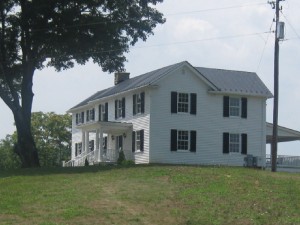 Assuming a sustained housing recovery continues, will the industry leap back into the construction of large homes? Or will the rebound signal a reset of the type and location of the next generation’s housing needs?
Preliminary signals are mixed, but buyers might want to adjust their view of what constitutes the American Dream. And builders need to be prepared to respond to an emerging market if demand for smaller homes on smaller lots, in fact, materializes.
Historically, small houses have been the norm in the Unites States. In 1950, the average home was 983 square feet. But as prosperity accelerated in the latter half of the 20th century, homes grew.
The Census Bureau reports the average U.S. home rose to 2,480 square feet in 2011, up from 2,392 square feet the previous year and seemed to defy the inherent economies of owing a smaller home in a tough economy.
One industry observer, Jack McCabe, CEO of Florida-based McCabe Research and Consulting, told Bloomberg last July that large home sales were rebounding. “It’s about opportunity, it’s about interest rates. And it’s about short memories,” he said.
A similar market reaction occurs when gas prices drop for an extended period; sales of larger vehicles begin to accelerate. Pain, indeed, has no memory.
What housing patterns are emerging in Prince William, Fauquier and Culpeper counties? And, as importantly, should local governments be developing policies that drive the recovering market toward smaller residential dwellings for the overall benefits of their residents?
Industry analysis
Concerned Culpeper Citizens was formed in 2001 to assess county growth planning. CCC publishes its findings and opinions for public information and testifies before public boards and commissions.
Perry Cabot, director of operations for the organization, sees a changing mentality in home buyers. “Today’s fluctuating fuel costs, younger couples opting to live closer to work, boomerang children moving in with parents for extended periods and older parents opting to live with their children, are driving demand for different housing options,” he said.
“In some cases, these forces are changing the demand from larger homes to smaller ones and to condos, townhouses and multi-family construction in our region. Even a shift of 10 percent can affect tens of thousands of units. Distance, location and density are driving this new demand. But I would not yet call the movement a surge.”
His observations mirror the reports of other experts. The real estate research firm Trulia found that in 2010 the median “ideal home size” for Americans had declined to 2,100 square feet. More than a third of its survey respondents said their ideal preference was below 2,000 square feet.
Yet a sustained pattern of building homes of this size is not easily discernible in the Piedmont. Even a modest economic recovery in the years ahead could stall any significant shift to smaller housing.
Keller Williams real estate agent Brian Hagarty (Disclaimer: Brian is my son) agrees that buyers are downsizing, but that price is the No. 1 motivator. Older, smaller homes, even those in need of some renovations, are attracting buyers.
“It’s driven by economics,” he said. “I don’t see the market wanting smaller homes per se, but [buyers] do want to reduce mortgages and taxes. A secondary driver is the desire to shorten commuting time.
“The combined benefits of smaller mortgage payments, taxes and faster commutes are the motivators we are seeing a lot in Prince William County,” he said. “We’re hearing a lot of people say, ‘We don’t want to struggle with our payments.’”
Tom Campbell with Long & Foster in Fauquier County agrees. “People are downsizing for multiple reasons, including first-time buyers who do not want to mortgage their lifestyle for a large home,” Campbell said. “Buyers are foregoing formal living rooms and extra bedrooms when their salaries are better spent on more modest dwellings that offer a better lifestyle.”
It’s not just young home buyers. As the Baby Boom generation — people born between 1946 and 1964 — heads into its later years, there will be an avalanche of older Americans seeking smaller homes and alternatives to conventional assisted-living facilities .
The economic impact from the wave of retirees will put pressure on entitlement programs and health care, to be sure, but housing will also be affected. Consider that the first baby boomers reached retirement age in 2011. There are about 76 million adults in this cohort representing 29 percent of the U.S. population.
The movement
The dialogue on smaller homes began in earnest in 1997 with publication of “The Not So Big House” by Sarah Susanka. The book sold nearly half a million copies and is widely recognized as the essential treatise on home design emphasizing “build-better-not-bigger.” Susanka, an architect, believes today’s homes place far too much emphasis on square footage rather than lifestyle needs.
She wrote on making the kitchen the focal point of a home and creating the illusion of space through the creative use of storage, lighting and furniture arrangement. The objective of such design is to make a smaller living space a comfortable and inviting alternative to large and often under-utilized conventional homes.
Another important book, “Pocket Neighborhoods: Creating Small-Scale Community in a Large-Scale World,” written by Ross Chapin and published in 2011, highlights the move toward smaller homes gathered around common, park-like settings.
Buyers of such homes are often young families, empty-nesters and single homeowners — major population segments inclined to seek homes on a scale that matches their needs.
Such living arrangements foster closer social bonding among residents, their adherents say, enhancing a sense of community.
After decades of suburban sprawl, there is an emerging demographic which is ready to turn elsewhere for its housing needs. With natural resources shrinking, the green movement on the ascent and people feeling increasingly isolated from one another, the smaller-home movement offers a more rewarding, budget-conscious lifestyle enhanced by deeper connections with neighbors.
Jim Carson, president of Carson/Ashley, a land-use consulting and engineering firm located in Warrenton, agrees with the need for a new paradigm in housing. “Natural land-planning standards for the last 50 years have been that we segregate uses,” he said in the January 2013 issue of a local lifestyle magazine. “We live here, we work there, we shop over there, so we’re always in our cars and there’s no community. Mixed-use communities are walkable, live-work type of environments which is what most land planners these days are saying is ideal.”
Builders’ perspective
Just as fine dining blossoms when an experienced chef is in the kitchen, so smaller housing becomes a reality when home builders are incentivized to build them. For builders, finding the profit in smaller structures has been the challenge. “The last two years have been as tough as I’ve seen it in home construction,” said Larry Aylor, a custom home builder in Culpeper.
Aylor’s 39-year career has included construction of very large homes, and he said that while he’s “been labeled as ‘he only does the big ones’, today I’m into remodeling, repairs, and whatever business I can get. I’ll even remodel your garage.”
From his perspective, building smaller homes is clearly profitable. There are many elements to making money in homes with shrunken floor space. One key is getting buyers qualified for a loan by reining in their desire for more living space.
“I do think the market is pushing smaller homes, but it’s all about affordability and price point,” Aylor said. “In Culpeper, the housing market is starting to clear of foreclosures, and it’s getting better every day.”
Retirees are a customer segment Aylor sees as holding great promise. “They are moving down from their 3,500-square-foot-plus homes and looking for little jewels that are one level, on smaller lots and easy to care for,” he said. “But I do not carry an inventory of building lots to always meet that need.”
Finding land is a challenge for small-home builders. Moreover, deed restrictions and covenants in existing subdivisions can prohibit smaller homes because of minimum square foot requirements.
Local governments’ role
Given the mixed demand for smaller housing, local governments play an important role in either fostering or discouraging the trend, particularly in view of the housing industry’s modest interest in building such units.
Kim Johnson, zoning administrator for Fauquier County, underscores builders’ general lack of interest, saying, “We haven’t seen developers coming in wanting to build smaller homes. Typically, it’s the individual property owner who is seeking a special exception, such as an auxiliary dwelling unit up to 800 square feet for an aging parent or in-law.”
 With respect to pocket neighborhoods — homes fronting on a common area without street frontage — Johnson said county zoning does permit such dwellings when clustered on smaller sites in some planned residential districts. But there are still no recognizable pocket neighborhoods in Fauquier County.
Where an applicant wanting to build such a neighborhood runs into problems is with regulations that “require homes to have frontage on a public street,” Johnson said — a costly expense for builders considering such an option, and one that likely makes building a community of smaller homes economically unattractive, perhaps even economically unfeasible.
“We are editing our Transportation Design Manual and asking ourselves do we always need frontage on a public street?” Johnson noted when she was interviewed last year. Amending the current regulation might open the opportunity for builders to build smaller homes and still make sufficient profit to make the project attractive.
In summing up the slow pace of small housing projects in the county, Johnson said that “Part of the reason people move to Fauquier is the idea of owning a nice piece of land with a house. I know the smaller home movement is happening around the country, but I don’t know if it’s come to Fauquier County yet.
“But certain segments of our population would be well served if smaller homes were available,” she mused. “Young people who grew up here and who’d like to stay but can’t afford the bigger homes are a good example of one of those groups.”
Prince William Zoning Administrator Nick Evers said “Generally, I think there is an interest in smaller homes here. People are downsizing. I’m not sure what percentage overall. But homes are getting smaller and developers are looking to put as many homes as they can on a development parcel.”
Perhaps one reason for the interest is population density. While Prince William County is slightly smaller than Culpeper County and only about half as big as Fauquier, its population is nearly nine times that of Culpeper and seven times Fauquier’s population.
The shrinking availability of land close to work centers and arterial highways may be driving greater housing density in Prince William.
Concerning Pocket Neighborhoods, Evers said, “We have cluster development standards. We have what we call ‘pipestem lots’ that allow a builder to place homes off private drives, enabling builders to maximize the number of building sites in a given subdivision.”
However, Ray Utz, the county’s long-range division chief, cautions that any such development as a pocket neighborhood would have to meet zoning requirements. Those requirements often include the deal killer – minimum road frontage. “My perception is everyone needs to get a driveway to their house,” Utz said.
“Generally, there is some sort of vehicular access to the front of a residence. Prince William offers quite a bit of flexibility in allowing private road access to some, or in certain cases, all of the homes in a development. We usually encourage and support a range of housing types.”
From here to where?
In assessing the movement toward smaller housing in the tri-county area, a mixed picture emerges. While demand exists, it does not appear to have reached the critical mass that would drive builders to respond.
Until they can discern a sustained movement away from the traditional-size single-family home and townhouse, they are likely to pursue business as usual.
It can be argued that local government policy could be the strongest catalyst for such change, and that government should take the lead — especially to the benefit of those who are ill-equipped to buy or don’t need or want a traditional-sized home.
Additional benefits include housing that helps preserve open space and the natural beauty of a region, does not place undue demands on taxpayers for infrastructure, and enhances community and overall lifestyle. Increasingly, that includes people who cannot find affordable housing, such as middle-income families, individuals and retirees.
Except for the retired, these are people who often hold jobs in local essential services – trade, manufacturing and government — and are forced into long commutes.
While local government often has little control over many factors that affect housing cost and size, that does not mean it is powerless.
In setting local land-use and development regulations, specifically in the areas of land acquisition, site development and location, local planning commissions and boards of supervisors hold the key to change.
 It’s not the purpose of this review to address in-depth actions local governing bodies might undertake. Nonetheless, there are some ideas on how local leaders could respond to the movement for smaller housing that needs its support and regulatory action.
• Comprehensive Plan. The comprehensive plan sets out the broad outlines of the community’s plans and goals governing land use. While comprehensive plans establish the broad policies and goals which guide the land development process, a community’s zoning and subdivision regulations provide the detailed means for achieving those goals.
• Zoning regulations. Zoning ordinances govern such matters as density — the number of housing units per acre of land — lot sizes, setbacks, frontage requirements, and the placement and mix of residential, commercial, and industrial uses.
Density standards in particular have been identified as having a direct relationship to land values. Land values, in turn, are a central component of housing costs.
According to a study by the U.S. Department of Housing and Urban Development, the cost of raw land can range from 8 to 25 percent of the cost of a new housing unit, depending upon the local market.
Where density standards are unduly restrictive, land prices per housing unit are likely to be high.
Reducing land costs through increased density is generally the largest single factor in achieving smaller and more affordable homes.
• Subdivision Regulations. Subdivision regulations set standards for street widths and construction, sidewalks, parking, drainage and other site-development requirements.
Site planning and development represent major areas of potential cost savings for housing developers. These costs may make up 10 to 20 percent of the cost of a new single-family home.
A number of communities are reviewing the development standards in their subdivision ordinances to determine where they can be modified to enhance housing affordability.
Successful approaches to affordable housing require more efficient utilization of land than has often characterized American home-building practices in the past.
Many towns and cities are employing new approaches to encourage development of smaller housing, either by providing incentives to developers to include such housing in new developments, or by giving developers greater flexibility in design and site development, or a combination of both.
Other approaches seek to make more efficient use of existing housing resources by removing regulatory barriers or by encouraging the adaptive reuse of existing buildings.
Upzoning, or higher use application, is a basic and effective strategy for promoting rational house size and affordability.
It involves the selective rezoning of residential land to allow greater density, as measured by the number of housing units that can be placed on a parcel of land. Higher density can include both multi-family and single-family housing.
Municipalities that allow higher densities may also enact special design requirements to ensure that new higher-density developments are compatible with existing housing in the community.
A single-family home on a half-acre lot uses 12.5 times as much land per household as a garden apartment of 25 units per acre.
At the extreme, a steel-and-concrete high-rise of 80 units per acre holds 400 times as many households per acre as a five-acre lot development of single-family homes.
Many communities have developed programs that offer developers “density bonuses” in exchange for the inclusion of smaller units within a proposed residential project. A density bonus allows a developer to build more units within a project than would otherwise be permitted under normal density limits. Both zoning and subdivision regulations can be modified to allow density bonuses.
Density bonus programs must be designed on the basis of a thorough understanding of the real estate market to determine feasibility and to develop appropriate regulations. If current zoning allows enough density to satisfy current market demand, developers may have no interest in using a density bonus.
Additional strategies include, performance/impact zoning, planned unit development, cluster subdivisions, small-lot subdivisions, infill development, adaptive reuse, mixed-use development, office-housing linkage, impact fee exceptions and a host of other approaches.
Perhaps none other than the 14th-century Italian Renaissance polymath Leonardo da Vinci summed up the ultimate marker of smaller housing: ”Small rooms or dwellings discipline the mind, large ones weaken it.”
It will be interesting to see what size homes Americans will embrace as the economy strengthens over the next few years.
Not so fast
Not everyone is sold on the idea that smaller homes are the wave of the future.
Warrenton Long & Foster Realtor Charles Ebbets, who works closely with builders of larger homes in FauquierCounty, sees little indication the housing industry will scale back the size of units it intends to build as the economy picks up steam.
“There is pent-up demand for housing in the 2,500- to 3,500-square-foot range,” he said. “There is almost no inventory of these existing homes. The demand for housing this year — both old and new — will go crazy, but it will be for the conventional-sized single-family home that we’ve seen in the past.”
To underscore his point, Ebbets lamented his lack of progress in launching a development in Warrenton within walking distance of the Warrenton Aquatic and Recreation Facility (WARF) that would feature seventeen 2,000-square-foot homes for buyers over 55 years old.
His market research demonstrated the demand was strong, but he could not find a single builder who was interested in the project. “One of the reasons the builders cited was the lengthy time it takes to get a site plan approved by the county,” Ebbets said.
But builders and Realtors should do well this year, Ebbets predicts. “This year and next will be a slam dunk,” he said. “The housing industry is going to go crazy; prices will jump 25 percent to 35 percent over today’s prices. No spec houses have been built in the last three years. Demand will be great. The young married couple with an infant six years ago now has two growing children. They will be looking to move further out to a larger home, especially with the attractive interest rates available.”
The larger builders are still focused on the conventional size family home. The $325,000 to $400,000 homes are their bread and butter, Ebbets said. “What I don’t see is much interest in the McMansions with more than 4,500 square feet,” he said.
 Last August, Toll Brothers, the No. 1 luxury home builder in the U.S., reported its highest revenue since the recession, sending its shares to a five-year high. In Prince William County, Toll Brothers Group President for Virginia John Elcano confirmed the market for larger homes in his Dominion Valley project is making a strong comeback.
“We think the American Dream is still the American Dream and buyers want large, luxury homes,” Elcano said. “Now that interest rates are at an all-time low, people can afford a lot more house. Around the Beltway, we are seeing prices growing 5 percent to 11 percent this year, and that creates equity sellers can use to move up.”
He cites Toll Brothers experience with its Villages Collection of homes that are 2,500 square feet. “When we first introduced that collection, they were smaller homes, but we found buyers wanted more space, so we made them larger.”
As a result, Elcano does not think there is a growing market for smaller homes and reinforces the premise that as the economy grows, the memory of hard times will fade.
“Buyers have been sitting on the sidelines waiting for the equity in their homes to rebound,” he said. “In December, we had one of our best months in years selling our estate homes that range in size from 4,000 square feet to 6,000 square feet. When people are starting their families, they want room; a bedroom for every child, and, hopefully, a bathroom for every one of their children. The market for large homes seems to have returned.”
Jim Epstein is chairman of his family’s investment firm based in D.C. and has been involved in a number of diverse ventures, including a project called Blue Ridge Produce that markets locally grown produce from artesinal farms. That venture, still being planned at the time, was featured in Piedmont Business Journal in the Winter 2011 issue.
In 1978, his father purchased 125 acres in northern Culpeper County known as Clevenger’s Corner. Epstein saw an opportunity to develop the property using “new urbanism,” design concepts that came to the fore in the 1980s and which promote mixed-use, pedestrian-friendly communities containing a range of housing and business options. “I made an effort to use those concepts at Clevenger’s Corner,” he said. “My efforts didn’t get very far. There were all kinds of issues. Then and now, people aren’t ready for something new and different.”
Last July, Epstein pulled his application for Clevenger’s Corner, saying he would return to the project in six months. As this was being written in January, the county had not heard from the applicant. It could well be he’s waiting for a stronger housing market to emerge in Culpeper County before proceeding. Epstein successfully developed BelmontBay in Woodbridge, a 325-acre community that will ultimately have 1,600 homes.
The town center is 80 acres of condos and businesses built by Epstein and embodying the principles of new urbanism. Other builders constructed the community’s remaining conventional single-family homes. “People love living there,” he said.
His project reinforces the idea there are successful alternatives to sprawling subdivisions with large homes where the automobile rules. “There is definitely a growing interest in smaller, more compact houses,” Epstein said.
Growing interest…maybe.
In Prince William, long-range planning chief Ray Utz cited “two over two” housing as an example, perhaps, of a contrary signal for the housing market. These are four-story townhouses with two separate entrances. One of the residents would access his or her home by climbing two flights of stairs.
“While we have such homes in the county, some builders who thought it was a good product later found out the market had moved away from the concept,” Utz said. “Those builders came back asking for modifications to allow other types of housing.”
Other alternatives
Last November, The Washington Post wrote about a high-tech cottage dubbed the “Granny Pod” and marketed by a Blacksburg company called MedCottage that could revolutionize the way Americans take care of mom and dad in the later stages of their lives. Several other companies sell similar “auxiliary dwelling units.”
The prefabricated mini-homes are placed on existing home sites by crane; utilities are connected directly to the primary residence. The Pods are designed with a kitchenette, bedroom and bathroom and monitor the inhabitant’s vital signs, filter contaminants from the air and permit communication with the main house.
The average cost of an assisted-living facility is about $45,000 a year, and full nursing-home care costs more than $83,000 annually; prefabricated Pod housing, ranging in size from 288 to 605 square feet and costing up to $125,000, including installation, is an attractive option to a traditional elder-care facility.
Three years ago, Virginia passed legislation requiring all localities to allow auxiliary dwelling units for relatives requiring temporary assistance. However, the units cannot remain in place after that family no longer needs the dwelling.
And that, some observers believe, kills any chance that such structures will make many inroads. It is, they say, simply too expensive to bring in the small structures, then take them out. If they could stay in for other family members, perhaps….
At the extreme end of small housing concepts is the tiny house. One firm marketing such building plans is the Tumbleweed Tiny House Company based in Santa Rosa, CA. It exemplifies the smallest of small homes that are available.
The firm sells design plans for homes ranging in size from 50 square feet – -that’s not a typo — up to 847 square feet. It does not offer turnkey finished dwellings, but rather a host of plans a construction firm or individual would use to build a house, typically for $20,000 to $50,000.
The smallest of the houses are crafted to look like traditional homes but Lilliputian in size and built on a trailer bed similar to a mobile home. They range in size up to 150 square feet. The plans are sold under its “House To Go” category.
The next level of homes is dubbed “Cottages” and offers floor plans up to 847 square feet. They are not mobile and a typical reaction on seeing such a home is, “How cute!” The exterior designs mimic classic home styles, including front porches.
Jay Shafer founded Tumbleweed in 2000 and has sold more than 1,500 sets of plans so don’t look for subdivisions of his tiny homes sprouting up anytime soon.
While these are radical living options for singles and adventuresome couples, such micro-housing offers relatively low-cost home ownership in lieu of renting.
A group of tiny home advocates calling themselves Boneyard Studios erected three tiny homes in an empty lot off an alley in Washington, D.C. late last year to demonstrate an urban affordable housing alternative.
“Although the diminutive homes are made of high-quality materials, they are priced for a flagging economy,” The Washington Post reported. “They sell for…less than the down payment on a two-bedroom condo in a trendy D.C. neighborhood.”
As with more traditional smaller homes, local government has a role to play if these housing options are going to get a foothold in the Piedmont.
Divide and conquer
Piedmont Business Journal interviewed Crissy and Daniel Southard of J&D Handyman Services for another article in this issue. More than handy, both Southards have Class A building licenses and do, indeed, build some homes from the ground up.
During our interview, the Southards noted, in passing, that McMansions are still popular in the Piedmont, though oftentimes for reasons that have changed substantially since their original construction.
“McMansions are holding their own because parents are now living with the kids,” Crissy Southard said. “Five, six bedrooms is not uncommon – people need them because so many more of these homes are housing multiple generations.”
Many of those families, likely, would consider making changes to the structures themselves to make living together more comfortable. Many, likely, would like to divide their McMansion, to duplex or even triplex the building. If so, they better be prepared to hoe a long, tough row.
In Fauquier, that would “typically require a special exception and the home needs to be on a larger site,” Zoning Administrator Kim Johnson said. The general consensus is that builders don’t want to get involved in such projects because at least some of them perceive it’s a lengthy process to get special exceptions approved in the county.
“Over the last five years, we have had two or three controversial applications that took a very long time,” Johnson said. “But, on average, they don’t take long at all. The majority of applications hit the mark within the 90-day process. It may be the perception that the process in lengthy, but the record doesn’t reflect it.”
In Prince William, Ray Utz, the county’s long-range division chief, also views duplexing as problematic.
“We don’t allow more than one dwelling unit per lot,” he said. “To turn a single-family home into a duplex, you would need to subdivide the property. You would have to be in a situation that allowed land subdividing and that would be unlikely. It would also involve creating multiple drain fields and other issues,” he said.
Another alternative which doesn’t seem to be moving forward in the PBJ readership counties has to do with allowing the construction of “backyard cottages” in already existing neighborhoods. “In many cities, growing populations are putting a stress on existing housing options,” apartment therapy.com noted in an article two years ago.
“Instead of building new condos and apartments, one creative solution is to increase the density of existing single-family neighborhoods by allowing ‘backyard cottages.’ These small dwelling units can be rented out for supplemental income or serve as a living space for extended family. (Some homeowners are even deciding to downsize to the cottage and rent out the primary home).
“Cities like Seattle have recently changed their zoning code to allow these detached accessory dwelling units (nicknamed “DADU’s”) and local architects and homeowners have been eager to explore the possibilities.
“In addition to the their small size and urban settings,” the article pointed out, “many of these examples also boast sustainable features like rainwater catchment, super insulation and the use of simple and durable materials.”
It is interesting to note that some of the most fashionable streets in Warrenton and Culpeper feature large, older homes, many of which have “backyard cottages” that do nothing if not increase the appeal of the property.
“We really have extremely liberal accessory dwelling unit [regulations],” Fauquier Zoning Administrator Kim Johnson told Piedmont Business Journal last year, though liberal is in the eyes of the beholder.
“Almost anybody can put a second house, for family members, or even an apartment, a small apartment up to 600 square feet, or even a larger apartment in some cases, on their property,” she said, “if they have the room for it and they can meet setbacks and can get the sewer and water and all those issues resolved.”
There are opportunities, she noted. There are also a lot of restrictions.
Build an efficiency apartment in your home, for instance, and “you can have only two people living in it, and it can only be so big, and, in the case of an efficiency apartment that’s open to anybody, not just family, it has to be incorporated above a garage or other existing building, or it could be in a basement or be part of the house,” Johnson said.A free-standing backyard cottage must be occupied by a family member.
And if that family member should die or move away? “The planning commission is looking at that,” Johnson said.

As winter draws to a close its farewell to a loving friend
Gazing into her magical depths transfixes me. Night after cold and dreary night she comforts me. Her warmth and charm infuse our living room with a presence. She never speaks accept to murmur assurances that peace prevails. And now, she begins to fade as the days grow longer and the sun gains strength.
Until we meet again next fall, I will soon bid farewell to my beloved wood burning fireplace.
Fire. Perhaps only the sound of a gurgling creek holds such hypnotic power over man. The fossil record dates fire to 470 million years ago; well before man appeared on the planet. Archaeological evidence points to man’s mastery over fire some 400,000 years ago. Capturing and controlling fire enabled man to assume his position as the dominate force among all living things.
 Through the centuries fire embedded itself in our psyche. Our Stone Age ancestors’ greatest fear was the loss of its fire source. Earliest man captured a flickering flame thrown down by a bolt of lighting. Cradling and lovingly protecting this miracle from the heavens was central to his survival. The warmth and protection afforded by the flame is seemingly hard wired into our DNA.
But today, man’s proximity to fire is far removed. Fossil fuels provide most of the energy needed to drive the modern world. Direct connection to fire is remote for most of us; more often associated with pollution and burning buildings than comfort.
And yet the lure remains. As I sit in my living room and watch my newly lit wood fire gain strength, it generates a feeling of security and peace. I have often reflected that fire is a real presence, as if an old friend were joining our company and comforting us with her warmth and ever changing landscape of hot coals and burning logs. I cast back 400,000 years and understand the powerful link between the dependence on light and heat to man’s existence in a harsh world.
When we first purchased our home twelve years ago, we had a faux gas burning fireplace installed. It bore a close resemblance to the real thing but was a cold and indifferent companion. Hour after hour it burned with the boring sameness of a rotating drum-like photograph. All glitz but no character. Monotonous.
 Fortunately, six years ago we discovered an out of work master bricklayer who offered to build the real deal at an attractive price. It was designed to accept a wood burning insert stove with a variable speed blower fan, maximizing the heat produced to reduce our propane furnace fuel costs.
Securing a local wood cutter to keep us supplied with split wood was later augmented by white oak slab wood delivered from a nearby mill. It made the entire unit a cost saving proposition; not dramatic, but nonetheless cheaper that our previous heating costs.
So it is with mixed feelings I embrace the coming spring. The winter has been long and dreary and the brown-drab forests and fields a one dimensional landscape. Spring with its lush greens, yellows and purples will soon be upon us.
But my old flame will steal away with the coming warmth and vivid colors.
Till next fall, adieu.