
Author Archive
On November 30, the pastor of First Baptist Church of Warrenton will step down from the pulpit and for the first time take a seat in the pews. His life has been one dedicated to the Word of God. The Reverend Matthew Zimmerman will move from in front of his congregation to a seat among the faithful whom he has guided for the past 21 years.
But the short journey reflects a lifetime spanning the globe and acting as the embodiment of the Golden Rule. It also closes the circle on a life of service that began in a small town in South Carolina almost 78 years ago.
“My father was the principal of my school and the pastor of our church,” the pastor recalls, smiling. “My mother was my first-grade teacher. When I stepped out of line, I was corrected three times because my grandfather was also a pastor.” While his intention as a young college student was to pursue a medical degree, his DNA directed him to the clergy. When he sets aside his pulpit robe this month, it will be his third retirement.
His first position culminated in achieving the rank of major general in the U.S. Army as chief of chaplains. That position led to his second career as chief of chaplains with the U.S. Department of Veterans Affairs for four years. The Chiefs of Chaplains of the United States are the senior service chaplains who lead and represent the Chaplains Corps of the United States Army, Navy, and Air Force. In this capacity, he oversaw and directed the activities of all the clergy serving in the U.S. Army, regardless of denomination.
As his term of office ended at the Department of Veterans Affairs, the secretary of the department persuaded him to accept the pastorship at First Baptist Warrenton…because if you want something done, ask a busy man.
Among the notable people he became friends with over the course of his first two careers were men of achievement such as the Reverend Billy Graham, General Colin Powell, Walter Cronkite, and many more.
But his self-effacing and modest demeanor belies the world of important men and women in which he traveled. It’s also why so many are drawn to his personality and leadership, making him the embodiment of an earthly spokesman for Christ.
One of the most gratifying aspects of his current position has been reliving as an adult the life he had as a young lad in a small southern town church. “When my father was the pastor of our church in South Carolina, you got to know all of the members on a personal basis,” says Reverend Zimmerman. “It’s the same today at First Baptist Warrenton.”
The church has 150 members, making it large enough to be a job and small enough to be a personal, heartfelt endeavor. In his previous two careers, reassignments and travel dictated meeting new faces and issues every few years. Today, the stability among his flock is a valued part of his work.
Reverend Zimmerman has no plans during his retirement other than enjoying the fruits of his labors and relationships. He and his wife Barbara are looking forward to leading a well-deserved quiet life of relaxation and reading. The days of endless responsibilities are over.
One thing that will not change is his attendance at First Baptist of Warrenton services. And he quickly adds, “We welcome everyone and ask that you join us for youth and adult Bible study and other church activities.” Once a pastor, always a pastor.
Published in the November 2019 edition of Discover Fauquier.
Virginia and West Coast grapes star in quality portfolio
Seth Chambers is a winemaker on the move. Wherever he can source grapes that shine, he moves on them. Virginia, California, Washington State and Oregon are four of his favorite venues.
But he quickly underscores he does not blend out-of-state and Old Dominion wine. Each offering stands on its own merits.
“Our goal at LaGrange is producing fine wine and pleasing customers,” says Chambers. “When guests taste our wines, I don’t think they think West Coast is better than Virginia. I am super proud of my Virginia Rosé, Petit Verdot and other wines.”
His wines are labeled Virginia or American so there is no sleight of hand about what’s in the bottle. What Chambers believes is there are certain terroirs—or the somewhereness of where the fruit is grown—that can produce different palate experiences.
To fully grasp the concept of terroir here’s a wee test: Where’s the best expression of a Georgia peach grown? Yep, Georgia.
In Virginia you rarely see grapes such as Gewürztraminer, Petit Sirah, Barbera, Nebbiolo, Zinfandel and more. They make excellent wines but the Old Dominion’s climate is often too cold, hot, or humid to bring out the best in those varietals.
But in the hands of a capable winemaker, it doesn’t matter where the wine is made. Once the fruit is in the cellar a qualified maestro can create a symphony of aromas and flavors from a variety of grapes.
“I want to be different and work with what Virginia produces best while also bringing out the best in West Coast fruit. It’s not an overlapping of styles. It’s what our guests are looking for.
“I try to be honest and upfront as winemaker. You can buy good wine at a lot of places today. At LaGrange it’s about producing a variety of quality wine while offering hospitality and a unique experience in the tasting room.
“An example was one of our Cabernet Sauvignon selections. The same wine was aged in French oak and American oak. We poured them as a pair and went back and forth contrasting the difference and similarities between the two oak styles,” says Chambers.
While the tasting room serves wines reflecting both east and west provenance, many of the more unique bottlings are destined for its wine club Black Label program. The club has been revamped this year and is gaining in popularity. Members receive special selections quarterly and can pick them up at the winery or have them shipped directly to their home wine cellar.
Bona vides
So where does the talent and skill originate to produce a panoply of wine styles? As with most success, it springs from a focused education coupled with passion. Chambers, 36, has both in ample supply.
Early in his formative years, he switched his college major from astrophysics to organic chemistry because he wanted to become a winemaker. He served a summer internship in 2006 at LaGrange, the year it opened.
“I left that summer with a determination that I had found my calling. I finished up at Penn State with a degree in organic chemistry and a minor in plant biology and got my first job as a winemaker in Virginia.”
The following spring, he obtained his Enology certification and in 2014 returned to LaGrange to lead its wine program. His education reflects a growing number of Virginia winemakers who hold wine and vineyard degrees as opposed to the early days when hobbyists largely morphed into winemakers.
The venue
With the dedication to producing a wide range of wines what might add to the experience? If the answer eludes, it’s likely you haven’t walked the hallowed grounds of LaGrange or toured its historic home.
Built in 1790, the manor house sits on a small rise in the shadow of Bull Run Mountain. The almost six-acre property was originally part of Robert “King” Carter’s Bull Run Tract in the 1600s known as LaGrange.
The property’s size ebbed and flowed over the centuries but fortuitously the three-story red brick manor house survived the vagaries of time. In December 2005, a small group of investors purchased the historic farm and dilapidated home and made necessary repairs to both. It opened it as a winery in September 2006.
Today the estate is a historical gift to wine lovers. To tour the home or relax on the park-like grounds while gazing at rolling vineyards and mountain scenes, is an invitation to step back in time and enjoy the liquid fruits of the vineyard and cellar.
“I live in nearby Gainesville,” says Chambers,” It’s always five to six degrees cooler out here. It’s a beautiful setting.”
The winery, located at 4970 Antioch Road, Haymarket, is opened seven days a week from noon to 9 p.m. enticing guests to sip and nibble from their own picnic baskets both during the day or after a day’s slog in the job harness.
For a full digital tour of The Winery at LaGrange, its history, wines, events, and more visit www.wineryatlagrange.com/
Birdwatching is focused relaxation on wing
As seniors move into their golden years advice they’re likely to hear is, “Stay involved.” Good counsel since movement and social interaction are the twin fountains of youth. But high energy activities may begin to lose their appeal when the color gray starts to play a role in in their lives.
Most of us want to stay active as we age but jogging, weights and jazzercise may be a bit less enjoyable after passing the half-century mark. What to do? Consider a casual walk through field or forest or even a loop around the backyard dedicated to gazing skyward.
Think birdwatching.
Birdwatching, or more commonly referred to as birding, is one of the fastest-growing hobbies in North America. Some 50 million Americans, young, middle age and seniors draw joy from observing the sights and sounds of feathered beauties as they dart, swoop and perch on trees and landscaping.
It’s an endeavor particularly well suited to sages. It can be a solo activity or enhanced through group bird walks often led by knowledgeable birders eager to share their experience with neophytes.
Moreover, with window bird feeders and a comfortable chair or recliner positioned to take advantage of the activity, it can enhance the lives of the homebound. The joys of gazing at fluttering birds are obvious but it also has a calming, almost meditative, effect that can help individuals connect with nature in richer more meaningful ways.
Today, with the advent of smartphones and digital cameras, notepads and pencils have largely been set aside. Field guides are as near as a few good apps and flipping through a hard copy guide is often replaced with a click and swipe.
But some seniors may not be comfortable with the technology, so tried and true birding guides are still employed. It’s not an either-or proposition. Comfort levels and enjoyment dictate how the activity is embraced.
Daniel Lebbin
The non-profit American Bird Conservancy is located in The Plains and dedicated to saving birds and their habitat across the Western Hemisphere. Its work seeks to eliminate extinctions, protect habitat and expand the capacity for birds to grow and thrive.
In other words, the organization is a birder’s best friend. Daniel Lebbin is vice president of threatened species at ABC and an avid birder.
Lebbin, 42, holds a degree in Biology and Environmental Science and Policy from Duke University and a Ph.D. in Ecology and Evolutionary Biology from Cornell University. He has worked for the World Wildlife Fund, The Nature Conservancy, and the National Zoo, and participated in field research projects in Jamaica, Costa Rica, Ecuador, and Venezuela.
A lifelong birder, Lebbin enjoys bird illustration and photography. He co-authored “The American Bird Conservancy Guide to Bird Conservation”.
“Some of my earliest memories are watching birds at my grandparent’s feeder. I became interested in birds at the age of 12. At 16 I got my driver’s license and was more independent and things really took off,” said Lebbin.
He says, “eBird is the most useful tool for people getting into birdwatching.” The goal of the website is to gather information in the form of checklists of birds, archive it, and freely share it to advance conservation and education.
It has numerous tools to make birding more rewarding. From being able to manage lists, photos and audio recordings, to seeing real-time maps of species distribution. eBird is the world’s largest biodiversity-related citizen science project, with more than 100 million bird sightings contributed each year by members around the world.
Getting started
For as richly rewarding a pastime as birdwatching can be the cost of entry is relatively low. A pair of good binoculars is the first item to consider. Prices can range from $100 to $300.
Two popular models are the Nikon Monarch and Leupold Yosemite. Its recommended 8-power magnification be used since it provides a good field of vision without the shaky effect of larger powered glasses.
If you are serious about quality, consider a visit to One Good Tern, a birding supply store in Alexandria. “They have some of the best salespeople in the industry. If you want hands-on help, they are very good,” says Lebbin.
Next, consider downloading the app eBird or purchasing a field guide. Two solid publications are National Geographic’s “Field Guide to the Birds of North America” and Peterson’s “Birds of Eastern North America”.
If you don’t already have one or more already installed, place some bird feeders on your window sill or in your backyard. Leaning into the hobby is a lot easier if you can glance out your window and start identifying nearby warblers.
Your smartphone will serve as your camera and also permit you to post photos of your “scores” on eBird if you are so inclined. With some 400 different species of birds in the Old Dominion, you’ll have no trouble staying entertained.
Finally, the joy of birding is multiplied by engaging with other birders.
There are several organizations to consider joining by searching your keyboard. One particularly useful site is the Northern Virginia Bird Club. It offers field trips, a newsletter and an extensive list of other birding organizations for your enlightenment. Visit http://nvabc.org/
“Birding can be as little or as much as you want it to be. You can make it a second career, or in my case, a first career,” said Lebbin. “The more people who understand and care about nature, the more they help us achieve our goals at American Bird Conservancy.”
Published in the October 16, 2019 edition of the Fauquier Times.
Warrenton’s Little Italy is where appetites fall in love
Pressed for time and money for a getaway to northern Italy? Forget booking flights and making hotel reservations, simply drop by Café Torino and let Andrea and Amber Ferrero transport you to Italiana via the plate.
The cozy restaurant, located in the Waterloo Station Shopping Center, has a proven track record of gustatory performance. If you’re not speaking Italian by the end of your repast, you wish you could. For 18 years the eatery has been satisfying a legion of fans who finish their meals with a sigh of “delizioso”.
To put its longevity in perspective, most restaurants close their doors after the first year of operation. Within five years 70 percent will have faded from memory. In the industry, an 18-year run seemingly approaches the longevity of the Roman Empire.
What sustains such a track record? Authenticity. “I try to keep the food authentic Italian. We focus on keeping the flavors like my grandmother used to make. She is the one who first taught me how to cook,” says Andrea Ferrero.
Struck with a passion for cooking as a young lad living in Torino, Ferrero went on to graduate from culinary school at age 18. He then did a tour of duty in the military and at 24 was offered a job at the former Warrenton restaurant Fantastico’s to design, open and run a bakery.
“I was crazy enough to accept the offer, got on a plane and came to America,” recalls Ferrero. A fortunate decision for the rest of us.
He met his wife while working at Fantastico’s. The couple have been married for 27 years and have two adult children. After the restaurant closed, Ferrero worked as a corporate chef in D.C. for two organizations but found himself unemployed after his last place of employment closed.
After receiving a severance check, he recalls his wife saying, “We have a three-year-old and five-year-old and you cannot be out of job. We are going to open our own place.” Behind every great man is a wife and mother who wants stability.
Amber Ferrero located the building where the café is located and created its name. “All I had to do was meet with the real estate agent and sign the contract,” says Andrea Ferrero. Together with her father the threesome completed the interior of the building and opened in 2001.
Today he calls his wife the owner of the café. But wait. Aren’t they co-owners? Of course. But Amber Ferrero “owns” the restaurant as in she is the “hero behind the picture” and soul of the establishment.
This perspective reveals the level of love and respect they have for each other. “Not many couples can work together”, but their success is reflected in the quality food and service coming out of the kitchen.
The menu
In the early days, they had a cook in the kitchen. But when he left, Ferrero put on the dining apron and switched roles as the bakery chef with his wife. She took over with no formal training and today produces all of the cafe’s baked goods except for the focaccia bread which is made early in the morning before she arrives.
“Amber picked up what I taught her and came up with some new ideas. That’s why the pastries look and taste way better now than when I was making them.” If the man were ever to consider another career, marriage counselor might be a good choice.
During the recession the focaccia bread and chicken salad, “…were what kept us in business.” But the menu has considerably more depth than those two popular items.
A quick glance at a recent menu reveals dishes rich in imagination and flavors: crab filled calamari, eggplant Sciliana, Paglia e fieno with scallops and lobster, chicken torino, veal ossobuco, tuna steak with saffron cream sauce and more. Perusing the menu requires some thought before placing an order.
A few years ago, a rumor circulated that the café was going to close. “We have no intention of closing whatsoever. We are not going to abandon Warrenton.” Good news for loyal fans such as Dan Kutruff who owns The Grapevine wine shop next door.
“I’ll pop over for a sandwich because the restaurant is the real deal. The baked goods are unbelievable. I always tell my customers to go over and try Andrea’s focaccia bread. It’s phenomenal. I tried to duplicate it myself but couldn’t.” High compliments coming from a wine connoisseur who knows a thing or two about food and drink.
Giving back to the community is high on the Ferreros’ priorities. Recently they contributed over $1,000 worth of food to the kick off this year’s “Shop with a Cop” program sponsored by area law enforcement agencies. The program connects children 5 to 12 years old from less fortunate circumstances with law enforcement officers for a two-hour shopping spree.
“Warrenton has given us a lot and we want to give back,” he says.
Café Torino is located at 388 Waterloo Street. For a full description of its diverse lunch and dinner menus, cakes, catering service and hours of operation visit cafetorinoandbakery.com.
Published in the October 16, 2019 edition of the Fauquier Times.
Manassas shop essential for homebrewers
In 1980 there were 80 craft breweries in the United States. Today, over 7,500 dot our sudsy landscape. Even small towns and villages often sport a wee brewhouse where locals gather to quaff artisan beer.
There’s never been a better time to hoist flavorful brews that are the polar opposite of the watery libations that have dominated our domestic beer world for decades.
What triggered the shift from quantity to quality?
Homebrewers.
In 1979, a Federal law was enacted permitting brewing at home. States vary on exactly how much is allowed; in Virginia, it’s 200 gallons annually for a two-adult household. That’s over 2,000 bottles.
But please, don’t go there unless you’re sharing.
With such dramatic growth many nascent brewers began to realize, “Hey, my stuff tastes pretty good. Maybe I should go commercial”, which they did in droves resulting in today’s commercial craft beer explosion.
It’s a classic example of free enterprise coupled with an entrepreneurial spirit being unleashed by market opportunity.
 There are now 1.2 million homebrewers scattered across all 50 states with new adherents joining the hop army daily.
For almost two decades Jay’s Brewing, located in the Triangle Shopping Center at 9790 Center St. has been producing the fuel that has helped homebrewing become so popular: barley, hops, yeast and more.
Jay’s is one of over 800 such supply shops nationwide. It’s an industry craft beer lover’s
should be thankful for. The role these stores have played since the early 1980s has helped catapult the U.S. to the forefront of artisanal beer worldwide.
In the beginning
Jay’s brewing is co-owned by Thomas and Jill Boman. The Manassas couple is the third proprietors of the business that opened in 2002. As with many small businesses passion led to ownership.
“As a homebrewer, I frequented the shop and got to know the previous owner well. He was ready to move on as entrepreneurs often are and we worked a deal to take over the shop.
“I work full-time in the cybersecurity field so the decision to purchase the business was made equally between Jill and I. Since I work full-time it’s Jill who is largely the face of the business. It’s a lot of work and she does a great job,” says Boman.
The “lot of work” began even before they started filling customer orders. The previous owner’s inventory ran on the basic side with numerous items collateral to the hobby not well represented.
Today the shop has hundreds of homebrewing and home winemaking products. The soul of the shop is its extensive selection of barley and yeasts which are the foundation of most beers.
The “suds” couple live in Manassas and are the parents of three young children providing a challenge to running the small business. Jill Bowman, like her husband, is knowledgeable and ever ready with suggestions and advice.
As a homebrewer delves deeper into the hobby, he or she is drawn to tinkering with recipes. At Jay’s, there are over 350 recipes to choose from and with additional input from the owners, thousands of variations are possible.
One group the store takes pride in supporting is Downright Obsessed Homebrewers. Created in 2006 the club has over 50 members and is one of the most popular brewing clubs in the area.
It also has members who are professional brewers. To join the club is find to yourself surrounded by beer talent ready to offer camaraderie and advice on improving one’s brewskis. Visit http://www.dohnova.com/ to learn more about this free “graduate school” of brewing.
The draw of homebrewing is the creativity and satisfaction in making a delicious beer that can rival store-bought products. “Wow! You made this beer?”, is an often-heard expression when a homebrewer hands a buddy one of his latest creations.
Newbies often start with simple kits that require minimal brewing knowledge. If you can bake brownies out of a box, you can create a flavorful beer. Especially under the guidance of the Boman’s.
In addition to the ingredients needed for brewing at home, the shop has an extensive equipment inventory that includes kettles, burners, fermenters, kegs, tubing, bottles, and more. If it’s related to homebrewing, it’s in the shop.
The latest addition to the business is its newly minted ABC license that permits the sale of commercial craft beer. Can’t wait to drink that clone of your favorite IPA you’re about to make? Simply grab a six-pack of it along with the necessary ingredients and sip your role model while creating the real deal at home.
Jay’s Brewing is open six days a week and closed on Sundays. Visit their digital store at https://www.jaysbrewing.com/ to learn more about the enjoyable world of homebrewing and home winemaking.
Published in the September 12, 2019 edition of the Fauquier Times.
Popular Sperryville restaurant offers Wednesday dining
It’s a problem every restaurant seeks: guests requesting more dining hours. What drives such demand? For The Three Blacksmiths it was due in part to the Washington Post’s 2019 Spring Dining Guide that rated the restaurant number four out of its top 30 newcomers in the DC Metro area. One of many acclaimed reviews.
An impressive achievement for an establishment opened just over a year ago.
Tom Sietsema, the Post’s nationally known food critic and author of the guide, made this observation: “The lone complaint I’ve ever heard about this Sperryville sensation concerns the challenge of securing a table.”
Always nice to be called a sensation. And it’s now nice to learn owners John and Diane MacPherson have addressed what appears to be the only problem with their business. On October 2 they began accepting reservations for Wednesday service to be offered starting on October 23.
Sietsema, who is not known for an easy compliment goes on to say, “… wannabe diners can book out as far as 203 days (29 weeks). Worth the trip? Definitely—worth any hassle, too.”
The downside of that reservation policy is Diane’s observation, “As of September 18, we are booked through April 4, 2019.” Hopefully the additional dining day will ease some of the angst among their current and future fans.
To better understand how such a problem could exist consider the restaurant is currently opened only on Thursdays, Fridays and Saturdays for a single seating of 20 guests. The experience is more akin to attending a private three-hour dinner party than public dining.
Background
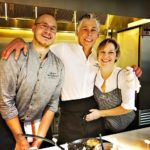 So how did a relatively unknown couple catapult to the top of the Nation’s Capital dining scene? It started in New England where both originally hailed; John, 54, came from the Boston area and Diane, 51, south of Hartford.
Their careers took them independently to California and a serendipitous first meeting at a wine event led to couplehood. “We literally met in a vineyard,” remembers Diane fondly. The couple has a son Finn, 13.
After more than two decades their West Coast careers grew stale leaving them “cogs in a wheel”. John believed they should make a living doing something they loved and suggested running a B&B. Diane quickly agreed. It was something she had always wanted to pursue.
Their search for the perfect inn led them to Virginia and specifically Rappahannock County. In 2004 they purchased the Foster Harris House in Little Washington, gaining experience in hospitality while garnering a legion of fans. After 13 years of honing their culinary and hosting skills the decision was made to shift full-time to the restaurant business. The eatery opened in June 2018.
Almost anyone who owns a successful restaurant will opine it’s not all accolades and smiles. But The Three Blacksmiths might be the exception. Given the intimate setting and multi-course dinners served with casual ambiance and style, the experience is like spending an evening with family and friends.
“Almost every night someone out of the blue will say, ‘We’re having such a good time!’ That’s not something you hear all the time. But when someone is so in the moment that they recognize it and express it, it’s very gratifying,” says Diane.
John is the chef and Diane manages the dining room. A team of four rounds out the staff that John refers to, “As this little family of employees that’s hard to call employees. They are such an important part of the whole thing. It makes the work a really wonderful experience.”
While John did not start cooking professionally until the B&B opened, his training dates to his youth. “I grew up in a family that was ridiculously passionate about food and wine.” The family traveled widely in pursuit of their passion. All of his family are excellent cooks.
During his West Coast career John was a competitive cyclist. “The great thing about racing a bike is you get to eat a lot.” His culinary and racing skills led to the creation of the popular Tour d’Epicure, a cycling and fine dining adventure formerly offered by their B&B.
Always at the ready
So is everything perfect every night? Mostly yes, but situations do arise that call for immediate action. The MacPhersons recall one incident in particular. A group of six diners were standing around their table enjoying a convivial conservation before dinner. With the rest of the diners seated the owner’s asked if they’d like to take their seats.
As they moved toward their chairs, water began pouring from an overhead chandelier onto their table. It was a pleasant evening so it wasn’t a leaking roof. Quickly the table was moved, cleared and reset while John raced upstairs to investigate.
To his surprise an air conditioning unit had overflowed its holding tank and was streaming water into the room below. The unit was quickly drained and the unexpected “rain shower” ended
.
“Today those guests are regulars but their evening could have been ruined it the leak if happened during dinner, Diane remembers.
Pricing & Reservations
Payment for dinners is unique. The multi-course tasting menu costs $128 per person plus a $70 alcohol charge; gratuity and tax not included. Both reservations and payment are made online.
A $50 deposit per person is levied when reservations are made. On the morning of the dinner the remaining bill is charged to the guest’s credit card. “When guests arrive, they sit down, enjoy their meal and leave when they’re finished. There’s no business transactions after the dinner,” said John.
To make reservations visit www.threeblacksmiths.com/. If you can’t secure your first-choice date, be patient and try again. Your efforts will be rewarded with a unique an intimate dining experience.
Published in the September 25, 2019 edition of the Fauquier Times.
Belief or disbelief in climate change engages the electorate today as perhaps no other issue. The science, or as some believe, the lack of it, can create “heated” discussions among the gentlest of souls. So how do you defang passion and discuss fact?
“When I talk climate change, right up front I let people know I don’t care whether people are responsible for it or not,” says Kevin O’Neill, director of the Fauquier Climate Change Group, noting that it takes away much of the intensity and makes it easier to discuss the reality.
“I’m a pragmatist,” he adds. “I look around and see 99.9% of over 20,000 scientific studies conclude the climate is changing.” He quickly underscores global warming can occur as either hotter or colder temperatures.
It could be a long-term climatic cycle unfolding or human activity driving the change. The causes can be left for future science to determine, but action to address the changes lies in the hands of an informed public. “We all need to sit down and come up with a viable game plan,” Kevin notes. “If we don’t, we’re sticking our heads in the sand and hoping everything works out. There is no Planet B.”
Noting the preponderance of the world’s population resides on or near oceans and that ocean levels are rising is a sobering reality. Kevin explains that we have tens of trillions of dollars of infrastructure on the world’s coastlines, and this infrastructure and human lives are at risk since there are already climate change refugees in certain regions of the world.
So, who is Kevin O’Neill and why does he care so much? After enjoying several successful careers, including 20 years as special agent for the State Department, he joined the Fauquier Climate Change Group four years ago and serves as its director. “This country has been very good to me and I want to make sure my children have the opportunities I have had. I want to give back,” he says.
The organization was founded in 2013 by county resident Judy Lamana. It is comprised of local citizens—spanning the political spectrum from conservative to liberal—who are passionate about finding ways to ameliorate damage caused to the planet by worldwide temperature changes. Group activities include working with members of Congress and raising the profile of climate change in the community, including churches and schools.
“We’ve talked with the Fauquier County Board of Supervisors and the Town of Warrenton, urging them to switch to LED lights,” Kevin explains. “That one change alone would reduce the carbon impact dramatically, including a decrease in people’s electricity bills.”
He also describes how teaching youth the value of LED lights sets the stage for generational acceptance for such cost-effective lighting. The group takes their “energy cycle” to schools and for kids to ride. When they cycle as hard as they can, it lights up the incandescent bulb panel. When they maintain an easy, steady pace, the fluorescent lights flicker on. Yet by contrast, with almost no pedal pressure at all, the LED panel shines brightly.
As dire as today’s climate prognostications are, Kevin speaks positively about the rate of change. Underscoring that it takes an average of 50 years to introduce a new technology, he thinks we are 30 to 35 years into a transformational conversion to solar and wind energy, noting that the price of a solar cell today is about a dollar.
Fauquier Climate Change Group’s message is clear; being part of the problem offers the opportunity to be part of the solution. The group meets on the third Wednesday of each month (the next meeting is on October 16) from 7:00–8:00 p.m. at the Bistro on Hospital Hill, and there is no cost to join nor any membership fees.
Published in the September 2019 edition of Discover Fauquier.
From young lad to master cidermaker
One of the recent entrants into the surging cider and mead boom opened its doors in Amissville in the fall of 2017 and began welcoming guests to the local world of fermented apple juice and honey.
It was not its first foray in producing what some might claim is the highest and best use of the red orbs and golden liquid. “I made my first batch of cider when I was 17. I pressed it with a cider press I made myself,” said Dennis Kelly, a partner along with his wife Mary Graham and fellow cidermaker and neighbor, Dave Shiff.
“I made it in Old Hollow in Sperryville where my parents had a share in the Apple Hill Farm. We’d spend weekends there and I fell in love with Rappahannock. I would have been amazed back then to know I would end up living out here. It seemed like a far-fetched dream but here we are.”
Kelly, 60, went on to a career in government contracting in Northern Virginia and still wields a keyboard full-time to augment his passion for fermentation. But his love of the countryside and producing social lubricants is where his heart has been since moving to the county in 2006.
His good fortune continued when he learned his neighbor Shiff was also a cidermaker. Shiff proposed joining forces and going commercial and today their cidery is located on Shiff’s 22-acre farm next to Kelly’s property at 379 Hinson Ford Road.
Over the years mead entered Kelly’s hobby portfolio but the breakthrough came at his daughter’s wedding in 2015. “We served champagne, wine, and craft beer but the mead kind of blew everything away. We knew then we were on to something,” said Kelly.
Going local
 Realizing the bountiful riches available locally, Hinson Ford focuses on locally grown fruit and honey to make their offerings. The first year they obtained apples from Lee’s Orchard and pressed the fruit by hand. “It was exhausting.”
Subsequently, they contracted with Thornton River Orchards. The orchardist Allan Clark and his daughter Megan select apples best suited for cider and press the fruit on their equipment. At harvest time pure apple juice is used to make cider saving considerable time and labor.
Clark had been considering producing hard cider himself but elected to supply the juice and let Kelly make the product. “Allan is very plugged into what apples make good cider and we’ve had great success with the fruit he’s procured for us.”
Windsong Apiary in Castleton is the source for their quality honey. As with any libation, the ingredients used in its production dictate the flavor and taste of the final product. Owner Bob Wellemeyer is a long-time apiarist and professional pollinator.
In addition to his own locally produced honey, each spring he travels to Fla. with his hives to help pollinate orange groves. Since pollination is the only thing the growers are interested in, he keeps the orange blossom honey for sale back in Rappahannock.
“It makes quality honey that produces quality mead,” said Kelly. “Also, he obtains nectar from Goldenrod plants in Pa. It’s the last nectar-producing plant in the fall enabling an additional crop of honey to be taken in before winter.
“It’s bright yellow with an almost vinegary smell and makes wonderful mead.” Henson Ford uses numerous 60-pound pails of honey annually to produce its mead.
This year Kelly’s own hives will start contributing to its mead. Moreover, his wife Mary Graham grows elderberries, blackberries, and raspberries to use as flavorings in the mead.
Dry is fine
One educational task the three partners engage in during tastings is explaining the rationale for their predominately dry line of ciders and meads. Unlike many commercial versions, the owners believe the most flavorful product is realized by not covering it up with sweeteners but letting its true nature shine through.
The result is beverages that are similar to dry wines.
As with many newbie wine drinkers who start off drinking wines with residual sweetness, cider and mead fans often gravitate to drier versions as their palates mature.
“I am an evangelist for dry ciders and meads. We have about a 98 percent conversion rate on the dry meads. Many people first tasted mead at a Renaissance festival where it’s typically sweet.”
The current bottlings of both products in the taproom are:
CIDERS
Brehon: Blend of eight Rappahannock County apples. 8% abv.
Ciderhouse: Blend of a dozen county varieties. 8.5% abv.
Ginger: Flavored with fresh ginger. 5.6% abv.
Hopyard: Dry hopped with Cascade and Amarillo hops. 8.5 % abv.
Scrumpy: Named for a traditional English cider. 7.2% abv.
Ruby: Blend of Baldwin apples, Montmorency cherries, and bittersweet cider apples. 9.8% abv.
Meads
Dark Skies Bochet: semi-sweet with caramelized honey fermented with maple syrup. 14% abv.
Elderberry: Fermented with Elderberry juice. 10% abv.
Orange Blossom: Made with orange blossom honey. 9.1% abv.
Goldenrod: Made with Goldenrod honey. 9% abv.
Strawberry: Fermented with strawberry puree. 8% abv.
“We are coming up on our first anniversary of participating in the Rappahannock Farm Tour. This year it will be held September 28 and 29. All three of us are kind of stunned how well things are going for us,” said Kelly.
Residents of northern Piedmont might also be a bit stunned at the elegant and flavorful ciders and meads this boutique establishment is producing. Its taproom is open Friday 5 to 8 p.m. and Saturday and Sunday noon to 6 p.m.
To learn more about their lineup and production techniques visit http://hinsonford.com/
Published in the September 18, 2019 edition of the Fauquier Times.
On September 21, the historic Little Fork Episcopal Church in Rixeyville will open its hallowed grounds and celebrated Lord’s house to the Piedmont community. Called “Little Fork Day,” it will provide a unique opportunity to relive the church’s history while embracing its future.
The event will be held the same day as the Culpeper Farm Tour, providing an educational and fun “twofer” for adults and children alike. Reflecting the legendary hospitality of the renowned church, there is no charge for admission. Events kick off at 10:00 a.m. and run until 3:00 p.m. For the young and young at heart, it offers the opportunity to bank some wonderful memories.
The program includes guided tours of the church by parishioner-docents dressed in colonial attire, a 75-foot-long inflatable obstacle course and rock climb slide, a white elephant sale, bake sale, and old-fashioned games. Lunch of bratwurst and hot dogs with sides will be served by the men’s ministry.
Church administrator Renae Gutridge notes that while proceeds from the sales and lunch will be donated to the church, the event isn’t geared as a fundraiser. “It’s an opportunity for the community at large to visit our church and immerse themselves in its history,” Renae says.
Seldom will a walk back in time include so much fun.
Fabled History
 The Old Dominion is gifted with numerous legendary homes and government buildings, and Little Fork Church is among the most notable, albeit lesser-known jewels in the state.
Completed in 1776 after three years of construction, it is named after the confluence of the nearby Hazel and Rappahannock rivers. The church’s records reflect that John Voss designed the edifice and William Phillips built it for a fee of 35,000 pounds of tobacco.
The 83-foot by 33-foot building approached the limits of audibility during services in an era absent of amplified sound. Our colonial pastors must have been strong voiced to project the message of salvation to the assembled faithful.
During the Civil War, the church interior was destroyed by a unit of the 13th Pennsylvania Cavalry stationed in the area. Soldiers and horses were quartered in the church during a bitterly cold winter. The combatants tore out the pews, the wineglass shaped pulpit, wainscoting, and most of the interior’s wooden features to fuel their campfires.
After the war, an apparent guilt-stricken Union officer sent the church $100 to help defer the cost of repairing the damages.
A full church renovation took place in the 1970s, including the relocation of the Little Fork Rangers cavalry unit memorial to the side yard of the church.
The building’s pastoral setting is located on a small knoll east of Route 229 and is the perfect venue to reflect on the historical and spiritual importance of this unique place of worship.
New Rector
On October 1, the church welcomes its new pastor, the Reverend Stacy Williams-Duncan, who celebrates her 20th anniversary of ordination this year. She has served parishes across the country and looks forward to leading Little Fork toward its 250th anniversary in seven years.
“Together we will determine how God is calling us to be the church, how Little Fork can be both a faithful steward of our history, and plant seeds that will bear fruit to carry us into a life-giving future,” says Reverend Stacy.
For more information on Little Fork Church, including its services and outreach programs, visit http://www.littleforkchurch.org/default.asp
Published in the August 11, 2019 edition of Discover Fauquier.
For those of us who have been around the sun a few times, Frank Sinatra’s 1953 hit lyrics, “Fairy tales can come true it can happen to you if your young at heart” is pitch-perfect. But it helps dreams crystallize if you’re also smart and carry a strong work ethic in your hip pocket.
Fortunately for folks living in Fauquier County Kevin and Melody Powers embodied the spirit of the song even though they are still in their mid-thirties.
“Our farm and brewery are high labor-intensive. But we didn’t anticipate how satisfying and fun it would be,” said Kevin Powers co-owner of both businesses along with his wife Melody, or Mel as she’s known down on the farm.
“We have a lot of small businesses as well as our customers who have reached out to us. That was unexpected and it’s been energizing for us both.”
Indeed, friends, customers, and business associates are collateral benefits to the couple’s success. “We were totally blind to that part of the business,” explains Powers.
Backstory
So how did the fun and success coalesce?

Mel and Kevin Powers
“We found we really enjoyed the agricultural part and the brewing part. I worked as an accountant and Mel was getting her master’s degree in psychology while working at American University,” said Powers.
It sounds like two professional careers headed for a routine life in the job harness.
But the pull of farming and brewing was too strong. After a few years, they purchased a 10-acre site in New Baltimore and began raising 1,000 hop bines, vegetables, and fruits on 2 acres they cultivated (grapes are grown on vines, hops on bines).
Originally, they began selling produce at the Manassas Farmers Market but Mel Powers soon began building a community-supported agriculture program. CSAs are a system in which a farm operation is supported by shareholders within the community who share both the benefits and risks of food production.
It dawned on the twosome a full-time living could be made by both farming and brewing. Then the real work began.
Veggies & more
In 2012 the tightly focused couple purchased a 21-acre farm in Midland; nine acres were clear and the remainder wooded. Since there was no home on the property the Powers elected to rent a place in Casanova about a half of mile from the farm. Tough commute.
A blank slate of rich farmland now awaited the two “farm artists” and cleaning dirt from their fingernails became a daily habit. “We are now growing a little bit of everything. There are about 40 products that are included in our CSA program,” explained Powers.
The CSA member agreement lists the following items and showcases the level of work required to successfully till the land:
kale, lettuce, radishes, mustard greens, garlic scallions, carrots, scallions, beets, cilantro, pea shoots, dill, broccoli, cabbage, cucumbers, summer squash, onions, beans, peppers, tomatoes, cherry tomatoes, garlic, ground cherries, tomatillos, new potatoes, watermelons, melons, cucumbers, basil, sweet peppers, beans, potatoes, eggplant, okra, hot peppers, summer squash, pie pumpkins, winter squash, sweet potatoes, Swiss chard, parsley, peppers, sunflower shoots, and radishes.
Whew.
The produce is available by month running for 15 weeks from June through mid-September. Costs range widely depending on the type and share purchased.
For example, a vegetable half share costs $224 and $450 for a full share. Check out all the options here: http://powersfarmbrewery.com/wp-content/uploads/2019/02/Powers-Farm-CSA-order-form-2019.pdf
As described in their CSA agreement the produce is grown without the use of conventional pesticides, synthetic fertilizers, bioengineering, or ionizing radiation. Because of the small size of the farm, they’ve elected not to become certified organic.
But they do hold themselves to organic practices and keep soil health, environment and nutrient quality in the forefront of their farming practices.
Brewery
In 2017 the brewery was opened on the farm. “We had planned from the beginning to create a brewery but it took more time to get it going given the work required on the farm,” said Powers. “We make a new recipe almost every week.”
Powers tries to integrate farm produce into brewery products whenever possible. Guests may encounter a lemongrass pilsner, a strawberry-infused beer, pumpkin and squash ales in the fall and more. Farm grown hops obviously find their way into the suds.
The taproom is opened Thursday and Friday 3 p.m.to 8 p.m., Saturday noon to 8 p.m., and Sunday noon to 7 p.m. Typically nine brews are available.
On October 19th the third annual Powersfest will be held at the farm. Live music, vendors, food trucks and a special Octoberfest brew will make for a fun day; even the family pooch is invited.
In summing up the life this power couple have created, Powers says, “It’s nice when people come in and appreciate our work because we really appreciate their support.”
For the full bountiful story on Powers Farm & Brewery open their digital garden gate at https://powersfarmbrewery.com/
Published in the August 28, 2019 edition of the Fauquier Times.
 The silver jubilee of a helping-hand organization is a worthy milestone, both for the celebrant and for the lives that have been touched by the good Samaritan.
Habitat for Humanity Prince William County has an enviable “scorecard” of over 200 families that have seen their lives enhanced by the legendary nonprofit organization over the past 25 years.
Founded in 1976, Habitat for Humanity International has helped more than four million people construct, rehabilitate, or preserve more than 800,000 homes worldwide since its inception. The mission of Habitat is to put God’s love into action by bringing people together to build homes, communities, and hope. ReStore facilities are an integral part of Habitat.
These independently owned reuse stores are operated by local Habitat organizations; they accept donations and sell home improvement items to the public at a fraction of the retail price. Proceeds are used to help build strength, stability, self-reliance, and shelter in local communities around the world.
Merchandise includes building materials, tools, lumber, kitchen cabinets, countertops, bathtubs, furniture, home decor items, small appliances, and more. Underscoring the value of the store for county citizens Traci says, “We price items from 40–90% off retail.”
Unlike typical retail stores where merchandise is standardized from month to month, the ReStore’s home improvement selections vary from day to day, even hour to hour.
Why? Because its “merchandise managers” are local developers, contractors, citizens, and anyone who has a serviceable household item they can donate to the store.
“Our Habitat was founded in 1994 and ReStore has been operating since 2004,” says Traci DeGroat, president and CEO of the Prince William County Habitat. “We’ve built eight houses from the ground up and helped 215 families with a variety of home projects.”
While Habitat’s track record is impressive, it is poised to make an even greater impact on the county’s less fortunate citizens. “We are kicking off a project in the East End Mobile Home community in the City of Manassas in partnership with Catholics for Housing,” Traci notes.
“The effort will involve installing a playground, renovating a building as a training center for teaching residents banking, home maintenance, and other educational subjects. It’s a neighborhood revitalization project that will result in expanding our assistance from 25 families a year to 100.” She adds that they want to hear residents’ stories to see how they can improve their lives by having them develop a community plan that reflects their needs.
Meanwhile, Habitat will be rehabilitating a home in the City of Manassas as part of their traditional mission. Habitat applicants must be willing to attend required workshops on successful homeownership, live in the community where their home is being built, contribute up to 350 hours of sweat equity toward its construction, and be able to cover the home’s mortgage and other monthly expenses.
So how can the more fortunate among us help with these projects? First, next time a serviceable used home item is being replaced, drop it off at Restore or call and arrange for a pickup. Secondly, consider volunteering to swing a hammer. Highly skilled talent is not required but a desire to help is. Finally, reach for your wallet and make a financial contribution to this most worthy institution.
On October 9, the Prince William Chamber of Chamber will hold its monthly After Hours social at the Restore located at 10159 Hastings Drive in Manassas from 5:00–6:30 p.m. to celebrate a quarter-century of giving. For the full story on Habitat for Humanity Prince William County visit https://habitatpwc.org/
Published in the September 2019 edition of Discover Prince William.
The Malty Chronicle of Beer in the Old Dominion
When American colonists landed in Virginia beer was brewed using corn, a technique possibly learned from the natives. Grapes were also planted in hopes of producing a commercial product that could be shipped back to England.
Alas, the wine was plonk. No manner of effort produced a quality and sustainable wine industry in the Commonwealth until the 1970s.
Thus, beer, cider, and hard alcohol became the everyday drink of our forefathers. Perhaps to their detriment. Colonial Americans drank about three times the amount of alcohol we do today.
Not only was it supposedly safer than hydrating on bacteria-filled water it also served as an early medicine cabinet to treat all manner of pain and emotional disorders. At least temporarily.
Thomas Jefferson noted the danger in hard liquor when he wrote, “No nation is drunken where wine is cheap, and none sober where the dearness of wine substitutes ardent spirits as the common beverage. It is, in truth, the only antidote to the bane of whiskey.”
The Sage of Monticello would have also placed beer in the preferred category but his patrician tastes favored wine.
But the reality behind “water is safer” is a myth. Water was cheaper than beer and the location of settlements and towns was predicated on the availability of safe and plentiful water supplies.
Nonetheless, Virginians have always loved to hoist a glass of suds and the practice has endured for over 400 years. And not because it was a safer drink. It simply tasted better than water and had the delightful side effect of easing worry, strain and a host of other maladies.
Today beer consumption in Virginia is more popular than ever.
The dawn of brew
Beer has been brewed for over 7,000 years. Early producers hailed from Iran, Egypt, and Mesopotamia and spread worldwide from there. Since any grain containing sugars can be fermented, it’s likely a spontaneous fermentation caused by wild yeasts created the first brew.
In an unrecorded moment in libation history, one of our ancestors likely sipped a handful of naturally fermented beer from a stone bowl and fell in love with its malty flavor. He also may have wondered, “How did that happen?”
Searching for the answer was a quest of passion and resulted in one of the oldest of alcoholic drinks.
By the Middle Ages beer was one of the commonest of libations. It was consumed year-round by rich and poor alike. And as in Virginia is was widely brewed where wine grapes did not thrive.
Nonetheless, it was not universally approved of.
In 1256, the Aldobrandino of Siena opined that beer, “harms the head and the stomach, it causes bad breath and ruins the teeth, it fills the stomach with bad fumes, and as a result anyone who drinks it along with wine becomes drunk quickly; but it does have the property of facilitating urination and makes one’s flesh white and smooth.”
Hmmm…a seemingly a mixed bag.
But the long road to commercial beer success is now tasty history. In 2017, over 51 billion gallons of beer were produced globally. Our forefathers would be impressed.
Commonwealth growth
As farming became established in Virginia wheat and barley helped propel beer into the most popular of libations. Alehouses, taverns, and plantations everywhere produced and served both beer and whiskey.
Beer, however, was the everyday go to drink and in a nod to the gentler sex, it was women who often were the brewers.
This task was seen as integral to women’s role in caring for and feeding her family.
Over the decades Richmond emerged as the state’s brewing center. From the late 1700s onward the state capitol developed a rich history of beer production. The Civil War slowed the industry as the South shifted to a war footing. Then in 1916, Virginia went dry; three years before Prohibition became the law of the land.
One unique aspect of Richmond’s brewing past are the beer caves at Rocketts Landing.
Originally part of the James River Steam Brewery, the cave system was built in 1868 to provide cool storage temperatures but the combination of advancements in refrigeration and the financial crisis of 1873 conspired to force the closing of the brewery.
Today you can peek into the caves but there is little to see since they are blocked by a chain link fence. They are located 4920 Old Main Street and present a fun—albeit brief—glimpse into yesteryear’s world of cold storage.
With the repeal of the Volstead Act in 1933, alcohol was back in bars and homes. But beer production was limited to a paltry 3.2% alcohol discouraging many brewers who were constrained from producing interesting and quality beers.
From the 1930s on beer in Virginia was largely provided by a decreasing number of national breweries producing what some felt was a good cold glass of sparkling water. “This Bud’s for you”, was popular largely because it was an easy sipper. Beer drinkers did not have access to richer, more flavorful options.
Then in the late 1980s craft brewers began to stir. Why?
In 1979 a Federal law was passed permitting brewing at home. States vary on exactly how much is allowed; in Virginia, it’s 200 gallons annually for a two-adult household. That’s about 2,000 bottles. But please, don’t go there unless you’re sharing.
With such dramatic growth in the hobby many nascent brewers began to slowly realize, “Hey, my stuff tastes pretty good. Maybe I should go commercial,” which they did in droves resulting in today’s commercial craft beer explosion.
It’s a classic example of free enterprise coupled with an entrepreneurial spirit being unleashed by market opportunity.
In 1980 there were 80 craft breweries in the United States. Today, 7,000 dot our sudsy landscape. Even small towns and villages often sport a wee brewhouse where locals gather to quaff artisan beer.
There’s never been a better time to hoist flavorful brews that are the polar opposite of the watery libations that have dominated our domestic beer world for decades.
Virginia’s role in the national explosion of craft beer parallels the Nation’s.
Virginia ascendency
The opening of a few state craft breweries in the late 1990s was initially seen as a fad that wouldn’t catch traction and fade quickly. What wasn’t consider was how delicious artisanal beer was compared to its with mass-produced cousins.
Both wholesalers and retailers, however, took little interest in the product, believing it was too bold and of marginal quality. True enough, craft beer would take some adjustment for a palate raised on weak flavors and low alcohol. But the quality was consistently good.
What was not factored into the dismissal of the newbie beer was the passion and dedication of the mostly young brewers leading the craft beer charge.
However, without access to distribution channels offered by wholesaler’s craft brewers had to get crafty.
Mark Thompson, president and brewmaster at The Brewing Tree Beer Company in Afton, describes the solution in the Spring 2019 Virginia Craft Beer magazine, stating, “Things began to change in the early 2000s when a couple of craft brewers chose to start their own distributorships who sold only their breweries beer.”
Soon enough the wholesalers began to take notice and started adding craft brew to their portfolios. The engine of change had been ignited. Today there are over 236 breweries in Virginia producing 405,465 barrels of craft beer annually.
So, what’s the future of craft beer in Virginia?
Given the success in utilizing wholesalers to move its product, small breweries will increasingly have limited access to the big boy’s distribution system. There are simply too many beers are out there today to find a home in wholesalers’ warehouses.
What more likely will occur is a shift back to smaller brewery production where beer will be sold only in taprooms absent a third-party distributor.
If so, that would be good news for consumers who would develop closer relationships with their neighborhood brewhouse and be treated like the prize customers they’d become.
And that’s a sudsy future we’ll hoist our glass to.
For a list of Virginia breweries for use in navigating Virginia’s Hopland, drop by
https://en.wikipedia.org/wiki/List_of_breweries_in_Virginia
Published in the Summer 2019 edition of Dine Wine & Stein magazine.
Delaplane couple blend green passion with expertise
It’s interesting how some careers progress on multiple fronts and in a lightning flash fuse into a single objective. It might be called a “Boom” moment.
Such a scenario is unfolding on a farm in Delaplane that’s managed by two young realists with idealist’s passions. It’s a yin and yang approach that seeks to balance their lives and the land they’re working on.
Meet Kelly Allen, 30, and Andrew Napier, 34, who are personal and business partners that have turned to the land to nurture themselves and a variety of in-demand crops.
It’s a story millions of Americans dream about. Locked in cubicles behind blue-hazed monitors and connected to their hearthside by hours of bumper to bumper traffic legions of worker bees fantasize about casting it all aside and embracing a more nature-like existence.
 Allen and Napier took the plunge and made it happen but spent years, perhaps unknowingly, positioning themselves to enter their new world. It might be called serendipitous coalescing.
Education & experience
“I graduated from Goddard College in Vermont with a degree in sustainable agriculture. I worked for (widely known and respected) Doug Fabbioli at his winery in Leesburg. I then spent some time in AmeriCorps teaching sustainable agriculture to tribal students near Santa Fe.
“Today I’m working in wine distribution throughout western Northern Virginia. So, my background is split between production and distribution,” explains Kelly Allen.
Andrew Napier says, “My introduction to wine was working in restaurants. I very quickly became the wine buyer for a couple of restaurants and that got me deeper into the industry.
“I then got a job working for Jim law at Linden Vineyards for two years where I learned a lot about grape growing and winemaking (Law is one of the most respected viticulturists and winemakers on the East Coast).
“From there I worked for The Whole Ox in Marshall and learned about sustainable butchery.”
The young couple was in the process of earning their bona fides. The “Boom” moment came after they had forged a personal relationship with each other as a result of their similar careers.
While working at The Whole Ox Napier developed connections with many people in the local community. One couple, David and Patricia Vos, had recently purchased land contiguous to their horse farm in Delaplane where Miracle Valley Vineyards had been located. The winery closed in May of this year.
Linking up with the Vos’s was fortuitous as evidenced by the established couple’s Facebook Foundation page mission statement: “To ensure the diversity of life on earth, by planting billions of trees to restore environmental balance, support imperiled populations, and advance thoughtful advocacy.”
Hmmm…sounds like a connection to sustainable agriculture.
Enter Allen and Napier.
Farm vision
Team Vos, Allen & Napier was thus created. On June 30 the couple moved to the farm and commenced a rebirth and expansion of agricultural products on the productive land.
The first task at hand is reviving the eight-acre vineyard that had been planted but not fully maintained by the former winery.
The vineyard has eight grape varietals and its restoration is job number one in a long-term farming expansion the couple will engage in over the next several years. Since there is a grape shortage in Virginia contracts will be established to sell a portion of the viable fruit this fall.
Removing and replanting some of the other vines will dictate waiting a few years before subsequent fruit is marketable.
Given their interest in sustainable agriculture, the long-term goal is to reduce the application of chemical sprays as much as possible. Such a goal must be balanced with the reality of growing the Eurasian grape species, known as Vitis vinifera, in Virginia.
The heat, humidity, fungus and insect depredation visited upon these delicate vines is relentless.
“Because the vineyard has seen some neglect it would not be in our best interest to try and grow the grapes without some chemical application. They are not healthy enough to support that kind of biosystem.
“Right now, we are using integrated pest management or IPM,” said Napier. It allows for slowly reducing the level of spraying.
IPM is an ecosystem-based strategy that focuses on long-term prevention of pests and their damage through a combination of techniques such as biological control, habitat manipulation, modification of cultural practices, and use of resistant varieties.
Pesticides are used only after monitoring indicates they are needed according to established guidelines, and treatments are made to remove only the target organism.
“We are undertaking a two-step approach. First, we must create a healthy microsystem and then plant grapes that are more appropriate to the area where they’re growing,” said Napier.
Given Virginia’s wine grape shortage, restoration of a healthy vineyard will produce a viable economic return while simultaneously aiding the wine industry by producing more high-quality grapes.
As the vineyard is brought under control additional agriculture products will be grown. “We’ll incorporate other cash crops as we go adding a layer of security to our business in the future.
“Mushrooms, culinary herbs, garlic, lavender and other things that we know will generate security will be planted,” said Allen.
Kickstarter
As with all thing’s commercial, investment drives success. Allen & Napier are embracing a funding source called Kickstarter to assist the farm’s goals and help them thrive in the years ahead.
Kickstarter is a funding platform where creators can share and gather interest on a particular creative project they’d like to launch. It’s entirely driven by crowdfunding, meaning that the general public and their financial support helps the projects being promoted.
For those who would like to assist the efforts of these two young and passionate farmers the couple’ Kickstarter page will go live in a few weeks.
You can support them at https://www.kickstarter.com/profile/artemisiafarm. Or write directly to contact@artemisisfarm.com
In summing up how she and Napier are embracing their new lifestyle, Allen says, “Everything we do, on and off the vineyard, is all about play. Life is short. It’s meant to be enjoyed.”
Published in the August 14, 2019 edition of the Fauquier Times.
Amissville winery takes incremental route to success
Virginia’s torrid winery growth is cooling off. Twenty years ago there were about 60 wineries statewide. Today 312 dot the Old Dominion landscape making Virginia the fifth-largest wine-producing state in the U.S.
But the last few years have seen just a handful of new entrants. Why?
As with all business trends, answers abound but the success of other artisanal libations has taken some of the air out of what was a juggernaut of success.
Craft beer, distilled spirits and now cider and mead are on the ascendency stalling the industry’s growth. Added to the increased competition from other social lubricants are a grape shortage and the dramatic increase in the cost of entry into the business.
There are now fewer couples or families bootstrapping their way to success. Often it takes an investment of two million dollars or more to secure a pastoral setting, plant a vineyard, procure the needed equipment and build an attractive winery and tasting room.
And don’t forget the passion and almost nonstop work required to make it all happen.
In short, “smarter and harder” is the new mantra for success. Magnolia Vineyards embodies both strategies.
Italy First
Owners Glenn and Tina Marchione are both of Italian descent. In 2006, they journeyed to Italy and visited Glenn’s relatives, toured a winery and became smitten with the idea of opening one of their own.
Fortunately, they are both fiscally conservative and in the ensuing years created a blueprint on how to pursue such a dream on a modest budget. Being employed full-time in Northern Virginia as IT professionals helped bankroll their vision.
“We did everything in stages. We spent one and a half years looking for the property. If the winery didn’t work out, it would be our retirement property,” said Glenn Marchione. The step-by-step planning process is still the hallmark of their growth strategy.
In 2008, they purchased 25 acres on Viewtown Road followed by an additional contiguous 25-acre acquisition. The setting met the requirements of a winery while fulfilling their desires for the home they had built.

Tina & Glenn Marchione
The basement of their home doubled as a tasting room until recently when they opened a new tasting room within view of their home.
“Everything we’ve done has been incremental, said Glenn Marchione. “In the beginning, we made wine for two years at Fabbioli Cellars in Leesburg before we released it in 2013. Then we opened the tasting room in our home the following year. We wanted to see if the public liked our wine.”
Positive social media and on-site customer compliments reinforced their decision to proceed. “At that point, we could have shut the doors and it wouldn’t have financially destroyed us.
“But securing a mortgage and breaking ground on the new tasting room was the point of no return. It now had to be a viable business. We waited five years to establish a record of producing wine that would sell,” said Marchione.
Today, Tina Marchione still works full time in Northern Virginia. Glenn balances his workload between the winery and IT consulting. The couple works seven days a week logging 10 to 12 hours a day.
This year Magnolia Vineyards will produce 1,000 cases of wine annually.
Their goal is 2,500 cases which they envision as sustainable to permit shifting to full-time retirement.
“Retirement”, of course, meaning working full time at the winery. The goal is five years out.
Vineyard & Wines
Currently, there are seven acres of grapes under vine on the property. An additional two acres are cultivated at a nearby winery. Plans are to establish an additional five acres of vines on site that will enable them to reach their ultimate production goals.
Increasing success has also permitted the wine couple to hire a staff of three who help pour at the tasting bar during their operating hours of 11:30 a.m. to 5:30 p.m. Thursday through Sunday.
“It allows us to greet and welcome our customers. “We’ve found guests like to talk with the owners and are often surprised we are also the winemakers. Otherwise, we’d be stuck behind the bar,” said Tina Marchione.
The winery produces eight selections including their popular Viognier, Cabernet Franc and Petit Verdot.
Like many wineries, Magnolia Vineyards has a quarterly wine club of two bottles each. Due to production constraints, they’ve had to cap club membership until more wine is available to new members.
This might be deemed a “good problem” but the owners are eager to expand membership once availability can meet demand. There is a waiting list that interested wine lovers can be placed on.
Club members quickly become family and known by their first names. Dropping by the winery might be viewed as a visit to a country club where management knows your name, the members of your family and wine tastes.
In reflecting on the investment in time and money, Glenn Marchione says laughing, “On occasion after a rough week I tell Tina, ‘We could have had a heck of a wine cellar and vacations for all the time and money we’ve invested.’”
Tina Marchione echoes the sentiments but quickly adds, “We really love what we’re doing. We’re happy to be doing it.”
For oenophiles who have not had a chance to check out the new digs at Magnolia Vineyards swing by and feel the love in both the tasting room and the bottle.
For the full success story drop by the digital winery at http://www.magnoliavineyards.com/
Published in the August 7,2019 edition of the Fauquier Times.
What are your most enduring memories? Graduation? Marriage? Children? Grandchildren? Oh, or county fairs?
No event better symbolizes summer than a fair. It’s a reflection of everything that can bring joy to people’s lives.
Who hasn’t caught a glimpse of a young lass tending her dairy cow while waiting for the judges to render (hopefully) a blue-ribbon decision? Then there’s the thrill rides, games of skill, demolition derbies, monster truck competitions, live musical entertainment, and food galore, including cotton candy.
Seemingly every attendee is either smiling, laughing, or possessing a satisfied expression. Fairgrounds are joy-filled grounds.
 One the largest and best-organized fairs in the Old Dominion, the Prince William County Fair will raise its curtain for the 70th year on August 9 at 10624 Dumfries Road in Manassas.
Everything a fair can offer 17,000 fun seekers will be in play until the gates close on August 17.
So how does an extravaganza like the Prince William County Fair come about?
The volunteer-driven performance is passion in action and owned by the Prince William Veterans Farm Club. One of the few paid positions is its director of business operations, Diane Burke. The “Queen of the Fair” earned her bona fides through years of active participation.
“I started attending the fair from the time I was a baby,” says Diane, adding that the fair was their family vacation spot. “I was involved in it with my brothers and sisters and showed cows and pigs.
“My father worked for Northern Virginia Electric. He’d bring his crew out, and they would hang the lights for the fair and take them down when it was over.”
As the years rolled by, Diane’s participation and responsibilities grew. As the mother of a son and daughter, it continued to be a family affair with her own family participating. One of the volunteer highlights of her work today is managing the baby contest.
Over 100 babies are entered annually in two age groups: 9–18 months and 18–36 months.
The tikes parade down the “runway,” smiling and flashing their best personalities at the judges. The winners are crowned the Prince and Princess of the fair. “Among the prizes is a loving cup,” Diane says with a laugh. “But for the winning parents, it’s mostly about bragging rights.”
With the passage of time, the emphasis on livestock exhibition has faded as the county has become more suburban than rural. As a result, many of the youth activities today are centered on arts, crafts, and photography. Diane points out that many children participate in the home arts portion of the fair, which is important because it reflects everything the kids have done over the last year.
Regretfully, all good things must come to an end, including this beloved annual tradition. Increasing insurance liabilities resulted in the decision to sell the 86-acre fairground, so 2019 marks the fair’s final showing, making it a historical event for everyone who attends.
“It’s going to be sad and nostalgic for me,” says Diane, who notes that she will certainly shed a few tears when the fair closes. If that’s the case, it will be the rare occurrence of a tear falling on the fairgrounds.
But for the legion of joyful attendees, it will be an opportunity to book some wonderful memories that will last a lifetime. For a full description of the hours, numerous events, and more, walk through the fair’s virtual gates at >http://pwcfair.com.
Published in the August 2019 edition of Discover Prince William.
