
Archive for HAGARTY TALES
Birdwatching is focused relaxation on wing
As seniors move into their golden years advice they’re likely to hear is, “Stay involved.” Good counsel since movement and social interaction are the twin fountains of youth. But high energy activities may begin to lose their appeal when the color gray starts to play a role in in their lives.
Most of us want to stay active as we age but jogging, weights and jazzercise may be a bit less enjoyable after passing the half-century mark. What to do? Consider a casual walk through field or forest or even a loop around the backyard dedicated to gazing skyward.
Think birdwatching.
Birdwatching, or more commonly referred to as birding, is one of the fastest-growing hobbies in North America. Some 50 million Americans, young, middle age and seniors draw joy from observing the sights and sounds of feathered beauties as they dart, swoop and perch on trees and landscaping.
It’s an endeavor particularly well suited to sages. It can be a solo activity or enhanced through group bird walks often led by knowledgeable birders eager to share their experience with neophytes.
Moreover, with window bird feeders and a comfortable chair or recliner positioned to take advantage of the activity, it can enhance the lives of the homebound. The joys of gazing at fluttering birds are obvious but it also has a calming, almost meditative, effect that can help individuals connect with nature in richer more meaningful ways.
Today, with the advent of smartphones and digital cameras, notepads and pencils have largely been set aside. Field guides are as near as a few good apps and flipping through a hard copy guide is often replaced with a click and swipe.
But some seniors may not be comfortable with the technology, so tried and true birding guides are still employed. It’s not an either-or proposition. Comfort levels and enjoyment dictate how the activity is embraced.
Daniel Lebbin
The non-profit American Bird Conservancy is located in The Plains and dedicated to saving birds and their habitat across the Western Hemisphere. Its work seeks to eliminate extinctions, protect habitat and expand the capacity for birds to grow and thrive.
In other words, the organization is a birder’s best friend. Daniel Lebbin is vice president of threatened species at ABC and an avid birder.
Lebbin, 42, holds a degree in Biology and Environmental Science and Policy from Duke University and a Ph.D. in Ecology and Evolutionary Biology from Cornell University. He has worked for the World Wildlife Fund, The Nature Conservancy, and the National Zoo, and participated in field research projects in Jamaica, Costa Rica, Ecuador, and Venezuela.
A lifelong birder, Lebbin enjoys bird illustration and photography. He co-authored “The American Bird Conservancy Guide to Bird Conservation”.
“Some of my earliest memories are watching birds at my grandparent’s feeder. I became interested in birds at the age of 12. At 16 I got my driver’s license and was more independent and things really took off,” said Lebbin.
He says, “eBird is the most useful tool for people getting into birdwatching.” The goal of the website is to gather information in the form of checklists of birds, archive it, and freely share it to advance conservation and education.
It has numerous tools to make birding more rewarding. From being able to manage lists, photos and audio recordings, to seeing real-time maps of species distribution. eBird is the world’s largest biodiversity-related citizen science project, with more than 100 million bird sightings contributed each year by members around the world.
Getting started
For as richly rewarding a pastime as birdwatching can be the cost of entry is relatively low. A pair of good binoculars is the first item to consider. Prices can range from $100 to $300.
Two popular models are the Nikon Monarch and Leupold Yosemite. Its recommended 8-power magnification be used since it provides a good field of vision without the shaky effect of larger powered glasses.
If you are serious about quality, consider a visit to One Good Tern, a birding supply store in Alexandria. “They have some of the best salespeople in the industry. If you want hands-on help, they are very good,” says Lebbin.
Next, consider downloading the app eBird or purchasing a field guide. Two solid publications are National Geographic’s “Field Guide to the Birds of North America” and Peterson’s “Birds of Eastern North America”.
If you don’t already have one or more already installed, place some bird feeders on your window sill or in your backyard. Leaning into the hobby is a lot easier if you can glance out your window and start identifying nearby warblers.
Your smartphone will serve as your camera and also permit you to post photos of your “scores” on eBird if you are so inclined. With some 400 different species of birds in the Old Dominion, you’ll have no trouble staying entertained.
Finally, the joy of birding is multiplied by engaging with other birders.
There are several organizations to consider joining by searching your keyboard. One particularly useful site is the Northern Virginia Bird Club. It offers field trips, a newsletter and an extensive list of other birding organizations for your enlightenment. Visit http://nvabc.org/
“Birding can be as little or as much as you want it to be. You can make it a second career, or in my case, a first career,” said Lebbin. “The more people who understand and care about nature, the more they help us achieve our goals at American Bird Conservancy.”
Published in the October 16, 2019 edition of the Fauquier Times.
Warrenton’s Little Italy is where appetites fall in love
Pressed for time and money for a getaway to northern Italy? Forget booking flights and making hotel reservations, simply drop by Café Torino and let Andrea and Amber Ferrero transport you to Italiana via the plate.
The cozy restaurant, located in the Waterloo Station Shopping Center, has a proven track record of gustatory performance. If you’re not speaking Italian by the end of your repast, you wish you could. For 18 years the eatery has been satisfying a legion of fans who finish their meals with a sigh of “delizioso”.
To put its longevity in perspective, most restaurants close their doors after the first year of operation. Within five years 70 percent will have faded from memory. In the industry, an 18-year run seemingly approaches the longevity of the Roman Empire.
What sustains such a track record? Authenticity. “I try to keep the food authentic Italian. We focus on keeping the flavors like my grandmother used to make. She is the one who first taught me how to cook,” says Andrea Ferrero.
Struck with a passion for cooking as a young lad living in Torino, Ferrero went on to graduate from culinary school at age 18. He then did a tour of duty in the military and at 24 was offered a job at the former Warrenton restaurant Fantastico’s to design, open and run a bakery.
“I was crazy enough to accept the offer, got on a plane and came to America,” recalls Ferrero. A fortunate decision for the rest of us.
He met his wife while working at Fantastico’s. The couple have been married for 27 years and have two adult children. After the restaurant closed, Ferrero worked as a corporate chef in D.C. for two organizations but found himself unemployed after his last place of employment closed.
After receiving a severance check, he recalls his wife saying, “We have a three-year-old and five-year-old and you cannot be out of job. We are going to open our own place.” Behind every great man is a wife and mother who wants stability.
Amber Ferrero located the building where the café is located and created its name. “All I had to do was meet with the real estate agent and sign the contract,” says Andrea Ferrero. Together with her father the threesome completed the interior of the building and opened in 2001.
Today he calls his wife the owner of the café. But wait. Aren’t they co-owners? Of course. But Amber Ferrero “owns” the restaurant as in she is the “hero behind the picture” and soul of the establishment.
This perspective reveals the level of love and respect they have for each other. “Not many couples can work together”, but their success is reflected in the quality food and service coming out of the kitchen.
The menu
In the early days, they had a cook in the kitchen. But when he left, Ferrero put on the dining apron and switched roles as the bakery chef with his wife. She took over with no formal training and today produces all of the cafe’s baked goods except for the focaccia bread which is made early in the morning before she arrives.
“Amber picked up what I taught her and came up with some new ideas. That’s why the pastries look and taste way better now than when I was making them.” If the man were ever to consider another career, marriage counselor might be a good choice.
During the recession the focaccia bread and chicken salad, “…were what kept us in business.” But the menu has considerably more depth than those two popular items.
A quick glance at a recent menu reveals dishes rich in imagination and flavors: crab filled calamari, eggplant Sciliana, Paglia e fieno with scallops and lobster, chicken torino, veal ossobuco, tuna steak with saffron cream sauce and more. Perusing the menu requires some thought before placing an order.
A few years ago, a rumor circulated that the café was going to close. “We have no intention of closing whatsoever. We are not going to abandon Warrenton.” Good news for loyal fans such as Dan Kutruff who owns The Grapevine wine shop next door.
“I’ll pop over for a sandwich because the restaurant is the real deal. The baked goods are unbelievable. I always tell my customers to go over and try Andrea’s focaccia bread. It’s phenomenal. I tried to duplicate it myself but couldn’t.” High compliments coming from a wine connoisseur who knows a thing or two about food and drink.
Giving back to the community is high on the Ferreros’ priorities. Recently they contributed over $1,000 worth of food to the kick off this year’s “Shop with a Cop” program sponsored by area law enforcement agencies. The program connects children 5 to 12 years old from less fortunate circumstances with law enforcement officers for a two-hour shopping spree.
“Warrenton has given us a lot and we want to give back,” he says.
Café Torino is located at 388 Waterloo Street. For a full description of its diverse lunch and dinner menus, cakes, catering service and hours of operation visit cafetorinoandbakery.com.
Published in the October 16, 2019 edition of the Fauquier Times.
Manassas shop essential for homebrewers
In 1980 there were 80 craft breweries in the United States. Today, over 7,500 dot our sudsy landscape. Even small towns and villages often sport a wee brewhouse where locals gather to quaff artisan beer.
There’s never been a better time to hoist flavorful brews that are the polar opposite of the watery libations that have dominated our domestic beer world for decades.
What triggered the shift from quantity to quality?
Homebrewers.
In 1979, a Federal law was enacted permitting brewing at home. States vary on exactly how much is allowed; in Virginia, it’s 200 gallons annually for a two-adult household. That’s over 2,000 bottles.
But please, don’t go there unless you’re sharing.
With such dramatic growth many nascent brewers began to realize, “Hey, my stuff tastes pretty good. Maybe I should go commercial”, which they did in droves resulting in today’s commercial craft beer explosion.
It’s a classic example of free enterprise coupled with an entrepreneurial spirit being unleashed by market opportunity.
 There are now 1.2 million homebrewers scattered across all 50 states with new adherents joining the hop army daily.
For almost two decades Jay’s Brewing, located in the Triangle Shopping Center at 9790 Center St. has been producing the fuel that has helped homebrewing become so popular: barley, hops, yeast and more.
Jay’s is one of over 800 such supply shops nationwide. It’s an industry craft beer lover’s
should be thankful for. The role these stores have played since the early 1980s has helped catapult the U.S. to the forefront of artisanal beer worldwide.
In the beginning
Jay’s brewing is co-owned by Thomas and Jill Boman. The Manassas couple is the third proprietors of the business that opened in 2002. As with many small businesses passion led to ownership.
“As a homebrewer, I frequented the shop and got to know the previous owner well. He was ready to move on as entrepreneurs often are and we worked a deal to take over the shop.
“I work full-time in the cybersecurity field so the decision to purchase the business was made equally between Jill and I. Since I work full-time it’s Jill who is largely the face of the business. It’s a lot of work and she does a great job,” says Boman.
The “lot of work” began even before they started filling customer orders. The previous owner’s inventory ran on the basic side with numerous items collateral to the hobby not well represented.
Today the shop has hundreds of homebrewing and home winemaking products. The soul of the shop is its extensive selection of barley and yeasts which are the foundation of most beers.
The “suds” couple live in Manassas and are the parents of three young children providing a challenge to running the small business. Jill Bowman, like her husband, is knowledgeable and ever ready with suggestions and advice.
As a homebrewer delves deeper into the hobby, he or she is drawn to tinkering with recipes. At Jay’s, there are over 350 recipes to choose from and with additional input from the owners, thousands of variations are possible.
One group the store takes pride in supporting is Downright Obsessed Homebrewers. Created in 2006 the club has over 50 members and is one of the most popular brewing clubs in the area.
It also has members who are professional brewers. To join the club is find to yourself surrounded by beer talent ready to offer camaraderie and advice on improving one’s brewskis. Visit http://www.dohnova.com/ to learn more about this free “graduate school” of brewing.
The draw of homebrewing is the creativity and satisfaction in making a delicious beer that can rival store-bought products. “Wow! You made this beer?”, is an often-heard expression when a homebrewer hands a buddy one of his latest creations.
Newbies often start with simple kits that require minimal brewing knowledge. If you can bake brownies out of a box, you can create a flavorful beer. Especially under the guidance of the Boman’s.
In addition to the ingredients needed for brewing at home, the shop has an extensive equipment inventory that includes kettles, burners, fermenters, kegs, tubing, bottles, and more. If it’s related to homebrewing, it’s in the shop.
The latest addition to the business is its newly minted ABC license that permits the sale of commercial craft beer. Can’t wait to drink that clone of your favorite IPA you’re about to make? Simply grab a six-pack of it along with the necessary ingredients and sip your role model while creating the real deal at home.
Jay’s Brewing is open six days a week and closed on Sundays. Visit their digital store at https://www.jaysbrewing.com/ to learn more about the enjoyable world of homebrewing and home winemaking.
Published in the September 12, 2019 edition of the Fauquier Times.
Popular Sperryville restaurant offers Wednesday dining
It’s a problem every restaurant seeks: guests requesting more dining hours. What drives such demand? For The Three Blacksmiths it was due in part to the Washington Post’s 2019 Spring Dining Guide that rated the restaurant number four out of its top 30 newcomers in the DC Metro area. One of many acclaimed reviews.
An impressive achievement for an establishment opened just over a year ago.
Tom Sietsema, the Post’s nationally known food critic and author of the guide, made this observation: “The lone complaint I’ve ever heard about this Sperryville sensation concerns the challenge of securing a table.”
Always nice to be called a sensation. And it’s now nice to learn owners John and Diane MacPherson have addressed what appears to be the only problem with their business. On October 2 they began accepting reservations for Wednesday service to be offered starting on October 23.
Sietsema, who is not known for an easy compliment goes on to say, “… wannabe diners can book out as far as 203 days (29 weeks). Worth the trip? Definitely—worth any hassle, too.”
The downside of that reservation policy is Diane’s observation, “As of September 18, we are booked through April 4, 2019.” Hopefully the additional dining day will ease some of the angst among their current and future fans.
To better understand how such a problem could exist consider the restaurant is currently opened only on Thursdays, Fridays and Saturdays for a single seating of 20 guests. The experience is more akin to attending a private three-hour dinner party than public dining.
Background
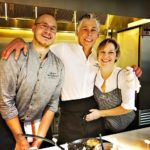 So how did a relatively unknown couple catapult to the top of the Nation’s Capital dining scene? It started in New England where both originally hailed; John, 54, came from the Boston area and Diane, 51, south of Hartford.
Their careers took them independently to California and a serendipitous first meeting at a wine event led to couplehood. “We literally met in a vineyard,” remembers Diane fondly. The couple has a son Finn, 13.
After more than two decades their West Coast careers grew stale leaving them “cogs in a wheel”. John believed they should make a living doing something they loved and suggested running a B&B. Diane quickly agreed. It was something she had always wanted to pursue.
Their search for the perfect inn led them to Virginia and specifically Rappahannock County. In 2004 they purchased the Foster Harris House in Little Washington, gaining experience in hospitality while garnering a legion of fans. After 13 years of honing their culinary and hosting skills the decision was made to shift full-time to the restaurant business. The eatery opened in June 2018.
Almost anyone who owns a successful restaurant will opine it’s not all accolades and smiles. But The Three Blacksmiths might be the exception. Given the intimate setting and multi-course dinners served with casual ambiance and style, the experience is like spending an evening with family and friends.
“Almost every night someone out of the blue will say, ‘We’re having such a good time!’ That’s not something you hear all the time. But when someone is so in the moment that they recognize it and express it, it’s very gratifying,” says Diane.
John is the chef and Diane manages the dining room. A team of four rounds out the staff that John refers to, “As this little family of employees that’s hard to call employees. They are such an important part of the whole thing. It makes the work a really wonderful experience.”
While John did not start cooking professionally until the B&B opened, his training dates to his youth. “I grew up in a family that was ridiculously passionate about food and wine.” The family traveled widely in pursuit of their passion. All of his family are excellent cooks.
During his West Coast career John was a competitive cyclist. “The great thing about racing a bike is you get to eat a lot.” His culinary and racing skills led to the creation of the popular Tour d’Epicure, a cycling and fine dining adventure formerly offered by their B&B.
Always at the ready
So is everything perfect every night? Mostly yes, but situations do arise that call for immediate action. The MacPhersons recall one incident in particular. A group of six diners were standing around their table enjoying a convivial conservation before dinner. With the rest of the diners seated the owner’s asked if they’d like to take their seats.
As they moved toward their chairs, water began pouring from an overhead chandelier onto their table. It was a pleasant evening so it wasn’t a leaking roof. Quickly the table was moved, cleared and reset while John raced upstairs to investigate.
To his surprise an air conditioning unit had overflowed its holding tank and was streaming water into the room below. The unit was quickly drained and the unexpected “rain shower” ended
.
“Today those guests are regulars but their evening could have been ruined it the leak if happened during dinner, Diane remembers.
Pricing & Reservations
Payment for dinners is unique. The multi-course tasting menu costs $128 per person plus a $70 alcohol charge; gratuity and tax not included. Both reservations and payment are made online.
A $50 deposit per person is levied when reservations are made. On the morning of the dinner the remaining bill is charged to the guest’s credit card. “When guests arrive, they sit down, enjoy their meal and leave when they’re finished. There’s no business transactions after the dinner,” said John.
To make reservations visit www.threeblacksmiths.com/. If you can’t secure your first-choice date, be patient and try again. Your efforts will be rewarded with a unique an intimate dining experience.
Published in the September 25, 2019 edition of the Fauquier Times.
On September 21, the historic Little Fork Episcopal Church in Rixeyville will open its hallowed grounds and celebrated Lord’s house to the Piedmont community. Called “Little Fork Day,” it will provide a unique opportunity to relive the church’s history while embracing its future.
The event will be held the same day as the Culpeper Farm Tour, providing an educational and fun “twofer” for adults and children alike. Reflecting the legendary hospitality of the renowned church, there is no charge for admission. Events kick off at 10:00 a.m. and run until 3:00 p.m. For the young and young at heart, it offers the opportunity to bank some wonderful memories.
The program includes guided tours of the church by parishioner-docents dressed in colonial attire, a 75-foot-long inflatable obstacle course and rock climb slide, a white elephant sale, bake sale, and old-fashioned games. Lunch of bratwurst and hot dogs with sides will be served by the men’s ministry.
Church administrator Renae Gutridge notes that while proceeds from the sales and lunch will be donated to the church, the event isn’t geared as a fundraiser. “It’s an opportunity for the community at large to visit our church and immerse themselves in its history,” Renae says.
Seldom will a walk back in time include so much fun.
Fabled History
 The Old Dominion is gifted with numerous legendary homes and government buildings, and Little Fork Church is among the most notable, albeit lesser-known jewels in the state.
Completed in 1776 after three years of construction, it is named after the confluence of the nearby Hazel and Rappahannock rivers. The church’s records reflect that John Voss designed the edifice and William Phillips built it for a fee of 35,000 pounds of tobacco.
The 83-foot by 33-foot building approached the limits of audibility during services in an era absent of amplified sound. Our colonial pastors must have been strong voiced to project the message of salvation to the assembled faithful.
During the Civil War, the church interior was destroyed by a unit of the 13th Pennsylvania Cavalry stationed in the area. Soldiers and horses were quartered in the church during a bitterly cold winter. The combatants tore out the pews, the wineglass shaped pulpit, wainscoting, and most of the interior’s wooden features to fuel their campfires.
After the war, an apparent guilt-stricken Union officer sent the church $100 to help defer the cost of repairing the damages.
A full church renovation took place in the 1970s, including the relocation of the Little Fork Rangers cavalry unit memorial to the side yard of the church.
The building’s pastoral setting is located on a small knoll east of Route 229 and is the perfect venue to reflect on the historical and spiritual importance of this unique place of worship.
New Rector
On October 1, the church welcomes its new pastor, the Reverend Stacy Williams-Duncan, who celebrates her 20th anniversary of ordination this year. She has served parishes across the country and looks forward to leading Little Fork toward its 250th anniversary in seven years.
“Together we will determine how God is calling us to be the church, how Little Fork can be both a faithful steward of our history, and plant seeds that will bear fruit to carry us into a life-giving future,” says Reverend Stacy.
For more information on Little Fork Church, including its services and outreach programs, visit http://www.littleforkchurch.org/default.asp
Published in the August 11, 2019 edition of Discover Fauquier.
For those of us who have been around the sun a few times, Frank Sinatra’s 1953 hit lyrics, “Fairy tales can come true it can happen to you if your young at heart” is pitch-perfect. But it helps dreams crystallize if you’re also smart and carry a strong work ethic in your hip pocket.
Fortunately for folks living in Fauquier County Kevin and Melody Powers embodied the spirit of the song even though they are still in their mid-thirties.
“Our farm and brewery are high labor-intensive. But we didn’t anticipate how satisfying and fun it would be,” said Kevin Powers co-owner of both businesses along with his wife Melody, or Mel as she’s known down on the farm.
“We have a lot of small businesses as well as our customers who have reached out to us. That was unexpected and it’s been energizing for us both.”
Indeed, friends, customers, and business associates are collateral benefits to the couple’s success. “We were totally blind to that part of the business,” explains Powers.
Backstory
So how did the fun and success coalesce?

Mel and Kevin Powers
“We found we really enjoyed the agricultural part and the brewing part. I worked as an accountant and Mel was getting her master’s degree in psychology while working at American University,” said Powers.
It sounds like two professional careers headed for a routine life in the job harness.
But the pull of farming and brewing was too strong. After a few years, they purchased a 10-acre site in New Baltimore and began raising 1,000 hop bines, vegetables, and fruits on 2 acres they cultivated (grapes are grown on vines, hops on bines).
Originally, they began selling produce at the Manassas Farmers Market but Mel Powers soon began building a community-supported agriculture program. CSAs are a system in which a farm operation is supported by shareholders within the community who share both the benefits and risks of food production.
It dawned on the twosome a full-time living could be made by both farming and brewing. Then the real work began.
Veggies & more
In 2012 the tightly focused couple purchased a 21-acre farm in Midland; nine acres were clear and the remainder wooded. Since there was no home on the property the Powers elected to rent a place in Casanova about a half of mile from the farm. Tough commute.
A blank slate of rich farmland now awaited the two “farm artists” and cleaning dirt from their fingernails became a daily habit. “We are now growing a little bit of everything. There are about 40 products that are included in our CSA program,” explained Powers.
The CSA member agreement lists the following items and showcases the level of work required to successfully till the land:
kale, lettuce, radishes, mustard greens, garlic scallions, carrots, scallions, beets, cilantro, pea shoots, dill, broccoli, cabbage, cucumbers, summer squash, onions, beans, peppers, tomatoes, cherry tomatoes, garlic, ground cherries, tomatillos, new potatoes, watermelons, melons, cucumbers, basil, sweet peppers, beans, potatoes, eggplant, okra, hot peppers, summer squash, pie pumpkins, winter squash, sweet potatoes, Swiss chard, parsley, peppers, sunflower shoots, and radishes.
Whew.
The produce is available by month running for 15 weeks from June through mid-September. Costs range widely depending on the type and share purchased.
For example, a vegetable half share costs $224 and $450 for a full share. Check out all the options here: http://powersfarmbrewery.com/wp-content/uploads/2019/02/Powers-Farm-CSA-order-form-2019.pdf
As described in their CSA agreement the produce is grown without the use of conventional pesticides, synthetic fertilizers, bioengineering, or ionizing radiation. Because of the small size of the farm, they’ve elected not to become certified organic.
But they do hold themselves to organic practices and keep soil health, environment and nutrient quality in the forefront of their farming practices.
Brewery
In 2017 the brewery was opened on the farm. “We had planned from the beginning to create a brewery but it took more time to get it going given the work required on the farm,” said Powers. “We make a new recipe almost every week.”
Powers tries to integrate farm produce into brewery products whenever possible. Guests may encounter a lemongrass pilsner, a strawberry-infused beer, pumpkin and squash ales in the fall and more. Farm grown hops obviously find their way into the suds.
The taproom is opened Thursday and Friday 3 p.m.to 8 p.m., Saturday noon to 8 p.m., and Sunday noon to 7 p.m. Typically nine brews are available.
On October 19th the third annual Powersfest will be held at the farm. Live music, vendors, food trucks and a special Octoberfest brew will make for a fun day; even the family pooch is invited.
In summing up the life this power couple have created, Powers says, “It’s nice when people come in and appreciate our work because we really appreciate their support.”
For the full bountiful story on Powers Farm & Brewery open their digital garden gate at https://powersfarmbrewery.com/
Published in the August 28, 2019 edition of the Fauquier Times.
 The silver jubilee of a helping-hand organization is a worthy milestone, both for the celebrant and for the lives that have been touched by the good Samaritan.
Habitat for Humanity Prince William County has an enviable “scorecard” of over 200 families that have seen their lives enhanced by the legendary nonprofit organization over the past 25 years.
Founded in 1976, Habitat for Humanity International has helped more than four million people construct, rehabilitate, or preserve more than 800,000 homes worldwide since its inception. The mission of Habitat is to put God’s love into action by bringing people together to build homes, communities, and hope. ReStore facilities are an integral part of Habitat.
These independently owned reuse stores are operated by local Habitat organizations; they accept donations and sell home improvement items to the public at a fraction of the retail price. Proceeds are used to help build strength, stability, self-reliance, and shelter in local communities around the world.
Merchandise includes building materials, tools, lumber, kitchen cabinets, countertops, bathtubs, furniture, home decor items, small appliances, and more. Underscoring the value of the store for county citizens Traci says, “We price items from 40–90% off retail.”
Unlike typical retail stores where merchandise is standardized from month to month, the ReStore’s home improvement selections vary from day to day, even hour to hour.
Why? Because its “merchandise managers” are local developers, contractors, citizens, and anyone who has a serviceable household item they can donate to the store.
“Our Habitat was founded in 1994 and ReStore has been operating since 2004,” says Traci DeGroat, president and CEO of the Prince William County Habitat. “We’ve built eight houses from the ground up and helped 215 families with a variety of home projects.”
While Habitat’s track record is impressive, it is poised to make an even greater impact on the county’s less fortunate citizens. “We are kicking off a project in the East End Mobile Home community in the City of Manassas in partnership with Catholics for Housing,” Traci notes.
“The effort will involve installing a playground, renovating a building as a training center for teaching residents banking, home maintenance, and other educational subjects. It’s a neighborhood revitalization project that will result in expanding our assistance from 25 families a year to 100.” She adds that they want to hear residents’ stories to see how they can improve their lives by having them develop a community plan that reflects their needs.
Meanwhile, Habitat will be rehabilitating a home in the City of Manassas as part of their traditional mission. Habitat applicants must be willing to attend required workshops on successful homeownership, live in the community where their home is being built, contribute up to 350 hours of sweat equity toward its construction, and be able to cover the home’s mortgage and other monthly expenses.
So how can the more fortunate among us help with these projects? First, next time a serviceable used home item is being replaced, drop it off at Restore or call and arrange for a pickup. Secondly, consider volunteering to swing a hammer. Highly skilled talent is not required but a desire to help is. Finally, reach for your wallet and make a financial contribution to this most worthy institution.
On October 9, the Prince William Chamber of Chamber will hold its monthly After Hours social at the Restore located at 10159 Hastings Drive in Manassas from 5:00–6:30 p.m. to celebrate a quarter-century of giving. For the full story on Habitat for Humanity Prince William County visit https://habitatpwc.org/
Published in the September 2019 edition of Discover Prince William.
The Malty Chronicle of Beer in the Old Dominion
When American colonists landed in Virginia beer was brewed using corn, a technique possibly learned from the natives. Grapes were also planted in hopes of producing a commercial product that could be shipped back to England.
Alas, the wine was plonk. No manner of effort produced a quality and sustainable wine industry in the Commonwealth until the 1970s.
Thus, beer, cider, and hard alcohol became the everyday drink of our forefathers. Perhaps to their detriment. Colonial Americans drank about three times the amount of alcohol we do today.
Not only was it supposedly safer than hydrating on bacteria-filled water it also served as an early medicine cabinet to treat all manner of pain and emotional disorders. At least temporarily.
Thomas Jefferson noted the danger in hard liquor when he wrote, “No nation is drunken where wine is cheap, and none sober where the dearness of wine substitutes ardent spirits as the common beverage. It is, in truth, the only antidote to the bane of whiskey.”
The Sage of Monticello would have also placed beer in the preferred category but his patrician tastes favored wine.
But the reality behind “water is safer” is a myth. Water was cheaper than beer and the location of settlements and towns was predicated on the availability of safe and plentiful water supplies.
Nonetheless, Virginians have always loved to hoist a glass of suds and the practice has endured for over 400 years. And not because it was a safer drink. It simply tasted better than water and had the delightful side effect of easing worry, strain and a host of other maladies.
Today beer consumption in Virginia is more popular than ever.
The dawn of brew
Beer has been brewed for over 7,000 years. Early producers hailed from Iran, Egypt, and Mesopotamia and spread worldwide from there. Since any grain containing sugars can be fermented, it’s likely a spontaneous fermentation caused by wild yeasts created the first brew.
In an unrecorded moment in libation history, one of our ancestors likely sipped a handful of naturally fermented beer from a stone bowl and fell in love with its malty flavor. He also may have wondered, “How did that happen?”
Searching for the answer was a quest of passion and resulted in one of the oldest of alcoholic drinks.
By the Middle Ages beer was one of the commonest of libations. It was consumed year-round by rich and poor alike. And as in Virginia is was widely brewed where wine grapes did not thrive.
Nonetheless, it was not universally approved of.
In 1256, the Aldobrandino of Siena opined that beer, “harms the head and the stomach, it causes bad breath and ruins the teeth, it fills the stomach with bad fumes, and as a result anyone who drinks it along with wine becomes drunk quickly; but it does have the property of facilitating urination and makes one’s flesh white and smooth.”
Hmmm…a seemingly a mixed bag.
But the long road to commercial beer success is now tasty history. In 2017, over 51 billion gallons of beer were produced globally. Our forefathers would be impressed.
Commonwealth growth
As farming became established in Virginia wheat and barley helped propel beer into the most popular of libations. Alehouses, taverns, and plantations everywhere produced and served both beer and whiskey.
Beer, however, was the everyday go to drink and in a nod to the gentler sex, it was women who often were the brewers.
This task was seen as integral to women’s role in caring for and feeding her family.
Over the decades Richmond emerged as the state’s brewing center. From the late 1700s onward the state capitol developed a rich history of beer production. The Civil War slowed the industry as the South shifted to a war footing. Then in 1916, Virginia went dry; three years before Prohibition became the law of the land.
One unique aspect of Richmond’s brewing past are the beer caves at Rocketts Landing.
Originally part of the James River Steam Brewery, the cave system was built in 1868 to provide cool storage temperatures but the combination of advancements in refrigeration and the financial crisis of 1873 conspired to force the closing of the brewery.
Today you can peek into the caves but there is little to see since they are blocked by a chain link fence. They are located 4920 Old Main Street and present a fun—albeit brief—glimpse into yesteryear’s world of cold storage.
With the repeal of the Volstead Act in 1933, alcohol was back in bars and homes. But beer production was limited to a paltry 3.2% alcohol discouraging many brewers who were constrained from producing interesting and quality beers.
From the 1930s on beer in Virginia was largely provided by a decreasing number of national breweries producing what some felt was a good cold glass of sparkling water. “This Bud’s for you”, was popular largely because it was an easy sipper. Beer drinkers did not have access to richer, more flavorful options.
Then in the late 1980s craft brewers began to stir. Why?
In 1979 a Federal law was passed permitting brewing at home. States vary on exactly how much is allowed; in Virginia, it’s 200 gallons annually for a two-adult household. That’s about 2,000 bottles. But please, don’t go there unless you’re sharing.
With such dramatic growth in the hobby many nascent brewers began to slowly realize, “Hey, my stuff tastes pretty good. Maybe I should go commercial,” which they did in droves resulting in today’s commercial craft beer explosion.
It’s a classic example of free enterprise coupled with an entrepreneurial spirit being unleashed by market opportunity.
In 1980 there were 80 craft breweries in the United States. Today, 7,000 dot our sudsy landscape. Even small towns and villages often sport a wee brewhouse where locals gather to quaff artisan beer.
There’s never been a better time to hoist flavorful brews that are the polar opposite of the watery libations that have dominated our domestic beer world for decades.
Virginia’s role in the national explosion of craft beer parallels the Nation’s.
Virginia ascendency
The opening of a few state craft breweries in the late 1990s was initially seen as a fad that wouldn’t catch traction and fade quickly. What wasn’t consider was how delicious artisanal beer was compared to its with mass-produced cousins.
Both wholesalers and retailers, however, took little interest in the product, believing it was too bold and of marginal quality. True enough, craft beer would take some adjustment for a palate raised on weak flavors and low alcohol. But the quality was consistently good.
What was not factored into the dismissal of the newbie beer was the passion and dedication of the mostly young brewers leading the craft beer charge.
However, without access to distribution channels offered by wholesaler’s craft brewers had to get crafty.
Mark Thompson, president and brewmaster at The Brewing Tree Beer Company in Afton, describes the solution in the Spring 2019 Virginia Craft Beer magazine, stating, “Things began to change in the early 2000s when a couple of craft brewers chose to start their own distributorships who sold only their breweries beer.”
Soon enough the wholesalers began to take notice and started adding craft brew to their portfolios. The engine of change had been ignited. Today there are over 236 breweries in Virginia producing 405,465 barrels of craft beer annually.
So, what’s the future of craft beer in Virginia?
Given the success in utilizing wholesalers to move its product, small breweries will increasingly have limited access to the big boy’s distribution system. There are simply too many beers are out there today to find a home in wholesalers’ warehouses.
What more likely will occur is a shift back to smaller brewery production where beer will be sold only in taprooms absent a third-party distributor.
If so, that would be good news for consumers who would develop closer relationships with their neighborhood brewhouse and be treated like the prize customers they’d become.
And that’s a sudsy future we’ll hoist our glass to.
For a list of Virginia breweries for use in navigating Virginia’s Hopland, drop by
https://en.wikipedia.org/wiki/List_of_breweries_in_Virginia
Published in the Summer 2019 edition of Dine Wine & Stein magazine.
Delaplane couple blend green passion with expertise
It’s interesting how some careers progress on multiple fronts and in a lightning flash fuse into a single objective. It might be called a “Boom” moment.
Such a scenario is unfolding on a farm in Delaplane that’s managed by two young realists with idealist’s passions. It’s a yin and yang approach that seeks to balance their lives and the land they’re working on.
Meet Kelly Allen, 30, and Andrew Napier, 34, who are personal and business partners that have turned to the land to nurture themselves and a variety of in-demand crops.
It’s a story millions of Americans dream about. Locked in cubicles behind blue-hazed monitors and connected to their hearthside by hours of bumper to bumper traffic legions of worker bees fantasize about casting it all aside and embracing a more nature-like existence.
 Allen and Napier took the plunge and made it happen but spent years, perhaps unknowingly, positioning themselves to enter their new world. It might be called serendipitous coalescing.
Education & experience
“I graduated from Goddard College in Vermont with a degree in sustainable agriculture. I worked for (widely known and respected) Doug Fabbioli at his winery in Leesburg. I then spent some time in AmeriCorps teaching sustainable agriculture to tribal students near Santa Fe.
“Today I’m working in wine distribution throughout western Northern Virginia. So, my background is split between production and distribution,” explains Kelly Allen.
Andrew Napier says, “My introduction to wine was working in restaurants. I very quickly became the wine buyer for a couple of restaurants and that got me deeper into the industry.
“I then got a job working for Jim law at Linden Vineyards for two years where I learned a lot about grape growing and winemaking (Law is one of the most respected viticulturists and winemakers on the East Coast).
“From there I worked for The Whole Ox in Marshall and learned about sustainable butchery.”
The young couple was in the process of earning their bona fides. The “Boom” moment came after they had forged a personal relationship with each other as a result of their similar careers.
While working at The Whole Ox Napier developed connections with many people in the local community. One couple, David and Patricia Vos, had recently purchased land contiguous to their horse farm in Delaplane where Miracle Valley Vineyards had been located. The winery closed in May of this year.
Linking up with the Vos’s was fortuitous as evidenced by the established couple’s Facebook Foundation page mission statement: “To ensure the diversity of life on earth, by planting billions of trees to restore environmental balance, support imperiled populations, and advance thoughtful advocacy.”
Hmmm…sounds like a connection to sustainable agriculture.
Enter Allen and Napier.
Farm vision
Team Vos, Allen & Napier was thus created. On June 30 the couple moved to the farm and commenced a rebirth and expansion of agricultural products on the productive land.
The first task at hand is reviving the eight-acre vineyard that had been planted but not fully maintained by the former winery.
The vineyard has eight grape varietals and its restoration is job number one in a long-term farming expansion the couple will engage in over the next several years. Since there is a grape shortage in Virginia contracts will be established to sell a portion of the viable fruit this fall.
Removing and replanting some of the other vines will dictate waiting a few years before subsequent fruit is marketable.
Given their interest in sustainable agriculture, the long-term goal is to reduce the application of chemical sprays as much as possible. Such a goal must be balanced with the reality of growing the Eurasian grape species, known as Vitis vinifera, in Virginia.
The heat, humidity, fungus and insect depredation visited upon these delicate vines is relentless.
“Because the vineyard has seen some neglect it would not be in our best interest to try and grow the grapes without some chemical application. They are not healthy enough to support that kind of biosystem.
“Right now, we are using integrated pest management or IPM,” said Napier. It allows for slowly reducing the level of spraying.
IPM is an ecosystem-based strategy that focuses on long-term prevention of pests and their damage through a combination of techniques such as biological control, habitat manipulation, modification of cultural practices, and use of resistant varieties.
Pesticides are used only after monitoring indicates they are needed according to established guidelines, and treatments are made to remove only the target organism.
“We are undertaking a two-step approach. First, we must create a healthy microsystem and then plant grapes that are more appropriate to the area where they’re growing,” said Napier.
Given Virginia’s wine grape shortage, restoration of a healthy vineyard will produce a viable economic return while simultaneously aiding the wine industry by producing more high-quality grapes.
As the vineyard is brought under control additional agriculture products will be grown. “We’ll incorporate other cash crops as we go adding a layer of security to our business in the future.
“Mushrooms, culinary herbs, garlic, lavender and other things that we know will generate security will be planted,” said Allen.
Kickstarter
As with all thing’s commercial, investment drives success. Allen & Napier are embracing a funding source called Kickstarter to assist the farm’s goals and help them thrive in the years ahead.
Kickstarter is a funding platform where creators can share and gather interest on a particular creative project they’d like to launch. It’s entirely driven by crowdfunding, meaning that the general public and their financial support helps the projects being promoted.
For those who would like to assist the efforts of these two young and passionate farmers the couple’ Kickstarter page will go live in a few weeks.
You can support them at https://www.kickstarter.com/profile/artemisiafarm. Or write directly to contact@artemisisfarm.com
In summing up how she and Napier are embracing their new lifestyle, Allen says, “Everything we do, on and off the vineyard, is all about play. Life is short. It’s meant to be enjoyed.”
Published in the August 14, 2019 edition of the Fauquier Times.
What are your most enduring memories? Graduation? Marriage? Children? Grandchildren? Oh, or county fairs?
No event better symbolizes summer than a fair. It’s a reflection of everything that can bring joy to people’s lives.
Who hasn’t caught a glimpse of a young lass tending her dairy cow while waiting for the judges to render (hopefully) a blue-ribbon decision? Then there’s the thrill rides, games of skill, demolition derbies, monster truck competitions, live musical entertainment, and food galore, including cotton candy.
Seemingly every attendee is either smiling, laughing, or possessing a satisfied expression. Fairgrounds are joy-filled grounds.
 One the largest and best-organized fairs in the Old Dominion, the Prince William County Fair will raise its curtain for the 70th year on August 9 at 10624 Dumfries Road in Manassas.
Everything a fair can offer 17,000 fun seekers will be in play until the gates close on August 17.
So how does an extravaganza like the Prince William County Fair come about?
The volunteer-driven performance is passion in action and owned by the Prince William Veterans Farm Club. One of the few paid positions is its director of business operations, Diane Burke. The “Queen of the Fair” earned her bona fides through years of active participation.
“I started attending the fair from the time I was a baby,” says Diane, adding that the fair was their family vacation spot. “I was involved in it with my brothers and sisters and showed cows and pigs.
“My father worked for Northern Virginia Electric. He’d bring his crew out, and they would hang the lights for the fair and take them down when it was over.”
As the years rolled by, Diane’s participation and responsibilities grew. As the mother of a son and daughter, it continued to be a family affair with her own family participating. One of the volunteer highlights of her work today is managing the baby contest.
Over 100 babies are entered annually in two age groups: 9–18 months and 18–36 months.
The tikes parade down the “runway,” smiling and flashing their best personalities at the judges. The winners are crowned the Prince and Princess of the fair. “Among the prizes is a loving cup,” Diane says with a laugh. “But for the winning parents, it’s mostly about bragging rights.”
With the passage of time, the emphasis on livestock exhibition has faded as the county has become more suburban than rural. As a result, many of the youth activities today are centered on arts, crafts, and photography. Diane points out that many children participate in the home arts portion of the fair, which is important because it reflects everything the kids have done over the last year.
Regretfully, all good things must come to an end, including this beloved annual tradition. Increasing insurance liabilities resulted in the decision to sell the 86-acre fairground, so 2019 marks the fair’s final showing, making it a historical event for everyone who attends.
“It’s going to be sad and nostalgic for me,” says Diane, who notes that she will certainly shed a few tears when the fair closes. If that’s the case, it will be the rare occurrence of a tear falling on the fairgrounds.
But for the legion of joyful attendees, it will be an opportunity to book some wonderful memories that will last a lifetime. For a full description of the hours, numerous events, and more, walk through the fair’s virtual gates at >http://pwcfair.com.
Published in the August 2019 edition of Discover Prince William.
Three Days in the Northern Piedmont
Magical might best describe Virginia. Arguably no state possesses a more graceful landscape and rich storied past. The Commonwealth is a cornucopia of life’s finer pleasures.
When traveling countries as divergent as British Columbia and Ireland, my wife and I have encountered comments from the locals such as, “You’re from Virginia? It’s so beautiful there!”
How did they know? Everyone does.
 The Blue Ridge Mountains. The Shenandoah Valley. The Chesapeake Bay. The Piedmont region. The landscape is legendary.
The beauty of the Northern Piedmont springs from its rolling, lush landscapes, dense forests, open farmland, and sparkling streams. All backdropped by the famed Blue Ridge.
This is the region we call home. Specifically, it encompasses Fauquier and Rappahannock counties. To highlight its popularity over 1.5 million motorists visit the Shenandoah National Park each year.
But there is so much more to see than just the sweeping views from Skyline Drive. Join us as we take a three-day tour of select lodging, restaurants, historical venues, shops, social lubricant establishments and more.
Let’s create some memories.
Fauquier County
From whatever direction you enter Fauquier County you will intuitively know relaxation awaits. For starters, there are 26 wineries, four breweries and two meaderies scattered over its 651 square miles.
But the libation cornucopia must wait until later in the day. Our first stop is the county seat, Warrenton. The historical area on Main Street is where we’ll head first. Specifically, the Old Jail.
The original four-cell jail was built in 1808 and converted into a house for the jailer when a larger hoosegow was built to the rear of it in 1823. As you enter the jail the “warden” or more accurately, docent, will give you a brief overview of the building’s history then set you off for a self-guided tour of the two-story structure.
What you will experience is one of the most well-preserved old jails in the state. To roam the second floor and see prisoner cells as they existed in the past will reinforce why breaking bad in the good old days came with a high price tag; cramped discomfort.
The jail’s museum includes a collection of artifacts representing the county’s history from Native Americans, to the Revolutionary War, Civil War, and World War II eras. The exploits of local Confederate legend, Colonel John S. Mosby, or the “The Gray Ghost, is also highlighted. Mosby was known for his lightning-quick raids and ability to elude Union Army pursuers.
The 45-minute tour costs $10 for adults and $5 for children under twelve. The museum is closed on Tuesdays.
Having served your “sentence”, you will be paroled to explore the four block Old Town district. Numerous shops will beckon as you casually stroll south down the right side of Main Street and back up the left.
Along the way, you will pass gift shops, jewelers, art shops, a bakery, a bike shop, and restaurants among other quaint boutiques. Since midday hunger pangs will be starting to stir consider dining at either Denim & Pearls, the Black Bear Bistro or Molly’s Irish Pub.
After lunch head back to the car and drive east on Route 29 for nine miles to Vint Hill, a “suburb” of Warrenton, to visit the Cold War Museum. Founded in 1996 by Francis Gary Powers Jr., the son of legendary U-2 pilot Francis Gary Powers, the museum preserves and honors Cold War veterans.
The museum has over $3 million worth of artifacts in its collections. Holdings include items from the Berlin Airlift, the suitcase Gary Powers carried when he was exchanged for Rudolf Abel, a 5,000-square-foot display on the Cuban Missile Crisis, Soviet and American Nike missiles and spy satellites.
It also has the largest collection of civil defense items in America. A donation of $10 is requested part of which can go to the purchase of items from its gift shop.
As you leave the museum consider stopping by Old Bust Head Brewery for a cold draft. It’s just a two-minute drive and an ideal winding down spot to end your day’s sightseeing.
Strapped back in your chariot your lodging destination for the day is, Airlie, a short five-mile drive back west on Route 29.
The original estate was built in 1899 by Philadelphia native Harry C. Groome who named it after a castle in Scotland. The home was destroyed by fire in 1924 and Groome rebuilt it on its original foundation.
In 1956 a new owner transformed the property into one of the first conference facilities in the country. Today Airlie offers a variety of value-added packages for couples and business groups including farm-to-table dinners, special amenities and more.
With onsite dining available you’ll be tempted to call it a day at this luxurious estate resort. But if your “explorer genes” are still humming, freshen up and head back into Warrenton for the 10-minute drive to Claire’s at the Depot in the historic district.
The dining establishment is considered one of the best in Fauquier County. Its setting is elegantly casual and no less a restaurant critic than The Washington Post’s Tom Sietsema said, “…the restaurant is in a former train depot and is a charmer.”
The charm includes dinners such as Atlantic salmon, sea scallops, blackened scallops, veal scallopini, double stuffed pork chops, farmed raised half chicken, char-grilled steaks and more. Its discerning wine list will not disappoint.
It’s been voted the “Best of Warrenton” for seven out of the last eight years.
After dinner, you might be tempted to drop in at Wort Hog Brewing Company diagonally across the street from Claire’s for a sudsy nightcap.
But then again, maybe we shouldn’t push it. Your call. A luxurious room at Airlie awaits.
Rappahannock County
A leisurely morning breakfast at Airlie will start the second day of your adventure. Drive back through Warrenton on Broadview Avenue and turn right onto Route 211 west. You are about to enter one of the most unique counties in the country 11 miles distant.
Rappahannock County is sparsely settled with a population of 7,300. That’s some 2,500 fewer souls than in 1850. It has no stoplights, no shopping malls, no fast food restaurants and gives new meaning to the words “laid back”.
What it does possess is beauty in abundance. As you drive west into the county you will be traveling on the Skyline Wine Trail. You won’t need hiking boots to explore this trail later in the day.
The trail encompasses nine wineries, two breweries, one meadery, one distillery, eight restaurants, 13 lodging establishments, and 14 shops and galleries scattered like diamonds on a rolling landscape of verdant fields and dense forests.
Our destination this morning is the town of Little Washington. A precocious 17 year-surveyor laid out the town’s 51 half acre plats in 1749. His name was George Washington. Today, the town has about the same number of home sites. Growth is not embraced in Rappahannock.
As you enter the village head to the post office that is located diagonally across from the famed Inn at Little Washington. There is parking behind the post office that will set you free to roam the village’s jewelry, art, and antique shops and to explore the historical Gay Street area.
As lunchtime approaches slide behind the steering wheel and travel west to the intersections of Route 211 and Route 522 and go north three miles to the Griffin Tavern located in the even smaller village of Flint Hill.
A selection of draft beers and quality wines make for a nice companion to a lunch of fish and chips, a local favorite. But the menu has depth so take your time in ordering.
If you elect to sit in the bar, you may be pulled into the friendly conversation as the bartender, ensconced in a rectangular bar at the center of the room, takes orders and links one conversation with another. Yes, it’s as fun as visiting a British pub whose ambiance it replicates.
With lunch over the “Rappahannock Dilemma” emerges, where to go next? Perhaps the best answer is to have no agenda but simply cruise the backcountry roads of this bucolic region, snapping photos and banking memories.
With the Skyline Wine Trail to fall back on, there will be ample opportunity to secure a glass of afternoon wine or draft beer. Even a tour of Copper Fox Distillery in Sperryville is a distinct possibility. You’ve got an imagination so be sure use it.
As late afternoon settles on the region it’s time to check into the night’s lodging. Here again, you will have been forced to make some decisions in planning your trip. The Inn at Little Washington is without a doubt the center of dining and lodging attention in both the county and the Nation. Even worldwide.
In over four decades it has risen to the pinnacle of a dining and lodging destination. Owner and Chef Patrick O’Connell seemingly has no more room in his figurative “trophy room” for more awards. He’s won them all, including his third Michelin star that he scored last year.
Unfortunately, if you both stay and dine at the Inn you need considerable lead time in making reservations…and deep pockets. A typical dinner could run $600 per couple. Spring for an expensive bottle from its legendary wine cellar and you’ll be in need of a loan officer. And the room? Ahem, let’s move on.
Perhaps it’s best to save a stay at The Inn for a seriously special occasion. But not to worry, the village has several high-quality bed and breakfasts and tonight you’ll be staying at Foster Harris House, about three blocks west of The Inn.
At Foster Harris, guests indulge in the luxurious feel of a five-diamond resort surrounded by the irresistible charm of an intimate, historic home. After you settle in and take a rest head back out to Flint Hill for dinner at The Blue Door.
The restaurant is new having opened two years ago. But its owners brought their dining bona fides from Northern Virginia where they ran the acclaimed Villa Mozart.
The menu fuses old world Italian cuisine with modern technique and flair and includes slow-cooked sauces and handmade pastas and pastries. Prices are moderate.
On your return visit to Rappahannock County—and yes, you will be back—consider dining at the newest upscale dining spot The Three Blacksmiths in the village of Sperryville. Accolades have poured in since its opening so reservations can be a bit difficult to secure. But don’t give up. It’s worth the wait.
If it’s a clear night, after dinner as you drive back to the Foster Harris House to bed down, take note of the starry sky. Another Rappahannock treat is its night skies, a prized benefit of traveling in a lightly populated region.
After a night of Rappahannock dreaming, you’ll awake to the aroma of a four-course gourmet breakfast being prepared by your hosts. We hope you left some room in the tummy from last night’s repast.
As you bid adieu to your hosts, your final day in northern Piedmont is all yours. By now you’ve gotten a feel for the delights available countywide. Pick your options carefully because this final day will fly by faster than a county Red-tailed Hawk.
As you set course for home in the afternoon, the one downside of spending three days in the northern Piedmont becomes comes increasingly apparent. You don’t want to leave.
But fear not, your return is a given. It takes more than one excursion to embrace all the delights of Fauquier and Rappahannock counties.
Safe journey.
Published in the June-July 2019 edition of Dine Wine & Stein magazine.
VolTran making medical appointments an on-time experience
Making a doctor or dentist appointment can be a bothersome task. Yes, we know we need to go but it often conflicts with other demands on our schedule.
But consider an elderly or disabled person struggling to make such an appointment then trying to figure out how they are actually going to get there. It can be stressful.
But it’s not only medical practitioners who provide the gift of life, there is a cadre of community volunteers who are rendering emotional and physical support to those in need.
And what’s in their “medical bag”? Smiles and wheels.
Listen to how one of the volunteers describes her duties: “I am very passionate about VolTran. I have met the most wonderful people from all walks of life. I love meeting new people and hearing their stories. I will continue to drive until I no longer can.”
This volunteer, by the way, is also the President of the Board of Directors for VolTran. From the president’s seat to the driver’s seat she’s got it covered.
Meet Linda Stouffer. Stouffer retired from the Department of Defense in 2007 where her specialties included Human Resources, Training & Development, and Recruiting.
Today her professional skills have been “employed” to not only head the nonprofit organization but also meet the frontline needs of the elderly and disabled as they seek to get from their homes to appointments and errands.
All without compensation.
Behind the scene
Recognizing the importance of social interaction VolTran provides not only rides to medical appointments but also to grocery stores, pharmacies, hair salons and more.
The most valued possession we have is time. It is also our most valued gift.
By now you’ve guessed the organization’s name springs from the words Volunteer Transportation.
As committed as Stouffer is, she couldn’t accomplish much if the organization she leads wasn’t run with Swiss watch efficiency. Twenty-six volunteers, all driving their own vehicles and paying for their gas, are the pulse of the service.
Its mission is to provide transportation for the elderly, disabled, and others in need for medical appointments and important errands. Its service turf includes Fauquier, Rappahannock, and northern Culpeper County.
Service hours are Monday through Friday, 9 a.m. to 3 p.m. and closed on holidays. To be eligible for the service residents must be:
- 60 years or older
- Legally blind of any age
- Wheelchair bound of any age
- Disabled of any age
- Others in serious need of its services
VolTran asks for at least two days’ notice when seeking a ride and five days’ notice for the use of a handicap van.
Since its creation in 2007 the service has steadily grown and today is posting some impressive numbers.
In 2018, 828 ride requests were fulfilled through 2,220 volunteer hours contributing 35,000 driver miles.
“We can’t always respond to a request. One time we received 11 ride requests in one day,” said Stouffer. “Some of our drivers are more active than others and it can be difficult at times find a driver for each and every request,” explains Stouffer.
But a resident who plans ahead will improve their odds of receiving a stress-free ride to their appointment.
Rides are scheduled through a call center called FAMS, or Foothills Area Mobility System. Operators there will assess the specific needs of the resident and coordinate with VolTran to meet the day and time of the requested pickup.
Residents call (540) 422-8424 and leave a detailed message with their name and telephone number.
When a volunteer driver accepts the assignment, he or she will call the passenger directly to arrange the trip. The FAMS coordinator also calls the client back to inform them a ride has been arranged for them or not.
Funding
Every nonprofit’s struggle is to secure monies to keep its endeavor going. VolTran has been fortunate in securing individual contributions and foundation grants, including grants of $50,000, $30,000 and $5,100.
Additionally, because of a recent grant from the PATH Foundation, they were able to lease a Chevy Equinox for three years, providing additional comfort for residents scheduled for appointments.
The PATH Foundation is a grantmaking organization that enhances health and vitality of Fauquier, Rappahannock and northern Culpeper county.
Nonetheless, every dollar donated to the organization is valued and citizens throughout the Piedmont are encouraged to make VolTran a favored charity. The donations make a difference between surviving and thriving.
Donations from local citizens help to support a part-time program coordinator, advertise its services, recruit volunteers and offer gas cards as incentives to volunteer drivers.
VolTran is a 501(c)(3) charitable organization. All donations are tax deductible.
But money alone does not make VolTran’s clock tick. Volunteer drivers are always needed to help offer the service to an ever-growing population of elderly and disabled Piedmont residents.
To become a driver, interested individuals complete a Volunteer Driver Interest Form, must be 21 years of age or older, have proof of car insurance, have a valid driver’s license and inspection sticker, and agree to a motor vehicle record check.
“We are always looking for new drivers and its exciting when someone joins our team. I like hearing the stories of the people we serve,” and think anyone joining would experience the same satisfaction.
As the former Secretary of Agriculture under President Eisenhower, Ezra Taft Benson once said, “If you really want to receive joy and happiness, then serve others with all your heart. Lift their burden and your own burden will be lighter.”
For the full story on VolTran, including securing a much-needed ride or volunteering to help keep the wheels turning visit https://voltran.org/
Published in the May 1, 2019 edition of the Fauquier Times.
Warrenton Circuit Rider increases popularity with additional bus
From the earliest days of the United States, members of the clergy roamed the sparsely settled frontier bringing the word of God to the colonials. They were called circuit riders.
The preachers’ role faded as the Nation grew but the name stuck in our lexicon. Today thousands of area residents hop aboard a bus with the same name that circulates around Warrenton providing access to shopping, medical appointments, dining and more.
 Similar to yesteryear, Warrenton’s Circuit Rider is making believers out of its audience. Especially anyone who needs to get from point A to B without car keys.
Launched in 1998 the service is a collaborative effort between Virginia Regional Transit, the town of Warrenton and Fauquier Family Resource Network. Phil Thompson, director of operations for VRT, oversees the service in concert with other local organizations.
“I’m very pleased to be part of a community-minded transportation system like Circuit Rider,” said Thompson.
Virginia Regional Transit is headquartered in Purcellville and is a not-for-profit organization providing affordable transportation solutions for a host of Old Dominion communities.
“A locality invests 32 percent of what it costs to operate a route and we pull-down grant funding from through the commonwealth from the Federal Transit Administration,” he said.
Thompson has held his position since 2012 and after a brief break returned again in 2017. Prior to that, he worked in the fuel and gas industry. His position takes him all over Virginia overseeing VRT’s portfolio.
Service Expansion
Monday through Friday the Circuit Rider motors around Warrenton from 7:30 in the morning to 8 o’clock at night providing transportation to a wide range of users. Saturday service runs from 9:30 a.m.to 10:30 p.m.
Grocery shoppers looking to score dinner, handicap individuals headed to a doctor’s appointment and green-minded drivers giving the family auto a day off all are among the residents climbing aboard the bus.
Since September 2018, there is a second reason to grab a ride. An additional 19 passenger bus was added to the Warrenton circuit eight months ago, reducing the drive time for each run from over an hour to 45 minutes while expanding the number of stops from 20 to 24.
“Over the years it became more difficult to maintain the loop schedule and stay on time. And it was routinely overcrowded,” said Thompson.
The solution again came in a united effort. This time involving VRT, the town of Warrenton and the Fauquier Mobility Council. Funding was provided in part from a grant from the local PATH Foundation.
“The joint effort assisted in funding the expansion through the introduction of a second bus; we now have two loops that connect at a central point near the post office.”
The result has been a leap from 2,220 riders a month to some 3,200. “It’s pretty impressive what the collaboration achieved.” It’s anticipated almost 40,000 riders will ride the sleek looking buses this year because of the expanded service.
And where does the bus go? Almost everywhere in town that a public or commercial entity operates.
The two routes are dubbed Maroon and the Black. The first starts at the post office and winds its way through the northern part of town to the medical buildings on Blackwell Road and then on to Giant, Safeway, nearby apartment complexes, Rite-Aid, the bowling alley, Subway, Food Lion and the Warrenton middle school.
The Black Route heads south from 3rd and Main Street to Leeds Square, the community center, Fauquier Hospital, Walmart and the Lord Fairfax Community College.
Locations for pickups are listed on the service’s website but Thompson underscores, “You don’t necessarily need to be at a specific stop to catch a ride. As long as we can safely pull over and safely pick you up, we will do so with our ‘flag down service’.”
What do the users of the Virginia Regional Transport think if its rides? Its Facebook page tells it all:
“I love this service because it’s convenient and affordable for people on tight budgets!!”
“My brother used VRT for years and was more than pleased with their operation. Dependable and trustworthy!
“I would like to say just how impressed I am by the leadership of this company. They are working to fix the issues and I can say I truly felt heard. Thank you all for your help and genuine concern.”
“Awesome! Convenient! On time! Thank you!!”
And what’s the price for all this attentive service? Fifty cents a ride. A charge that hasn’t changed in 21 years. These folks don’t believe in inflation.
In summing up his experience in serving our county seat Thompson said, “Warrenton is a wonderful community for us to be part of. We are blessed to be there.”
For a full description of the Circuit Rider routes, location of stops and pickup times take a courtesy ride at http://cms.revize.com/revize/warrenton/document_center/Community/circuit.pdf
Published in the May 1, 2019 edition of the Fauquier Times.
The storied past of Virginia’s inns, taverns & ordinaries
As he travelled through Williamsburg in 1765, J.F.D. Smyth made this frank assessment, “There is no distinction here between inns, taverns, ordinaries and public houses…they are all in one. They are all very indifferent indeed compared to the inns in England.”
Well…excuse me.
But consider Mr. Smyth was travelling on horseback over 250 years ago through a rough and tumble pre-Virginia landscape. The Commonwealth wouldn’t be founded for another 23 years.
The mere availability of a night’s lodging was much preferred to tossing a cape on the cold ground for a restless—and potentially dangerous—night in the open.
England sought commercial success in its colonies and established court ordered requirements that public houses be established in every community. The cost of such lodging was under the strict guardianship of the government.
Moreover, the British needed to generate revenue and manpower from their colony to fund ongoing military and high seas ventures. But it was difficult to get unpaid citizen volunteers to drop their plows and axes and show up for regular militia training.
The secret to producing fighters? Provide free ale if they agreed to appear at designated public houses for maneuvers. Soon enough well-trained soldiers were at the King’s disposal not to mention a growing cadre of experienced brewers.
Unfortunately, a few decades into the future the Crown’s trained men would become its bitter enemies as the American revolution took hold.
But as either travelers or men under arms, a warm and hospitable place to meet, drink, dine and sleep was pivotal to the economic growth of the nascent Nation.
 As a further control on travel and trade, early on only two licenses per town were permitted by the Brits for an establishment providing lodging and food for the general public. Decades later hundreds of such places dotted the colonies’ post roads.
Licenses were typically awarded to the wealthy and influential. Think yesteryear’s Conrad Hilton and friends.
Warm and comfy or…
Taverns in Virginia closely mirrored the ordinaries of mother England. The proximity to the frontier, however, dictated the establishments be used for multiple purposes such as trading posts for families headed over the mountains.
The earliest dwellings were often a story and a half log cabin. The ground floor was for public use and the upper level for bedrooms. It was not uncommon for two or more strangers to be compelled to sleep in the same bed. And fresh sheets? Not often.
As the decades advanced, the quality of the “hotels” improved. Upscale taverns had a lounge area with a large fireplace, a bar, benches and chairs and several dining tables. The very best houses had a separate parlor for ladies, a friendly landlord, good food and soft, roomy beds with fireplaces in all the rooms.
Even warming pans were slipped under the covers as guests prepared for bed.
But the further one ventured from larger towns and villages such amenities quickly faded. On the edge of civilization, the inns were little more than dirty hovels crawling with vermin. Still preferable to spending a cold and frightening night camped in the wilderness.
Since permits were required to open taverns and ordinaries, much like today, the locals did not always support such applications.
In 1751, a clergyman’s thoughts were published in the Virginia Gazette on pending requests from a certain part of town.
In part it read, “…that ordinaries are now, in great measure, perverted from their original intention…and become the common Receptacle and Rendezvous of the very Dreggs of the People.”
Warming to his subject, the man of the cloth went on to claim activities, “…such as without intermission; namely Cards, Dice, Horse-racing, and Cock-fighting…Drunkenness, Swearing, Cursing, Perjury, Blasphemy, Cheating, Lying and Fighting are not only tolerated but permitted with impunity.”
My, my. There must have been some hopppin’ joints in the colonial era. Even unusual capitalization was employed to underscore the sins of our fathers.
As one travelled further north into a bit more civilized country, the positive critiques could still be spotty. In 1789, General George Washington passed the evening at the Perkins Tavern in Connecticut because local custom discouraged travelling on Sunday.
He later recorded his pre-Trip Advisor thoughts on the tavern, “…which by the way is not a good one.” George rarely complained so one can only imagine what the place was like.
Nonetheless, in addition to providing comfort to weary travelers, inns and ordinaries were important to local residents. They were a place to gossip, exchange news with guests, transact business such as land sales, and livestock auctions, pick up mail and talk politics.
One could make a case that some of the most consequential discussions on the revolution and constitution occurred in taverns. John Adams claimed the City Tavern in Philadelphia was “the most genteel tavern in America”. It was a favorite watering hole of the Founding Fathers and the First Continental Congress.
In Alexandria, Gadsby’s Tavern often played host to men like John Adams, Alexandria Hamilton, George Washington and other notables. Thomas Jefferson was honored there with a banquet in 1801, the year he became president.
George Washington’s two favorite dishes at Gadsby’s was grilled duck breast with scalloped potatoes and port wine orange glaze and “Gentleman’s Pye”, a lamb and beef red wine stew in a pastry crust.
Today, Gadsby’s Tavern is opened as both a museum and a restaurant.
Virginia’s four oldest
The vast majority of yesterday’s lodging accommodations have been lost to the exorable march of time. But a few have survived and continued to thrive. Here are four Methuselahs of the Commonwealth’s lodging past:
Hanover Tavern
Located in Hanover, the tavern dates from 1733 and was constructed in five stages. It covers 12,000 square feet over three floors. The almost 300-year-old structure has been graced by luminaries no less important than George Washington, Lord Cornwallis, the Marquis de Lafayette and Marquis de Chastellux.
Several slaves from the tavern participated in the Great Slave Rebellion of 1800. Both Union and confederate soldiers took refuge under its roof. It is still an operating tavern serving soups, salads, sandwiches and full dinners. https://hanovertavern.org/
Michie Tavern
Corporal William Michie, who served at Valley Forge, started construction of the tavern in 1784. It was a popular and well-kept lodge with the upstairs assembly room hosting dances, church services, and theatrical performances.
In 1927, a local businesswoman purchased the building, which had been turned into a private residence. She had the structure carefully disassembled and moved 17 miles down the road to its current location and reopened again as a tavern. Today, it serves traditional American cuisine by period dressed servers. Specially items include Southern fried chicken, pulled park barbecue, mashed potatoes, cornbread and biscuits. https://www.michietavern.com/
The Red Fox Inn & Tavern
This is the oldest tavern in Virginia and the oldest inn in the United States. It opened its doors in 1728 and has a storied history, including its bar that was used as a surgeon’s operating table during the Civil war.
It is currently owned by the Reuter family who still serve its famed peanut soup, a recipe dating to the early days of the inn’s existence. Specialties include their crab cakes, surf & turf, fried chicken and crispy half duck. http://www.redfox.com/
The Tavern
The Tavern is the oldest building in Abingdon and one of the oldest taverns in the state. Built in 1799, it has operated as a tavern from its earliest days. It has housed such historical rock stars such as Henry Clay, King Louis Phillippe of France, President Andrew Jackson and Washington D.C. designer Pierre Charles L’Enfant.
The inn once served dual duty as the local post office and the mail slot still exists in its original location. Tavern favorites are the black & bleu medallions, New York strip, New Zealand rack of lamb and scallops au Gratin. http://www.abingdontavern.com/
Today, the story of the inns and taverns of the past is told in the numerous bed & breakfasts scattered across the Virginia landscape. While many of these establishments share a link to our state’s past, many others are simply wonderful places to slip away to for a day or two of stress relieve and sightseeing.
To replicate the experiences of our forefather travelers—without the downside of questionable lodging—unlock the door to your next getaway here: https://www.virginia.org/listings/PlacesToStay/BedBreakfastAssociationofVirginia/
Published in the February 2019 edition of Dine, Wine & Stein magazine.
For almost six decades storied South Wales Golf Course has shot par
Golf course designer Ed Ault was a native Washingtonian who combined a love of the game with a champion’s skill to rise to the top of golf course design in the 20th Century.
By the end of his career, he had designed 98 memorable venues. Among the first of his jewels was the South Wales Golf Course in Jeffersonton.
Arnold Palmer played an exhibition round there the year the course opened and almost reached the 640-yard par 5 18th in two shots. Whoa.
To play here is to walk on hallowed ground.
Ault and his partner Al Jamison were hired by the officers of Bolling Air Force Base in 1958 to build the course. It opened in 1960. History doesn’t record if a colonel’s first tee shot was a slice, hook or line drive but to the ensuing legion of golfers an often-heard refrain is, “One of the best layouts anywhere.”
Pedigree always shines through. Even sixty years later.
In 1965 the course passed into private ownership and in 1988 sold to a group of businessmen that included Ken Thompson. The Thompson family eventually became sole owners.
The Family
 Tommy Thompson is a third-generation builder. His grandfather was a carpenter and his father Ken a professional builder. Upon graduating from high school Tommy Thompson picked up a hammer and never looked back.
Today, he owns Benchmark Homes headquartered in Richmond where he and his wife, Maria, live. The couple has four adult sons, ages 32 to 21.
In the late 1980s, the Thompson’s purchased the South Wales golf course and land west of Route 229 subdividing it to create one of Culpeper County’s largest subdivisions; 340 homes grace the community where all the street names reflect towns and villages in England.
In 2008 the golf industry nationwide encountered a perfect storm when the recession reduced disposable income.
Couple that blow with an oversupply of courses nationwide, an aging population no longer capable or interested in the game, and perhaps most importantly, a declining interest of the younger generation in chasing the white ball.
What resulted was a trifecta one might call the “golf course blues”.
Ken Thompson, frustrated with a marginally profitable business, closed the course in the fall of 2014 and died a year later at the age of 88. His son Tommy Thompson understood both the legacy of South Wales and its potential for revitalization and had his longtime greenskeeper Johnny Smith simply cut grass and keep the layout viable.
In April 2016 he reopened the course and invested in improving the turf, sand traps, and irrigation. “We’ve done a lot of reseeding and planting of Bermuda grass which thrives well in hot, dry weather.” Of course, 2018 was anything but dry with over five and a half feet of rain.
“Last year we lost 90 days of golf due to the weather,” said Thompson. One might posit that to make a small fortune in golf today you have to start with a large one.
In fact, Thompson can be viewed as a golfer’s best friend by embracing an industry buffeted by challenges on all fronts. Yet he’s willing to keep the course open. “I’m looking at a goal of 12,000 to 15,000 rounds annually and growing from there. In the years ahead this region will see continuing development so play will naturally pick up.”
In the golden age of golf, South Wales could post 30,000 plays a year.
The challenge
The good word in golfing today are the seniors who are still the most avid players and integral to the game’s success. But as that cohort ages, as in the past, it will impact the viability of the industry. The biggest challenge is attracting younger players.
“The millennials, between 21 and 35, are simply not playing golf at the pace they used to. This year we are offering an all-day golf package of unlimited play. Players can golf the entire day for $55 on weekdays and $65 on weekends,” said Thompson.
Travel to courses east of Warrenton and a single round could cost upwards of $90 on weekdays and $120 on weekends. And chances are you’ll be surrounded by homes.
South Wales is the ultimate country layout where deer, turkey, and even an occasional black bear can be seen ambling about. Oh, and never is heard a discouraging word.
Another new offering is Annual Unlimited Play. At the beginning of the season, the price was $1,300 for the entire year. Each week into the season the fee drops on a prorated basis. Under the program, a round of golf would cost $14 for a single player. Bring a buddy and the fee drops to $10.
Social media is an avenue to scoring an even better deal: free golf. Each week the South Wales Facebook page announces the names of two players who have liked its page as winners of a free round.
“Our Facebook messaging goes out weekly to up to 6,000 people. Those who have liked us are eligible for the free offer,” explained Thompson.
Each Thursday a group of golfers gathers to play a round that emphasizes fun over competitiveness. They are always looking for new players to join them. The highlight of the day is the 19th hole get together on the club’s deck overlooking the 18th fairway.
Jimmy Mauro is general manager of the club and doing repeat duty as he was the head pro back in the 1990s and a member of the PGA. He is a retired federal police officer.
“I use to try and qualify for the U.S. Open, the Kemper and other tournaments,” said Mauro. If it’s a lesson you are in search of, Mauro is the man to see.
Mauro also emphasizes that golfers over 55 receive a senior discount—$33 on weekdays and $38 on weekends. That same discount is offered to ladies and members of the military, law enforcement, and firefighter community.
Today he is the face of South Wales. Walk through the door of the pro shop and chances are he’ll be smiling and greeting you with a, “Hey, how are you doing!” Play a few rounds and he’ll know you by name.
Tommy Thompson’s message to both skilled players and duffers is, “We’ve tried to bring comfort and quality to South Wales.
“We are a public course and welcome all level of players. We are looking to keep South Wales alive and operating and hopefully getting the number of players that will make that happen.”
And the challenge for the players? Simply come out, have fun and support a legendary club who has its eye on the next sixty years.
For information on rates, course layout and more visit https://www.southwalesgc.com/ Or line up for some free golf by liking its Facebook page at https://www.facebook.com/SouthWalesGolfCourse/?epa=SEARCH_BOX
Published in the April 24,2019 edition of the Fauquier Times.
