
Archive for HAGARTY TALES
Fauquier County focused on clean recycling
Recycling embodies the best of what we want for the environment. Disposing of trash so it lives to see another day. Either as a similar product or reborn as an entirely new one.
No matter the outcome, Earth wins.
But to achieve such lofty goals, we all need to tighten up our recycling focus. “Toss and run” doesn’t work nearly as well as “separate and score”. To be a bit more technical, it’s single-stream versus multi-stream recycling.
Even trash is complicated in the 21st century. Sort of. With the emphasis on “sort”.
To make it a bit easier to understand, let’s turn to China.
What would be your reaction if you learned China told us to take our recyclable stuff and stick it where the landfill doesn’t shine?
Disbelief? The temerity of our Asian brothers? Maybe. But their rejection was a learning lesson for American recyclers back in 2013 when China implemented its Green Fence policy.
It seems the People’s Republic had grown a bit weary of accepting America’s dirty recyclables and implemented a ban on their import. The touchy, or trashy, issue has been in play between both countries ever since.
The backstory is one of initial success. China accepted much of our country’s recyclable materials as a source for serving its own high demand container and packaging industry and, more importantly, selling product back to us. Clearly a win-win for both counties.
Then things got creepy. Let’s have Trish Ethier, Fauquier County recycling information program coordinator, explain the problem:
“Essentially, the Chinese considered our recycled materials trash. For example, say a 1,650-pound bail of old pizza boxes were shipped to China for recycling. Upon arrival at their papermills the goal was to recycle them into new pizza boxes and sell them back to us,” she said.
“But when they opened the bales, they were filled with maggots feeding on residual grease and cheese and were unusable. We couldn’t blame China for not wanting our trash.”
Today, Ethier and her counterparts nationwide are trying to get people to clean up their act so we don’t have to deal with similar problems stateside. And deal with it we have to since recyclable shipments to China have essentially evaporated.
Ethier’s passion for recycling has served Fauquier County for 14 years. “I love my job because not only do I get to preach what I’ve always practiced, but I get paid to do it,” she said.
And what is her job? Think of an old-time circuit preacher’s craft and his oft-told opening line: “This is what I’m about to tell you. Then I will tell you. Then I will tell you what I told you.”
In Ethier’s case, it’s all about real-time communication in settings as diverse as grade schools, high schools, colleges, church groups, civic organizations, garden clubs, boy and girl scout troops and on and on. The message is always the same, “Recycling matters. And here’s how to do it right.”
Single versus multi
 First, let’s underscore that any recycling is better than no recycling. But like Sears’ legendary merchandise categories, Good, Better, Best, similar delineations apply to recycled materials.
Here is Fauquier County many residents use commercial trash companies to collect and dispose of their garbage, including recyclables. This is accomplished by providing their customers with a separate container for all materials that can lead second lives: plastic, glass, paper, etc.
Such items are heaved into the single rolling container and faithfully positioned curbside once or twice a week. Upon collection of the single-stream materials, the trash companies head to Manassas to enter the refuge into a materials recovery facility where they are sorted into separate recycling categories.
One study—The MRF Material Flow Study—reported a loss of up to 12 percent of plastics to the paper stream during single-stream sorting. Moreover, there is a higher chance of cross-contamination of materials treated in the single-stream process.
Susan Collins, director of the Container Cycling Institute said, “Mixing everything together is convenient but leads to waste when wet paper and bits of broken glass can’t be sorted.”
Conversely, multi-stream recycling demands more work on the part of residents but is the gold standard for producing clean, highly reusable materials. It’s also the challenge Either faces in convincing residents to shift to multi-stream cycling.
But the lady refuse expert walks the talk, acting as a perfect role model. “At home on our ten-acre farm, I divide my trash into multiple categories. Residents should focus on separating, glass; plastic bottles, aluminum, and steel cans; mixed paper; newspapers; corrugated cardboard; and plastic bags.”
She even uses kitchen waste to make compost for the farm. “I just have a tiny bag each week that is considered trash. And it’s important that all the recyclables be rinsed or cleaned before disposing of them,” she emphasizes.
Clearly, if there was an academy award for recycling, Ethier would have a mantel full of bronze buddies. But one needs to think in terms of creating a new habit when establishing an at-home multi-stream recycling program. Once established, it becomes second nature.
When a sufficient volume of recyclables is accrued at home, residents take them to one of six collection sites located in the county: Warrenton, Catlett, New Baltimore, Marshall, Markham or Morrisville. Last year the county faithful generated 11,000 tons of clean recyclable materials.
“We have hundreds and hundreds of people recycling on a daily basis,” said Ethier
Hours of operation vary by day and season but the collection sites are typically opened at least between the hours of 9 a.m. to 3 p.m. daily. For addresses and specific hours of operation visit https://www.fauquiercounty.gov/government/departments-a-g/environmental-services/residents/collection-sites
Ethier underscores when transporting recyclables in plastic bags, the bags should be emptied at the collection site in the assigned container and then disposed of in a container designated for plastic bags only. “Those bags are sold to the company that makes Trex decking material,” she said proudly.
And therein lies a comforting thought: Sitting on a deck made from recycled plastic bags and firing up the grill in celebration.
Let the recycling begin.
Published in the April 17, 2019 edition of the Fauquier Times.
Valley View Farm poised for second century of success
It’s a story we are all familiar with: the disappearing family farm. In 1920 there were over six million farms scattered from sea to shining sea. Today two million are left.
And while that number is stabilizing, it’s the big boys that are increasingly plowing the earth not mom and dad.
So, it’s refreshing to hear a story that began at the height of family farming a century ago and is still going strong. Swing open the garden gate and let’s learn about Fauquier County’s Valley View Farm.
“My great grandfather purchased the land for my grandfather back in the 1920s. He operated a beef and horse farm and rode in the Cobbler Hunt with George Patton of World War II fame,” said Philip Carter Strother.
Strother, 49, is the current owner of both the farm and Philip Carter Winery in Hume. The farm itself encompasses 500 acres in the scenic Delaplane Valley off Route 17. “Twenty-six years ago, my grandfather planted the first peach orchard and started a pick your own operation. We have been welcoming people to farm the ever since.”
Strother is quick to point out he does not call himself the owner of the farm. Rather he’s the steward. Why?
“This is a generational farm. We believe as a family we are here for a short time and during that time the person who has management authority over the farm is the steward.
“It’s that person’s responsibility to leave the farm a little bit better than it came to them. To carry it forward, to preserve it, to maintain it and to enhance it for the next generation,” Strother said.
Today that modest peach orchard beginning has been dramatically expanded to include all manner agricultural related products including fruit, vegetables, social lubricants, family activities and more.
To visit the farm is to take a three-hour graduate course in farming. “When guests come out to Valley View, they’re going to get a hands-on farming experience,” explains Strother. The operation embodies the best of what is known as agritourism.
With the ongoing disappearance of family farming, today’s generation of both adults and children have minimal knowledge of how grocery store products are actually produced. Just grab some corn, green beans, a couple of steaks and head to the checkout counter. This stuff came from the land? Interesting.
Nature’s bounty
 Depending upon harvest timing the farm acts as an open-air grocery store or a farmer’s market on steroids.
Consider what you can buy from their bountiful “aisles”: Fruit butters, honey, jellies, jams, preserves, syrups, salsas, salad dressings, cheeses, fudge, peanuts, strawberries, squash, beans, peas, radishes, corn, tomatoes, cucumbers, eggplant, zucchini, potatoes, beets, carrots, onions, broccoli and even sunflowers.
Then the real fun begins. Before or after heading out to the fields to pick their own grocery basket, guests can stop by the farm’s tasting room and enjoy a glass of hard cider, mead, peach wine, or white or red table wine. A 45-acre on-site vineyard supports both the farm’s wine production and its winery in Hume.
If guests elect to enjoy a delicious glass of cold cider, they can then go to the orchard and pick the fruit that produced the classic farm beverage.
Honey Bee initiative
In keeping with Strother’s stewardship philosophy, this spring a partnership initiative with George Mason University will commence with the release of up to a half a million honey bees that will support 10 hives.
The high annual loss of honey bees, as well as range reduction and local extinctions of both wild and native pollinators, are of great concern within the farming community.
Approximately one-third of the typical Western diet requires bee pollination and honey bees are the primary pollinators of numerous food crops, including fruits, nuts, vegetables, and oilseeds. Annually, insect-pollinated crops are valued at approximately $175 billion in the United States.
The effort will focus on developing resistance to a virus attacking queen bees that has been decimating the honey bee population. The university will manage the hives and retain the ensuing research for the study.
In exchange, the farm will be given the honey for use in tastings, sales and mead production. It’s always fun to support an effort that benefits both man and nature. Especially when a tasty adult beverage is involved.
Not content to lean on its pitchfork, this season the farm will open a viewing zoo to showcase the numerous delights of farm world inhabitants. “We will have some Highland cattle, emus, llamas, pigs, and many more farm animals, some unique more than others, Strother said.
“It will give suburbanites who are not used to seeing farm animals in their daily life the opportunity” to see them up close and personal.
Another initiative is a collaborative effort with Sky Meadows State Park to restore an old farm road that backdrops both properties. When completed it will allow guests from both the farm and the park to hike, jog and even ride horses between the two venues.
“The stables would be in Sky Meadows and people could ride over to Valley View. We will have a hitching post and guests could have a pint of cider or glass of wine and then head back to Sky Meadows on horseback,” said Strother.
This spring the farm will also partner with Hidden Creek Farm who will provide organically grown vegetables in addition to what is grown on the farm. A pumpkin patch and new corn maze will round out the end of harvest fun.
In summarizing what he seeks to achieve Strother says, “My commitment is to do the best I can to contribute to our long traditions of agriculture in the Commonwealth and to make the past pastoral ideal accessible to as many people as possible. Guests can come and appreciate quality products that are grown here in Virginia,” he said.
It’s gratifying that a unique place like Valley View Farm is managed by a steward whose vision for next the century is to be even more productive than in its storied past.
For a full digital tour of the farm and its 2019 seasonal delights visit https://valleyviewva.com/
Published in the April 17, 2019 edition of the Fauquier Times.
A fresh makeover for Foster’s Grille
There’s a whole lot of new happening at Foster’s Grille in Warrenton. Fortunately, it won’t include tinkering with its popular menu. It’s hard to amplify on a winner.
That’s especially true considering several hundred thousand burgers have been enjoyed by customers since the restaurant opened twenty years ago.
But after April 5 customers walking through the doors of the town’s burger icon, located on Broadview Avenue near the Route 211 intersection, will be treated to an entirely new décor.
After two decades of serving lunch and dinners to the hungry of Fauquier County and beyond, the restaurant has whole a new look.
“We had a need to refresh. We’ve done a complete gutting of the entire restaurant so everything visible to the public has been changed. New walls, floors, order bar and restrooms. New signage will be on the outside of the building by mid-April,” said Mike Cerny, President of Foster’s.
The building was built 60 years ago and was originally a Howard Johnson’s. That chain was established in 1954 and at its height in the 1970s had more than 1,000 company-owned and franchise outlets in the Nation. Fosters is located on hallowed ground.
Cerny has guided the success of the company for the last 16 of its 20 years from his offices in Haymarket. Today there are 12 restaurants scattered across Virginia, Maryland, North Carolina and one in Florida, which is good to know if you need a “Foster’s Fix” while on vacation.
Seven of the eateries are corporate-owned and five owned by franchisees. Cerny has been in the food distribution and hotel business in the mid-Atlantic region for over three decades. The Warrenton restaurant was the first to be established. Customers dining there are breaking bread where its success began.
The purpose of the interior sprucing up was to create a, “very comfortable ambiance for family and friends,” explained Cerny.
Included in the renovation is a private dining room with an 80-inch television screen that can be reserved for business or family functions. Guests can order food and then relax in the privacy of their own dining area.
The restaurant seats 110 inside with a front patio seating for 40, which is the largest outside dining area of all its restaurants. It will be increasingly popular with the coming balmy spring days.
The menu
 To scan the menu at Foster’s is to understand why its lineup was not toyed with. From its ever-popular charburger to veggie burgers, chicken sandwiches, all beef hot dogs, fish and chips, turkey burgers, chicken wings, fries, onion rings, and salads, the menu has depth.
Deciding what to order will be your biggest in-house challenge.
In addition to assorted fountain drinks, another house specialty is hand-scooped milkshakes. “We hand scoop and blend the shakes ourselves,” said Cerny.
In a nod to Virginia’s artisan libation industry, local craft beer and wines are available.
Cerny underscores, “Everything is fresh and made to order. “There are no microwaves and no heat lamps. Nothing is pre-cooked. We do not start preparing the order until it is placed by the customer.
“It’s not a fast food restaurant. It might take a few minutes longer to reach your table but you’ll get a freshly cooked meal.”
When guests enter the restaurant, they place their food order at the counter, secure drinks and take their seats. The food arrives at their table straight from the kitchen within 12 minutes or less.
If time is of the essence, download load its app on your smartphone and order online. “It’s a great feature for families at ball games or soccer practice. They can order their dinner as the leave the park and we’ll have it ready when they arrive,” he said. “It’s available at all our restaurants.”
If you want Foster’s to cover a family or business event, catering is integral to the business too. “We can bring our mobile 10-foot grill, tents, and everything that goes with an offsite event. We’ve prepared food for schools, businesses and more.”
Community citizenship
Over the years it’s more than good food Foster’s as provided Fauquier County. Cerny is a strong believer in contributing to the community. “We do a lot of sponsorships and support school teams in a variety of ways.
“We’ve also been involved in Dining for Dollars fundraisers for worthy causes.” When customers attend a Dining for Dollars event and mention or present a fundraiser flyer, up to 25 percent of their dine-in, or carry out net sales check is donated back to the participating non-profit organization.
Cerny is also proud of the support his company gives local contractors. The extensive renovations made to the restaurant have been completely done by Warrenton based firms.
“My architect, electrician, plumber, security company and signage company are all local businesses. I don’t know how many people can say that. And all of the work has been done on schedule too.”
If all this sounds like a successful, well-run company it explains the franchise side of the business. “If anyone is interested in belonging to a successful restaurant business, we are the one to see. We are looking to grow our franchisees.”
He also urges those who may not have been to the restaurant lately to come back. “It’s the same great food but with a totally different look. Our regular customers are going to be in for a special treat. It is far and away a beautiful new restaurant.”
To flip through Foster’s Grille digital menu and prepare yourself for checking out its new digs, visit https://www.fostersgrille.com/store/warrenton/
Published in the April 10, 2019, edition of the Fauquier Times.
Ultimate overnighter showcases premier Virginia winery and storied hotel
Anniversaries and birthdays are quintessential times to take the chariot on a quick tour of the Old Dominion. With endless job and family responsibilities, most of us are tied to the whipping post except for annual vacations.
Yet a special occasion getaway need not involve an extended trip. Like a brief afternoon nap, an overnighter is restorative. The Commonwealth is chockablock full of opportunities to refresh and recharge.
So, my wife Jean and I plotted with our good friends Fred and Betsy to make a deposit into our memory banks. The excuse? Our anniversary and Fred’s birthday. The purpose entitled us to bump up the caliber our destinations without the associated guilt of spending more money than we normally would.
It comes under the heading of, “Hey we’re entitled.”
And where to go? It was a joint decision. We had visited Upper Shirley Vineyards in rural Charles City once before and wanted to share its delights with our friends. Betsy wanted to spend a night at the historic Jefferson Hotel in Richmond.
With such attractive options, we sealed the deal and made our hotel reservations. Pull your vehicle in behind us and let’s experience this adventure together.
Upper Shirley Vineyards
 We departed Warrenton around 10:30 a.m. on a spring-like Wednesday with temps in the 60s. The trip south took us down Route 17 and then south on I-95 for about 40 miles to I-295 which bypasses Richmond on the east. We exited at Route 5 and traveled south for 15 miles to the winery on the right.
There are over 300 wineries in the Old Dominion today. An impressive leap in numbers since the first one opened in 1978. Moreover, the quality of the wine has garnered Virginia vinous respect and catapulted it into the fifth largest wine producing state in the Nation.
But try locating a winery in the Commonwealth that has a restaurant. Much less one offering an exceptional dining experience.
The reason? Wineries and restaurants are two completely different businesses. Creating such a twofer takes smarts, skill and the rare trait of embracing risk. The owners of Upper Shirley Vineyards qualify on all three counts.
We arrived at the winery around 12:30 p.m. and were promptly seated in the dining room. For guests simply interested in sampling wines the tasting bar is located at the back of the dining area.
The interior of the large winery is beautiful all white themed rooms with rich dark wood flooring that coordinates with the tables. Spacious windows looked out onto a plantation-style setting of broad lawns.
The James River flows past the back of the winery a few hundred yards from its large, covered deck.
Our wine order was promptly taken. A quick perusal of a late winter menu included truffle frites, crispy fried oysters, warm brie, caramelized mushroom flatbread, San Marzanto tomato bisque, house-cured salmon, eastern shore crab bisque, and a host of salads with or without protein.
Focusing on a bit heavier fare revealed specialties such as chargrilled chicken wraps, high- end burgers, cast iron quiche, southern fried chicken and more.
Since a large dinner awaited us that evening, Jean and I selected salads and our companions’ lunch size portions of fried chicken and shrimp and grits.
Susy and Tayloe Dameron are the proprietors. They built the winery in 2013 on their 100-acre property that also showcases their historic private home and equestrian operation. It is located on rural Shirley Plantation Road, or Route 5, situated between Richmond and Williamsburg.
After our order was taken, Tayloe Dameron stopped by our table and explained the food is prepared by two chefs with burnished reputations: Partner & Executive Chef Carlisle Bannister and Chef de Cuisine, Ernie LaBrecque.
“We are all about sourcing food locally, rooted in a Southern-style using fresh ingredients”, he said. “Carlisle has a great twist on our menu items and he’s not going to let anybody go hungry. His burger is the best on the East Coast and his shrimp and grits are to die for,” he said.
Our meals and a glass of wine ran about $50 per couple with tip and tax.
Learning of our interest in Virginia wine Dameron offered to pour his selection of wines at the tasting bar; all the bottlings are made by Michael Shaps, one of the most respected vintners in Virginia. An intriguing discussion ensued on the Virginia wine industry led by a man well-versed on the subject.
As we left the winery, we slowly drove down a gravel road to Shirley Plantation literally the next home to the south. Its construction began in 1723. Tours are available year-round and if your visit to the winery is a first-time experience, be sure to carve out time to see the mansion, or “Great House”.
Jefferson Hotel
 Pulling back out onto Route 5 we headed north for the forty-five-minute drive to the Jefferson Hotel located at 101 West Franklin Street in the heart of historic Richmond. In driving into the expansive front plaza, I inquired if I could park there while we unloaded and registered. The immediate response was, “Absolutely!”
By the time we checked out in the morning virtually all of the staff had laced their conversations with, “Absolutely!” If the word is embedded in staff training classes, it was executed flawlessly coming off as sincere and original each time we heard it.
The service from check-in to check-out was understated and friendly. “Pampered” came to mind.
The Jefferson was built in 1895. It’s estimated up to $10 million was spent on its planning, building, and furnishing; that’s $299 million in today’s dollars. When it opened it was proclaimed to be the finest hotel in the country.
The hotel’s history encompasses a major fire and a series of restorations over the last century. In 2013 the latest multi-million reconstruction project was undertaken. The 262 guest rooms were transformed into 181 spacious rooms featuring entry foyers, dressing areas, and luxurious marble baths.
No less than thirteen presidents and an endless number of famous guests have rested easy at the hotel, including Scott and Zelda Fitzgerald, Charlie Chaplin, Ray Charles, Frank Sinatra, and Elvis Presley just to mention a few of the dozens of American and international notables who have slept there.
It was certainly one of the finest hotel rooms we had stayed in. While not cheap at $300 a night, we struck a deal at Hotels.com and stayed for $245.
Drinks and dinner were in the Lemaire bar and dining room. It is named after Thomas Jefferson’s French chef. It is one of the city’s premier white-tablecloth dining rooms. The menu is American focused with entrees of Angus beef tenderloin, grilled pork chops, lamb shank gremolata crusted salmon, jumbo sea scallops and more.
Our tab came to $180 including wine, tax, and tip. An exceptionally fair price given the setting.
Our entrees were a nice cross-section of the menu. We were attended by Sean, our humorous and personal waiter who enhanced the dinner with his winning personality.
In the morning we breakfasted at TJ’s, named affectionately after the hotel’s namesake. It’s a lower level bistro that features both breakfast and lunch. We were struck that several tables were occupied by men in dark suits obviously starting their business day off with a morning meeting.
Our waitress broke the staff record during her service, telling us no less than six times we “Absolutely!” could have a second cup of coffee, more cream or Tabasco sauce.
We departed the hotel at 10:30 a.m. and headed north up I-95. We were home by noon. It was a twenty-six-hour escape so packed with good wines, food, conversation, and beautiful sights we all felt like we’d been on an extended getaway.
Consider creating your own personally crafted one day escape. Virginia awaits to make it happen.
For the full story with accompanying photography on the two featured venues visit http://www.uppershirley.com/ and https://www.jeffersonhotel.com/
Published in the April 10, 2019 edition of the Fauquier Times.
Broad Run Farm Brewery soil-based success
For 20 years Bill and Michelle DeWitt toiled the land. The crop they’ve harvested includes a successful commercial landscaping business and a thriving brewery. Today, countless landscaped homes and businesses coupled with a legion of satisfied suds fans are testament to their labors.
Pull up a bar stool, grab an artisanal beer and listen to how they pulled it off.
“Back in 1998, we purchased 40 acres just outside of Haymarket. We grew perennials and annuals and more that supplied our landscaping business. But over the past two decades landscaping became an entirely different business. Contract growers now supply the industry,” said Michelle DeWitt.
The evolutionary change provided time for the DeWitt’s to retool their valuable land into a more productive moneymaker. What made it easier is they both were homebrewers. Going commercial was just a sip away.
But the go-go couple is too busy today to make the beer needed to slack customer thirsts. “I have a professional brewer on my team, Wes Nick, who is our head brewer,” explained DeWitt.
Under brewmaster Nick’s guidance some 800 barrels of beer a year take the short journey from the brewing area to the taproom a few yards away. There are no wholesale sales. What happens in the Farm Brewery stays in the Farm Brewery.
Nick worked in New York State as a brewer for 12 years. After moving south, he toiled for some other Virginia breweries before finding a permanent home as DeWitt’s in-house hop artist.
 Dispensing tens of thousands of pints annually of Nick’s production is a testimony to the quality of his beer and the thirst level of his customers. “Bottoms up” might be the brewery’s unofficial slogan.
The beer menu is an impressive lineup of standards combined with unusual brews to keep everyone entertained: Oatmeal Stout, Belgian Tripel, two dark German beers, blonde ale, American and double IPAs, herbed beer, Jalapeno milk stout, and a red lager are currently on tap.
“Our most popular beer is the Blonde Ale but we’ve also brewed some fun things like a green coconut curry beer, a chicken wing beer, and a Bloody Mary beer. We like to play and experiment!” said a laughing DeWitt.
On May 11, brewer Nick, in concert with nine other Virginia brewers, will release a series of collaboratively brewed beers. The effort is a healthy reflection of the camaraderie that exists among Old Dominion’s craft brewers.
All this “beerjoyment” unfolds in the brewery’s spacious taproom that seats 250 guests. But the DeWitts have learned a thing or two from other breweries and wineries: how to resolve the conflict between families with kids and folks who are seeking a quieter atmosphere in which to sip.
“We now have a separate facility that seats 70 to 100 adults only, said DeWitt.
A staff of 20 mostly part-time employees makes certain there is no wait for your beer or food. And they are ever-ready to refill your growler if you’ve made the smart move to buy one.
During warmer months a six-acre beer garden beckons guests to wander outside and enjoy the balmy breezes in a country-like setting.
Evidence of the DeWitts success is the annual visitor count. “We had about 25,000 people come through the brewery last year. As expected, the winter months are the slowest time of the year. Even Anheuser-Busch says there is a slowdown in sales” when the cold winds blow.
As a result, the brewery is closed Tuesdays and Wednesdays until spring arrives.
Music and victuals
Every Friday, Saturday, and Sunday live entertainment is on the playbill. During March look for talented entertainers including The Bottle Shop, Lenny Burridge, Time Warp Rock, Fran Scuderi, Jim Steele, Katie & Kelly, Andrew O’Day, James Britton, Chris Bowen, and MoSafen all making the taproom jump.
Currently, appetites can be appeased with popcorn, soft pretzels, and corn dogs. Food trucks offer heavier fare. However, soon the in-house menu will be expanded to include pizza, chicken wings and more. A new brick oven will be the “pie factory” producing the tasty beer companions.
“People need to eat when they drink. A lot of our pizza ingredients are grown on the property,” said DeWitt.
With their agricultural backgrounds, an acre of hops is growing on “bines” on the farm and used in their craft beers. In April a two-acre vineyard will be established on site. That’s good news for the Virginia wine industry that is currently experiencing a shortage of grapes statewide.
Bill DeWitt will continue to grow his landscaping business, Community Landscape Services, based in Sterling, while Michelle DeWitt manages the brewery.
In keeping with their, “Let’s share our good fortune,” philosophy the brewery sponsors four major fundraisers annually. One in May will support the Sweet Julia Grace Foundation. The organization supports families who are dealing with the heartache of caring for a terminally ill child.
On June 8 there will be a series of bike rides emanating from the brewery to raise money for Willing Warriors. The organization operates the Warrior Retreat at Bull Run that offers a beautiful home to qualified veterans and their families in need of a much-earned convalescing and pampering vacation.
To further add to the excitement, the blended DeWitt family of six are soon to embark on another life experience; empty nesters. “Our youngest is about to finish high school and we are excited, said DeWitt.” Probably because it will open up even more time to building their adult Disney World.
In reflecting on the success of their plant-based kingdom, Michelle DeWitt says, “I love agriculture and the brewery was a natural transition for us. It’s a fun business. It’s new and exciting every day. I’m blessed to make beer for a living.”
To catch the fever, drop by http://thefarmbreweryatbroadrun.com/ to learn the full story of the green garden that could.
Published in the April 3, 2019 edition of the Fauquier Times.
Fauquier-based band set to release first album
Two Piedmont men who thrive as rock and rhythm & blues artists could also be viewed as musical philosophers. The intensity of their onstage sound is equaled only by their passion for the role of music and its impact on humankind.
Seeking musical perfection underpins their performances.
On April 20th they will release their first album, titled Kingdom From. It will be available from Spotify and iTunes.
The exceptional talent these men possess seems secondary to how they see their craft and commitment to being the best. They know full-well such intensity is critical in achieving artistic and financial acclaim.
But ultimately their philosophical insights on music stand above success. Music reflects their emotional and artistic core.
“I believe that artists serve a vital and nearly biological function for humanity. Musicians stand on the border of nature and culture and look into it, tell the truth of those stories and enrich the lives of people,” John Schreiner said.

John Schreiner
Schreiner, 31, married with a newborn son, is the leader and multi-instrument virtuoso of the group simply called, Schreiner, as in “Schreiner is finer”. His onstage reflection is bass player Jay Glasby.
“I met John at the New Life Church in Gainesville shortly after moving here 2014. My wife and I attended our first service there during the Christmas season to meet people since we were new to the area. John was the worship leader at the time and he played in the church group,” said Glasby.
“After seeing the band play, I wondered if they needed a bass player. They did. And after a couple of years of playing together, we formed Schreiner. Attending that church service was probably the most important thing that happened in my life.”
That’s not an idle sentiment since Glasby, 41, was a recently retired Green Beret having served five combat tours in Afghanistan in the Special Forces and earning a Bronze Star for valor at the time he met Schreiner.
He was working in cybersecurity for a year after his military service but realized after joining forces with Schreiner he wanted to pursue music full-time.
Today, their three-piece band is a tight unit with one of four skilled drummers performing with them based on their availability.
John Schreiner
Schreiner grew up in Warrenton when his family moved here when he was 12 and concurrently began writing and playing Christian contemporary music. “I knew I was going to be a professional musician when I was nine years old. Music has been the defining feature of my life,” he said.
He started college in Minnesota but later transferred to Lee University in Tennessee graduating with a degree in vocal music performance. For most of his college years, he studied opera and performed in numerous operatic roles. “I thought for a time I would pursue opera professionally. I knew I had the chops for it,” he said.
He also played in a Christian band called Myrrh, releasing two albums before deciding to shift to country music with the release of his third album.
His eventual evolution to blended rock and rhythm & blues came when he realized, “You kind of pursue rock at your own peril because of the demands it places on your voice. That’s why I wound up between rock and R&B. Those are the juicy genres for me and the most challenging,” he emphasized.
His musical education instilled in him the goal, “to become the best singer in the world”. He practiced tirelessly during his college years to hone the quality of his voice and his musical instrument.
Today he lives in Paris, Virginia and performs 300 shows a year as both a solo artist and increasingly with his own band. His solo gigs include weekly performances at Mastro’s, a high-end steakhouse in the heart of D.C. He also is well-known for his private party and corporate Fortune 500 performances, including shows at the MGM National Harbor Hotel.
Jay Glasby
Glasby grew up in Los Angles and is a lifelong music fan. He was a high school athlete and joined the Army at age 18. Within three years he was accepted into the Special Forces after meeting its demanding requirements.
As fate would have it, he joined the elite command just before 9/11 and was deployed shortly thereafter with multiple combat tours in Afghanistan.
Glasby makes an insightful comparison between a high-caliber musician and a warrior. “Working with an elite musician like John I saw the same traits as being a member of the Special Forces. What makes both successful are a strong work ethic and a relentless pursuit in mastering their craft.
“And it never ends. Always seeking to improve and get better is the goal in both disciplines,” he said. “I took those principles and applied them to my music. Like the military, you find a good teacher and put in the hours to become successful.
One of his go-to books embodying that principle is titled: “The Talent Code: Greatness Isn’t Born. It’s Grown.”
The book emphasizes, “We tend to only see the end result when we watch masters in action. What we do not see are the 10,000 hours of hard work that went into that one moment. We become masters of our life through the same long-term step by step process.”
Schreiner and Glasby embody those principles each time they step on stage.
“It is constant work to make a dent in the music industry. John and I work really hard on what we do,” said Glasby.
Schreiner will perform live on April 20 at 8:30 p.m. at the Uptown Alley in Manassas concurrent with their release of the of their first album, Kingdom From.
Cuts from two of the album’s songs along with their performance schedule can be found at https://www.schreinermusic.com/
Or catch them in a driving YouTube performance of Kingdom From at https://www.youtube.com/watch?v=8cPWIV6Bhkc
Ideally, you’ll be present on April 20th to see in person what may well be the launch of the next big story in today’s music.
Published in the April 3, 2019 edition of the Fauquier Times.
Black bears poised to leave dens
One of the delights of living in the Piedmont is the seemingly endless vistas we encounter as we motor around our countryside. But our verdant landscape is home to not only natural beauty but a host of wildlife.
Chipmunk, squirrel, rabbit, beaver, raccoon, skunk, fox, bobcat, coyote and more call our home their home. Oh, and of course, black bear.
Black bears have made a remarkable recovery in Virginia since the early 1900s when they were largely hunted out. Today it’s estimated some 17,000 of them roam almost all of the Old Dominion.
The state’s western mountains have the highest concentration with the Shenandoah National Park home to about 500. Bears can live up to 30 years in the wild and even longer in captivity.
For newcomers, the reaction of hearing or seeing sightings of Ursus americanus, especially around homes and subdivisions is, “Oh, my. That’s scary.” With a large boar weighing in at 400 pounds it’s an understandable reaction.
 But rest easy. The black bear is one of the most intelligent, shy and gentle of mammals. Attacks on humans are extremely rare. Its full-time job is filling its belly. If you really don’t one to encounter one, don’t leave a menu lying around.
But if they find out you’ve opened a local “restaurant”, it’s almost guaranteed you’ll be treated to repeated visits. They are omnivores and opportunistic feeders. Up to 75 percent of their diet is consists of berries, flowers, acorns and other plants. But they will eat meat, including insects, roadkill and garbage.
Commercial farm crops like corn, apples, and peaches are also on its menu. Increasingly winery owners are encountering bear depredation. An entire vineyard can go down in a couple of nights as a bear vacuum cleans its way through chardonnay, cabernet sauvignon, and other grapes. An unsettling thought for wine lovers.
During the lead-up to winter denning, they may forage for food 20 hours a day. Guess what happens when they stumble upon a birdfeeder or unprotected garbage can?
Life cycle
The cycle begins in June and July when males and females “hookup” for a three or four-day lovefest. Within days a repeat encounter with a new mate starts the lovemaking all over again.
These guys want to make sure they are propagating the species properly. They then part ways until the party starts over again the following year.
The animals also sport a characteristic called “multiple paternity”. For example, a sow’s three cubs may well have three different dads. An even more interesting trait is females are “delayed implanters”.
To assure that an impregnated mother does not have to forage to support both herself and up to four fetuses the fertilized egg is held in what might be called suspended animation while she puts on weight to survive the winter hibernation.
Once tucked comfortably in a den of a hollowed-out tree or dense thicket of vegetation, the egg implants in the uterus and the wee ones begin to grow.
As solar energy increases in the spring males are the first to stir beginning in mid-March followed by the females in early to mid-April. Mom has to assure herself her young family is capable of moving about the forest learning the rudiments of its lifelong food search before she leaves the den.
For those living in bear country, a good rule of thumb is to be alert to bear depredation beginning around April Fool’s Day. But this time it’s no joke with what you may encounter.
The cubs will again den with the mom the following fall and be urged to make their way in the world the following May when the cycle repeats itself.
Protective measures
While its obvious removing potential food sources is the best way to stop bear encounters it nonetheless can be difficult for bird and squirrel lovers to forgo putting feeders out. Resist the temptation. Feeders equal bears.
The fastest way to discourage the furry predators is to remove all temptation.
Here’s some state recommended preventive actions:
- Secure your garbage in bear-resistant trash cans or store it in a secure building.
- Keep your grill clean.
- Remove bird feeders if a bear is in the area.
- Don’t put meat scraps in your compost pile.
- Don’t leave pet food outdoors.
- Make sure your neighbors are following the same recommendations
But what to do if a bear still shows up looking hungry and casing your home? Listen to a few proven strategies for scaring them away from expert Fred Frenzel.
Frenzel is a wildlife biologist with the Virginia Department of Game and Inland Fisheries in Edinburg. Fauquier County is part of his service turf.
“One of the best tools to use is a small marine air compressed horn. They are really super loud. And you don’t even have to go outside. Just open a window or door and let it go,” said Frenzel. A small horn capable of numerous blasts cost about $20.
Another clever scare’m tactic is to click your vehicle door opener fob’s red button to let loose a honking-flashing light show. “It’s very effective. It happens so quick and they never see a human so it scares the daylights out of them, he said.
If caught short, however, a large spoon banging against a pot may work. And tossing stones at the brute is also likely to make it scatter. What you do not want to do is get close enough to expose yourself to danger.
While attacks are rare a bear can run up to 30 miles per hour. Trying to flee would be a lost cause if one decided to launch a rare attack.
Frenzel shares that a robust hunting season extending from September through mid- January keeps the bear population in check. Hunting seasons vary by county and weapon which include bow, muzzleloaders, and guns. During the 2018-2019 hunting season, 2,715 bears were harvested.
Asked what bear meat tastes like, Frenzel said, “It’s stringy and tastes somewhat like roast beef. It’s gamier than venison.”
For a fascinating education in all things black bear visit Virginia’s Department of Game & Inland Fisheries at https://www.dgif.virginia.gov/wildlife/bear/
Published in the March 27, 2019 edition of the Fauquier Times.
Junkluggers hauling its way to a cleaner planet
Each year over 9 billion pounds of garbage is produced in the United States. That’s a nine followed by nine zeros. It looks like this: 9,000,000,000. Any way you cut it, it’s a whole lot of trash. And growing.
About 25 percent of that mountain of detritus is recycled. The remaining three-quarters consist of valuable glass, metal, paper and other materials tossed into landfills.
Admirably, recycling has progressed over the last several decades. In 1980 Americans recycled 15 million tons of garbage. By 2016 that number had climbed to well over 90 million tons and continues to grow.
Still, by any measure, there is an opportunity to further redirect tons of waste from landfills into reusable materials. The solution is embedded in every citizen contributing one bottle, can or newspaper at a time.
But operating with a larger vision, the newest member of Northern Virginia’s business community is channeling tired household goods into second lives by recycling furniture, appliances, glass, metal and other commodities.
 The company’s business model centers on coming to your apartment, home or office to start the evolution of used things to their next useful stage. And it does not involve a visit to a landfill.
So, who might need such a service? Families renovating a home, empty nesters cleaning out after a young adult’s departure, loved ones disposing of a life of accumulated possessions after the death of an elderly family member, or simply those switching out one piece of furniture for another.
Welcome to Junkluggers.
Hauling for humanity
The force behind Junkluggers is Mark Harrington, 44, a Haymarket resident, husband and father of three young ones. He is a native Virginian having grown-up in Alexandria and Springfield.
The first part of his professional career centered on business development in the IT industry serving Beltway Bandits and the Federal Government.
“I worked for a midsize Chantilly firm securing IT contracts for eight years and then spent 12 years with a larger firm in a similar capacity. That company was sold in 2016 and I took time off to consider what I wanted to do with the rest of my life,” said Harrington.
The energetic and athletic looking man had a strong entrepreneurial streak waiting to be set free. He undertook extensive research on franchises to find one that was both profitable and contributing to the commonweal. Junkluggers resonated as among the best.
The company was the original brainchild of Josh Cohen who stumbled upon the idea of an environmentally friendly junk service in 2004 while studying in Australia. He returned to the states and established the nascent service using his mom’s SUV. Needless to say, that original workhorse has been put out to pasture.
Today, the company is a highly rated waste and junk removal franchise. Northern Virginia is fortunate to have Harrington’s firm serving the top third of the state. With his experience in business development, he quickly assessed the potential success factor of opening his own hauling company. “Initially I didn’t know anything about the industry but after my research, it was appealing to me and it fit my skill set.”
Two months ago, the local firm began service and is now serving all of Northern Virginia, D.C. and suburban Maryland.
Its service is simplicity itself tucked into green trucks. Junkluggers contracts to haul any used household goods and recycles almost 100 percent of the contents. When a truck full of former life stuff leaves a customer’s home or office its destination is either partner charities or recycling centers.
“Frankly the term junk is a misnomer. Often, it’s simply things that have run its course within a certain home and need to start a new life somewhere else,” Harrington explains.
Here’s how it works: A customer places a call to the firm and arranges for a free estimate. After an agreement on terms, the company’s two-man team arrives with one of its trucks that are outfitted with an off-loadable 15-yard container. The container is only left on site when sortation and packing cannot be accomplished in one visit.
As the used materials are removed from the home, items are segregated as to their intended disposal. Furniture, lamps, appliances, etc. that obviously have second life potential are packed separately from glass, metal and other recyclable materials.
“Currently we have six designated charities: Habitat Restore, Soles4Souls, Inova Children’s Hospital, Vets on Track Foundation, Women Giving Back, and Mikey’s Way Foundation. We will grow our list of hyper-focused charities over time.”
The remaining items including unusable home furnishings are taken to multi-stream recycling centers. “For example, if we are removing used paint cans, we do not simply put them in a plastic bag for dumping. We segregate and dispose of them in proper recycling bins,” said Harrington.
He also underscores that unlike simple trash hauling companies his crew will remove furnishings from throughout the home, including basements and third floors. “A lot of trash companies want you to stage the stuff. That’s not required with our service,” he explained.
The cost of the service is divided into 13 increments depending on the size of a given load. The average job to “clean house” has been running around $533.
In the next few months, Harrington will open a 5,000 square foot warehouse as a remix marketplace. “It will be a further testament to sustainability and 100 percent landfill diversion.
“If a piece of furniture is really banged up and one of our charities does not want it, the last thing we want to do it take to a landfill. At the center, we can re-purpose and refinish it and upcycle those pieces to sell them and give a portion of the proceeds back to a charity.
“What I really would like to ultimately do with the center is create a, “Do it yourself” operation and have creative people produce art and craft items to benefit a charity,” said Harrington.
Any way you segregate it, Junkluggers is an emerging force in the battle against landfill overload. They are located at 6632 Electric Avenue in Warrenton.
To learn more about how the company can declutter your life visit its comprehensive website at https://www.junkluggers.com/gainesville/#~k8h5Q51
Published in the March 20, 2019 edition of the Fauquier Times.
Piedmont Urgent Care celebrates first anniversary
Back in 2004 Piedmont Family Practice in Warrenton spotted a trend. An increasing number of patients were looking for doctor appointments after hours and on weekends.
Often these were younger people with no family physician and did not want to spend three or four hours in an emergency room seeking treatment for the flu or a sprained back.
Like a moistened finger held high in the air trying to judge which way the breeze is blowing, this Warrenton medical practice “felt” a trend and launched Family Docs on Call. They offered evening and weekend hours out of their existing offices. The patients came.
On March 15, 2018, the service was rededicated into a separate section of its large medical building and named it Piedmont Urgent Care. It’s opened from 8 a.m. to 8 p.m. seven days a week.
The original concept of 14 years ago proved prescient. Today there are over 7,100 urgent care centers in the United States serving 160 million patients.
“We have three nurse practitioners down there with at least two working during the entire day,” said Dr. Christopher Ward a primary care physician and a member of the practice. “Down there” is one floor below the main practice but with a separate entrance and its own patient parking. It’s located at 493 Blackwell Road, Suite 101B.
 Today up to forty patients daily are served with no need for an appointment. A typical visit lasts about 45 minutes but can extend to over an hour depending on treatment and workload. A lot faster than a typical ER visit.
Ward, 49, is one of eight medical doctors and eight physician extenders at Piedmont Family Practice. “Physician extenders” are professionals who can treat, order tests, and prescribe drugs. By any measure, 16 medical professionals are a large practice. Include the three additional staff at the urgent care center and you have what equates to a small hospital.
“If they are falling behind or have a difficult diagnosis, we can walk down one floor to provide needed assistance,” said Ward.
Ward is married to another physician, Dr. Amy Trace, who works with him giving new meaning the term “family practice”. “We were married right after medical school in Ohio and were looking for a region without the cold winter months of the north.
“We visited Virginia and fell in love with Warrenton and joined this practice in 2001,” he said. The couple has two daughters.
Treatment and advice
Virtually any type of medical condition can walk through the door of an urgent care center. It’s essentially designed to treat semi-urgent situations. If the problem can wait, patients are encouraged to see their own doctor if they have one.
“There are some things you don’t want to wait on like a sinus infection, possible pneumonia, lacerations or strep throat. We are not set up to handle things like a heart attack, stroke or car accident. In those cases, a person should go directly to a hospital emergency room,” Ward said.
The patient demographic is broad but tends to slant toward a somewhat younger profile. “My guess is younger folks tend to not have a relationship with a doctor because they don’t have many chronic health problems.
“The biggest factor is probably the convenience of being able to just walk in and get treated,” he explained.
But at the end of the day, the ultimate goal is to not have to visit a medical provider in the first place. How to achieve that? Listen to the good doctor’s counsel:
“First, take care of the things you can take care of, for both your physical and mental health. Both are so important to the overall quality of life. You can’t do anything about genetics and you can’t do much about what you are exposed to like workplace stressors,” he said.
What one can do is eat a healthy diet, avoid fast food, get regular exercise and cultivate healthy interpersonal relationships with both your family and friends. “Improving the quality of life makes our intervention so much less necessary. Take care of yourself like you take care of the material things you own.”
Good stuff but we’ve heard it all before. So, Ward drills down further. “We are a consumer-driven culture. Unfortunately, social media and cell phones have become ubiquitous in our lives. Our brains need to settle down and process things in a quieter meditative state.”
He recommends even simple outdoor walks as restorative. “We are surrounded by the constant pinging of digital devices it creates a stress factory. We never really get a chance to rest. That affects our immune system and raises stress hormone levels.”
He also believes the health care system itself needs some healing. “We are working toward a better model to keep people healthier for longer periods.”
The goals of both Piedmont Family Practice and Piedmont Urgent Care is to integrate with the community and enhance the health and wellbeing of Fauquier County residents and beyond.
“We are really trying to invest and become part of the community because most of us live here. We are raising our families here and we want to provide the same service that we want for our families.”
The ultimate message from Ward is that physicians and patients must work together to enhance lives. Shared responsibility will lead to a more joy-filled existence.
For a full description of its services, visit Piedmont Urgent Care at https://www.piedmont-urgent-care.com/
Published in the March 20, 2019 edition of the Fauquier Times.
Marshall barbershop spinning scissors and rock music
It’s tough to say when it began. Perhaps in the 1970s. Its progression grew quietly. Then, one day the American male arose from his hirsute slumber and realized most traditional barber shops had morphed into hair salons.
Guys had lost another battle to the increasing forces of the gentler persuasion.
There are those among us who will claim male dominance is on the wane, and it’s not just at the neighborhood barbershop. But it’s likely the guys that are staking out that position if they think about it at all.
Equality of the sexes is simply the multiplying power of individuals. It started with the vote and has accelerated to the overall benefit of humanity.
But still. There is something nostalgic about guys chatting away among themselves as their locks are shorn. To their benefit, there is a shop reviving the old-time haircut but with a modern twist.
 “I started cutting hair at a salon near Akron, Ohio back in 2001. I don’t know why but I picked up a really strong male following. I enjoy cutting men’s hair. I don’t like coloring, permanents and all that, said Kristy Haase, owner of Rock-N-Barbers in the Food Lion Plaza in Marshall.
“I always thought it would be neat to combine the best of a hairstylist and a barber.”
But the idea had to incubate for a few years. In the interim, Haase moved to D.C. and cut hair at a high-end male-only hair salon. “They offered a full spa with massages and adult beverages. It was very much what I wanted to do and I spent several years researching the idea without success,” she said.
But there is more than one way to trim a head and Haase took a modified approach to her barbershop dream when she moved to Front Royal seven years ago.
Realizing a full-blown shop would take considerable financial investment Haase elected to start where everything does. At the beginning.
“I said, ‘You know, I’m just gonna start small. I don’t have all this money to get a huge, fancy place with fancy chairs so I’m just going to start somewhere.’ I knew I had the experience and talent and there was no one that could do what I could do.”
Confidence is what someone is looking for when they make a decision to place their hair in scissor-powered hands. It’s also why Haase’s shop has been a success from the first hairs that hit the floor.
What she has created is a traditional barbershop catering to men but also serving women. “About 90 percent of my customers are guys. But the men will tell their wives what we do. When the women come in, they don’t see old barbers in overalls cutting hair,” she said laughing.
What they do see is a shop staffed with experienced women hair stylists who know hair from the roots up. At any given time, you’ll see Haase and one or two of her staff of four cutting, or shaving while chatting away with their clients. Rock music plays in the background and friendly banter echoes around the shop.
“I wanted a shop that was modern but with a relaxed atmosphere. That’s why I went with a rock music theme. I’m originally from Cleveland which is the home of rock and roll and I just thought it was a cool idea,” to create a shop called Rock-N’-Barbers.
In addition to custom haircuts, the guys get to choose their favorite rock genre if they desire. Amazon’s Alexa stands at the ready to play classic rock or whatever generation of rock desired.
“There might be Pink Floyd or Guns N Roses playing but a customer can ask Alexa what they want to hear,” said Haase.
Clients and services
So are the loyal customers who drop by for a trim the edgy clientele she served at the high-end D.C. shop? Not quite. Haase explains her customers range across all age groups from the very young to seniors. “I’ve had customers where it was their first haircut and, unfortunately, where it was their last one,” she said.
There are a lot of businessmen and farmers who frequent the shop along with high schoolers reflecting the demographics of a rural location. And the dream of serving adult refreshments has been put on hold for now. Instead, there is a Keurig machine at the ready serving coffee, tea or hot chocolate.
All of the stylists are adept at razor, scissor, and clipper work, “We even have one girl who specializes in ethnic hair. Tell us exactly what you want and we will custom cut your hair. And that includes hot lather shaves if you want one.”
In addition to traditional haircuts, the shop specializes in cutting and sculpting beards. “Beards are definitely popular right now. They’re more like design beards where the beard is faded or tapered to what’s called ‘skin fade’. They can take as long as a haircut to do,” Haase said.
Men’s haircuts cost $17 and women’s go for $20 to $25. When asked if men silently endure their cuts Haase says, “The guys are probably as chatty as the gals but you do find some who just want to take a nap.”
Plans for the ultimate spa barbershop are on hold for now. “Someday I’m hoping I’ll be able to get a bigger place and have tanning beds and massages but I don’t know how far in the future that is.
“For sure we won’t leave Marshall. I just signed another five-year lease on this place,” Haase said.
The shop is opened seven days a week and serves about 30 customers a day. It takes about 15 to 20 minutes to score a typical cut. Wait times can range from a few minutes up to 30 depending on the time of day. However, reservations are accepted and online booking is available from the shop’s website.
For a full description of the shop’s services and personal profiles of Haase and her four stylists visit https://www.rock-n-barbers.com/
Published in the March 13, 2019 edition of the Fauquier Times.
Tolson Appliance & Design Center launches new pricing strategy
The bane of small shop retailing is the competitive edge big box stores hold over the small guy. Absent the leverage the ginormous stores possess in purchasing power, it can be a struggle.
But that’s no longer the case with Warrenton’s Tolson Appliance & Design Center, Inc., located at 470 Broadview Avenue. Its challenge to the “big boys” benefits both the long-time appliance retailer and, more importantly, their customers.
How did they pull it off?
By thinking outside the washing machine while staying focused on its, “small is beautiful” theme. “We recently joined a buying group out of New York so our pricing today is basically the same as the big box stores,” said Dennis Lexo, the newly hired sales manager for the store.
While Lexo is new to Tolson’s, he has 30 years in appliance sales tucked in his shirt pocket. “We are now one of 1,500 members in the buying group.” Challenging the behemoths with their own strategy bodes well for a store that has been serving Fauquier Country for 135 years.
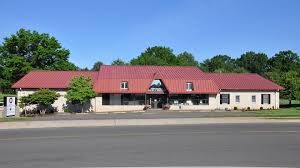 And quite a history it is. The original store opened alongside the railroad tracks in Calverton in 1883 selling general merchandise. That was the same year that “Buffalo Bill” Cody launched his first Wild West Show in Omaha, Nebraska. In other words, a long time ago.
Even more impressive, the average life expectancy for a small retail shop is about eight years. Obviously, these folks know what they are doing.
The store’s owner, Church Matthews, has hired new management to execute his revised retail strategy while keeping valued long-time employees in place. His philosophy is what is right for the customer is right for the store.
Think of the tried and the true blending with the new to create another century of success. A staff of 10 employees works as a unit to make it all happen.
To underscore the philosophy another new hire Jennifer Drunagel, is now the store’s business manager. With experience running a family-owned business, she is a Vint Hill resident and mother of two who brings contagious enthusiasm to her job.
“My husband and his family were born and raised in Warrenton,” she said proudly, and she is dedicated to the long-term success of the business.
Drunagel says, “We have a beautifully updated showroom with new countertops and cabinetry,” that will trigger buying ideas for homeowners updating their kitchens.
In addition, Warren Cabinets Inc. is located nearby and stands ready to install any cabinetry and that may be purchased in conjunction with new appliances.
Showroom floor
So what sells in the world of household appliances today? The standard suspects dominate such as stoves, refrigerators, dishwashers, washers, dryers, microwave ovens and grills. The shift has been in colors and coatings not seen in the past.
Sales manager Lexo explains: “Stainless steel is still the number one choice for color. But it now comes in different coatings, including fingerprint resistant and smudge proof to aid in keeping them clean. Black stainless steel is also popular as is black matte.”
One interesting twist is the top-load clothes washer is making a comeback. The most popular manufacturer is American made Speed Queen.
“It is the most reliable washer in the industry. It will last 20 to 25 years. Most other washers have a life expectancy of 10 to 12 years,” said Lexo. “We see a lot of people who have been disappointed with their front-load machines.”
Speed Queen is only sold through independent dealers giving Tolson a big edge in meeting customers’ expectations for the much-desired product.
Lexo emphasizes that when you purchase a product from Tolson you also buy a support team to boot. “We have our delivery, installation, and service teams who are in place to assure proper installation and follow-up on any service-related issues.”
Financing and extended warranties are available on the store’s products.
Drunagel emphasizes, “What sets us apart is our knowledge of small appliances. We know exactly what we can do to meet a customer’s needs. We have customers repeatedly come back and buy from us, even for as long as 50 years.” That experience scores more than a wheelbarrow full Facebook Likes.
In addition to the depth of its product line, there is a fully stocked parts department at the back of the store.
One of the important goals for the “new Tolson’s” is to get its message out to a younger demographic.
“We are looking to pull the younger generation into the store,” said Drunagel. With the proliferation of today’s superstores, attracting a younger buying crowd becomes critical to tomorrow’s success.
The key to achieving that goal is quality backed by competitive prices. As the author Robert M. Pirsig once said, “Quality tends to fan out like waves.” And if it is emanating from Tolson Appliance & Design Center, then may the wave be with you.
For a full description of the store’s products accompanied by an impressive gallery of product photographs, visit their website at https://www.tolsons.com/index.html
Published in the March 6, 2019 edition of the Fauquier Times.
Blue Ridge Seafood Restaurant celebrates four decades of salt life
Ask almost anyone living in Fauquier or Prince William counties if they know where the Blue Ridge Seafood Restaurant is and the answer will be a variation of, “Of course. On Route 29 west of Gainesville.”
The restaurant’s iconic sign with its large crab logo is viewed by thousands of travelers a day as they motor past the down-home eatery or into its packed parking lot. Siting the restaurant in a quiet country location and then watching development encircle it bordered on genius.
Or more likely hard work created the success.
 Rod and Cora Stringer founded the crab factory back in 1979. Working full-time as an air traffic controller Rod Stringer parlayed a part-time gig selling crabs out of a trailer in Dranesville into the beloved seafood restaurant.
Today the Stringers are enjoying the rewards of their work as retirees in Fla. They also beam with pride as they see their creation embraced by family members who are laboring as hard as they did to satisfy seafood appetites.
Mark and Donna Donavan and their son Kyle are the faces of the restaurant today. Donna is a daughter of the Stringers. She married a man like dad in Mark Donovan who is an entrepreneur in his own right. He owns Donovan Asphalt Paving in Warrenton.
“I grew up with a father that was always doing something. He had multiple side businesses. He would never sit still,” said Donna Donovan. “My mom worked in the restaurant for years.”
In the early days, success was fueled by personnel working at the Vint Hill military base who were among its first fans. Young Donna Stringer and her sister Gail worked at the restaurant then, “We helped out minimally in the beginning but then full-time as we got older.”
To keep the restaurant supplied in fresh seafood Rod Stringer traveled widely to wherever quality product could be obtained. Road trips to Fla, N.C. and up and down the East Coast were typical. The strategy paid off as customers increasingly counted on Blue Ridge to feature choice offerings on its menu.
Mark Donovan entered the picture when he met Donna at the former Napoleon’s Restaurant in Warrenton. “I asked her where she worked and she said, Blue Ridge. So, I went to Blue Ridge Hardware looking for her. I didn’t realize there was another place called Blue Ridge Seafood.”
His pursuit paid off at the altar and in the late 1980s. Rod Stringer asked him to work at the restaurant. The gig turned part-time when he developed his construction businesses and then the paving company. Today he works at Blue Ridge on weekends.
The eatery’s menu has expanded over the years and now covers the gamut of seafood and more. It showcases shrimp, crabs, clams, lobster, calamari, crayfish, haddock, scallops, mahi-mahi, salmon, flounder, and catfish. Oh, and gator tail.
If seafood isn’t your thing, choose from quail, chicken, steak, BBQ ribs, and even frog legs. Wine, beer and cocktails round out the chock-a-block menu.
If you leave this establishment hungry, shame on you.
To reinforce the popularity of the restaurant, its classic busiest days are Mother’s and Father’s Day. “We serve a tremendous number of people on those days. Our record is 1,900 people on one Mother’s’ Day,” said Mark Donovan. The restaurant seats 250 people, including its outside dining area.
To assure prompt service a staff of about 60 people is employed as needed, including many part-time high schoolers.
The future
Several members of the family’s third generation are now taking the restaurant into the future. The Donovan’s son Kyle is increasingly the point person and his role will undoubtedly grow in years ahead.
Kyle Donovan, 27, graduated from college with studies in business and hospitality. His success at managing the firm is giving his parents more opportunities to take time off from their demanding schedule. “It allows us to do more things on our own.
“We have a lot of customers tell us what a great job Kyle is doing,” said Donna Donovan. “I see him taking over more and more of the business. He is very good and he’s taking our social media to another level.” Kyle is featured in a video on the company’s website.
One segment of the business getting special attention is catering. Some modest catering occurred in the past but it will intensify in the future. In addition to two catering trucks, a special trailer is being constructed to further advance this side of the business.
Ironically, the trailer concept casts back to the Stringers earliest days bringing the business full circle. Two major catering events occurred at Philip Carter Winery with successful crab and oyster feasts. An increasing number of similar events are planned.
As the family takes aim at their 50th anniversary, Donna Donovan underscores their commitment to quality. “We use local crabs as much as we can and all of our seafood is produced in the U.S. We buy the freshest seafood we can with no chemicals involved in its production. We pride ourselves on high quality.
“It’s also gratifying to have longtime customers come back for a meal even if they’ve left the area. You lose a lot of people over the years as they move on. We consider our customers as part of our family and they come back to visit their favorite seafood restaurant.”
Blue Ridge Seafood Restaurant is opened six days a week and closed Mondays. For a mouthwatering digital visit to the ocean emporium visit https://www.blueridgeseafood.com/. Or check out their Facebook page at https://www.facebook.com/BlueRidgeSeafood/
Published in the February 13, 2019 edition of the Fauquier Times.
March 9th fundraiser to aid restoration of North American Elk
In 1855, a hunter took careful aim at a lone elk in southwest Virginia. Resting his sights carefully on the 700-pound bull he slowly squeezed off a shot and unknowingly dropped the last elk in Virginia.
Thus ended centuries of the regal animal’s existence in the Old Dominion.
The exact nature of the last elks’ demise here is conjecture but for certain it was a combination of hunting pressure and loss of habitat that saw the noble Cervus elaphus fade from our mountains and valleys.
Much like the buffalo who would be brought close to extermination in the late 1880s by professional buffalo hunters who slaughtered up to 250 animals a day, elk had the unfortunate luck to thrive and die in an era when killing wild game was dictated by hunger…or greed.
But there is a Warrenton resident who has spent 29 years tirelessly working to reestablish elk throughout the U.S., with an emphasis on Kentucky, North Carolina, and especially Virginia.
It’s a success story that many are only vaguely aware of and positions both wildlife enthusiasts and hunters for unique outdoor experiences for generations to come.
Meet Danny Smedley, a retired senior manager for an electronic funds transfer company, who ignited his passion for elk and elk hunting 29 years ago when he picked up a magazine called Bugle, published by the Rocky Mountain Elk Foundation headquartered in Missoula, Montana.
“I was out in Yellowstone on a family vacation after my first child was born. I looked through that magazine and was very impressed and joined the foundation,” Smedley said.
“About six months later, a gentleman who had been a former chair of the national organization invited me to a meeting in D.C. He said they were thinking about starting a Warrenton chapter of RMEF.
“I attended that meeting and for 29 years have been involved with both the foundation and organizing the local fundraiser that supports our cause.”
In the beginning
 The RMEF was founded in 1984 by four guys sitting around a western elk hunting camp opining that unless action was taken both elk habitat and the species itself would disappear. Its success is measured today by the 500 active chapters and thriving herds around the country. Over one million elk roam the western states.
The organization’s template was taken from the pages of Ducks Unlimited who worked tirelessly since 1937 to successfully preserve wetlands and associated upland habitats for waterfowl, other wildlife, and people.
Today RMEF has brought over seven million acres under conservation easement providing critical survival habitat for the America Elk. While the emphasis has been on western land preservation, individuals like Smedley and cadre of other dedicated sportsmen have achieved similar success in the eastern U.S.
There are now some 13,000 elk in Kentucky, 200 in North Carolina’s Great Smoky Mountains National Park, 200 near Grundy, Virginia, 1,000 fittingly thriving in Elk County, Pennsylvania, and 100 in the Monongahela National Forest in West Virginia.
By any measure, the success of the relocation of these herds represent diamonds on an elk’s rack. Moreover, the location of some of the herds is on reclaimed strip-mining land, often located in some of the poorest sections of the country.
“Down in Grundy they’ve got little cabins, a visitor center and viewing stations throughout the area. Last year we had 350 people visit the area and pay $30 each to see the elk and listen to them bugle,” Smedley said.
The positive economic impact on these rural areas cannot be understated. Moreover, as is often the case in re-establishing one species, it serves to boost the advantages for a variety of other wildlife.
Hunting is conversation
This is the slogan of the RMEF and underpins why the hunt is an integral part in saving a threatened species.
Smedley says he is often asked about the dichotomy between hunting and recovering threaten wildlife. Actually, the two go hand-in-hand. He cites as an example the tale of two birds: The America Wood Duck and the White-Billed Woodpecker.
The former thrives as both a game duck and successful survivor because Ducks Unlimited became its “sponsor”, recovering wetlands and building hundreds of thousands of duck boxes. Today it is one of the most numerous ducks in the country for the mutual enjoyment for both birders and hunters.
Conversely, the latter had no sponsor and today the White-billed Woodpecker is extinct. “A species can lose out if it does not have a purpose and a sponsor,” said Smedley.
Fundraiser
This year the RMEF’s local fundraiser will be hosted at the Fauquier County Fairgrounds on March 9th from 3:30 p.m. till 9:30 p.m.
In addition to speakers updating attendees on the success of elk restoration nationwide, there will be games, live and silent auctions with prizes as exotic as a premier elk hunt in Wyoming, an Illinois Whitetail hunt, a 10-day African safari valued at $16,000, and a two-night cabin Virginia elk tour.
High-end hunting rifles, numerous pieces of art, jewelry, and a host of related items will also the gifted to the lucky assembled. A catered big game banquet will round out the evening.
Join some 200 other sportsmen and wildlife enthusiasts and learn more about the valued work of the Rocky Mountain Elk Foundation.
Tickets are $85 each, $135 for couples and support the goal of elk revival throughout the United States. Tickets can be purchased by contacting John Overend at (703) 930-7594. For information on the foundation itself or on making a donation, reach out to Danny Smedley at (540) 222-4994.
Tickets can also be ordered online at https://events.rmef.org/shop/bullrun. A digital tour of the world of elk recovery can be taken at https://www.rmef.org/default.aspx
Finally, consider visiting any of the east coast elk recovery areas and be riveted by the sound of the haunting bugle call of this stately king of the forest.
Published in the February 27, 2019 edition of the Fauquier Times.
Weighted blankets helping the weary overcome insomnia
One of the silent health issues today is sleeplessness. Silent in the sense it occurs in the depth of night as the afflicted lies motionless, staring at walls and ceilings waiting for the sleep fairy to arrive.
Often, she fails to show or does so reluctantly in the early morning hours. The resulting next day’s work is a slog for the underpowered as they labor through another day of chronic energy loss.
Just less than 50 percent of Americans claim they are not getting a good night’s sleep. Some 164 million citizens struggle with the curse at least once a week.
Coming to the rescue—and profit—are prescription drugs and OTC sleep aids. Americans spend an estimated $41 billion annually on such remedies. The number is anticipated to swell to $52 billion by 2020.
A 2016 Consumer Reports investigation found on average, popular sleeping drugs like Ambien and Lunesta only helped the afflicted get eight to 20 minutes extra sleep a night. Even science seems flummoxed on how to treat the misery.
Given the extent of the problem, troubled sleepers will try almost anything to get some shuteye. In addition to a sea of drugs washing over the problem, numerous devices are pedaled as the secret to sawing wood in peace.
Glasses that block “blue” light emitted by tablets and smartphones are supposed to help counter the loss of melatonin, a hormone that induces sleep. White-noise machines that block distracting noise, special sleep-inducing masks, “smart” mattresses, calm-inducing smartphone apps and much more are also marshaled to solve the problem.
Perhaps one untried strategy is to simply cruise the internet looking for the best drug, device or secret to a good night’s rest. With over 33 million results popping up on the search word “sleeplessness”, an extended Google hunt might simply bore a person to sleep.
Segmented sleep
Before we jump to the conclusion that not getting eight hours of uninterrupted sleep is a calamity, let’s consider a pattern that has been around for centuries: segmented sleep.
Segmented sleep, or “polyphasic sleep”, is sleep that is divided into two or more sessions. Someone who comfortably coexists with this pattern may go to bed at 9 p.m. and wake at 1 p.m., read or work—in or out of the bed for one or two hours—then retire for a second time.
It’s not insomnia and anyone who thinks it’s unhealthy will be surprised to learn many of our ancestors slept this way until the 19th century.
Historians believe humans naturally evolved to sleep in blocks of time—not a straight eight hours. There are written descriptions dating back 3,000 years of this behavior; polyphasic sleep is even referred to in Homer’s Odyssey.
The “in between” time was considered sacred. People would use it for purposes as diverse as praying, visiting neighbors or enjoying a romantic interlude with their loved one.
Physicians in the 16th century even advised patients that the time between sleeping was ideal for conception, going as far as telling couples they, “would have more enjoyment” and “do it better” than other times of the day.
Today, one should carefully consider waking a mate at 1 a.m. with a whispered suggestion it was time to get “chummy”. But if they proceeded anyway, they might simply be displaying evolutionary behavior’s sleepy face.
Suffice to say, waking up in the middle of the night is not all that unnatural. If it works for you, enjoy. But given today’s work schedules, a more modern approach to beddy-bye may be in order.
Weighted blankets
 Into this battle for dreamland comes riding yet another claim for achieving sleep nirvana: weighted gravity blankets. Never heard of them? They’ve actually been around for a while but mostly used by therapists and psychiatry clinics.
Today the blankets are going mainstream and are increasingly catching the attention of a sleepy workforce. Whether their benefits ultimately collapse in a heap as a passing fad or settled into an accepted and proven sleep solution, time will tell.
But for many current users, the jury is in and the verdict is, “These things work.”
In clinical settings, the blankets’ history revolves around their use in an occupational therapy called sensory integration. The treatment is employed to help deal with autism and similar disorders by focusing on sensory experiences.
Let’s listen in as one manufacturer describes its blanket:
“The weighted gravity blanket is filled with hypo-allergenic, non-toxic, odorless glass beads engineered to be around 10 to 15 percent of your body weight. The deep pressure from the weight causes the body to produce serotine and endorphins, improving mood and promoting restful sleep.
“It can help promote sleep by reducing anxiety, improving cognitive function, overcoming sensitivity to touch and pacifying obsessive-compulsive behavior. The blanket can help with sensory disorders, sleep insomnia, ADD/ADHD Spectrum Disorders, Asperger’s and Autism Spectrum Disorders”.
Think of curling up in your mother’s loving arms as an infant. Huggly snuggly.
Some studies have shown the blankets do reduce anxiety, creating a safe and more comfortable feeling while sleeping. One study even demonstrated a drop in heart rates for dental patients having wisdom teeth removed.
And yet, like snake oil salesmen of yesteryear, one must be cautious when a single product promotes relief for multiple ailments.
But if the blankets work, they can achieve startling results without the use of drugs. Even some clinicians find the blankets have more up-value than many conventional sleep aids.
Proof in the snoozing
A quick review of Amazon’s verified customer reviews shows four to five-star ratings on most of the blankets for sale. Typical comments include observations such as:
“Feels really great on. I got the 20 lb. blanket and I weigh about 165. I love it.”
“After about a week of use, I feel like the blanket works incredibly well. I’ve been sleeping 8-9 hours a night, falling asleep faster and tossing and turning less.”
“I’m not a fan of being held too tight or being restrained but I must admit I love!”
“This blanket is amazing!”
Lullabyland does not come cheap. Be ready to bruise your credit card for $70 to $150, depending on the size and quality of the blanket purchased. But you may recover from sticker shock after a couple weeks of solid rest.
And if you do pull the trigger and are unhappy with your purchase, return policies for most in-store and online sales are accommodating. Nothing ventured nothing gained.
Except a good night’s rest.
Published in the February 20, 2019 edition of the Fauquier Times.
Spiritual Care Support Ministries forged in a dream
Dreams can come true. But you may have to wait 15 years and labor with endless love to see them materialize.
One story that embodies that reality belongs to Liz Danielsen, a nationally endorsed ordained minister, whose gift of compassion has changed the lives of thousands of Fauquier County citizens and beyond.
Chances are you’ve never heard of Danielsen. Scoring headlines is the furthest thing from her mind. Bringing peace to souls suffering from any number of physical and emotional torments is her only goal.
As a result of her labors, today the Spiritual Care Support Ministries is a quiet yet integral part of Fauquier County.
“For the love of God”, is often a throwaway line for exasperation. But for this dedicated minister, it is her core value and drives everything she does. The Piedmont region is a better place for the work of this love-focused individual.
The tale
The story begins in New Jersey in 1989. Danielsen was working as a hospital and hospice chaplain and repeatedly saw a need that was not being met.
Chronically ill people, those who had lost loved ones, and the personal loss of divorce, drugs, aging and more took a toll on lives beyond what physicians could cure.
One day she returned home exhausted from the strain of tending to the psychic pain of those she was ministering to. “I was very exhausted and tired because of my work and went to bed praying and asking God to give me an idea of how to meet the needs of both children and adults dealing with loss and chronic illness.
“Then I had a dream. I had all these deaths and emotional issues I was dealing with and I had a dream—a vision—of this ministry,” said Danielsen.
Intriguingly, she had never dreamed before and the next morning shared the dream with her husband who urged her to see their pastor. The man counseled that if the dream was God-directed, it would come true.
In the interim, he let Danielsen have a room in his church where she began her nascent counseling services.
One of her early revelations was to learn grief cannot be assuaged quickly. One needs time to work through emotional trauma. “If you lose a child, others may want you to move along quickly but it can take years.
“Nowadays we know it takes at least two years for people to just find they are getting back to normal after emotional trauma.”
In the course of her emerging ministry, her husband’s job was relocated to Warrenton in 2000 because of a corporate merger.
Shortly after arriving here both the Culpeper Hospital and the Hospice of the Rapidan (now the Hospice of the Piedmont) recognized her talent and hired her as a chaplain.
Almost immediately she again recognized the unmet needs of those in emotional pain. Then God stepped in. “I was in a car accident in 2004 and suffered multiple broken ribs and swelling of the brain that affected my eyesight.”
The accident was not her fault but not wanting to pursue an extended lawsuit she accepted a financial settlement from the insurance company.
 “I called that settlement my ‘seed money’ for the counseling center. My husband had a good job and he was 100 percent behind me so we used the money to open the center at 76 West Shirley Avenue.”
In a twist of irony, the location was a former palm reader business. “I felt like now we could really help people who came here. Fifteen years after my dream it had come true.”
Center’s programs
In addition to Danielsen’s own initial funding, a few grants also helped established the non-denominational, non-profit center. Some additional operating revenues come from local churches via monthly investments.
Most importantly, volunteer contributions offered by those who have been healed through the ministry’s work fund the majority of its operating budget. There are no fees for any of the services rendered.
What is the scope of the work? The center is officially opened Monday through Friday. However, with special sessions and training, it is not unusual to see something unfolding seven days a week at the center.
The ministry is led by Executive Director, President and CEO Danielsen. She has three part-time paid employees; 13 counselors; 114 volunteers; conducts almost 700 counseling sessions annually; leads a seven-member board of directors and serves some 3,000 people in need each year while publishing a newsletter for 4,000 recipients.
“The number served does not count our telephone ministry. And because of technology, I talk and Skype with people all over the world. I’ve been to Bangladesh, Nepal, England, and Australia to conduct training sessions. Not to mention my speaking engagements throughout the United States.”
Each Wednesday she conducts counseling sessions at the Chapel Springs Church in Bristow. “I’ve been doing that for years because there are people in the Manassas area that need ministering also.”
Danielsen does all of this without compensation. Her work is performed gratis.
“Because we do not charge for our services, we have locally licensed counselors who send us patients when they can no longer afford their counseling. Often these people only have so much money and after that there is nowhere for them to go. We work with children from six years old and up.
“For many of these people, the light has gone out of their eyes. To see them working toward healing is exciting for me,” said Danielsen.
A recent example of such healing was a woman who anonymously wrote an article for the center’s website describing the grief she experienced with the death of her father.
As her recovery progressed, she asked to write a follow-up article using her byline. In it, she revealed her father had committed suicide.
“She realized the way to fully resolve her grief and help others was to reveal the truth. That’s the key to our ministry. Healing is a process. A journey. And we’re here to support that journey.”
The future
Under the banner of, “what goes around comes around” the next chapter of Spiritual Care Support Ministries is emerging off of Airlie Road across from the Chestnut Forks Athletic Center.
A couple who were healed through the work of the center is funding a new 3,500 square foot counseling office that is under construction and will launch the next chapter of the organization.
“The work we are doing is so exciting. I hope to be blessed with doing it until I die, said Danielsen,” Such sentiments will surely echo from future sufferers who will be comforted through the work of this extraordinary ministry.
To learn more about Danielsen’s dream that came true, visit the organization’s website at https://www.scsm.tv/
Published in the February 21, 2019 edition of the Fauquier Times.
