
Author Archive
Part mixologist part psychiatrist bartenders pour from the heart
It may not be the oldest profession in the world but it runs a close second. Shortly after adult beverages were created some 9,000 years ago, variations of “Can I get you a drink?” have echoed down through the ages.
 Today, bartending has evolved into a noble—and demanding—profession. Top guns can pull down as much as $100,000 a year in wages and tips. But big money demands big talent, a prodigious memory and highly calibrated social skills.
Have trouble remembering recipes, names or dealing with irritating people? Then stick to the day job. And the big money? Only for the anointed few.
Nonetheless, almost 600,000 “bar tenders” nationwide play a valued role within the restaurant industry, often being the image of the restaurant or bar where they ply their trade.
Yes, a man walks into a bar but he is often drawn there by the genial and knowledgeable person manning it.
Bartenders can tie on the apron after graduating from an in-depth course costing around $500; or engage in on-the-job training as a bar-back, or assistant, as is more often case.
Schooling enables a student to learn how to make dozens of different cocktails and evaluate quality beer and wine. It also teaches the aspirant how to deal with the drinking public; a difficult and ultimately learned, not taught, skill.
So let’s recap the requirements: a quick mind, long hours on the feet, an assertive yet friendly personality and a multi-tasker with a sharp memory.
Bear all this in mind when it comes to the tip.
Fauquier County
Unlike big city nightlife, Fauquier supports a host of eating and drinking establishments that are spread across a relatively wide area. Traditional bar hopping in the Piedmont would require a sturdy pair of hiking boots.
The automobile—not walking—is the favored mode of transportation when planning to step up to the rail. It also typically means fewer drinks and less time face-to-face with your bartender. All the more reason to select a barkeep that you can connect with.
With the holidays upon us, let’s chat with a couple of Fauquier’s finest to get their take on the profession.
Connal Finn
McMahon’s Irish Pub & Restaurant
Finn, 30, is a native Irishman with a hospitality management background and the perfect brogue to work in an Irish pub. Arriving here is 2011 from the old sod, he was recruited by an agency looking for Irish talent to quench American thirsts.
Most popular drink? “The Fireball shooter (cinnamon-flavored whiskey) and Guinness draft.”
Fan club? “I’ve got my regulars but wouldn’t call it a fan club. My customers are laid back and come in for a few drinks and some conversation and are on their way. The fireplace in the winter is a draw too.
“And yes, some customers do cry on your shoulder so you become part of the conversation whether you intend to or not.”
Busiest time? “From November through St. Patrick’s Day; lots of parties around Thanksgiving and Christmas.”
The job? “As along as you’ve got your head on your shoulders and decent social skills it’s a good job. I enjoy it.”
Ivan Melson
The New Bridge
Melson, 38, is the General Manger with a bartending background of seven years at the restaurant. He’s been behind bars for a total of 16 years (no, not that kind) and has some sage observations on the profession.
Most popular drink? “Martinis; Dirty, Vodka and 007s. Scotch is a favorite too, especially our scotch and cigar tastings.”
Fan club? “Not a fan club but people do come in and ask advice or seek consolation, absolutely. I’ve said I’m an underpaid psychiatrist. People will say they shouldn’t be sharing with me but I tell them I’m paid to keep secrets.”
Busiest time? “November through March. The day before Thanksgiving and New Year’s Eve are the busiest.”
Toughest customer? “Somebody who knows exactly what they want. A good friend of mine wants a Martini with just one drop of Vermouth and two olives not three.
“Also someone who has had too much to drink. Unlike most service jobs, in this business the customer is not always right. You need to tell them when they’ve had enough. I’m responsible for them and won’t continue to serve just because they’ve had a bad day. Often they will come back the next day and thank me.”
The job? “It’s not for everybody. You have to love what you’re doing and be a people person. There are challenges every day. But I’m a social creature and I like a little chaos in my life.”
Unleash your inner bartender
 The pros know dozens of cocktail recipes by heart. But who has the time or inclination to follow suit? Simply pick a few of your favorites and commit them to memory. Here’s a starter kit of three faves.
Dirty Martini
2 ounces of vodka or gin
1 dash dry vermouth
3 stuffed green olives
1 ounce brine from olive jar
In a tumbler combine the vodka, vermouth, brine and olives. Pour ingredients over ice and strain into chilled cocktail glass.
Fireball Tart
1 ounce Fireball Whiskey
½ ounce pomegranate liqueur
Squeeze of lemon juice
Pour each ingredient into a rocks glass filled with ice. Stir well and serve.
Mojito
1.5 ounces of spiced rum
10 pieces of mint
1 tsp. sugar
½ lime juice
2 oz. soda water
Place majority of mint leaves in bottom of glass. Add crushed ice, rum, sugar and lime juice and gently stir. Add soda water and garnish with remaining mint leaves.
Published in the Winter 2015 edition of inFauquier magazine.
VDOT and Town of Warrenton poised to plow
Typically two camps form when the white stuff falls; lovers and aginners. But eventually most folks meld into a single mindset; melt already.
Welcome to the paradox of a winter wonderland. As snowflakes drift down on our pastoral Piedmont landscapes, scenes unfold reminisce of a Currier and Ives print.
It’s simply beautiful.
But the reality shifts from delight to work after the storm moves on. Let’s get those driveways and walks cleared. And oh by the way, “Where are the snow plows?”
Fortunately, Fauquier County answers that question before the snow begins accumulating. It’s taken for granted that our highways and byways will be asphalt black in short order. Why?
Because there’s no plan like a snow plan.
VDOT
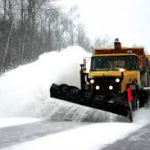 Fauquier County has two entities responsible for clearing its roadways; Virginia Department of Transportation and the Town of Warrenton.
Throughout the Old Dominion VDOT is responsible for the vast majority of the state’s more than 57,000 miles of roads.
Larger towns typically clear its snow-clogged streets without state assistance.
The scope of VDOT’s responsibilities is impressive. In Fauquier the agency maintains 2,040 lane-miles of roadway. A lane mile is the length of a road at its centerline multiplied by the number of lanes. A one-mile section of a four-lane road equals four lane-miles.
The county is maintained by the VDOT Culpeper District that has responsibility for nine counties; Fauquier being the northernmost. About 50 personnel and an equal number of trucks are assigned to snow duty in the county. Contractors augment the force when conditions dictate.
Planning for an upcoming winter begins in the spring. New snow crew employees are trained, routes assigned and equipment repairs made to assure the fleet is in action-ready mode by fall.
County roadways are segmented into three priority categories:
I-66 and major routes connected to airports, major cities, hospitals and military bases are targeted first. When those roads are cleared, primary roads with route numbers 1 through 599 are the focus of the cleanup. Finally, secondary roads with route numbers 600 and above are plowed.
Subdivisions with route numbers 1,000 and up are included in the third category. As each category of roadway is cleared, plows move on to the next segment. The goal is have all roads cleared within 48 hours of the end of a storm; a target that is often achieved in less time.
One way VDOT gets a jump start on roadbeds is to spray brine on I-66 and primary roads before a storm hits. “The liquid salt spray will only be employed if temperatures are below freezing and a weather system is expected to begin as snow not rain,” said Stacy Londrey, acting communications director with the Culpeper District.
In a heavy snowfall the agency will employ a one lane clearing approach to subdivision plowing. This enables residents to break free from their homes and head to work or go shopping. Hours later the crews return to finish plowing the entire roadbed.
Londrey advises, “The VDOT customer service center number is 1-800-367-7623.” However, she underscores that during snow storms immediate call backs may be difficult to make. Nonetheless, calls to the center will alert field management of possible plowing delays.
Town of Warrenton
The Public Works department is responsible for snow removal of the town’s 95 lane miles. John Ward, superintendent of public works, directs the town’s snow removal. He has a staff of 22 workers assigned to 12 hour shifts around the clock until all roads are cleared.
Eleven pieces of equipment are employed, including six dump trucks with plows and spreaders, one dump truck with a plow and four pickups with plows. One truck is assigned to continuously clear Broadview Avenue.
In addition to the town’s roads, he is responsible for clearing all the municipal parking lots and the access road and parking lot of the Warrenton Aquatic and Recreation Facility.
One tricky challenge his crews face is learning the location of the town’s manhole covers. “Some of the manholes stick up a little and if you don’t know where they are you are going to get a big jolt when you are plowing. After they learn the locations they lift the plow just a touch and go over it,” Ward said.
Sounds like a cavity rattling experience for newbie drivers.
The town has a dispatch center that residents can call with questions about road conditions or status of unplowed roads. “Most citizens are very appreciative of all our snow plowing efforts,” Ward said.
The center is manned 24 hours a day and can be reached at (540) 347-1107.
Easy does it when wheeling in the snow
Compared to years ago, driving in snow has become less challenging. Tire chains and rear-wheel drive vehicles have faded from today’s snowy roads. Four-wheel and front wheel cars and trucks now make getting stuck less likely.
Nonetheless, a bit of skill needs to be employed when the white stuff sticks. Arriving safely at your destination is pretty much a given when you drive with care.
Here are few tips for mastering the white stuff when behind the wheel
*Accelerate and deaccelerate slowly to maximize traction. A deft touch will eliminate fishtailing and skidding off roadbeds.
*Do not use cruise control. Much like the mystics you want to be in touch with your inner car. Reaction times are much quicker in the white stuff.
*Gas your car up when storms threaten to avoid gas line freeze-up.
*Never move the car until your seat belt is securely fasten.
*Create an emergency box in the trunk consisting of a blanket, power snacks, gloves, hat and water. If you become snowbound, remain in your car. Help will likely arrive shortly.
*Don’t stop on hills if you can avoid it. A steady firm acceleration up steep grades will help eliminate spinning tires.
*And finally, consider staying at home until the roads are clear. If you don’t have obligations, sit back in the easy chair and enjoy the winter wonderland from indoors.
Published in the Winter 2016 edition of inFauquier magazine.
Native Virginian takes keys to Madison cellar
Ben Jordan is a man on the move. Or was. He’s held a host of jobs in locales as diverse as New York City and San Francisco. Now he’s circled back to Virginia for what appears to be the end of his peripatetic travels.
“I’m a Virginia boy born and bred,” Jordan said. “So there is that draw. But it’s also the draw of being part of something that is growing and finding itself.”
Indeed. Virginia wine is increasingly recognized nationally for its quality. The industry is at a stage similar to the early years of Napa Valley. It’s an exhilarating time for a talented winemaker.

Ben Jordan
“It’s a lot more exciting and interesting to be one of the people that gets to decide what works and what doesn’t. At Early Mountain, with its state-of-the-art cellar facility and focus on quality, it’s a great opportunity,” Jordan said.
The winery has 55 acres of grapes under vine—predominately Bordeaux varieties—producing 6,000 cases of wine a year. With the emphasis on quality, production will top out at no more than 10,000 cases.
The cellar employs a gravity fed system enabling wine transfer to occur throughout the production process with minimum pumping and oxygen exposure. There are 40 stainless steel tanks and 250 oak barrels in use. French oak predominates because of its delicate impact on wine.
Country boy
Jordan, 39, was born in Staunton and raised as a young child on the Middle River in Augusta County near the family farm he regularly visited. He later attended Duke University studying biology and screenwriting. Upon graduation he moved to San Francisco.
Screenwriting was his first love and he returned east to attend Carnegie Mellon University earning a Master of Fine Arts degree.
After graduation, he moved to New York City to pursue a career in screenwriting. He worked at a wine shop while trying to establish a career as a playwright because “Nobody pays playwrights.”
His job selling wine sparked a serious interest in the beverage and he returned to San Francisco to work for a wine wholesaler and retailer.
“I got to know a lot of California winemakers, mostly boutique, and got to know them very well. I told them I wanted to learn what they were doing,” Jordan said.
Their advice was to do the actual work so he signed on as a volunteer during harvest at a winery. His talent was obvious and he was soon offered a job working both sales and winemaking.
From there Jordan went on to other wineries, making Pinot Noir in the Russian River Valley and a variety of wines in Sonoma. Screenwriting began to fade into the background.
Homeward bound
Realizing what was unfolding in Virginia, Jordan secured a job with Michael Shaps, owner of Virginia Wineworks in Charlottesville. Shaps is a respected winemaker who produces both his own wines and wines for other Old Dominion wineries.
Jordan became Shaps winemaker in 2012. “That job was my first real exposure to Virginia. I got to see much of the state. It was a terroir boot camp,” said Jordan, referring to the distinctiveness created by where the fruit is grown.

Early Mountain Vineyards
“I made more wine there in a year than most winemakers make in five years. It was very educational.”
Because of his wide ranging contacts established at Virginia Wineworks, Jordan was offered a job at Early Mountain.
“That’s the cool thing about Virginia. It’s more of a colleague thing than a competition thing. There’s a lot of sharing of information. Everybody is still figuring it out. You ask each other questions.
“Virginia is exciting. I could have stayed in California and made a career there” but he chose to come home and devote himself to the state of his birth.
Family vineyard
In addition to his full-time employment at Early Mountain, Jordan’s father owns a five acre vineyard in the Shenandoah Valley that he and his brother Timothy manage. Timothy Jordan is Michael Shaps vineyard manager so he comes with his own wine bona fides.
There are plans to establish a family labeled wine at some point in the future.
And who knows, someday Ben Jordan may also pen a screenplay on the fascinating world of Virginia wine.
John’s pick of the month
Early Mountain Vineyards
2013 Reserve Chardonnay
$34
With the holiday season upon us, chardonnay is a go to wine that complements a wide variety of foods from roast turkey to veal and pork. This 2013 rendition from Early Mountain is unique in that 15% petit manseng is blended in to brighten its acidity and aromatics. The delicate, even risky, technique of wild fermentation was employed to add further depth to an already big wine.
Aged on its lees (spent yeast cells) for nine months in predominately new oak and bottled without fining and filtering, a glass of this chardonnay is a fine example of one of the world’s most popular wines.
Published in the November 12, 2015 edition of the Culpeper Times.
Fair farmers of the Piedmont
Women represent 30 percent of all farmers—either as operators or co-operators— according to the most recent 2012 United States Department of Agriculture census.
It’s a surprising number given the traditional view of farming as male dominated.
 Here in Fauquier and Prince William counties those percentages track closely with national statistics. And yet, a woman’s role on the farm is seemingly hidden by the perception that only men drive tractors, plant fields and raise cattle.
Think again.
Women gravitate to working the land for number of reasons. Historically, a farmer’s wife always played an important role on the farm. Today, the urge to work the land is reinforced by an emphasis on healthy eating, a return to an agrarian lifestyle and the entrepreneurial spirit women have brought to other industries.
In addition, the growth of farmers’ markets has created venues for women to sell produce and other farm products directly to the consumer. In 1994 there were 1,755 such markets nationwide. Today the number exceeds 8,000.
“Farm to table” resonates because producers and consumers know the value of wholesome food. Women play an important role in the burgeoning movement.
There are a host of stories of women in agriculture in our region. Here are three typical producers.
Powers Farm
Melody Powers, 32, has always been interested in eating healthy food. She grew up on a hobby farm in northeastern Pa. and moved to Virginia as a young women. She held a few conventional jobs before moving with her husband, Kevin, to Fauquier County in 2013. They purchased a home on 11 acres.
“We always wanted to start farming,” Powers said. Kevin Powers still works full-time off the farm. She devotes all her energies to farming their small operation. Currently she tends an acre of vegetables and a quarter acre of hops.
The hops are sold to Old Bust Head Brewery in Warrenton. Her husband hopes to start a commercial brewery of his own in the future.
Her crops include tomatoes, watermelons, peppers, beets, celery, beans, winter squash and more. She markets the produce at the Manassas Farmers’ Market on Saturdays during the growing season.
This year she started a Community Supported Agriculture enterprise. CSAs are a system in which a farm operation is supported by shareholders in the local community who share both the benefits and risks of food production.
A full membership in her CSA costs $550 annually and entitles the buyer to a bag of fresh vegetables each week over a 20 week period. Half shares are also available.
“I look forward to growing my CSA. I really enjoy it. I use no sprays or chemicals” so the food embodies the best of fresh produce.
Her goal is to have two acres in production. She explains that every farm has a “microclimate and you always are experimenting to find out what grows best.
“I think local farms are really important to communities. I feel lucky I get to do this. It is hard work and takes perseverance but I enjoy being my own boss and watching plants grow,” Powers said.
Visit http://powersfarmbrewery.com/find-us-at-market/ for a full description of the farm’s produce.
Harvester Farm

Restin’ Easy
Bethany Seal, 29, comes from a farming family and her parents still work the land. The family moved to their Nokesville farm when Seal was in middle school. She recalls seeing one of her neighbors raising cattle and thought to herself “I think I want a cow!”
Seal graduated from Virginia Tech in 2007 with a degree in Agriculture and subsequently obtained a degree in Veterinary Technology. The lady farmer has her bona fides.
Today she and her husband, Bradley, have a herd of 80 registered Black Angus cattle with the goal of growing it to 200 head. They artificially inseminate both their cows and heifers to obtain industry leading genetics.
As is often the case for aspiring farmers, her career began with participation in 4-H activities. She showed her cows as a teenager and continues to do so today. The family owns three different farms and rents a fourth for a total of 1,400 acres.
Reflecting on her work she explains she and her husband employ a “divide and conquer” strategy to each day’s tasks. In the morning they assess what needs to be accomplished and independently tackle the work, sharing experiences at the end of the day. They are both full-time farmers.
A typical day involves checking the status of the herd to assure the health of each animal. Particular emphasis is placed on brood cows that are close to calving. A brood cow and calf can cost as much as $4,000 so maintaining bovine health is critical to a successful operation.
Supporting work involves repairing fences, haying and rotating pastures so herds do not “eat it to the bottom”. In the fall, fields are planted to assure a hay crop for the winter months. Weighing between 1,200 to 1,400 pounds, each a cow is a virtual eating machine that must be catered to for maximize profit.
“If you want to farm you have to love it. There are days you’ll look in the mirror and wonder what you’re doing. It’s hard work,” Seal said. “Being a farmer is not for the faint of heart. You cannot be afraid to get dirty and sometimes you have to take one for the team and end up covered in manure.”
Another reason the consuming public owes a debt of gratitude to farmers.
Seven Oaks Lavender Farm
Deborah Williamson hails from a multi-generational Pa. farming family. During her teenage years the family moved to a farm in Catlett. It was a hobby farm with all the “Green Acres” suspects of chickens, calves, ponies, horses and a big garden. “It was a lot of fun,” Williamson said.
Nonetheless, by the time she was a young woman, she left the farm to seek her fortunes elsewhere; first in the Virginia Tidewater region and later in New York City. “I swore I’d never live in the country again. There’s not a whole going on there” for a grown woman.
But when her son, Lincoln, was two-years-old she realized she did not want to raise him in the Big Apple. “I wanted to raise him in fresh air and around my family so I moved back to the farm. I have three brothers and a sister and we all live within 15 minutes of each other,” Williamson said.
A trip to France with her mother and sister created the idea of starting a lavender farm. She researched the business and found there were few such farms on the East Coast.
Lavender has a long history of cultivation. During colonial times the flower was grown for a variety of uses including sachets for use in closets and drawers to scent clothes with its floral aroma.
It is also known for its calming and relaxing effect and as an aid for sleep. You can cook with it or just smell it to reap its calming benefits.
Williamson and her mother, Edith, jointly work the farm and have almost four acres of lavender under cultivation. Customers do most of the harvesting. In early June, the crop is ready to market and customers come from around the state to buy the flowers.
In season—June and July—an entrance fee of $4 for children and $6 for adults is charged in addition to 15 cents for each cut stem. The perennial plant grows up to six feet wide and produces 2,000 flowers each.
The farm was started in 2003 and opened to the public in 2006. Four years ago Williamson became a full-time lavender farmer. “It allows me to be the kind of mom I want to be because I get to work at home,” single parent Williamson said.
Her son is now 16-years-old and plays on the Kettle Run High School varsity football team.
“It’s been a struggle but with the help of my family we made it through. For the past four years we have been quite profitable.” She devotes full-time to the farm’s success.
For additional information on the farm’s operational hours and products visit http://www.sevenoakslavenderfarm.com/
Published in the Fall 2015 edition of the Piedmont Business Journal.
Over three decades of successful winemaking
It’s fitting the original founder of Prince Michel Vineyard and Winery was a Frenchman; France has produced wine for over 2,000 years. Jean Leducq and his wife Sylviane established the winery in 1982 when Virginia was in its wine infancy.
But in 2002, Jean Leducq died and his wife sold the winery to Kristin Swanson Holzman. Together with winemaker Brad Hansen, the pair has grown Prince Michel into the fourth largest winery in the Old Dominion, producing 45,000 cases annually.

Brad Hansen
“I have been with Prince Michel for 16 years. I couldn’t imagine a situation arising that would make me jump away from this,” Hansen said smiling. “We have kind of a family relationship. It goes beyond just showing up. We are all looking out for each other even out of the work place.”
The family-like atmosphere may well be the basis for the quality wines produced at the Leon facility, located on Route 29 south of Culpeper. Karma goes into every bottle coming off the bottling line.
The winery produces two brands: Prince Michel and Rapidan River Wines. The former are traditional drier wines and the latter sweeter and fruit wines. The branding employs market segmentation providing customers a wide spectrum of wines to choose from.
Proprietor and vintner
Holzman and Hansen have a long working relationship that dates to when she sold grapes to Prince Michel over 15 years ago. Holzman farmed Ivy Creek Vineyards in Ivy, a respected vineyard that consistently produced quality fruit. Hansen established a long-term contact with her that eventually led to her buying Prince Michel.
Prior to grape growing, Holzman was a successful interior designer specializing in luxury yacht interiors. Her success led to establishing her own design company in Florida and eventually purchasing a historic property in the Charlottesville area.
The land was producing Viognier and Merlot grapes and set the stage for her next career as winegrower. The serendipitous purchase of her grapes by Hansen led to her buying Prince Michel in 2005.
As a young man Brad Hansen earned a degree in Botany and a Master’s Degree in Enology. He worked at Chateau St. Michelle and Columbia Crest in Washington State before returning East and to the eventual position as winemaker at Prince Michel.
In 1990, he married his wife Lydia and together they raised two “winery children” at Prince Michel, Christian and Isabella. “Both of our children grew up in the winery with me. I have lots of great stories of them helping me clean barrels, tanks, and doing other winery work,” Hansen said.
The hard working winemaker and family man has earned more than 400 medals for his wines.
Vineyard strategy
When Leducq established the winery 33 years ago, he grew his vineyard to 500 acres under vine; an exceptionally large planting even by today’s standards.
But it was also an era when vineyard managers were struggling to decode the secret behind what grapes to grow where. The “somewhereness” of a grape’s soil and climate is critical to sussing out the best properties of the fruit.
One grape that failed to fall in love with Virginia was Riesling; Leducq had planted 150 acres of the varietal that eventually had to be abandoned. Like many pioneers he left a legacy useful to future grape growers. Riesling is not widely grown in Virginia today.
As a result, in 2002 Hansen began sourcing fruit from quality vineyards from around the state. The strategy offered two advantages. First, it created a diversity of flavor profiles and secondly mitigated the dangers of a given seasonal crop failure by eliminating the “all eggs in one basket” approach to farming the delicate Vitis vinifera grape.
“I cherry picked the better Virginia vineyards and developed long-term relationships with the owners,” Hansen said.
 Today, the original Prince Michel vineyard has been reduced in size to six acres under vine; Pinot Grigio and Chardonnay are the two varietals grown on site. The majority of fruit is now sourced from six premier vineyards scattered across Virginia.
Symbius
Ask a winemaker what wine he or she is most proud of and you’ll likely get a hedge answer such as “all of them”. But of course.
In reality, a handful of beauties will truthfully come to mind for most winemakers.
Acknowledging that crisp, white wines are his summer favorites Hansen says, “When the weather turns, I’m in love with Symbius.”
Explaining modestly that the red blend “makes itself”, the effort in creating it belies that opinion. “We take all of the reds from a vintage and Kristin, Lydia and I blind taste them. We will taste 300 or 400 glasses and come up with the best of the best,” Hansen said.
Out of the seemingly endless number of potential red blends comes Symbius. “If I am not satisfied with that vintage blend, I will not make the wine that year,” Hansen emphasizes.
Typically, the final product receives four to six years of barrel aging before it is released to its waiting followers.
Prince Michael Vineyard and Winery is opened seven days a week. For information on hours of operation, events and more visit http://www.princemichel.com/
John’s pick of the month
Prince Michel Vineyard and Winery
2010 Symbius
$34.99
A rich blend of Bordeaux varietals, the wine displays a deeply colored red in the glass with aromatics of black fruits and currants. On the palate, full-bodied flavors of blackberry and currant dominate followed by a long, silky finish.
Pair this red beauty with a petite filet mignon and Yukon Gold mashed potatoes. To further enhance its enjoyment, add a gently crackling fireplace.
Published in the October 15, 2015 edition of the Culpeper Times.
Moon shining brightly on legal & illegal distilling
In 2005, there were some 70 craft distilleries in the United States. Today, over 700 are in operation and a few years hence it’s projected over 1,000 of the watering holes will grace the Nation’s landscape.
Craft distilleries generally produce less than 10,000 bottles annually; often much less. By comparison, bourbon producer Jim Beam churns out 90 million bottles a year. The $70 billion distilled spirits industry is dominated by the major producers. Small distilleries generate less than 1 percent of sales.

Home pot still
On the amateur side, some industry observers believe there are over 50,000 home nano-distillers who are operating without a license; not a risk-free endeavor for scoring a few bottles of liquor considering the severe penalties for firing up an unregistered still.
Here in Virginia, there are 21 holders of distilling licenses; many of them producing less than 5,000 gallons annually. The most recent entrant is Old House Vineyards and Distillery in Culpeper; sales began in June 2015.
So what’s driving the resurgence in booze?
The demand for hand-crafted, artisanal beverages and the creative urge to produce such libations, coupled with the reduction of licensing fees to operate smaller distilleries.
The cost of obtaining a legal license in Virginia is modest; $450 for producing less than 5,000 gallons annually. But it takes serious money to buy the stills and other related equipment; putting a $200,000 dent in the checkbook is not uncommon.
The days of moonshining in mountain hideaways may be fading just as urban hobbyists and professional distillers are gaining traction in the world of upscale social lubricants.
Fauquier County
Over two dozen wineries and one brewery are currently operating in Fauquier County but no distillery has yet opened its doors. Knowledgeable sources think it won’t be long before the county will be able to boast a trifecta of libation production; beer, wine and whiskey.
If the prediction comes to pass, look for the product to be hand-crafted and of superior quality. Our current alcohol alchemists have a reputation for excellence; creating highly rated “water of life” would likely be no exception.
As for the traditional moonshine trade in Virginia, in 1941, the ABC Division of Enforcement seized an all-time high of 1,771 illegal stills.
In 2011, a collaborative four-day air and ground operation between the ABC and Virginia State Police resulted in the discovery and destruction of just 25 inactive but operational stills in Franklin, Pittsylvania and Carroll counties. Clearly, things have settled down since the heyday of the professional moonshiners.
While few county amateurs are ready to crow about their home operation, it’s certain to be happening based on similar activity around the country.
Home nano-distillers are able to fly under the radar because selling their product is not in their “business plan”. Home distillers often eschew the moonshiner tag, largely considering it an insult. Their only goal is to enjoy crafting a beverage in extremely limited qualities, often as few as 3 or 4 bottles at a time.
As one home distiller of wine explained, “I purchased a small stove top distiller in Portugal 15 years ago. Since then, I’ve distilled wine into brandy more than 50 times and aged it in a 5 liter oak cask. As it’s consumed, I distill a new batch. And truthfully, while my brandy is good I can buy higher quality stuff. The fun is in the doing.”
It’s the law
A misconception held by many is that producing distilled spirits at home is legal; just don’t try to sell the hooch. And while backyard distillation of a bottle of alcohol seems innocent enough, both federal law and the Virginia ABC takes a decidedly different view. In response to an inquiry to the ABC, their response read:
Producing ANY amount of a distilled spirit (even a single bottle for one’s own consumption) is a Class 6 felony with a penalty of 1-5 years imprisonment or jail up to 12 months and up to a $2500 fine, either or both. Simply possessing a still or distilling apparatus without a license from the ABC is a Class 1 misdemeanor, if convicted.
Wannabe moonshiners beware.
Published in the Fall 2015 edition of inFauquier magazine.
Note: After six years of writing for a wide variety of regional publications, I finally got a chance to interview myself. The editor of our community magazine asked me to profile our family; which of course I embraced.
 Hidden from view while embracing the good life
Tucked away in a tucked away part of the world might aptly described the Hagarty home at the end of a cul-de-sac on Tattershall Way. The old chestnut “you can run but you can’t hide” might be true. But why would anyone consider hiding if the Piedmont region is beckoning with endless beauty and activity.

Jean
So it was in July 2001, John and Jean Hagarty pulled up 23-year-old roots in Reston and headed out to one of the prettiest little communities in the Old Dominion.
John had just retired from the U.S. Postal Service as an executive in its Government Relations Department in Washington, D.C. Jean would soon retire from Giant Food as a pricing analyst monitoring the firm’s competition over a four-state area.
What they left behind physically—but took with them emotionally—were four adult children; three sons and a daughter. Little more than a decade later, all four were married, nurturing 10 grandchildren and living within an hour’s drive of South Wales.
Second careers
So did the peace and charm of South Wales lure the retirees into rocking chairs? Hardly.
“When I first retired I would pinch myself in the mornings to make sure the golden years had actually arrived. But within three months I was antsy to do something,” John recalls.
That “something” was an eclectic group of fun jobs, including golf course marshal, pro shop employee, and milking cows at a local farm. “Jean wasn’t too happy with that job. Phew, did my clothes stink at the end of a shift,” remembers John.
Then lighting struck. Chrysalis Vineyards in Middleburg was seeking a cellar assistant and John applied and got the job. “Within two weeks of being hired, I learned the real title was ‘cellar rat’. I loved it,” John said.
Running a fork lift, pumping wine from one stainless steel tank or barrel to another, cleaning equipment and working endless hours at harvest time left John with a love of wine and winemaking.
A year later, he left the Middleburg winery for a shorter commute to Rappahannock Cellars in Huntly, located seven miles south of Front Royal. He worked the tasting room there and then assumed the position of manager, special events, a part-time job he holds today.

Jean’s favorite
He also became a home winemaker, producing over 40 cases of wine a year in his basement “cellar”. Three years ago, he expanded his social libation activities by becoming a home brewer.
Meanwhile, Jean was casting about for her second career. One day while joining John on a wine delivery, the owner of the Inn at Poplar Springs in Casanova offered her a position as office manager. “It was a beautiful and historic property. I enjoyed working there,” Jean said.
But after five years, she resigned to enjoy some time off.
Her availability soon became known to the couple’s pastor at St. Peter’s church in Little Washington who was seeking an office manager. She accepted the job on a three-day-a-week basis. Today, her management skills coordinate a broad range of activities at the little country church.
And it’s true, small is beautiful. The Catholic church in Warrenton has over 1,200 families; by comparison, St. Peter’s has 130.
“I love working there. It’s contributing to the community. You never know what you’ll be working on; a baptism, a marriage, a person in emotional or financial need, or a funeral. Church work spans the most emotional parts of a person’s life. I’ve made many wonderful friends there,” Jean said.
So does winery and church work embody all of the good life? Not quite. Jean is an ardent cat lover and tends to four house cats and four ferals. Even a trip to the mailbox will find Jean bending over to rescue a struggling worm seeking refuge in the moist lawn. “I call her St. Jean of Assisi, John said. “If it’s living, Jean seeks to comfort it.”
She also has devoted herself to “feathering the nest”. Visitors to the Hagarty’s residence often remark on the furnishings and color coordination.
John, on the other hand, seeks fulfillment of a different nature. He golfs twice a week, hikes and backpacks with a local club called Boots ‘n Beer (a drinking club with a hiking problem) and is active in the Knights of Columbus.

Hiking with Boots’nBeer
He also channeled his love of wine into founding of the South Wales Wine Society. The group has met over 45 times in the last seven years. “Getting to know your neighbors over a glass of wine is the heart of community living,” John said.
Six years ago the editor of Culpeper Times asked John to pen a monthly column on wine. The job led to writing for a number of regional newspapers and magazines. All of his work is posted on his web site Hagarty on Wine.
And mutually, John & Jean maintain two Adopt-a-Highway sections. The primary section is a three-mile stretch on Colvin Road, part of which borders South Wales. The second two-mile section is on Hume Road running past Rappahannock Cellars.
With respect to their highway cleanup activity, John reminiscences that almost 40 years ago he attended a conference where The Happy Warrior, Senator Hubert Humphrey from Minnesota, was speaking.
“I suspect it was one of his standard stump speeches. But it was a forceful declaration of how each citizen can make a difference in the quality of life in America. One line in the speech spoke about starting small, such as picking up a piece of trash beyond the confines of your own property.
“That thought resonated with me, and I have tried to employ the philosophy in my life. Small actions can, indeed, lead to meaningful change,” John said.
John and Jean Hagarty celebrated 50 years of marriage this past spring and show no signs of slowing down. Could some South Wales magic be in play here?
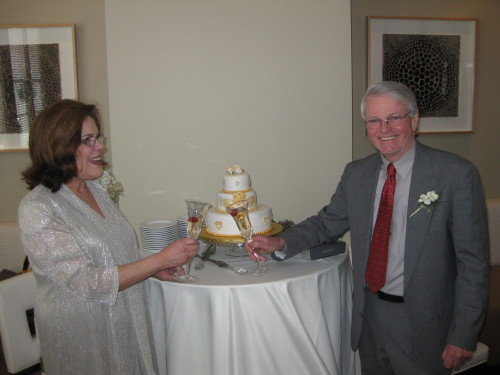
Fifty years and counting.
Published in the November 2015 edition of Life at the Trails.
Fermenting success at Old Bust Head Brewing Company
In January 2006, Ike and Julie Broaddus were riding high. The power couple had just sold their Century 21 real estate company and were casting about for a new venture.
It was a given further success awaited them. After all, by the time they placed their real estate firm on the market they had built it into the largest Century 21 company in the world, employing 400 people in 14 different offices scattered across northern Virginia and southern Maryland.
Nonetheless, it took a few years before the beer began flowing.

Ike Broaddus
In the interim, the couple developed a deep interest in Fauquier County and worked for various non-profit organizations supporting land preservation. As a result, Ike Broaddus landed a job as board member, and then chairman, of the Vint Hill Economic Development Authority. Within a few years, he was its director.
Meanwhile Julie Broaddus pursued her interest in Fauquier history working on the county’s architectural review board and supporting historical events.
She also spent over two years researching and writing a manuscript based on civil war diaries of county residents. The document is used by researchers and will be published in the future.
Ignition
In June 2010, Charles Kling walked into Ike Broaddus’ office seeking a building in Vint Hill for a brew pub. Kling held a degree in chemical engineering and had extensive experience as a commercial brewer of craft beers, acquiring multiple awards.
At the time, Kling was employed at the Patent Office and recalls he took the position “to get a real job and settle down. I soon realized that was not going to be a long term plan.” Once a brewer always a brewer.
Over the course of two years, Kling impressed the Broaddus couple with his smarts, drive and brewing expertise. It occurred to Ike Broaddus to join forces with the brewmaster; not just to open a small brew pub but a full brewery. Kling agreed.
So the two guys wanted to make beer; no surprise there. But a cooler head prevailed and forced an in-depth analysis of the proposed venture. “Ike and Charles worked for a year and a half to convince me that it was the right business for us to invest in,” said Julie Broaddus.
It was time well spent. Starting a business from scratch is a challenge. Less than 50 percent of small businesses make it past four years. A brewery is a major financial commitment. It’s not a sound move to roll the dice with the family bank account in play on an ill-advised project.
As the intense planning for the brewery unfolded, Ike Broaddus was steadily working himself out of a job. He knew that soon all the the properties for sale in Vint Hill would be snapped up leaving him unemployed. Type A personalities don’t like to sit around so the Ike-Julie-Charles team became Old Bust Head Brewing Company.
Taking Flight
After evaluating several properties, it came as no surprise that the brewery was located in Vint Hill. The next task, among many, was naming the business and creating a marketing plan. “I developed the brand,” Julie Broaddus said. “I came up with proposals to present to Ike and Charles.”
They all wanted the brand to reflect their commitment to quality, sense of community and nostalgia for Fauquier County. “We were rural. We were fun. We were down to earth. We were not a scary brand. Charles makes beers that are delicious. Anyone would love these beers. We wanted a brand that was inclusive,” Julie Broaddus said.
Her knowledge of county history also came into play. The Broaddus’ live on Old Bust Head Road. The oldest part of their home dates to 1734. Over 250 years ago, a wheelwright shop was located at the bottom of their property. It also housed a small moonshine operation.
One day one of the locals got deep into his cups and tumbled off his horse. It was an era of nicknames and the tipsy local became know as “Bust Head”. The name stuck and evolved over the ensuing decades with the nearby lane being called Old Bust Head Road.
Success again
 This year Old Bust Head Brewing Company will produce 5,000 barrels of beer; that’s 1.5 million bottles. Full production will take at least five years to achieve; production will top out at 30,000 barrels annually.
So what does the brewery team think of their successful enterprise?
“It’s a wildly complex business. There are so many moving parts and that’s what makes it so much fun. And we are the only brewery in Fauquier County,” said Ike Broaddus.
“I started with a vague business plan and its been a lot fun to see how its worked out. It’s a dream come true,” Charles Kling said.
Julie Broaddus puts their success in perspective by saying, “We’ve hosted over 100 events in our taproom since opening. And we’ve given over $11,000 to charities in donated tours and tastings. We want to help others do good.”
Having fun, pleasing people and gaining satisfaction; sounds like the perfect business.
We’ll drink to that.
For additional information on the brewery’s operating hours and events, visit https://www.oldbusthead.com/
Here’s to your health
Wine dinners are a common offering at many Fauquier County wineries. But today’s craft brews are so flavorful and diverse that beer dinners are rapidly gaining in popularity. Here’s a recent Old Bust Head Brewing Company menu for a dinner held at a local eatery.
Salad: Winter field greens, caramelized baby onion, Gorgonzola cheese, pickled walnuts, paired with Wildcat IPA
1st course: Smoked IPA braised pork belly, fennel cabbage slaw, paired with Virginia Hop Harvest Smoked IPA
2nd Course: Brewer’s lamb pie—a twist on shepherd’s pie—and prepared with plenty of beer, topped with cheddar leek mashed potatoes and paired with Bust Head English Pale Ale
Dessert: Chestnut porter brownie, vanilla ice cream, porter infused chocolate sauce, paired with Chinquapin Chestnut Porter
Hoppin’ good stuff
Most beer drinkers divide into two groups: Those who like a strong hop impact in their beer and those who prefer a more modest touch. The former folks are typically called “hop heads” and wear the moniker with pride. The rest of the beer world often wonders, “How can you drink that stuff?”
But beer without some hop impact would be tantamount to drinking Kool- Aid. Hops are a critical component of any beer. They contain an essential oil with a very bitter flavor. The bitterness counters the sweetness from the malt and creates a balanced libation. It also acts to preserve the brew.
One of the strongest of hoppy beers is called an India Pale Ale. It can contain 60, 70 or even 100 IBUs, or International Bittering Units; an industry measure of the hop strength.
Conversely, a pilsner or stout beer will contain 20 to 30 IBUs. Currently, much of the domestic hop cultivation occurs in Washington State but there is a nascent Virginia hop industry that will be producing some distinctive brews in the years ahead.
Published in the 2015 Fall edition of inFauquier magazine.
Living large not in the cards for yesteryears bad boys
The year was 1808 and the bandit was being hosted at the new jail in Warrenton. But unlike the town’s previous five jails this structure had four separate cells instead of just one.
What it didn’t have was furniture, heat or a jailer. The sheriff simply the tossed the miscreant into a small dirt floor cell and apparently fed him whenever the opportunity arose.
If crime paid back in those days, it came with a potentially high price in misery.
 Then in 1823, a form of local prison reform resulted in a second building being added to the eventual prison complex. Prisoners now had all the comforts of home; wooden floors, a wood burning stove and an attentive jailer who lived in the original jail building and provided home cooked meals. Home cooked. Not gourmet.
The jail went on to enjoy a 143 year run of hosting Fauquier County’s hall of shame members before closing in 1966. The “new” jail, off Lee Street, has been in operation for almost 50 years.
We know all these details and much more because of a long line of paid and volunteer members of the community who have slowly brought the old jail back to life.
The most recent and current “guardian angel” of the hoosegow is Teresa Reynolds, director of the Fauquier History Museum at the Old Jail.
“We came in when the buildings were empty. We reverted the kitchen back to 1823 conditions. When visitors come today, they actually see the original walls, floors, cooking hearth and pots.
“The cells themselves were reverted to the early years to let visitors get a good idea of what the original cells felt like,” Reynolds said.
The restoration started in the early 1970s and has patiently and faithfully brought the entire prison complex back to life.
Exhibits and more
In addition to reliving the life of incarceration in the 1800 and 1900s, the old jail has other fascinating exhibits. Upstairs in what is called the War Room there is a tent exhibit showcasing medical treatment during the Civil War. It contains surgical implements and other items used to treat soldiers.
“We explain how people died during the war; most people died from illness not gunshot wounds. They had septic, bad water and bad food conditions,” Reynolds said.
In the back building there are exhibits on the history of the local wine industry, 19th century hand tools, pre-automobile transportation and African American schools.
There were 37 African American schools in Fauquier in the 1900s. There is also an exhibit on the Underground Railroad that was used to secret runaway slaves to safety in the North.
To further bring history to life historians are periodically invited to give talks at the museum. Such past events covered the War of 1812, World War II and John Mosby.
There is a small admission fee to the Old Jail; $2 for adults and $1 for students, ages 11 to 18. The modest fees help cover the cost of operating the museum. “Less than 25 percent of our operating funds come from the county and town. The rest we have to earn ourselves to keep our doors open,” Reynolds said.
 The Old Jail is located at 10 Ashby Street and is opened six days a week from 10 a.m. to 4 p.m.; closed Tuesdays. Visit its website at http://www.fauquierhistory.com/ for information on its tours, exhibits, gift shop and more.
Spooky tours
One of the most popular programs the Old Jail hosts sponsors is its annual ghost tour. The tour starts in the museum with period costumed docents sharing stories about suspicious paranormal activity in the jail. It then moves on with a walking tour down Main Street where a variety of spooky stories are brought to life by the knowledgeable guides.
“There have been some bad people and odd things that have happened in town and we share that with the visitors,” Teresa Reynolds said.
The tour ends back at the old jail where everyone enjoys hot cider and tasty treats. The tours will be held this year every half hour from 7 p.m. to 9 p.m. on October 16-17 and October 23-24.
Reynolds encourages the interested public to sign up early for a tour. “All them are sold out every year,” Reynolds said.
Published in the Fall 2015 edition of inFauquier magazine.
Delaplane estate rising to new heights
 Even from a distance the edifice looks imposing. Understandably so. Its spacious tasting rooms and cellar clock in at over 20,000 square feet of spotless modernity.
As you wind gently up a country lane to the winery—perched on the highest point of the 63 acre property—its stature is fully revealed. But there’s a dilemma; gaze at the impressive two-story field stone winery or the 360 degree views of rolling countryside and Blue Ridge Mountains.
The solution? Head inside and taste the wines.
As one approaches the large arched front doors chances are you’ll be greeted by your first host, Jill, a ten-month-old beagle with a wagging tail. The signal is clear. This is an upscale establishment with a down home feel.
Children are also welcomed because “We have four grandchildren of our own,” co-owner Helen Zissios said.
Opened in April 2015, the multi-million dollar winery is gaining buzz as oenophiles visit and spread the word. And as impressive as the facility and grounds are, the project is not yet fully realized. Grassy picnic areas, waterfalls and a Koi pond are a few of the amenities still to come.
One guest remarked he had “visited some 200 Virginia wineries and Blue Valley has the best views of them all.”
Family affair

Stergio Zissios
The winery has evolved from dream to reality due to the passion of the Greek Zissios family. John and Helen Zissios and their three adult children have all played a role in its creation. Their oldest son Stergio is the key player in the winery.
The story began one Sunday 18 years ago when mom and dad were enjoying a Sunday drive in Fauquier County. “My husband saw a sign on the ground covered with leaves,” Helen Zissios said. Upon inspection it revealed the property was for sale.
Unfortunately, it was the John Marshall estate consisting of 400 acres, more land than the family wanted. They offered to buy a portion and were rejected. But two weeks later the sales agent called back and asked then to pick out the lot they wanted.
The vision of a winery had not yet materialized. John Zissios had been a home winemaker for decades and simply wanted to grow grapes and enjoy the country life. Years later his oldest son Stergio convinced the family to build a winery on the very location the family home was to be situated.
It’s been a labor of love since. Helen Zissios says some people think a wealthy and detached owner is behind Blue Valley “but it’s not true”. While a sizeable portion of the family’s money has been invested in the business, their son Stergio, 34, reminds visitors 85 percent of the winery construction was completed by him and his father.
Hands on personifies the establishment.
And where does such skill sets come from? His father founded Capitol Services Heating, AC, Plumbing and remodeling thirty-five years ago. His second son, Demos, 33, runs the Falls Church firm today. Daughter Katerina, 28, is a Physician Assistant.
The wines
As experienced as John Zissios is in making wine, he wisely employed consultant John Levenberg to oversee his work. Levenberg made wine in California, France and New Zealand.
Wine Spectator magazine rated one of his reds as among the three best wines of the 2002 Bordeaux vintage. He also produced 23 wines rated 90 points or higher by wine legend Robert Parker, including two 100-point wines he crafted while working at Paul Hobbs winery in Sonoma County, CA.
With the pressures of running a new winery, John Zissios hired a talented young winemaker, Tyler Henley, in 2014 to craft his future wines. A tour of the wine cellar reveals over 30 stainless steel tanks, numerous French and American oak barrels and a dramatic stone-lined banquet room available for private dinners.
Currently, there are seven varietals grown on 17 estate acres with plans to expand plantings in the future. Last year, 9,800 cases of wine were produced with a goal of 20,000 cases rolling off the bottling line by 2022.
In addition to Virginia grapes used to make wines, the family buys fruit from California to help meet its production goals. The Zissios family is currently harvesting their own grapes. As more estate fruit becomes available, out-of-state purchases will be phased out.
The deft touch of John Zissios and John Levenberg is evident in the 11 clean and flavorful wines currently being poured in the tasting room.
 “We are very particular about our wines and our service,” Helen Zissios said. The proof is in the bottle and the friendly staff. And the pièce de resistance? An expansive deck with umbrella tables off the side of the tasting room. A glass of wine can last a long time in such a setting as guests sip, gaze and unwind.
Blue Valley Vineyard and Winery is opened seven days a week. Visit http://www.bluevalleyvineyardandwinery.com/ for directions, operating hours and events.
John’s pick of the month
Blue Valley Vineyard and Winery
2013 Celebration
$38
A unique blend of Cabernet Franc, Merlot and Sangiovese. The full-bodied wine presents with delicate aromatics and a rich mouth feel. The palate is replete with blackberry, cocoa and toasted vanilla. Aged in new French and American oak for 14 months, the wine is elegant, fruit forward and suitable with a wide range of grilled meats.
Hiking back to a forgotten era
There’s a secret hiking jewel less than 10 miles from Warrenton. Admittedly, it’s an open secret since The Nature Conservancy has owned the property since 1960.
 But on any given day the footpath is lightly used. A walk on peaceful Wildcat Mountain will lead you to believe you are in the wilds of West Virginia. If a quiet and beautiful outdoor experience resonates with you, this preserve delivers.
There are patches of ancient oak and hickory on the mountain but the land was mostly cleared for farms in the early 18th century. Well-preserved stone walls still crisscross the mountain marking the boundaries of former fields.
Many of the mountain homesteads were abandoned after the Civil War but some farming and considerable logging continued into the 20th century. Today, the entire mountain is forested as nature reclaimed the land.
The mountain received its name more two centuries ago when wildcats freely roamed the area. And no, don’t be concerned about jumping one today. They’ve long since left the area.
Benefactors
So who do we thank for this unique gift? First, the Arundel family who donated the property to The Nature Conservancy. Nick Arundel, who passed away in 2011, was a legend in the Piedmont region. He was a journalist, philanthropist and conservationist.
He donated the 655-acre Wildcat Mountain to The Nature Conservancy 55 years ago, making it the oldest TNC preserve in Virginia. The organization then created a three mile trail circumnavigating the mountain (2.9 to be persnickety). It’s open to the public seven days a week from dawn to dusk.
And while a three mile walk may sound a bit on the light side of a good workout, don’t be surprised if it takes two hours to cover the distance.
 There is some decent elevation gain on the front end of the hike that offers a challenge. And a variety of small signs posted on trees provide hikers an opportunity to learn about the forest they’re walking through. Think outdoor classroom on boots.
Perhaps most interesting, an abandoned spring house and farm house built around 1900 by Enock Smith is located mid-way on the circuit. Smith’s parents lived in a one room cabin built in 1830 that was located behind the farm house. Only the chimney remains today.
TNC is a charitable environmental organization whose mission to “conserve the lands and waters on which all life depends.” It was founded in 1951 and operates in all 50 states and 35 countries.
It has over one million members and has protected more than 119,000,000 acres of land and 5,000 miles of rivers worldwide. Its 2014 assets totaled $6.18 billion. Fauquier County is fortunate to have land owned by the organization which in turn is made available to all citizens to enjoy.
Move’em out
With your boots laced up, the hike itself officially begins a tenth of a mile from the parking lot. The website Hiking Upward offers a succinct description of the walk:
From the parking lot walk up the gravel road for 120 yards to the point where the road comes to a T, turn right, following the trail signs and shortly pass a chain gate. Begin the steepest section of the hike as the trail makes several switchbacks for 0.4 miles climbing 400 feet in elevation before reaching a stone wall and intersection of the main loop.
Turn left following the trail signs as it descends the ridge for 0.6 miles then turns right and follows one of the many small fire roads.
The fire road will veer left uphill, then pass around a small rise before reaching a split in the road in 0.3 miles. Stay left downhill and cross a steam. Climb 50 yards to the next intersection where the loop trail turns right. Turn right continuing to follow the loop trail on a dirt road believed to be the one of the oldest roads in Virginia.
In another 0.1 miles arrive at the spring house, a replica built in the early 1960’s, with the original spring box just uphill. The Smith house further up the rise, was constructed in the 1900 by Enoch Smith, and remained occupied for most of the early 20th Century.
Turn right at the yellow blazed Wildcat Mountain loop trail as it crosses over the earth embankment of a small pond. In 0.2 miles from the pond arrive at a stone wall and the fire road intersection on the right. Remain straight following the trail signs for 0.5 miles where the trail turns right off the fire road. Follow the trail signs now downhill before arriving back at the beginning of the loop in another 0.3 miles.
Turn left downhill at the end of the stone wall, retracing the route 0.4 miles back to the parking area.
 There are several side trails that lead to adjacent private properties. Hikers should stay on the yellow blazed trails to avoid getting lost. For a full description of the hike with map and photos visit http://www.hikingupward.com/ and search Wildcat Mountain.
Off to the trailhead
A good spot to launch your trip to Wildcat Mountain Natural Area is Fauquier High School. Proceed west on Old Waterloo Road for 3.5 miles. Old Waterloo Road turns left but continue on the same road that now becomes Wilson Road. Go 2.5 miles and take a right on Carters Run Road. Drive 3.1 miles and take a right onto graveled England Mountain Road. Proceed 0.1 of a mile to parking lot on right.
Walk 0.1 mile up hill to trailhead on the right. Enjoy your walk!
Note: I am a member of Boots ‘n Beer; “a drinking club with a hiking problem.” The men-only club regularly sponsors hikes throughout the Piedmont region and Blue Ridge Mountains. Each hike concludes with a rehydration stop at a local pub. Visit http://bootsnbeer.com/ to become a member.
Published in the August 2015 edition of the Warrenton Lifestyle magazine.
Farming the land for over two centuries
In 1794, a tax protest erupted in Pennsylvania that became known at the Whiskey Rebellion. It’s also the year that a pioneer family established Sharp Rock farm in western Rappahannock County.
Perhaps it’s fitting the farm’s original founder and its current owner have a link to the production of each era’s popular libation; whiskey then wine today.
 Sharp Rock farm received its moniker from a well-known landmark that jutted out of the Hughes River that flows past the property. Decades ago the huge boulder was leveled off and a bridge built over it. Nonetheless, the original name of the property has prevailed for 221 years.
Jimm and Kathy East are the current proprietors of the farm, boutique winery and bed and breakfast. Unlike the farmers of the past, today the cash crop is wine grapes, a fruit seldom grown in Virginia in the 18th and 19th centuries.
The Easts purchased the property in 2004 having worked for the previous owner for a year. “I really did not have any training other than helping Dave a little. I never hired a consultant,” Jimm East said.
David and Marilyn Armor founded the winery in 1998 but work commitments led them to sell the property to the Easts. Jimm East worked for more than two decades in the outdoor recreation industry and was seeking to transition to a job requiring less travel. Sharp Rock fulfilled his needs.
It also met the needs of the wine drinking public who soon found the nascent winemaker producing clean, flavorful wines.
Jimm East
Today, East still maintains contact with outdoor enthusiasts but it comes in the form of chatting with visitors to his tasting room. Sharp Rock lies in the long shadows of Old Rag Mountain, one of the most popular hiking destinations in the mid-Atlantic region.
“On Saturday and Sunday afternoons we get a number of hikers” returning from an adventurous hike up Old Rag. Over 100,000 hikers summit the iconic mountain each year.
Small is beautiful
Sharp Rock Vineyards is emblematic of a small winery and lodging establishment. It is situated on 25 beautiful, rolling acres with the Blue Ridge Mountains serving as backdrop. Wine production tops out at around 700 cases annually; a fraction compared with many Old Dominion wineries.
But while production is small the lineup of wines offers considerable depth. East produces about a dozen wines each year from eight varietals grown on the farm. The eight-acre vineyard is home to three white and five red grape varieties.
East’s creative winemaking is showcased in the unique blends he crafts. Vidal Blanc, Chardonnay and Sauvignon Blanc are often melded together to create bright, crisp white wines.
Experience has taught the winemaker that red blends offer greater flavor options rather than bottling 100 percent varietals. It enables guests to experience new aromas and flavors “that isn’t the same old thing.”
The winery and tasting room reinforces the historic nature of the farm. It is housed in a 1860s era barn. The winery is located on the ground floor. Guests ascend a narrow set of stairs leading to the former loft to sample and buy wines. The atmosphere is simultaneously down-home and artisanal.
Visit and stay
If it sounds like a day spent at the winery would be time well-invested, you would have numerous like-minded folks in your camp. The ambiance of Sharp Rock is geared to reducing stress for overworked city denizens and locals alike. Proof? Both B&B cottages are booked solid on the weekends.
Each cottage comes with its historical bona fides. The “Cottage” was the original dwelling on the farm and dates to 1794. The “Carriage House” was built in 1850. Both buildings are nestled near the Hughes River.
East describes a typical guest experience. “Recently we had a couple spend a weekend at the Cottage. He fly fished in the Hughes while she read nearby. Later they did a wine tasting and received a bottle of wine as part of their stay. The next day they hiked Old Rag.”
Sounds suspiciously like a prescription from your doctor to unwind and relax, eh?
Sharp Rock Vineyards is opened Friday, Saturday and Sunday from 11 a.m. to 5 p.m. For information on wines, lodging and events visit http://sharprockvineyards.
John’s pick of the month
Sharp Rock Vineyards
Circa 1794
$30
This red Bordeaux wine pays tribute to the founding of Sharp Rock farm over two centuries ago. It is a blend of the five classic Bordeaux grapes and casts a deep garnet color in the glass.
The aromatic wine telegraphs mouth filling flavors of cocoa and blackberry framed by a subtle touch of cigar box and earth nuances. It is vinified in a style that is approachable now or capable of sleeping for a few years to further enhance its rich, black fruit flavors.
Published in the July 30, 2015 edition of the Culpeper Times.
Popular music instruction firm poised to expand
In 2010, Greg Harpine made a decision to quit his job in law enforcement and devote full-time to teaching musical instrument classes for Culpeper’s young and young at heart.
 He turned in his badge, picked up a guitar and never looked back. Today, students age 6 to 75 visit his home studio daily for personalized and family-oriented instruction in a wide ranging number of instruments. Over 40 students a week pass through his offices.
From banjo to bass and violin to voice, if it makes music Harpine and his five instructors teach their students to “sing” with the joy of music making.
Harpine started giving lessons part-time in 2007 and made a faith-based decision to go full-time in 2010.
“I had what you call a ‘Peter in the boat’ moment,” recalls Harpine. “You have human fears. You are worried about a monthly pay check. But you have to have faith and step out and know God is good every day.
“God doesn’t know recession. God doesn’t know shortages. If we trust and have faith, He opens doors for us every day.”
As proof in his belief, White Dove has steadily grown in size since it opened. “We have not felt the impact of the recession,” Harpine said.
While talented musical instructors form the core of a musical instruction firm, Harpine provides both his skilled teachers and students with a family-like setting that is critical to a student’s success. He strives to create an inviting atmosphere that brings out the best of their abilities.
In the front room of his studio are couches and a coffeemaker. It’s not unusual for the teachers to find waiting parents asleep when their child has finished a lesson. Relaxed defines his holistic approach to teaching music.
To further enhance the family theme one entire wall is hung with photos of his students. “We call it our ‘Family Wall’, Harpine said.
Unlike many musical instruction firms, White Dove’s lessons are a full hour long. Preparing for and winding down from a half hour lesson often leaves just 20 minutes for serious instruction.
“We won’t teach for less than an hour. It’s important to teach the music but it’s so much more important to develop a rapport and relationship with your student. They have to feel comfortable playing in front of you and being able to make mistakes and not feel like the world is going to coming crashing down,” Harpine said.
The price for the personalized instruction is $140 a month that provides four weekly one-hour sessions.
Souls In Harmony
 Harpine had also been providing instrument instruction for autistic children and the elderly. One of his regular students was a retired financial adviser and asked him why he didn’t incorporate that portion of the business into a non-profit organization.
He did not realize he could serve the musical needs of special students as a non-profit. “The gentleman helped me file to become a 501c3.” said Harpine.
As a result, “We are now ready to step out into the community and bring music to a lot of folks. It’s going to make a huge quality of life change for them. Research shows music can positively impact, and even reverse, dementia and Alzheimer’s.”
The company is called Souls In Harmony and was launched in early July. Harpine will devote full-time to building his new business. It will provide music lessons at nursing homes, senior citizen centers and other locales for special needs students.
New vice president
As is often the case, a new business can provide opportunity for others. In this case it’s for one of Harpine’s instructors. Kim Lillard has been promoted to vice president of operations at White Dove Studios.
Lillard began as a student and rapidly advanced through four instruments becoming proficient on the guitar, drums, ukulele and piano. “I couldn’t give her enough to do, she was like a sponge,” Harpine said.
Soon enough Lillard was teaching. “She was absolutely a natural; compassionate and caring.” When Harpine committed to starting his new business, Lillard was promoted to vice president, enabling him to step back from the day-to-day management of White Dove.
“She has been nothing but a blessing since she has been here. I have zero doubt in this young lady’s abilities. She’s my right hand,” said Harpine.
“It’s just a really great experience. Music has been a big part of my life and it’s nice I get to share that with other people,” Lillard said.
But wait…there’s more
White Dove Studios provides highly rated musical instruction and instruction for the special needs segment of the local population but it’s only part of its product offerings.
The firm also has onsite recording and video production studios. Individuals or businesses interested in producing record demos, records, advertising campaigns or conference materials will find the company prepared to deliver.
These offerings include songwriting, songwriting collaboration, arranging and copyright assistance.
White Dove Studios is located at 15161 Beverly Court. Visit them at http://www.whitedovestudios.com/ for a full description of its product offerings.
Published in the July 23, 2015 edition of the Culpeper Times.
Fauquier ferals feel the love of committed caregivers
The natural beauty of Fauquier County is legendary. The landscape encompasses rolling farmland, deep forests, and mountain views; all graced with streams and rivers of uncommon beauty.
But within this pastoral setting a silent population of some 20,000 feral cats freely roams the countryside; roams, survives and multiplies.
A “feral” is a domestic cat who has largely reverted to some of form of wildness. Often it is multi-generations removed from hearth and home.
Young feral kittens can be socialized and re-introduced to domestic life more so than an adult. But for the most part, feral colonies keep their distance from man and resist domesticity.
 So how do they survive? Being natural hunters help. But there is also a group of compassionate men and women who are drawn to caring for and controlling the population of these silent, peaceful beauties.
SPCA
The Fauquier SPCA is central to addressing the needs of feral cats in the county. The private shelter contracts with the county and receives funds in the form of grants to care primarily for dogs and cats. But all animals in need come under its watch.
One most often thinks of the SPCA when it recues livestock from deplorable conditions. Saving a starving, ribs-exposed horse is a sad and graphic reminder of the care the society provides helpless creatures.
But they also play a pivotal role in caring for feral cats in concert with help from citizens committed to their well-being.
“We started our trap, neuter and return program back in 2008,” said Caroline Folker, manager, community relations with the Fauquier SPCA. “People were bringing in a large number of cats in to be euthanized. They might have started out trying to feed five or six cats but by the following year had a population of 50 or 60.”
In the last six years, the clinic has spayed or neutered over 2,600 cats. While the number may seem modest given the estimated county-wide population, the reproduction rate of the animals means tens of thousand of ferals have not been bred as a result.
Folker underscores the effort is entirely run on donations and grants and not funded out of the general shelter budget. Why? Some people in the community are not in favor of doing it. “They think we’re helping the ferals stay out there rather than being euthanized. They don’t want them on their property,” Folker said.
But the program respects the wild state of the cats. It provides food, shelter and an opportunity for them to live their lives on their own, responding to their unique natures.
Some people may not be aware that both the feral population and disease are controlled through the humane effort of the society and its caregivers.
Once cats are sterilized they are given rabies vaccinations and parasite prevention. The caregivers commit to feeding and providing housing for the ferals upon their return to the wild. Since the colonies can’t reproduce, over time the population declines naturally.
The program is not targeted to all citizens in Fauquier County. “We are not trying to make people keep and care for cats that they don’t want,” Folker said. The society learned early on if people were persuaded to trap and go through the neutering process at some point many lost interest in the effort.
“We are trying to reach those people who are already committed. We’re not trying to persuade anybody. The caregivers will continue to look after their cats whether we help them or not, and they will never euthanize them,” Folker said.
Trap, Neuter, Return
Volunteers anchor feral cat program
 If you choose to have a family cat spayed or neutered by the Fauquier SPCA, it’s going to cost $50 for a male and $65 for a female. A fair price given the average cost by a veterinarian is in the $200 to $300 range.
But sign up for the feral spay/neuter service and that cost drops dramatically; $5.75 and $15.75, respectively. But there are a few caveats.
First, caregivers must to commit to feeding and providing shelter for any feral that is sterilized and returned to the wild. And the waiting time for the procedure ranges from a few weeks to three months, depending on the number cats in queue.
Nonetheless, it is an impressive cost savings for caregivers. And the benefits are multifold for their furry charges.
Typically the SPCA will wait until a substantial numbers of ferals have been identified for treatment. Then a clinic is held at its Casanova shelter.
“If we get 50 cats needing sterilizing, we’ll hold a daylong clinic,” said Judy Hagerman, a coordinator who volunteers in arranging the sessions. Some clinics have treated over 100 ferals in a day.
“I get a list of the caregivers and take it from there. We set a clinic date, arrange for volunteer vets and interview the caregivers prior to the procedure. We have 100 traps available and instruct them on their use,” Hagerman said.
Dr. Pat Denny, owner of Pender Veterinary Clinic in Fairfax, provides his services for free four or more times a year. “I enjoy doing it. I think it’s a good cause. People trap and bring in the cats. It’s all orchestrated by very good people. I’m just a small cog in the wheel.”
Well perhaps. But the sterilizations would not take place unless Dr. Denny and many other volunteer vets provided their surgical skills at no cost.
Denny reinforces the value of the program by saying, “It’s healthier for the animals. There’s not as much fighting within the colonies. And it’s better and safer for other wildlife” such as birds and small game.
It’s also been proven that fertile cats will not enter a “fixed” colony. This reduces both fighting and disease. And over time natural attrition reduces the size of the colonies.
For more information on the Trap, Neuter and Return program call the Fauquier SPCA at 540.788.9000. Or, visit http://www.fauquierspca.com/
Published in the summer 2015 edition of inFauquier magazine.
Labels span the gamut from exclusive to inclusive
Fauquier County’s wineries cover 651 square miles. To visit them all would involve some serious road time.
But before backing out of the driveway, multiply the 26 wineries by an average of seven wines per tasting room and you’ll get a better idea of why it would take devotion and a couple tanks of gas to sip through them all.
No calculator handy? That’s 182 different wines.
Indeed, the depth and diversity of the county’s wine culture is remarkable. Here are three randomly selected wine names you’ll encounter on your odyssey.
Philip Carter Winery of Virginia: Corotoman. A red Bordeaux blend named in honor of the home of Robert “King” Carter. Over 250 years ago, the ancestors of the owner of Philip Carter Winery were recognized by the London society and Virginia’s Royal Governor Francis Fauquier as having made quality wine from the delicious, but notoriously difficult to grow, European grape.
It is the winery’s signature red wine with a silky mouthfeel and a full-bodied red stone fruit palate.
 Corotoman was a 17th century plantation on the Rappahannock River and the home of “King” Carter. The mansion rivaled the best of Colonial homes of the era and oversaw 48 plantations encompassing 300,000 acres. The residence affirmed the status of Carter as the most powerful planter in the Tidewater aristocracy. The wine scored a silver medal at the 2014 Virginia Governor’s Cup competition.
Desert Rose Ranch & Winery: Covert Cab. Perhaps the most whimsical wine name in the county. The moniker is driven by two dynamics. First, it is made from a new hybrid grape of Norton and Cabernet Sauvignon. No one in the county grows or produces the unique wine except Desert Rose. The resulting wine is deep-colored and full-bodied.
Secondly, the proprietor of Desert Rose served 31 action-packed years in the Nation’s clandestine service. Covert Cab blends the mystique of the grape’s heritage with the mystery of the owner’s cloak-and-dagger career. The undercover wine won best in show for reds at the 2015 Fauquier County wine competition held at Airlie Conference Center.
Granite Heights Winery: humility. That’s not a typo; in keeping with the spirit of the wine’s name it is always spelled in lower case. It is a red Bordeaux blend typically comprised of Merlot, Cabernet Sauvignon, Cabernet Franc and Petit Verdot. It produces a rich, full-bodied wine that can simply be described as delicious.
The owners chose the name because it embodies their belief that humility is a silent strength rather than an act of lowering oneself in relation to others. It is a character trait that speaks well of the person or wine displaying it. As winemakers they want the wine to do most of the “talking”. To reinforce the philosophy, their tasting notes have no descriptive language on the aromas or flavors found within the bottle; just a simple list of the blended composition.
Guests taste, discover and decide on their own what secrets are unlocked as they enjoy the gifts from the vineyard. The owners believe to do otherwise would be like leading the witness or being told the ending of a book before its read.
Past vintages of humility have been recognized by wine cognoscenti and prestigious competitions, including a gold medal for the 2010 vintage from the Atlantic Seaboard Wine Competition and a silver medal from the Virginia’s Governor Cup for the 2011 bottling.
Here are a few other wines with intriguing back stories waiting to be revealed. Enjoy your journey as you explore all the label tales behind Fauquier wine.
Boxwood Winery: Topiary and Trellis reds
Mediterranean Cellars: Bellview Blanc
Winding Road Cellars: Tribute red table wine
Pearmund Cellars: Ameritage
Three Fox Vineyards: Giacosa Chardonnay & Cano Passo Rose
Barrel Oak Winery: Bowhaus Red & Chocolate Lab dessert wine
Linden Vineyards: Hardscrabble Chardonnay & Boisseau Chardonnay
Fox Meadow Winery: LeRenard Rouge & Freezeland White
Morais Vineyards & Winery: Battlefield White & Sam’s Jeropiga dessert wine
Delaplane Cellars: Maggie’s Viognier & Williams Gap red
