
Author Archive
In the Not Too Distant Past Wine Served Chiefly One Purpose
The debate is long over. The United States produces some of the finest wines in the world. And its success has spawned an explosion in high caliber wine production worldwide. Today, nations as diverse as Argentina, Australia, Chile, New Zealand and South Africa have become wine powerhouses by following in the wake of California’s vinous success.
 OK, the debate still rages as to the ultimate wine style: old world or new world. The former places an emphasis on subtlety, grace and elegance while the latter prides itself on bold, expressive, and fruit forward renditions. But wine lovers everywhere no longer reach for only European wines; California changed that paradigm over thirty years ago.
So it may come as a surprise that for a good portion of the last century wine in America was consumed for basically one reason. To get high.
When the twentieth century dawned, our nation was on the brink of entering a golden age of wine. Commercial success was being achieved in California with over 1,000 operating wineries, and parts of the mid-Atlantic region were experimenting with hybrid grapes that ultimately proved successful. Then in 1919, the hammer fell with passage of the infamous Volstead Act. Our nation’s wine industry collapsed into a death spiral as prohibition crushed production of fine wine. It took some fifty years to recover.
The difference between fine wine and cheap, fortified wine is the difference between a Rubens’ masterpiece and a delinquent’s spray-painted graffiti wall. It’s that huge. Sadly, “graffiti wine” soon gained commercial success.
But let’s back up a bit and set the stage for the immergence of fortified wines.
Before the “Big Dry”

Moonshine Mania
Prior to Prohibition, major wine producers adopted a business strategy that eventually led to the erosion of table wine growth. Firms such Italian Swiss Colony and others made a range of wine styles, but almost fifty percent of their inventory was sweet, higher alcohol wines, brandies and grappa. Loathe to disassociate themselves from the lucrative liquor market, wine was inexorably pulled into the vortex of the public’s anti-alcohol sentiment along with beer and whiskey. Instead of marshalling an effective fight to exempt wine from Prohibition, their desire for greater profits trumped their more traditional urges for making decent table wines. In short, greed won out.
After repeal of the 19th Amendment, brewers and distillers rebounded quickly but not winemakers. With the public’s perception as wine as booze, and reinforced with the idea that fortified wines were simply an easy fix for a cheap, quick buzz, serious wine production did not revive. Americans, particularly in low income neighborhoods known in the trade as “misery markets”, opted to buy pseudo wines. Quality wine’s reputation languished in this negative environment for decades.
In the mid-1950s, some 40 million gallons of table wine was produced annually as opposed to over 94 million gallons of fortified wines. Two brothers, Ernest and Julio Gallo, in their third decade of winemaking, realized that to fulfill their dream of becoming the largest winery in the world they had to come up with a creative idea to generate new customers. It came to their attention that in inner city neighborhoods cheap port was often sold with packets of lemon-flavored Kool-Aid. Customers then mixed the two together.
Springboarding off the idea of this homemade concoction, the Gallos conceived of performing the mixing process at their winery and created a wine called Thunderbird—a 21 percent alcohol port-style wine flavored with lemon concentrate. It was an instant success; years later Ernest claimed he thought of the beverage as a “lower-alcohol alternative to the evening cocktail.” But of course.
One of the more famous ad slogans of the era was, “What’s the word?” “Thunderbird!” “What’s the price?” “A dollar twice.”
As always happens in a free market, competitors quickly started producing similar types of wines and selling them under names such as Silver Satin, Ariba, Golden Spur, Red Showboat, and Zombe. It must have been great fun working in the marketing departments of these firms, conjuring up one exotic name after another for what was no more than cheap booze. None of the copy cats, however, matched the success of the original.

Being "half in the bag" was common for fortified wine drinkers.
Over the years these wines earned some interesting and descriptive monikers, including gutter punk champagne, street wine, block party breakup, goon, bum wine, bag wine, hobo juice and poverty punch. If the shoe fits…eh?
When the 60s arrived, wine had hit rock bottom in America. There was no way to go but up.
Wine Revives
The United States slow ascendancy onto the world stage of fine wine began fifty years ago but did not reach critical mass until the mid-seventies. Men on both the East and West Coasts dedicated to resurrecting wine as a lifestyle beverage played pivotal roles in not only producing but marketing their product. Understanding that little demand existed for quality table wine, these early wine pioneers were driven more by passion than financial reward.
In Maryland, a newspaper man and amateur winemaker named Philip Wagner became convinced that French-American hybrid grapes could survive the harsh East Coast continental climate and produce quality wine. He started the first post-Prohibition winery in Maryland in 1945, Boordy Vineyards, while continuing to work as an editor at the Baltimore Sun. His contribution centered more on imparting knowledge to mid-Atlantic grape growers and winemakers than producing large quantities of wine. He supplied cuttings and rootstock to professional and amateur winemakers alike and lectured widely throughout the eastern United States. Grapes he championed are still producing quality wines east of the Mississippi and include Seyval Blanc, Vidal Blanc and Chambourcin.
In New York, Dr. Konstantin Frank, a Ukrainian émigré, arrived in the Finger Lakes region in 1951 and observed only native grapes being grown. He was convinced that Vitis vinifera grapes, which produced ninety-nine percent of the world’s wines, had a future in the Empire State. He successfully planted the vines and soon others were following his lead. Dr. Frank also played an important role in Virginia wine by traveling to the state and introducing numerous vineyard techniques to budding viticulturists and winemakers. Today, over eighty percent of wine grapes grown in the Old Dominion are from the delicate vinifera species—think Chardonnay, Viognier, Cabernet Franc, Cabernet Sauvignon, Merlot, Petit Verdot and more.

Robert Mondavi
Out in California, similar advances were underway. Early leaders included men such as Andre Tchelistcheff, Warren Winiarski, Mike Grgich and Robert Mondavi to name a select few. The 2008 movie Bottle Shock tells the story of the revival of quality wine making in Napa Valley. Steven Spurrier, an English sommelier and wine shop owner in Paris, was impressed with wines coming out of California. He conceived the idea to pit the best of France against the best California.
In May of 1976, nine high priests of the French wine world met in Paris and sniffed, swirled and sipped the finest wines from each country. All of them were tasted blind so the judges did not know which country any given wine hailed from. When the scores were tallied up shock reverberated around the tasting tables. Two wines from Napa took top honors; a 1973 chardonnay from Chateau Montelena and a 1972 Cabernet Sauvignon from Stag’s Leap Wine Cellars. It was the wine shot heard round the world. Jim Barrett, Montelena’s general manager and part owner said, “Not bad for kids from the sticks.” To say the least.
Within a few years, California became a major force in global wine. Today, over 700 million gallons of wine are produced annually in the United States. The majority of this production is table, dessert or sparkling wines. While the sale of low cost fortified wine has declined dramatically, the market hasn’t disappeared. One popular bottling, Richards Wine Irish Rose, still sells two million cases annually. Nonetheless, only a small percentage of total sales represent the low cost, fortified wines so widely consumed back in the 60s.
The Future is Now
Our Nation’s wine ascendency is now in full bloom. Since 1999, there has been an 81% increase in the number of wineries coast to coast, with over 6,000 in operation today; all fifty states are producing either grape or fruit wine and are supported by nearly a million acres of vineyards.
Perhaps not even Nostradamus could have predicted such phenomenal growth. America’s four hundred year old culture of beer and distilled spirits is changing as a rising percent of the population—from twenty somethings to senior citizens—are opting for wine as a companion at social events and dinner.
With such popularity could advertising campaigns aping the marketers of yesteryear be appearing soon?
“What’s to say?” “Cabernet!” “What’s to like?” “It’s so polite!”
Published in the 2011 Harvest edition of the Virginia Wine Gazette.

Even the Wine Experts Can’t Get It Right
In April 2009, Wine Spectator magazine rhapsodized about a $130 bottle of 2006 Clos Otta Shiraz from Barossa Valley, calling it, “Plush, round and opulent, offering a gorgeous, showy mouthful of sweet blackberry, black currant and café au lait aromas and flavors….”
And the rating? An impressive 94 points. Should we believe it? Maybe.
But then again, maybe not.
When wine lovers stroll into their favorite wine shop, it’s tempting to search the racks and bins for bottles touted by major wine magazines as vinous versions of great works of art. Today, “mega validator” publications have immense influence over wine worldwide because the public has come to believe they are the final arbiters of what’s tasty and what’s not.
But as wine consumption soars in this country, a rising number of enophiles are questioning the pros’ opinions. And with cause.
A Subjective Skill
A fascinating article in the November 20, 2009 issue of The New York Times lays bare the subjectivity of wine tasting. The article goes into considerable detail about a series of controlled scientific studies on tasting conducted by Robert Hodgson, a retired professor of statistics at Humboldt State University in northern California. And the professor’s conclusions? Don’t always trust the experts.
Over the course of four years of evaluating wine judges’ decisions, Hodgson found their ratings varied by as much as 4 points—plus or minus—on the same wines tasted three different times from the same bottle. Yep. A wine tasted blind the first time and justifying a 90-point rating might well be given an 86 or 94 rating on the second or third evaluation. Same wine. Same judge. Same imprecision.

Heavy Load
An even more revealing study by the good professor disclosed the high probability of a wine winning a gold medal in one competition and garnering zip in the next contest it was entered in. The medals appeared to be awarded by random with each wine having about a 9% chance of winning a gold medal in any given competition.
Are we surprised? Numerous studies over the years have revealed the subjectivity of wine tasting. One of the more startlingly evaluations was conducted by wine researcher Frederic Brochet using two identical white wines. Cunningly, however, he colored one a deep garnet hue resembling a cabernet sauvignon using flavorless food dye. Tasting the “red” wine, the panel noted attributes of red currant, cherry, raspberry and spice on the very same white wine they had just declared as exhibiting lemon, apricot and honey notes. Perhaps we should simply taste wine with our eyes, hey?
Another example from one of Brochet’s unique tastings involved 57 French wine gurus asked to evaluate two red wines. The crafty evaluator, however, poured the same average rated Bordeaux into two different bottles. The first was an expensive Grand Cru bottle and the second one had previously been the lair of a cheap table wine. The one mostly highly rated by the experts? Of course, the pedestrian red poured from the more expensive bottle. And remember, these were experts. The palate is a terrible thing to trick.
A common secret is that some bars substitute mid-range liquors for the leading brands when they pour mixed drinks. Almost nobody is the wiser because most cocktail sipping patrons simply cannot tell the difference. As long at the brand name is called out upon ordering, the satisfaction is achieved, even if the drink delivered to the table is not what was requested. It’s a bit embarrassing, but we all are susceptible to such chicanery.
The Wine Trials is a fascinating book summarizing the findings of 17 blind tastings held over the course of a year involving more than 500 tasters. One interesting evaluation compared a bottle of Dom Perignon, a $150 Champagne from France, with a Domaine Ste. Michelle Cuvee Brut, a $12 sparkler from Washington State. Both wines are dry with firm acidity. But, sixty-six percent of the tasters preferred the $12 bottle of bubbly when tasting both bottles blind. This finding was consistent with the authors’ yearlong study of a wide range of wines. Often the taste of money is what influences how a wine is perceived. If it costs more, it must taste better, right? The placebo effect is not limited to just medicines.
 Today, the chance of bringing home a terrible tasting wine is small. Yes, there are unexciting producers out there but too much science and proven winemaking skills are employed to produce much wine that is undrinkable. Given the overall rising quality worldwide, few wineries could survive by peddling swill in a marketplace full of decent little quaffers.
So What’s a Body to Do
How do we separate the indifferent from the great and not bust our wine budget in the process? First, trust your palate. Yes, it’s great fun to identify the raspberry, smoke and spice components of a wine and declare it a 95-point winner. But if you can’t perform such palate gymnastics, and you simply like what you’re drinking because it’s “yummy”, go with it. Over time, you will become more skilled in classifying winners and losers and sharpen your buying skills. Taste. Taste. Taste.
Secondly, try evaluating wines blind. This is easily accomplished in a group setting where several similar varietals can be wrapped in paper bags and compared and evaluated. Such an approach is both fun and educational. In the event you’re not up to hosting tastings, consider buying two or three bottles of recommended wines and taste all of them at the same sitting. Using an inexpensive rubber stopper and hand pump, save all three bottles for the next night’s meal. Over a two or three-day period, you will be able to pronounce your top choice of the three. Then add the winner to your growing list of favorites.
Third, consider the impact of price. The Wine Trials demonstrated time again the effect cost has on our perception of quality. One of the book’s more important conclusions was that after pouring 6,000 glasses of wine to over 500 tasters who did not know the producers or cost, drinkers favored moderately priced wines over their more expensive brethren by a statistically significant margin. Expensive wine likely does provide greater pleasure for an experienced taster, but it can often be more tannic and robust than an average drinker cares for. Why spend the money simply to impress if it’s the enjoyment of the wine that you are pursuing, not the image.
Finally, rely on a trusted wine shop owner more than the major wine magazines. A frequently visited shop owner will soon discern your favorite styles and budget. He will also begin to guide you to some selections you might otherwise overlook. Some under appreciated reasonably priced beauties are coming out of Spain, Chile, Virginia, New Zealand, South Africa, Oregon and other emerging wine power regions. One of the great joys of wine is the anticipation of opening a bottle of something you’ve never tasted before.
So remember, your next favorite wine might well be sitting on the shelf of your local shop patiently awaiting your arrival. Don’t let it get too lonely. Both the chase and the taste are wine pleasures to be enjoyed frequently. Become your own expert.

Published in the 2010 Harvest edition of the Virginia Wine Gazette.
Anghel
Virginia Red Wine
2008
$35
 Anghel is one of the newest wine offerings in the state. It’s the creation of Jason Burrus, a professional winemaker with a well-known Virginia winery. His first bottling is a blend of 50% Cabernet Franc and 50% Petit Verdot. The wine displays a deep garnet hue in the glass with a nose of black cherry, plum, anise and a touch of mint. The palate reflects an Old World style that is focused elegance and subtly of black fruit, mineral notes and spice framed by firm, balanced acidity. This a quintessential food wine and will continue to blossom as the years roll by. With winter here, pair with rustic beef ragu and a fresh loaf of Ciabatta. Drink now through 2018.
Anghel wine is available on line at http://anghelwine.com/. Or, call Jason Burrus at 540.305.6305.
Owner of Linden Vineyards Muses on the State of Virginia Wine

Linden Vineyards
If you are familiar with Virginia wine, Jim Law needs no introduction. He is arguably—but who would—the preeminent winemaker in the mid-Atlantic region. One is tempted to call him the East Coast elder statesman of wine but he might protest, saying, “I’m not that old.” Which is true.
Statesman or not, he is widely respected and increasingly at philosophical odds with what is unfolding in the Old Dominion’s wine industry. Passionate to the point of creating an almost cult-like following, he has tacked hard into the winds of convention to take Virginia wine to a place many others in the state have neither the inclination nor dedication to go.
On a cold December weekday, we sat in his quiet winery and spent an hour talking of vines and wines and his comfort level with the somewhat lonely path he has chosen to take while Virginia’s wine boom unfolds around him.
So how did it all begin?
I was an agricultural volunteer for the Peace Corps in the late ‘70s working in Zaire, now the Congo. I grew coffee, cocoa, rubber trees and assorted tropical fruits. Even as a very young man I loved farming. When I returned to the states, I was looking for opportunities to make a living working the land. I also enjoyed wine. A career in wine made sense. I moved to Virginia from my home in Ohio and fell in love with the mountains. In ’81, I helped start a small, no longer operating, winery. I felt the best vineyard sites in the state were at higher elevations and steeply sloped, which led me to purchase this hardscrabble farm in 1983 and start Linden. At the time there were eight wineries in the state. Today there are some 180.
That’s dramatic growth. Is the pace sustainable?
It depends. For smaller wineries where lifestyle and entertainment drives the business, the future is limitless. For serious winemaking the challenge is greater and the commensurate work more difficult. The enjoyment of running a small business drives the former but a commitment to quality and price motivates the latter. More pointedly, if you choose to compete with quality wines from around the world, you must be driven to make the best wine possible. Our proximity to the Washington, DC metro market and Virginia’s tourism industry assures a steady stream of customers. But if wine tourism is feeding your business, the pressure to continually increase quality can be diminished.
How many wineries in Virginia are focused exclusively on serious wine?
I’d say about five percent. Don’t get me wrong. Everyone wants to make good wine. But increasingly, I see tourism and entertainment trumping fine wine. If you are hosting large groups, weddings, bachelorette parties and other commercial activities, it does produce quick and steady revenue. But it takes a lot of discipline to keep your focus on both the vineyard and the cellar while managing an entertainment business. I believe one or the other will suffer from inattention. Usually it’s the wine.

Jim Law Winter Pruning
Your winery limits customer access to your deck and grounds unless they are members of your case club. Why so?
Well first of all, it’s not as onerous as it sounds. If you buy just one case as a single purchase once a year, you become a member of the club. The reason for creating the club was to give my winery back to my loyal customers. I also stopped limos and buses from coming and limited the size of groups. I saw what was happening in the tasting room and on the grounds and I didn’t like it. The crowds, the noise and on occasion the over drinking, was simply not Linden. Trust me, it hurt my business for awhile and it offended some people when I implemented the policy. On a more personal level, it stung all of us here to field disgruntled customer complaints and to read negative reviews on Yelp! and other web sites.
But it worked. Today, a visit to Linden is a relaxing experience with wine as the central focus. I enjoy talking with people who are curious about wine even if they know little about it. I have a beautiful property with rolling views of mountains and vineyards. I want my guests to enjoy the full experience of wine in this quiet, pastoral setting. There are plenty of wineries where people can go to experience a party atmosphere. But it’s not Linden. From a purely short term business perspective my decision had a negative impact on the bottom line. But in the long run I now have loyal customers who are happier and so are my staff and myself.
Viognier is emerging as Virginia’s white grape. Yet, you don’t grow it or make it? Why?
Because I am not a fan of Viognier. And I don’t grow grapes unless I enjoy the wine produced from them. Virginia is doing very well with Viognier and it’s good for the state and our reputation. But I love higher acidity, elegant and lower alcohol white wines and Viognier typically has the opposite profile. I prefer Old World wine styles and East Coast Viognier has a New World emphasis. If you are in the vineyard daily, growing the best fruit you are capable of, you have to look forward to enjoying the wine produced from that labor.
Virginia is the fifth largest wine producing state in the nation. What can we learn from California, Washington, Oregon and New York?
 We need to address the issue of variability. There are some excellent wines coming out of Virginia but there is also a substantial amount that could not earn national recognition. We need to increase the number of top tier wineries if we want to put Virginia on the Nation’s wine map. To accomplish that we need to plant on steep slopes and in hardscrabble soils instead of fertile flatlands. Once a critical mass of quality wine is being produced, acclaim will follow. It’s the only way to gain national attention.
Has the state government been supportive of the industry?
Yes, they’ve been great. It can be a tough job at times for them trying to respond to the various pressure points from within the industry. But their overall efforts over the last thirty years have propelled us forward.
Pet Peeve?
None really. I’ve reached the stage in my life where I’ve made peace with most of the things that annoyed me years ago. One phenomenon I have a hard time understanding is the almost addiction-like focus on handheld gizmos. Cells phones and Blackberries are not only everywhere but are in constant use. A few months back I was gazing out my office window and noticed a group of guests at a picnic table with wine and lunch spread before them. Their heads were all bowed as if in quiet contemplation. I was touched to see them apparently praying before their meal. But looking closer, I realized everyone was thumbing away on their little devices, oblivious to their friends, the beautiful views and the wine and food. I think our culture is losing something when we can’t let go of these crutches on occasion and enjoy the people and world around us.
Closing Thoughts?
I love Virginia and how our wine culture has grown. It’s been rewarding to be part of an industry that has met with such success. One thing I would like to see is more young winegrowers take the industry to the next level. I got into this business primarily because I love farming. It’s driven everything I’ve tried to accomplish at Linden. It really is an intellectual endeavor. To plant a vineyard, watch it mature, craft wine from its fruit and then share it with guests has created a satisfying life for me. I do not want to expand. Making more money is not going to make be a happier man. My business supports my passion.
What would make me happier is for other winegrowers to pursue the quest for quality. It’s one of the reasons I have an apprentice program. We have tremendous potential in the state. There are so many sites with good slope, but poor and well-drained soils, that are ideal for vine growing. Site selection is critically important to the production of fine wine. To select land because it’s near major roads or has beautiful views might be a great business decision but it’s not necessarily a great wine decision.

Linden Vineyards
Published in the December 10, 2010 edition of the Fauquier Times-Democrat.
Five Year Project Provides 19th Century Respite for 21st Century Souls
Last year, I wrote a short piece on a volunteer project sponsored by the Potomac Application Trail Club, or PATC, to restore a cabin built over a hundred and fifty years ago and long abandoned. The cabin is located on the evening side of the Blue Ridge Mountains six miles souteast of Elkton, VA. On October 23 of this year, the dwelling was officially dedicated and placed into the club’s rental system.

Argow Cabin 1999
With nature grinding away at it, the structure did not have many years left before exposure to the elements would have seen it collapse and slowly return to the mountain soil from which it had risen. But today, its future is secured for decades to come, hopefully much longer. We can thank, in part, the almost indestructible Chestnut tree logs and a tin roof for its past and future longevity.
But we also need to thank the driving force behind the restoration effort, Jeff Testerman. Testerman is a superintendent with a large commercial construction firm in Charlottesville, VA. He used his considerable skills—assisted by a loyal group of some fifteen volunteers—to plan, manage and restore the structure to its original condition and more. The new side deck with a fireplace and sweeping views of the Shenandoah Valley would have been much appreciated by the cabin’s original owner, Samuel Eaton.
Eaton was born around 1828 and married in 1861, after he had built the cabin. The couple had two sons. He died in 1896 and is buried in Elkton. Mountain living in the mid-1800s was challenging. Even the most basic of supplies required long trips into the valley to buy flour, sugar, coffee and other staples. The last full time residents of the cabin left in the 1960s and the building began its long, slow decline. It did receive some comfort on occasion when hunters took refuge in its decaying shell during deer season.
The official name of the log home today is Argow Cabin. Keith Argow, with a résumé in forestry and conservation, sold the cabin and 200 acres to PATC in the 1990s and contributed initial funds to launch the restoration effort. Argow had the vision to see how history could be brought back to life and the club named the cabin in his honor.
There are thousands of historical properties scattered across the country but few that allow visitors to do more than briefly visit and leave. Yes, you can still sleep in Lincoln’s bedroom in the White House, but knowing the President and making a sizable campaign contribution would greatly boost your chances of bringing your toothbrush and pajamas and staying the night. Imagine sleeping over at Monticello, Lee’s Mansion, or Mount Vernon. Not a chance.

Argow Cabin Today
But that’s not the case with Argow cabin. PATC members can rent the cabin for a weekend rate of $45 a night and weekdays for just $35. Not a budget breaker given the cost of lodging today. But a cautionary note. This is a rustic property with the emphasis on rustic; there is no electricity, no indoor bathrooms, a seasonal spring and your fridge is that insulated lunch bag you carried in with you. Oh, and if I failed to mention it, you need to hike in just under a mile a mile to reach the front door.
Yes, history comes with a bit of physical inconvenience. But the rewards of getting reacquainted with yourself, loved ones or friends are multitudinous. One additional benefit? You don’t have to worry about your cell phone and Blackberry battery life. There is minimal coverage up in the mountains.
Not yet a member of PATC? Completing a quick online application and payment of an annual $35 membership fee will solve the problem.
Once you are an official member, you immediately earn extra bonus points. There are thirty-eight other club cabins available for rent in the mountains of Virginia, West Virginia, Maryland and Pennsylvania. If you pay, you play. If you don’t, you won’t.
So let’s sum it up. Annual membership: $35. Cabin rental: $45 per night. Food and gas for the weekend: $100, maybe. The experience? Priceless.

Keith Argow & Jeff Testerman
Warrenton Hikers Assault Old Rag Mountain at Night
For several days the weather forecast called for cloudy skies. Even the afternoon of the event it was ominously predicted that clouds with patches of fog would envelop the trampers. Not a bright idea to climb Old Rag Mountain in pitch darkness.

As the Sun Sets the Troops Assemble
But, as the cars unloaded at the trailhead parking lot and the hikers noisily assembled in anticipation of a brisk walk up the slopes, there wasn’t a cloud in the sky.
Head’em up…move’em out.
Old Rag Mountain is located in Madison County, not far from Sperryville, Virginia. It is one of the most popular hikes in the Mid-Atlantic Region, with spectacular views in all directions from its regal crown of boulders. It’s also a strenuous hike, especially if a frontal assault up the Ridge Trail is taken rather than the easier ascent up the Weakley Hollow Fire Road. Think jungle gym on steroids.
Take a quick guess which route we chose.
Our intrepid little band of fourteen hikers had been assembled by Jim Carson, an outdoor enthusiast, who over the last few years has built a loyal following of like-minded guys who love the mountains. Sorry ladies, you’re going to have to form your own chapter; this crew is all testosterone wrapped in moisture wicking undergear. Opening an incoming email from Trapper Carson is an anticipated moment. Where is the dude taking us now?
As we began to climb the trail, the moon glowed like a huge orange ball on the eastern horizon, slowly fading to milky white as it climbed higher in the sky. Flashlights were in sporadic use but not mandatory. “By the light of the silvery moon…” began to take on real meaning.

Jake & Jim Carson
Then it hit us. The Wall. Ascending Old Rag via the Ridge Trail for the first ninety minutes is typical of any Shenandoah National Park hike; a well traveled and easy walkup. Then things begin to get interesting. It starts innocently enough with a sharp angled boulder, twenty yards in length, which reminds you of scampering up your roof to inspect a flapping shingle. Abruptly, the roof becomes two roofs jutting side-by-side vertically and you are trying to squeeze between them. Hmmm…maybe I should take off my pack and throw it head of me. This is tight territory.
The speedy pace of the early hike now slows to a grind. Certain sections need to be taken by sitting on your posterior and scooting up the sheer rock face backwards. Shouldn’t the park install handles here? Not a chance, pal. You are now in Old Rag country. Buck it up.
My progress was slow but decent until the cramps kicked in. Using all my strength to advance up and through narrow slits in the rocks my hamstrings started slowly murmuring, “What do you think you’re doing?” Fortunately, my secret weapons kicked in: Jim and Andreas. They alternately extended much needed hands to pull me up the steepest rocks. Memo to file: stick these guys in my pack if I ever do this again.
Finally, after more grunting than is heard at a county fair hog chase, all fourteen hikers were topside and congratulating themselves. Then a new phenomenon kicked in. This place is cold! With moisture dripping from every pore in our bodies and a stiff breeze blowing the frigid air around, damp clothing takes on a decidedly nasty feeling. Lets’ get moving.
And so we did. At a fast pace. The backside saddle trail connects to the easy fire road descent and the last hour of the hike was a constant chatter of conversation. As the last hiker walked into the parking lot, smiles and photo flashes where popping up all over the place. And clouds began to obscure our silver beacon in the sky. Perfect timing.
The jaunt covered almost ten miles in about five hours. Not bad in dim light over a rocky footpath.
Now for our reward. Where are we headed for the post hike libation? Uh, this is Sunday night at 10pm deep in rural country. Ain’t a place open that has a cold Corona for sale.
Oh well, next time we’ll do old Rag during the day. Hurtin’ never felt so good. We’ll be back.

Old Rag Mountain Vanquished
Private Tasting at Exclusive Club Earns High Marks
On November 3, my wife Jean and I were fortunate to join three of Virginia’s acclaimed winemakers as they traveled to one of the bastions of wine connoisseurs, an exclusive club in downtown Washington, DC with a history dating to the mid-1800s.
And get this. They invited the vintners, not the other way around.

The Wine Guy in Paradise
The opportunity for the tasting serendipitously occurred several months earlier as I poured wine at a local festival. During the afternoon, a gentleman and his wife stopped by our booth and tasted and commented favorably on the wines. About an hour later, he returned and posed a question. Would I be willing to facilitate a tasting at his club—where he was the food and beverage manager—that would involve our winemaker and two other legends in the industry? After a five-second pause to consider the offer, I heartily agreed.
The club had been following the rising quality of Virginia wines and the commensurate media reviews it was garnering. Fortuitously, the morning of the event Washington Post wine writer Dave McIntyre had written an article on the value of the state’s wines when compared with other producers worldwide, stating, “Why am I jazzed about local wines? Because the best of them are thrilling…” Indeed.
Within a few weeks, I had secured commitments from Jim Law, owner and winemaker at Linden Vineyards, Luca Paschina, winemaker at Barboursville Vineyards, and our own winemaker Jason Burrus at Rappahannock Cellars, to participate in the tasting. On a rainy Wednesday evening, this elite trio gathered in the quiet dining room of the private club an hour prior to the event. We were given a brief history of the establishment by one of the club’s senior members and extended an offer to tour their wine cellar. Smiles of delight broke out on the faces of the Virginians. But of course, we’d love to visit the sanctum sanctorum.

Jason Burrus with wife Natalia and son Maximilian
As expected, the cellar was cramped and a bit difficult to maneuver in, but with cause. The wine repository held 13,000 bottles of nectar valued at over three quarters of a million dollars.
The club’s passion was Burgundy and Bordeaux but high-end wines from around the world were sleeping quietly in wooden cases and wine racks. The urge to ask for a private tasting prior to our own event had to be stifled. I was pleased our escort did not perform body searches as the group left the cellar. If he had, we’d have understood.
By 6:45pm, some sixty members and guests were sipping their first wines of the evening, aperitifs from each winery. Following the ice breaker, the winemakers addressed the group individually before adjourning to their respective tables to begin the evening tasting. The wine list reflected quality across the board, including Linden’s ’06 and ’07 Hardscrabble Red, Barboursville’s ’06 Octagon and Rappahannock Cellars’ ’08 Cabernet Franc, among others. A total of twelve different wines were poured.
Following the tasting, a sumptuous full buffet featuring filet mignon roast and Hake from the North Atlantic was served. The manager later stated the members thought the tasting went great and that some superb wines had been poured. The club is currently evaluating a selection of the offerings for its wine-by-the-glass program.
Once again, Virginia advanced its cause by having the opportunity to pour its wines for a group of influential and discerning wine lovers.

From left, Jason Burrus, Luca Paschina and Jim Law
Philip Carter Winery of Virginia
2008 Cabernet Franc
$23

Philip Carter Winery
Cabernet Franc has established itself as Virginia’s best red wine grape, expressing the character of the fruit consistently from vintage to vintage. The Philip Carter ‘08 offering is a medium weight red displaying cherry and raspberry notes with a touch of pepper on the finish, all classic markers of Virginian grown fruit. Serve with Italian meatballs and spaghetti on an upcoming chilly fall evening. Drink now through 2013.
The Philip Carter Winery of Virginia is located at 4366 Stillhouse Road in Hume. The picturesque winery sits on expansive, rolling country side outside the village of Hume surround by vineyards. The tasting room is opened daily, April through November, from 11am to 6pm and from December through March Thursday through Monday, 11am to 6pm. (540) 364-1203. http://www.pcwinery.com/
Obscure Self-made Millionaire Created Nation’s Wine Industry
In 1803, a penniless young man arrived in a frontier town called Cincinnati on the banks of the Ohio River, a log village of 800 brawling, whiskey drinking ruffians. A glass of wine was the furthest thing from their minds.
Forty-eight years later, the gentleman was one of the richest men in America and his winery—the first successful commercial one in the United States—was garnering reviews from around the world, including one from the 1851 Great Exhibition in London that proclaimed, “Cincinnati has become the chief seat of wine manufacture in the United States.”
To prove his gene pool ran long and deep, seventy-two years further into the future his grandson, bearing his name, was elected the 43rd Speaker of the United States House of Representatives and was eventually memorialized by having one of the current House office buildings named in his honor.

Nicholas Longworth
This wine patriarch was affectionately known as “Old Nick” at the height of his career but history records him as Nicholas Longworth, an American wine icon.
True enough, grapes were planted and wine produced in states as divergent as California, Virginia and Texas for as long as two hundred years before Ohio tossed its hat into the wine ring. But none of these early efforts resulted in a viable wine industry. Often the finished product tasted terrible, or if palatable, was used for religious purposes. Dropping by a general store and grabbing a bottle of wine for dinner was not an option for our forefathers. When entrepreneur Longworth appeared on the scene, he permanently changed the domestic wine landscape.
The Longworth family dated to the early days of our nation’s history. During the Revolutionary War they remained loyal to the British Crown rather than join the fevered cause of independence. The price they paid was the destruction of their estate in New Jersey. Following the war, Nicholas headed west to clear the family name of loyalist taint and to rebuild the family fortune.
Standing just five feet tall and blessed with a passion for hard work, framed by modesty and likeability, he quickly began making his mark in the turbulent river town of Cincinnati. One of his contemporaries wrote that he was, “shrewd, sagacious, quick-witted; with great common-sense and acquisitiveness.” The man would have been quite comfortable in today’s executive suites.
An Agrarian Dream
Much like Thomas Jefferson, Longworth believed the future of the United States lay in the building of an agrarian society of stable farm families, not industrialists and merchants. In retrospect, it was a charming vision that would not prevail. In the early 1800s, the second Industrial Revolution was just emerging and widespread use of steam and locomotive power was still a few decades off. Farming the land was seen as the path to establishing a strong nation.
Ironically, his first major business success came as a real estate investor. Shortly after moving west, he turned to the practice of law. One of his early clients could not pay his legal fees and Longworth accepted a deed to fourteen acres of land on the outskirts of town as payment. The value of the property quickly skyrocketed and our future wine icon began a career in land speculation that eventually made him a multi-millionaire. He now had the money to pursue his philosophy of expansive land cultivation. Enter wine grapes.
Exhibiting another Jeffersonian belief, Longworth abhorred the consumption of hard liquor. Today, we under appreciate the reasoning behind the temperance movement. But in the mid-1800s, alcohol abuse was rampant, along with its associated ills of destroyed families and careers. Wine was a naturally made alcoholic drink that fostered civility while eliminating the heartbreak of distilled spirits. Its consumption perfectly matched Longworth’s agrarian vision.
If at First You Don’t Succeed
His first attempts at vine growing met with typical failure. Disease and weather took a heavy toll on most palatable wine grapes. To make drinkable wine that did not turn bad after bottling, distilled spirits were often added. This technique did not comport with Longworth’s desire to produce a naturally fermented, modest alcohol beverage. Eventually, he settled on growing the red Catawba grape and producing a musky smelling dry wine. His only problem was nobody wanted to drink it. Only sweet and fortified wines were marketable to the rustic, frontier population.
He observed that the odd aroma of the Catawba grape came from the skins so he tried fermenting the wine without skin contact, creating a blush libation that the local German population enjoyed. However, Longworth wanted wider acceptance of his wine and began experimenting with hundreds of varieties, including the classic European grapes. They all succumbed to the difficult climate and insect life of the Ohio Valley. Then a fortunate accident of fate occurred.

Catawba Grapes
In 1842, a cuvée of his Catawba—a grape resistant to the cultivation problems of most grapes—underwent an accidental secondary fermentation producing a champagne-like wine. It tasted far better than his previous efforts. He committed to produce more but needed the expertise of French winemakers. Now a wealthy man, he hired professional winemakers from the Champagne region of France to create a sparkling wine using the traditional méthode champenoise.
Soon he was bottling a substantial amount of his Ohio sparkler but the process came with some serious drawbacks. One major hiccup was the unfortunate side effect of exploding bottles. Since a second fermentation occurred in the bottle—creating all those zesty bubbles—it produced significant pressure inside the vessel. In one of his first years in producing the wine, forty-two thousand bottles exploded in his wine cellar. Can you imagine how much fun it must have been to work at his winery? “Duck!” was likely shouted numerous times a day as bottle after bottle sprayed wine and glass all over the cellar.
Success and Then…
Undaunted and rich enough to indulge his passion, Longworth started buying thicker bottles, employing even more experienced winemakers and dramatically increasing the volume of his sparkling Catawba. Soon not only the locals but wine lovers from around the country began to purchase the unique wine. He never claimed it was champagne out of respect for the original French product but more that one critic claimed it was a superior product.
By the mid-1850s, he was producing nearly 100,000 bottles annually and running advertisements nationwide. As expected, the wine caught the attention of the Europeans. One British writer with the Illustrated London News wrote that the wine “transcends the Champagne of France.”

Ohio Wine Country
Longworth’s success triggered a growth in vineyards throughout Ohio and by 1859 the region was producing nearly 600,000 gallons of wine, or three million bottles. There were over 2,000 acres under vine in not only Ohio but also portions of Kentucky and Indiana. The American wine industry had been born.
But as is the case with many success stories, it did not endure. Over time, the Catawba grape, which was a hybrid of an American native and classic European grape, began to succumb to the pressures of black rot, downy mildew and insect depredations. During dry years the problem was held in check but humid, rainy summers took their toll. During the 1850s, only three vintages were dry enough to produce quality wine. The industry began to fade back into obscurity.
In 1863, Longworth passed on to the Valhalla vineyard in the sky leaving behind the legacy as the first successful commercial winemaker in the United States. His estate was valued at ten million dollars, an enormous sum of money in the 1860s, and valued today at more than a quarter of a billion dollars. By any measure, the man was a success, and especially as the Father of American wine.
Among his last words was his lifelong dream of discovering, “a new vine,” one that “would neither mildew nor rot.” His son-in-law later wrote that, “He never found it in this world.” Today, in all fifty states a vibrant industry free of diseased vineyards is thriving.
Notwithstanding his failure of achieving permanently healthy vineyards, Nicholas Longworth demonstrated that quality wine could be produced and marketed in the United States. Shortly after his death, winemakers around the country slowly began to build upon his success. Today, his single winery has grown into an industry of over 6,500 wineries producing 711 million gallons of wine a year and is the third largest wine producing nation in the world.
The man embodied the American Dream and the dream prevailed.
Published in the 2011 winter edition of the Virginia Wine Gazette.

Wineries, B&Bs and Fine Hotels Offer Nearby Fulfilled Getaways
With over 170 wineries, more than 200 bed and breakfasts and numerous charming hotels, the opportunity for planning an overnight or extended vacation in the Old Dominion, without forcing the house into foreclosure, is almost limitless.
Beyond a doubt, a trip to Napa Valley or France to tour vineyards and dine at famous restaurants is an attractive adventure. It also comes with a multiple-thousand dollar price tag. How can you enjoy a similar holiday at a fraction of the cost? Simply think Virginia.
This past August, my wife Jean and I challenged our good friends Fred and Betsy to join us for a day of winery hopping followed by an evening stay at the historic Mimslyn Inn in Luray. Not surprisingly, they accepted.
Our companions had not visited many of our area vineyards so I crafted an itinerary that included six unique wineries. As the designated driver, I sipped lightly at each stop since I had been to all of them on more than one occasion.
The fascinating part of the tour for me was chatting with the proprietors. One of the delightful aspects of Virginia wine country is the opportunity to meet and talk with the owners, winemakers or vineyard managers. Up close and personal comes to life in the world of Virginia wine. This is not GalloWorld.

Barrel Oak Winery
Our first destination was Barrel Oak Winery—or BOW–in Delaplane. We arrived around noon, well before the busy mid-afternoon guest traffic. The winery’s growing reputation centers on dogs and kids. It is an eclectic atmosphere where “fun” is the password to a good time. As anticipated, upon our arrival owner Brian Roeder was surveying the tasting room and greeting visitors with smiles and pooches with patted heads. He smiled at us.
BOW is one of the fastest growing wineries in VA and challenges the concept that a quiet tasting room is de rigueur. Here the atmosphere is more akin to a family reunion with parents, grandparents, kids, young adults and several of man’s best friends tail wagging away, all enjoying the spacious tasting room, patio or picnic-tabled grounds. Before we departed, Fred purchased a bottle of Norton, a wine he’s not normally a fan of. The BOW creation, however, changed his mind.
Next we motored up Route 17 to Delaplane Vineyards. Owner Jim Dolphin was in the cellar when we arrived, but within minutes he was standing behind the tasting bar discussing the upcoming harvest and sharing some insights on the wines we were sipping. Dolphin chose a beautiful piece of property upon which to build his sleek looking winery. The tasting room features a long series of picture windows providing vistas of nearby rolling ridges and points further west. Typical of most wineries in our state, the views matched the quality of the wines. I purchased a bottle of the Maggie’s Vineyard Viognier, a grape performing very well in Virginia.
Next on the agenda was Linden Vineyards. Established in the early 1980s and situated on 76 high and rolling acres, the winery has acquired an almost cult-like following due to the passion for winegrowing of its owner, Jim Law. Law is one of the most respected winemakers in the mid-Atlantic region and writes extensively on the subject of grape cultivation and winemaking. Shortly after our arrival, Jim emerged from the cellar and we discussed the exceptionally hot summer Virginia was experiencing. Temperatures hovered in the high nineties for the better part of the growing season and Law had harvested his Seyval Blanc a few days before on August 12, one of his earliest harvest dates in memory. After our tasting the fine line up of wines, Betsy purchased a bottle of the Avenius Sauvignon Blanc and we departed, briefly stopping to snap some photos of the vineyard’s succulent Cabernet Franc vines heavy with fruit.
Descending back down the steep, winding and picturesque entrance to Linden, we drove a few miles north to Fox Meadow Vineyards. Again, this establishment sits on highly elevated land with sweeping views of the Blue Ridge Mountains. In fact, all six of the wineries that we were to visit on our tour possessed scenes worthy of an artist’s attention. Sipping quality wines in such pastoral settings has been known to reduce blood pressure readings by as much as 25-points. A winery a day keeps the doctor away.

Preparing for Harvest
Fox Meadows owners, Bob and Cheryl Mortland were behind the tasting bar when we arrived, pouring their lineup of exceptionally clean and tasty wines. Jean and I were particularly struck by the whites and purchased a bottle of the Le Renard Gris, a creative blend of Vidal Blanc, Chardonnay and Pinot Grigio. Bob and I chatted about our attending a tasting for a group of ten British wine writers to be held the following day at the Ashby Inn in Paris, VA. Even the Brits are getting the message about the rising quality of our state’s wines.
Chester Gap Cellars was our next destination. If it’s possible for the scenery to improve, the property that Bernd and Kristi Jung’s establishment resides on proves the point. Nestled at the top of Chester Gap at 1,700 feet elevation, views from the winery deck gaze down on scenic Rappahannock County, home to the internationally known Inn at Little Washington and another six wineries. Our schedule precluded the temptation to visit some of those wineries so we took a virtual tour by soaking up the views.
At the tasting bar, the Jungs performed a tag team minuet as they poured and described their wines. I’ve always enjoyed the style of wine produced by Bernd and again on this visit found the aromatic, full bodied offerings equal to the best in the state. As we prepared to depart, a bottle of his Viognier goes into the wine box in the back of our 4Runner. Will there be a fight at the end of our tour as to who gets whose wine? Fred eyes me suspiciously as I place my bottle next to his Norton. Memo to file: Don’t mess with Fred’s wines.
As we headed for our final tasting of the day, Glen Manor Vineyards, Betsy again pulls out her traveling hors d’oeuvre tray and serves cheese and crackers to the pilot, co-pilot and her sweetie. During wine tours you get to keep your trays in the permanent down position since all the landings are soft…and yummy.
Jeff White, proprietor and winemaker at Glen Manor Vineyards, located south of Front Royal, belongs to a long line of Virginia farmers whose origins date back to 1787 when the property encompassed 14,000 acres. Today, the estate consists of 212 acres, about 15 of which are under vine. Unlike all of the wineries we had previously visited, Glen Manor is tucked at the base of the Blue Ridge Mountains and provides sweeping views upward of open pasture land, vineyards, and the faint trace of Skyline Drive at the top of the mountains. Beauty in reverse.
White, like Jim Law who he formerly worked for, considers himself a winegrower foremost, letting the quality of his fruit dictate his final wines. His philosophy is apparent in the glass as we drifted through two Sauvignon Blancs and three deeply flavored reds. Building memory lane is fun.

Philip Carter Winery Vineyards
With our afternoon fading into evening, we drove south via Route 340 to the town of Luray. I had reserved two suites at the historic Mimslyn Inn, built in 1931, and the recipient of a multi-million dollar restoration a few years back. The suites are beautifully appointed and after checking in and enjoying an hour’s respite to reflect on the day’s adventures, our foursome met for dinner in the comfy Speakeasy restaurant. My dinner of baby back ribs and fries were a perfect match for an accompanying glass of Cabernet Sauvignon.
After dinner we sat out on the third floor patio, star gazing and chatting until our eyelids began to droop. Time for dreamland.
Monday morning gifted us with typical Virginia August weather…hot and sunny. We breakfasted in the elegant and cool Circa ’31 dining room. Sliding away from the table an hour later we all realized there would be no need to eat till dinnertime.
As I pointed our winemobile east and drove up and over the lush Shenandoah National Park we fought the temptation to stop at few more wineries in route home. Between the samplings of fermented grapes enjoyed the day before and the belt expanding breakfast we just consumed, we made a group decision the weekend had been properly seized. Carpe Vino.
Planning your own wine getaway is as easy as consulting two web sites: First go to http://www.virginiawine.org/ and find a listing and descriptions of all the wineries in VA. Then Google http://www.innvirginia.com/ and choose a bed & breakfast to match your proposed itinerary.
Your own Virginia staycation awaits you. Release the travel agent inside you and start planning your trip today.

Mimslyn Inn, Luray, VA
Published in the November 25, 2010 edition of the Culpeper Times.
Fox Meadow Vineyards
2009
FMV Le Renard Gris
$20

2009 Le Renard Gris
Owners Dan & Cheryl Mortland—and their widely respected consultant Tom Payette— have been clever as foxes in blending 40% chardonnay, 40% Vidal Blanc and 20% Pinot Grigio to create their Le Renard Gris. Bright, crisp, and fruit forward, the wine showcases peach, grapefruit and lemon notes. This exceptionally clean white is captured sunshine in a bottle. Pair with grilled marinated prawns and fresh melon salsa. Drink now.
Fox Meadow Vineyards is located at 3310 Freezeland Road, Linden, VA. The tasting room features an expansive deck with adjoining gazebo offering impressive views of the Blue Ridge Mountains. The winery is opened Monday through Friday 11am to 5pm and on weekends 11am to 6pm. (540) 636-6777. http://www.foxmeadowwinery.com/
Billions Are used Annually but Humble Vessel has Fascinating Past
In the mid-1600s, the Dutch produced square wine bottles similar to our traditional olive oil bottles of today. It enabled wine to be stored and shipped more efficiently. But for some unknown reason the idea went down a rabbit hole and was never heard from again.
But that’s getting ahead of our story.
Glass was in use during the Roman times but was rare and expensive. The Romans even used cork occasionally to seal such containers but with the collapse of the empire the technology would not be rediscovered until the 1600s. The second time around its advantages was so obvious that the marriage of bottle & cork continues to enjoy a passionate relationship to this day.
Fact is, without a wine bottle sealed with an almost airtight closure, wine could not age or blossom into something greater than its original self. During the long history of wine production—some 9,000 years—the libation had to be enjoyed within in a year of its production. If it wasn’t, it would be quickly consumed by a variety of nasty bacteria rather than thirsty humans. “Drink up” had a very real meaning in the good old days. The stuff tasted terrible after a year or so.

Wine Bottles---Then & Now
When the bottle was first widely adopted, it was used mainly to convey wine from the cask to the table. Its shape was similar to a large light bulb with a flat bottom. During its evolution it was first known as the “globe and spike” and then the “onion,” rather perfect descriptions of their actual shapes. Over time, the bulbous shape was drawn out and made thinner and longer to enhance the storage capability of the bottles.
Early versions of wine bottles produced in Italy were quite fragile and thus wrapped in straw, wicker or leather baskets to protect them during shipping. The word “fiasco” in Italian means flask or bottle but it morphed into “failure” when cheap glass resulted in wine bottle breakage. Truly, a real fiasco.
Tradition Rules
The wine bottle is so laden with tradition that some of its features are still uselessly built into its design. For example, the “punt”, or indented part of the bottom of each bottle, was originally where the blowpipe was attached to the molten glass during its production. As a glassmaker finished each bottle, he spun it and indented the hot glass to disengage his pipe from the vessel. This created a firm base and an area where sediment could be captured.
Today, there’s no significant reason for the punt’s existence other than the traditional look it provides a wine bottle. Interestingly, one wine analysis revealed that the deeper the punt the higher the quality of wine (caution: don’t faithfully take this advice to the bank, uh, wine shop. It was only one study). But if it’s true, most likely the reason is that winemakers who charge big bucks for their product want to consumers “feel” they are getting their money’s worth. In other words, the deeper your pockets the deeper the punts.
Another feature of the modern bottle that dates to three hundred years ago is the capsule. This is the tin sleeve at the top of each bottle. Its origins was born out of necessity when uncapped bottles were exposed to weevils and rodents that ate their way through the corks in dank cellars, exposing the wine to damaging oxygen. The capsule was a protective measure and surely irritated a host of little critters intent on living off of the tasty cork. Today, the only purpose the capsule serves is cosmetic. It makes the finished product look…er, finished.
There is no date certain when folks actually began sticking a cork in a wine bottle. The late 1600s seems to be when it began gaining wider acceptance in the marketplace. Nonetheless, in 1598 Shakespeare penned the following words for Rosalind in his play As you Like It: “I pray thee take thy cork out of thy mouth, that I may drink thy tidings.” Clearly, even then the cork was being inserted in other openings than just the mouth. We’ll assume it included wine bottles.
Name that Bottle
Perhaps one of the more fascinating pieces of bottle lore was the naming many of the various sized bottles for biblical characters. To this day the historical names are still in use. A “Jeroboam”—named after the First King of Northern Kingdom—contains three liters. Other names employed for obscure reasons were Methuselah, Mordechai, Salmanazar, Balthazar and Nebuchadnezzar. The eleventh bottle in the long list is appropriately called Solomon—the King of Israel, Son of David. And it would be a decision worthy of Solomon to consume its contents in one sitting since it holds 20 liters—or 676 ounces—of the transformed grape.

Happiness Spent!
Over the centuries, the shapes of wine bottles have evolved into four basic sizes, each containing 750 milliliters or 25.6 ounces.
- Bordeaux: straight-sided and high shouldered with a pronounced punt. Normally used for reds, except Pinot noir.
- Burgundy: fuller bodied with sloping shoulders. Many whites and one red call these bottles home, especially Chardonnay and Pinot noir.
- Rhine or Hock: Tall, narrow and with a flat bottom. German Rieslings and many off-dry wines are housed in these sleek vessels.
- Champagne: Thick-walled and wide with a deep, pronounced punt and sloping shoulder. These bottles must be sturdy to withstand the pressure of the naturally carbonated liquid. An unimpeded cork leaving a champagne bottle is traveling at over 50 MPH.
So with over three hundred years of history bottled up in the traditional wine receptacle, can we expect it to endure for centuries more? Not necessarily. Even as we peacefully sip our Sauvignon Blanc, creative minds are planning a possible overthrow of the glass bottle.
A small but growing segment of producers are beginning to use plastic. The weight of such containers are dramatically less than glass and are cheaper to make and ship, taking up to 20% less storage space. The bag-in-the-box technology is also advancing, with sleeker, more attractive packaging designs catching the eye of younger consumers. And there is Tetra Pak technology—used in packaging soy milk and chicken stock—that some vintners are also eyeing. Many of these innovative materials can also be shaped into square containers—just like milk—enhancing storage and shipping capabilities.
But hey, wait a minute. Didn’t somebody already think of the square wine container back in the 1600s?
Hmmmm…what goes around comes around.

Published in the Culpeper Times.
Intriguing new study sheds light on the connection between wine and health
On November 17, 1991, an event occurred that caused the single biggest boost for red wine consumption in America.
A Presidential Executive Order to drink up? Free wine distributed nationwide? Wine shops agreeing to stay opened day and night?
None of the above. It was the airing of a segment on Sixty Minutes called “The French Paradox”. Within a year, red wine sales in the United States skyrocketed 44%.
 The essence of the television piece, reported by Morley Safer, was the counterintuitive findings of a French scientist, Dr. Serge Renaud, that the French enjoyed a low incidence of heart disease despite a diet relatively rich in saturated fats because of their love of red wine. Americans began to look at the fermented grape with new appreciation.
Since that fortunate bit of reporting, many health studies have touted the benefits of wine drinking. Science has reinforced that antioxidants, free radicals, resveratrol and other healthful components found in red wine provides protection from heart disease, the leading cause of death in the United States.
But is it the wine itself that creates this life giving benefit?
It seems a new study—conducted by another Frenchman, Dr. Boris Hansel, an endocrinologist who specializes in cardiovascular prevention at Hopital de la Pitie-Salpetrière—claims that moderate wine consumption, indeed, results in a lower risk for developing cardiovascular disease. But it’s not due to the wine.
 What’s the connection? The researchers say that people who drink moderately tend to be better educated, have a higher social status, exercise more, suffer less depression and enjoy overall better health than heavy drinkers or teetotalers. A daily glass or two of vino is apparently a reliable marker for an overall healthier lifestyle.
If you are a wine lover, you can pause here and give yourself a shout out, “I told you so!”
The findings of the study were recently published in the European Journal of Clinical Nutrition and drew the conclusion that a causal relationship between cardiovascular risk and moderate wine drinking does exist, but challenges the idea that wine gets the credit.
The study examined the health status and drinking habits of nearly 150,000 French adults. The volunteers were placed in four categories: teetotalers, low-level drinkers, moderate drinkers and heavy drinkers. The study revealed it was the low to moderate drinkers that had an overall healthier lifestyle than teetotalers and heavy drinkers.
Previous studies failed to account for the fact that sensible drinkers were more likely to have developed a better approach to life in general; they exercised more, ate more fruit and vegetables and were more likely to engage in activities and exercise that reduced overall tension and stress in their lives.
Specifically, the findings identified that low to moderate male drinkers have less stress and depression, were slimmer, had lower body-mass index, lower fasting triglycerides, lower blood glucose and lower blood pressure. Their female counterparts has slimmer waists, lower blood pressure, higher amounts of good cholesterol (HDL) and lower levels of bad cholesterol (LDL).
It is believed that heavy drinkers avoid going to doctors as often as they should. It seems they do not want to be lectured about correcting their bad habits. As a result, they do not enjoy the benefits of regular medical care as much as low to moderate imbibers do.
While the findings of this latest study are good news for wine drinkers, it once again reinforces the time-tested adage, “everything in moderation.”
We’ll drink to that.
Published in the Harvest 2010 edition of the Virginia Wine Gazette.
Certain Wine Grapes Are Not Often Seen in the Old Dominion
Virginia’s ascendency in the world of fine wine has been dramatic. Over a span of some forty years we have gone from zero to almost 170 wineries. Why for?
Perhaps the single most important impetus for success has been the ability to grow and vinify the Vitis vinifera grape, which produces 99.9 percent of the world’s wines. Think Chardonnay, Viognier, Cabernet Sauvignon, Cabernet Franc, Merlot, Petit Verdot and many other popular bottlings.
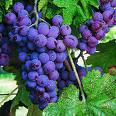 Can you imagine a thriving wine culture if we only were selling Alexander, Catawba, Niagara, Rayon d’or, Villard Foch, Villard Noir and Scuppernong? In the not so distant past, those wine grapes were grown in Virginia. And it’s one of the key reasons why so few commercial wineries existed.
Not only did these grapes make less than stellar wine, getting the public to buy a bottle made from strange sounding grapes was difficult. In the 1970s, American wine was breaking away from its reputation of making cheap, fortified and sweet wines and commanding international attention for producing a product that could compete with of best France. Virginians demanded the same.
When the challenge of producing wines in the commonwealth from classic grapes was overcome, the public’s curiosity turned to intrigue and tasting rooms began appearing like fireflies on a soft summer evening.
Notwithstanding this dramatic success, certain classic grapes—and their finished wines—are still not often seen in the Old Dominion. True enough, there are a few adventurous wineries out there growing such grapes. But most vintners elect to devote their talents to fruit more likely to produce consistent quality.
 Our hot humid summers, abundant rainfall and dense clay soils create an environment that taxes the skills of the most gifted vineyard manager. Introduce certain ultra sensitive, high strung grapes into this climate and the challenge becomes almost insurmountable. Let’s find out why.
RIESLING
Considered one the “noble” grapes, Riesling is native to Germany where it has been grown for as long as 2,000 years. Its aromatic, flowery, almost perfume-like nose and high acidity produce wines ranging from dry, to semi-sweet, to sweet. The grape is highly terroir expressive, with different soils producing a variety of flavors. It demands a cooler climate with calcareous slate, sandy clay or sandy loam soils. It especially excels in thin soils with poor fertility.
The wine is often naturally fermented using no commercial yeast, rarely blended and receives no malolactic fermentation or oak aging. It’s considered by many wine enthusiasts as the greatest white variety.
PINOT GRIGIO
The actual name of this grape is Pinot Gris (Gree), but most wine lovers know it by its Italian name Pinot Grigio. Gris means “gray” in French and the clusters produce grapes with a silvery blue to grayish violet hue. It’s the most popular imported wine in the United States and widely known and loved as a crisp, easy drinker. It is thought to be a clone of Pinot noir and shows faint flowery aromas of honey, rose and orange rind.
It is widely grown in areas as diverse as Italy, France, Australia, New Zealand and Oregon. The grape desires a cool climate with long mild summers. Cooler temperatures help the grapes fully develop. Among connoisseurs, much of the wine is considered uninteresting. However, Oregon produces some very tasty Pinot Gris. The grape thrives best in warm and fairly sandy soil and in loose soil lying on top of bedrock.
Pinot Grigio is a wine some Virginia wineries, in fact, do produce. But plantings are generally limited to the cooler regions of the Piedmont and you will not find many renditions appearing on local tasting notes.
PINOT NOIR
This thin skinned beauty produces some of the greatest and most expensive wines in the world. Consider that in 2007, a Sotheby’s auction saw a case of 1990 Romanée-Conti go for $262,000…almost $22,000 a bottle. The grape is a beast to grow almost anywhere, including Burgundy. Andre Tchelistoheff, the dean of American winemakers in the post prohibition era, said, “God created Cabernet Sauvignon whereas the devil made Pinot Noir.”
The grape thrives in cooler climes, and likes a long growing season with sufficient amount of warm days and cool nights. Grown in a hot, humid climate the wine will produce an overripe, cooked flavor. It is very susceptible to spring frosts due to its early leafing propensity. It thrives in well-drained chalky clay and marly loam soils.
ZINFANDEL
Considered California’s red wine grape, it’s not widely grown elsewhere in the world. Its colorful history dates to the gold rush days when it was introduced to America by Italian prospectors from 1852 to 1857. The berries are medium sized and thick skinned and produce a wine that is full-bodied, showing briary flavors with black fruit, plum and raisin notes. It is a moderately vigorous vine and requires a long, warm and abundantly sunny growing season. Hot days and cool nights aid flavor development and help maintain sufficient acidity.
It ripens early but notoriously unevenly, with green berries and raisins often co-mingled in a cluster of ripe grapes. It thrives best in thin, minerally, well drained soils which help curbed its vigorous productivity. The grape shares DNA characteristics with Italy’s Primitivo, not too surprising considering how it found its way to California.
While these four wines are not readily available in Virginia, we should not feel deprived. Our state is home to a majority of the world’s best grapes. If we need to visit a wine shop occasionally to fill in the missing gaps, what’s the issue?
The search for great wine should lead us to a variety of sources. Diversity is one of the libation’s greatest attractions. Our hunt for a good bottle of wine should be as enjoyable as the capture.

Published in the 2010 Harvest edition edition of the Virginia Wine Gazette.
Owner of Barrel Oak Winery Shares Secrets to His Success
Barrel Oak Winery
Brian and Sharon Roeder opened the doors to their Barrel Oak Winery—BOW—in Delaplane, VA in the spring of 2008. Since then, 120,000 guests have sipped, picnicked and chatted away in their tasting room or on their patio or spacious grounds. Recently, Brian carved out an hour of his 100 hour work week to talk about why so many folks visit—and then return—to his kid and dog friendly winery. In 2010, BOW will produce 8,100 cases of wine, well on its way to a goal of 10,000 cases annually.
How did you and Sharon end up in the wine business?
We both were leading professional lives far removed from the world of wine. I was involved in small business development focusing on construction, property management, and nonprofit organizations. Sharon worked for a government affairs consulting firm. About four and a half years into our marriage, we realized we both had similar dreams. Sharon wanted to farm a vineyard and make wine and I had always wanted to own a winery. Barrel Oak was born.
Did you name the winery with the dog theme in mind?
Yes. But truthfully, we didn’t think it would resonate with the public as quickly as it did. When our beloved Golden Retriever “Bogart” died of Lyme disease at the age of eight, we called our breeder and purchased a pup just days before we opened the winery. On opening day, Sharon was not letting go of her new baby and carried the puppy all around the winery. Our customers loved it and asked if they could bring their own dogs. But of course! Word began to spread that we embraced kids, dogs and fun. The tasting room business took off.
Dogs and kids alone can’t build the volume of business you’ve generated. What else is in play here?
Think of a target with each widening circle contributing to our growth. First it’s our family and friends, then a network of twenty-six partners, followed by barrel club members, then regular wine club members, and finally, a growing email list that currently has 10,500 addresses. All of these forces are spreading our BOW message of quality wine and fun. In fact, our motto is: Farm, Family, and Fun.
In addition, Sharon and I are actively involved in working the tasting room and cellar each weekend. I personally like to greet our customers at the front door. I circulate throughout the tasting room, patio and grounds asking folks if they are enjoying themselves and what they think of our wine. We also conduct tours in our cellar. Everyone has a dream and we’re showing others they can live theirs; even if it means a lot of hard work.
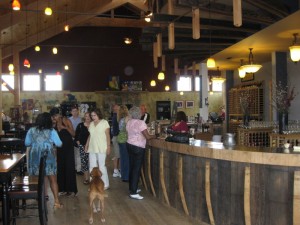
Barrel Oak Tasting Room
There are some people—both in and outside the wine industry—that think Barrel Oak is operating a night club or bar type of business. How do you respond to those accusations?
With disappointment. For us, wine has always embodied the good things in life. Our staff works hard to create an environment that is accommodating, clean and safe. Anyone who visits us on a busy weekend can see we are a community. Hard working people and their families need a place in the country with scenic views and a relaxed atmosphere to act as a counterpoint to their hectic working lives. I’m proud we’ve extended our hours to 9pm on Fridays and Saturdays. We provide a welcoming atmosphere and it’s the key to our success. It’s also good for the growth of the state’s wine industry. We’ve introduced a lot of people to the world of Virginia wine.
On the other hand, there is a demand for wineries that take a different approach to their business. Some people like a quiet tasting room with the focus primarily on the wine. We understand and appreciate that. At barrel Oak we combine the energy of a fun loving place with quality wine. I think our success shows there is opportunity for both types of establishments.
Finally, we are sensitive to any actual or perceived negative impact in Fauquier County. We have good relationships with all our neighbors and I personally respond to and fix any situation that might be of concern to the local community. We live full-time on our farm. Being a good neighbor comes first.

Brian Roeder
Why do you hold charity events?
For the first time in our lives we are in a position to help worthy causes. We’ve raised over $120,000 for charitable organizations since we opened two years ago. Each of these events creates new friends and supporters and spreads the word about what’s happening here, so it also makes good business sense. Simply put, raising money for a just cause is the right thing to do.
How do you handle large groups of tasters on busy weekends?
We have seating for up to five hundred people and on some weekends we are full. But, no one should have to wait to enjoy a tasting or purchase wine. At peak times we have forty people on staff working four tasting bars, nine sales registers and serving fare such as cheeses, meats and hummus. We also focus on maintaining clean grounds and keeping an eye out so guests don’t drink too much. People come here to relax, not to get agitated standing in long lines or waiting for service.
Pet Peeves?
Clean restrooms. Every aspect of Barrel Oak should speak quality. A clean and attractive restroom sends a powerful message of quality and commitment to our customers. I push my staff to look at things through the “eyes of the owner.” I know it can be difficult for an employee to take that view but I preach it and reinforce it often.
Biggest misstep when opening the winery?
I’m a guy that tends to speak with authority. In the early months of our operation I shared my formula for success with other Virginia winery owners. Frankly, I don’t think many of them wanted to hear it. I probably ended up offending some folks. I did not intend to tell them how to run their businesses but I think that was the perception. I regret that.
I also wish I had built the winery twenty percent larger. You always think you are planning correctly but in retrospect that was an element I misjudged.
Closing thoughts?
The future of Virginia wine is unlimited. We need to focus on quality and produce wines that are authentically Virginia. I would love to see Fauquier County join forces with its wineries and attract out-of-state investors to open additional wineries. A national advertising campaign extolling the business advantages of locating a winery in Fauquier County would be a sound way to preserve our scenic countryside. If we don’t develop such strategies, the goal of keeping Fauquier green will be paved over with shopping centers and subdivisions. What we have here is too valuable to let it slip away to commercial rather than agricultural growth.

Cabernet Franc Grapes
Published in the August 26,2010 edition of the Culpeper Times.
