
Author Archive
Barrel Oak Winery
Norton
2009
$27

Barrel Oak Winery 2009 Norton
Norton is Virginia’s own grape with a storied history dating to the 1820s. Winemakers Sharon Roeder and Rick Tagg have captured the unique character of the grape with their 2009 rendition, aged—in what else—Virginia White Oak. The wine casts a deep garnet hue in the glass and displays floral and chocolate notes on the nose with a blueberry and a coffee spice palate. Pair this hearty Old Dominion red with baby back ribs and homemade fries. Drink now through 2013.
Barrel Oak Winery is located 3623 Grove Lane, Delaplane, VA. The winery is opened Wednesday thru Monday 11am to 6pm; Friday and Saturday 11am to 9pm; and closed on Tuesdays. (540) 364-6402. http://www.barreloak.com/
New Wine in Old Bottles as 2010 Grape Harvest Nears
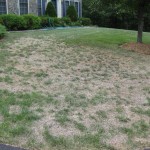
2010 Typical Summer Lawn
Hot and dry describes the Virginia summer of 2010. All of us can look at our lawns and appreciate what the power of the sun and the lack of rain can create, or more accurately, destroy. Rock hard and brown is not a reference to the well-muscled twenty-somethings populating our local swimming pools and beaches, but to the earth from which wine grapes spring forth.
As a result of this summer’s climate—can we blame it on El Niño or La Niña?—procuring quality grapes in Virginia will be a challenge. White grapes are nearing optimal harvesting conditions but it’s a bit unclear as to the caliber of the fruit.
In 2003, France experienced a similar blistering summer. It produced some excellent red wines but not whites. Not until early next year will we know for certain how the wines will fare given this scorching summer. For more on this subject visit http://www.hagarty-on-wine.com/OnWineBlog/?p=2674
But, weather cannot be controlled so the winemaking challenge has to be considered part of the fun.

Empty Carboys Eager to Receive New Wine
All of my 2009 wines are now in bottle and my empty cellar awaits the coming new fruit. It’s an exciting time of the year for winemakers—both amateur and professional. Will the grapes easily produce gold medal winners or will alchemy (and some luck) be needed to create quality libations. Only time and successful winemaking will tell.

Recycled Bottles Awaiting Next Year’s Wine
As a home winemaker, I reuse a substantial portion of my bottles. It is perhaps the most meaningful recycling program I am committed to. Quality bottles are expensive and over the years I have reused them after the nectar contained therein has been drained. I am certain I have bottles in storage that have held three or four vintages. It would be great if commercial wineries could engage in such recycling, but it’s not physically or economically practicable.
As for my last year’s wines, I am generally pleased with the 2009 vintage; among my whites I have received favorable comments on my Seyval Blanc and virgin Chardonnay—meaning no oak or malolactic fermentation. In fact, in 2010 I will increase my production of light, clean, crisp whites. I rarely find a commercial bottling of a full-bodied, buttery chardonnay interesting anymore. Give me razor sharp acidity and bright flavors any evening.
My red wines are also pouring nicely but are still aging in bottle to round out some of the oak edges and soften the palate. One bottling I dubbed “Cashmere” is a blend of fifty percent Cabernet Sauvignon and fifty percent Cabernet Franc. It is a fruit forward, soft and smooth wine, almost, er, Cashmere-like in texture. I have received several compliments on it already, telegraphing it will be a family favorite this coming winter.
Perhaps the most telling sign that I will soon be deep into winemaking was the arrival of my lab supplies last week. Each year I replenish these items to assure fresh yeasts, additives, and cleaning supplies are in stock. Now, I am simply waiting for the phone call, “We are harvesting the Seyval this morning.”
Soon, there will again be new wine in old bottles.

Hagarty Cellars Wine Lab
Hospice of the Rapidan Benefits from Local Artisanal Winery Winefest
 On July 31 and August 1, the first annual Festa Rappahannock wine & food festival was held on the grounds of Rappahannock Cellars in Huntly, VA.
The two-day event, attended by several hundred wine lovers, was a celebration of locally grown and produced wine. Grass fed beef & free range chicken on the grill complimented the wines, and live music was performed in a Civil War era barn providing added entertainment to the festive two-day celebration.
After an extraordinary long and hot summer, the event’s weather crystallized into a perfect summer weekend with low humidity, soft breezes and moderate temperatures. If you tried to dial up a better combination for success, you’d have had to bribe a meteorologist.
The festival officially launched the “Artisanal Wineries of Rappahannock County”, Virginia’s newest and most unique wine trail. The group is a collection of five family run wineries who have joined together to offer a premium wine tasting experience rooted in small lot, handcrafted wines. All five of the participating wineries are located in Rappahannock County, just a short scenic drive from one another, and only an hour from the DC beltway. This is boutique and casual wine tasting at its best and provides a sharp contrast to the hustle and bustle of Northern Virginia.

Tasting Tent
The group’s wineries include the Jung Family of Chester Gap, the Gadino Family of Gadino Winery, The Patil Family of Narmada Winery, the Delmare Family of Rappahannock Cellars, and the East Family of Sharp Rock Vineyards. These dedicated winemakers invite the public to experience their individual family’s hospitality, artisanal wines and uniquely intimate environments. For more information visit: http://www.artwinerc.com/events/
The funfest was held in support of the Hospice of the Rapidan, a nonprofit community organization providing skilled medical care, social work, bereavement care, volunteer support, and spiritual support to terminally ill patients and their families residing in Culpeper, Fauquier, Madison, Orange, Rappahannock and surrounding central Virginia counties. Hospice of the Rapidan offers services to everyone who qualifies for hospice care regardless of their financial resources.
Plans for an even bigger and more entertaining Festa Rappahannock next year are underway. Stay tuned. The fun has just begun.

Ruth Pavlik and Jan Deshceyes man the Hospice of Rapidan Tent
New Hume Vineyards Producing Virginia Wines with French Touch
 Stéphane Baldi grew up in France and lived in some of the most respected wine regions in the world. His family owned farms in Burgundy and later moved to the Loire Valley. But, they never grew grapes or made wine.
Nonetheless, the blood of a winemaker courses through Baldi’s veins. Perhaps there is a genetic throwback to his passion. Shortly after graduating from college his love affair for the fermented grape began to blossom in earnest; first as a consumer, then a collector—and following its natural evolution—a winemaker and owner of the new Hume Vineyards.
The young entrepreneur does not fit the profile of many of today’s Virginia winery owners who are enjoying second careers after successfully retiring from their chosen life’s work.
Stéphane, and his wife Andrea, are a couple that might be mistaken for up and coming, inside-the-beltway professionals, out for a day of winery hopping. And indeed, that is part of their current lifestyle as they delve into the art of winemaking and its marketing. But they are hopeful of transitioning their current business careers into full time winery owners.
If the past is prologue, success seems likely. Stéphane holds a PhD in social science and is a principal in a Georgetown firm doing work in the field of education for the federal government. Andrea also has a PhD and works for a research and consulting firm in McLean. Given the nature of their jobs, they are able to live full time on their fifty acre farm, commuting back to the city occasionally to meet with clients. The dovetailing of their professional careers and winery ownership provides them financial stability while launching their new business.
The Vision
The Baldis have a tightly focused vision for succeeding. “We want to be a boutique-styled winery producing small lots of quality wine that we only sell in our tasting room and at selected high-end wine shops and restaurants. Our goal is to ultimately produce around 5,000 cases annually. But, we are going to grow slowly and maintain quality,” states Stéphane. Currently, their production is 500 cases a year spread about evenly over four bottlings; Vidal Blanc, Chambourcin and two distinct Cabernet Sauvignons.
“During our travels, we fell in love with the wines of Paso Robles and Santa Ynez in California. Many of the best were coming out of smaller wineries creating exceptional wines. We wanted to produce a Virginia version of this exciting region,” Stéphane explains.

Tasting Room
The winery is located off Leeds Manor Road in Fauquier County, a few minutes from the historic village of Hume. It’s a bit ironic that folks are now imbibing wines in their tasting room which is located minutes from the old Barbee Tavern built in 1787, where travelers and locals alike sipped eighteenth-century refreshments such as cider, beer and whiskey. Quality Virginia wine was still a few centuries away.
The couple evaluated some 200 properties before making the decision to purchase the land. “We wanted to be about sixty miles from DC but in a relatively undeveloped area that emphasized the beauty of a rural, agricultural region. Hume met all our needs,” explains Andrea.
Historic Land
The farm dates to 1883 and was established by John Carper whose family has a long history tied to the early days of Virginia farming. He built a log cabin on the site of the current farm house which has been renovated into a modern colonial style home. “During the course of expanding the home, built in the early 1900s, we found evidence of the original log cabin,” Andrea says. John Carper was laid to rest on the property and his grave overlooks the young grapevines, a crop he would have likely never seen during his lifetime.
 In 1901, the Wright family purchased the farm and kept it in continual agricultural production until the Baldis purchased it three years ago. Thus, the legacy of farming the land will continue into the twenty-first century.
Currently, the winery has five acres of vines consisting of Merlot, Viognier, Petit Verdot and Chambourcin. Future plantings will include Sauvignon Blanc, Grenache, Cabernet Franc and Cabernet Sauvignon, growing the vineyard to eleven acres of fruit.
The Winemaking
For most new wineries, the first few vintages are often produced using purchased fruit and the assistance of an experienced winemaker. This is somewhat true for the Hume Winery. The steep learning curve in cultivating vineyards, producing wines and opening a tasting room can be leveled under the tutelage of a professional.
“My relationship with our consultant is different than most. I am producing all of our wines and seek input on an as needed basis. I control the wine growing and winemaking and utilize a consultant to deepen my understanding of the nuances of the art,” Stéphane emphasizes. His skill as a vineyard manager and vintner is evidenced by the high quality of his first bottlings.
For the Baldis, the winery is a passion with callused hands. They manage every aspect of the business and are emblematic of a family run farm operation. There is no staff to provide assistance. Moreover, the winery commitments are balanced with the demanding requirements of their professional lives. “We only travel into the city as necessary. Our ultimate goal is to be working here exclusively. I love the farm. This was not Andrea’s dream originally, but mine. Now she has become an integral part of our winery and we are working together to make it a reality,” says Stéphane.
After visiting the peaceful setting of the Hume Vineyards, it’s easy to appreciate why one would want to abandon the rigors of a high pressured job requiring an extended commute. Even if it means working harder than ever.

Stephane & Andrea Baldi
Hume Vineyards
2009
Chambourcin
$19

A popular French-American hybrid grape grown widely in the mid-Atlantic region, the Hume Vineyard’s “Sham-boor-san” stands above its typical rendition. Possessing a strikingly deep garnet color and alluring aromas of spice and plum, the wine engages the palate with smooth, even creamy, flavors of black cherry, spice, pepper and licorice. Pair this beauty with barbecue short ribs and corn on the cob. Drink now through 2014.
The grand opening for the Hume Vineyards was July 10. It is located just south of the village of Hume, off Route 688 on Washwright Road. The tasting room is opened on weekends from noon to 6 PM on Saturdays and noon to 5 PM on Sundays. (540) 364-2587. www.humevineyards.com
 We live in an age of science. A rational explanation exists for everything. Anyone relying on unproven tales from the past is simply out of step with the technology gods.
True? Well, not exactly.
We all love to cling to personal theories, home remedies, conjecture or simply “gut feel” to help us navigate through our world of insecurities.
A few examples: Most body heat is lost through the head. The darker the beer the higher the alcohol. Newton was hit on the head with an apple. Salem witches were burned at the stake. You must drink at least eight glasses of water a day. Cracking your knuckles causes arthritis.
All classic beliefs. All false.
OK. You get the idea. Now, let’s have some fun puncturing holes in a few wine myths.
Wine Improves with Age
 Wine changes with age but for most moderately priced bottlings it does not improve in flavor, especially whites. Today, most wine is vinified to be enjoyed the day it was purchased—displaying fruit forward traits and bright, fresh tastes. As whites age they tend to oxidize, turning a golden hue and losing most of their youthful exuberance. Reds also lose fresh fruit characteristics and become somewhat flat as the years roll by.
Of course, high quality—read expensive—reds and whites from world renowned vineyards will evolve over time from a fruit and acidity center to ones with more compelling aromas and tastes. It is not unusual to discover notes such as earth, cedar, tar, pencil shavings, mushroom and similar complex characteristics in a twenty-five year old bottle of First-Growth Bordeaux. But, if you are paying less than twenty dollars for a bottle, drink up. Your purchase is not an investment, it’s tonight’s dinner companion.
Critics Know All the Answers
There’s no denying trained professionals know quality wine. But experience has shown that often the wines preferred by the experts are not the ones attractive to the average wine drinker. Pros have developed a more acute palate and tend to favor more complex tastes, traits the average person is not looking for in their wine.
Use the experts as a guide but rely more heavily on what your own taste buds are telling you rather than what a slick and expensive magazine purports as good. Better yet, develop a “go to” relationship with your local wine shop. Owners of these establishments work hard to identify your flavor profile and will consistently guide you to wines that create smiles.
Smelling the Cork is Important
 The tradition of smelling the cork actually originated in France in the early 1900s when wine fraud was rampant. Shysters would bottle cheap wine in used expensive bottles and pawn it off as the real thing. An easy way to spot such fraud was to examine the cork and see if it bore the same châteaux name as on the label.
Over time, this evaluation test morphed into the practice of smelling the cork. Smelling the cork will tell you very little about the quality of the wine therein. When offered the cork by a waiter, accept it graciously and set it aside. Wait for an actual sip to learn if the wine is good.
White with Fish & Red with Meat
Years ago this was a faithful guide when ordering a dinner wine. Today, restaurant meals are often a fusion of many styles, opening up the possibilities for a variety of wine/food matches. While the old adage still has some merit, do not be bound by its restrictive guidance. Seek matches that also marry the weight, color, or spice notes of the wine with your entrée. Some examples are Pinot noir with salmon, dry Rosé with rosemary chicken, off-dry Riesling with Indian cuisine, and even champagne with potato chips. An almost endless number of wines will pair well with an array of dishes. Have fun discovering new matches.
Wine and Cheese Are a Perfect Match
 Most everyone will agree that wine and cheese are tasty companions. But it can also lead to a diminution of wine flavor when the sipper coats his palate with the fat and protein of the cheese, thus disguising the true taste of the wine. One improbable study was conducted by Professor Hildegard Hildmann with the Sensory-Science lab at US Davis in CA a few years back. The professor found that when wine and cheese were tasted together in a laboratory environment, the wine came off a little less oaky and a little less fruity.
Hildmann also discovered every cheese she tested had the same dampening effect on every wine in the study—Syrah, Cabernet Sauvignon, Pinot Noir, whatever. It seems if you really want to assess the true flavor of a wine steer clear of all food, including cheese. But, hey, are we seeking a technical evaluation of our dinner wines or trying to meld the flavors of our food and wine for maximum enjoyment. So technically, this myth is, indeed, a myth. But who cares.
A “Reserve” Wine Means Quality
Surely the word “Reserve” on our bottle of wine means its special, right? Well, maybe. Or, maybe not. No one other than the winemaker knows for sure. The use of the word “Reserve” in the United States can mean anything the producer wants it to. There are no laws regarding its use.
Typically, it connotes a wine of higher quality, aged longer, vinified with better quality fruit and other conventional benchmarks used to identify fine wine. What is doesn’t mean is a guarantee that it possesses any these particular traits. Since there is no restriction on its use, be careful basing your buying decision solely because the word appears on the label.
The list could go on and on. The world of wine is replete with misinformation. The point is, when it comes to “facts” involving our beloved social lubricant challenge everything. You are your own best critic because only you know what you like.
For beginners, don’t be brow beat into thinking a White Zinfandel or a 3 liter jug of Burgundy is the height of poor taste. Yes, most ardent wine lovers steer clear of these inexpensive offerings. But many passionate drinkers started their early sipping career downing lesser known—and lesser respected—vinous products. Think Boone’s Farm.
In this age of science, rely on the most trustworthy expert available. Your own palate.

Published in the July 8 edition of the Culpeper Times.
 From a distance it often looks like an enormous green flag lying softly upon the land. Row upon row of sculpted grape vines undulating over the hills and swales. The vineyard beckons.
We know the scene well because countless works of art have depicted the iconic view. It embodies all that is rewarding about working the land. Woodie Guthrie memorialized it in his song Pastures of Plenty with the line, “Cut the grapes from your vine…to set on your table your light sparkling wine.”
But like many of life’s visions, there is the reality of it all. Especially in Virginia. Growing European wine grapes in the Old Dominion can be as difficult cultivating corn in Alaska. Well, maybe not quite that hard.
 Virginia’s emergence as a promising wine powerhouse has been a long time coming. About 400 years long. The English colonists who landed at Jamestown in 1607 recognized the lucrative potential in winemaking. Their new home abounded with native grapes and within two years they had produced the first wine. It tasted awful.
Thus began a 350-year trail of tears, as generation after generation of winemakers tried to commercially produce wine in our state. The vintners encountered a host of problems, not the least of which was our climate, soil, and varied insect life, or what the French call terroir…the “somewhereness” of the fruit’s cultivation.
One of the major hurdles that could not be breached was the disappointing aroma and flavor of our native grapes. Yes, they grew in profusion and still do. But achieving anything resembling a quality bottle of wine from them was not possible. One of the abiding characteristics of indigenous wine is its foxy aroma and taste, or more pointedly, “wet dog” nuances. Taste a cabernet sauvignon along side a scuppernong and you would not be spending a lot of time fermenting the latter.
 An interesting cultural phenomenon emerged because of this failure to produce wine in America. Our nation was launched on a path of beer and hard liquor consumption. Since fruits, grain and corn were cultivated with relative ease, folks fermented or distilled these agricultural products so as to have an alcoholic drink at hand. Alcohol was consumed in prodigious amounts in our nation’s early history. Think of it as that era’s social libation, plus an over-the-counter painkiller and physic drug cabinet, containing Prozac, Zoloft and Valium. Alcohol was the genie in a bottle and it granted our ancestors many wishes.
After the initial failure to produce palatable native wine, French vines were imported, followed by French vinegrowers, or vignerons, to work their magic. This time the vines did not even reach maturity before they withered and died. It became apparent wealth was not going to be amassed pursuing winemaking. Instead, the colonists decided to plant a crop that grew like a weed, tobacco. And while it was commercially viable, it also destroyed the land not to mention countless addicted smokers.
So what were the mysterious problems the early winemakers encountered? Why couldn’t they make decent wine? Let us count the ways.
First, ninety-nine percent of all wine is produced from the grape species Vitis vinifera. The grape is commonly referred to as the Eurasian grape vine because its origins were at the meeting point of Europe and Asia. Over eons the fruit developed traits enabling it to thrive in these environs. Unfortunately, this was not the grape species our colonists stumbled upon.
When the delicate European plant was shipped to America it landed on hostile shores. Cold winters, hot humid summers and a host of above and below ground insects were lying in wait for the tasty, little plants. No matter how experienced a winegrower was, successfully growing such tender fruit was not in the cards. Most vines succumbed within a few years of planting. An entire vineyard could be defoliated in a matter of days by beetles alone. It must have been heartbreaking for those early winegrowers to encounter failure year after year, while gazing at the thriving native grapes all around them.
Even Thomas Jefferson, our nation’s first wine connoisseur, tried to grow the European grape for over thirty years without success. Nonetheless, over time, the native grapes did hybridize with its high-class kin to produce wines that were more acceptable to the taste buds. But American hybrids never achieved more than regional curiosity status.
Then in the 1970s, vine growing embraced science and a wine industry began to emerge. One early leader was Dr. Konstantin Frank, a winegrower from New York State who expounded the idea that the delicate Vitis vinifera grape could thrive in the mid-Atlantic region. The good doctor traveled to Virginia and instructed a small group of dedicated growers on the methods of deep vine planting, proper root stock selection, correct trellising systems, canopy management, targeted spray programs and a host of other techniques he had perfected in the Empire State.
Virginia began to take some tentative steps into the world of serious winemaking. It was a thrilling and scary time for these wine pioneers as they rolled grapes onto the roulette wheel of fine wine production. It was also when the technique of keeping your fingers crossed while holding a wine glass was perfected.
 After proper rootstock selection, canopy management and spray programs are the keys to the successful production of the classic wine grapes. Because Virginia’s soil is largely clay, it easily retains water and stimulates excessive vine vigor. Unless relentlessly pruned, the unchecked foliage can swamp a vine, denying the fruit of much needed air and sunlight to ripen the berries. It also can incubate lethal funguses and mildews waiting to spread across a vineyard, defoliating vines and limiting the cover and nutrients necessary for successful fruit maturation.
So with today’s vineyard successes, is this end of our story? Not at all. ‘Tis just the beginning. What started as an embryonic industry with one commercial winery in 1975 has blossomed into some 160 Virginia wineries and 3,000 acres of vineyards. The next ten years will see even greater progress and recognition of our wines as the caliber and knowledge of our viticulturalists and winemakers advances even further.
Indeed, Virginia is poised on the threshold of wine greatness. Our first winemakers must be softly smiling.

Published in the Summer 2010 edition of the Virginia Wine Gazette.
Northern Virginia winemakers sip together before selling independently
It’s a bit risky…maybe even threatening, but several times a year a group of professional winemakers gather to discuss and evaluate each other’s wines.

Baby Wines
The bottles they pour from are not the classy ones sold at their wineries. These nascent wines come in unadorned vessels with handwritten labels and have been drawn directly from tanks and barrels. It’s the ultimate, “So tell me, what do you think,” exercise.
And they do it all for us wine lovers.
In February this year, with snow on the ground, some thirty winemakers gathered at Breaux Vineyards in Loudoun County to discuss and evaluate their new red wines. As they filed into the expansive cellar, chatting and recognizing each other with vigorous handshakes and animated conversation, it was obvious camaraderie—not competition—would be the spirit of the day.
Unlike most businesses in today’s competitive world of commerce, Virginia winemakers are supportive of each other’s efforts to build the reputation of the state’s wines. It’s not an easy task.
Notwithstanding the surge of wine quality in the Old Dominion, there are many outside the state that still view the industry as provincial. With a preponderance of the state’s boutique wineries averaging around 3,000 cases a year—Gallo, by the way, sold 68 million cases last year—much of the supply is consumed by Virginians who know and enjoy the wine.
As a result, there is precious little product to sell to the rest of the country. If you can’t taste or buy a Virginia Viognier or Cabernet Franc outside of our state, building a national reputation becomes a formidable challenge.
The pursuit of excellence is critically important to achieving national recognition. Quality will beget quantity if the public demands greater production. Today, there are over 6,000 wineries nationwide. Virginia has less than 170. And as amazing as the explosion of tasting rooms has become, today’s production amounts to just a few drops in the bottom of the nation’s wine bottle.
Enter the Northern Virginia Winemakers Roundtable. The group’s membership is largely comprised of Loudoun County wineries, but membership is open to all winemakers in the northern part of the state. There is a similar group in the Charlottesville area.
 As the meeting began, attendees settled in at long rows of tables set up in a canyon of tall stainless steel tanks lining both sides of the cellar. Jim Corcoran, proprietor of Corcoran Vineyards is the group’s organizer. Dave Collins, winemaker at Breaux Vineyards, was the day’s host.
Collins spent the first hour sharing his perspective on winemaking. His discussion ranged from vineyard practices—“One technique I use to determine if the grapes are ripe, is to crush them between my fingers and see if they bleed red,”— to an in-depth discussion of his fermentation processes.
While all winemakers employ the same fundamental procedures, there is a wide variety of techniques—from yeast selection, fermentation temperatures, barrel or tank aging, and other important minutiae—that differ between them. Collins described his best practices and answered questions from his colleagues.
The heart of the meeting began with the distribution of a sheet describing three different flights of wines to be evaluated: Cabernet Franc; Varietals (75% or more of a single grape); and Blends. Each flight consisted of about five different offerings.
With empty wines glasses and a plastic pour cup set before each participant, staff from Breaux Vineyards began pouring an ounce of wine into every glass. The first flight of Cabernet Francs featured five wines from four wineries. After a few minutes of sniffing and sipping, Collins commented on the wine. After his assessment, observations from the assembled vintners began to tumble out.
Throughout the afternoon, the language of winemakers resonated around the cellar: “Nice color and good fruit with firm acidity. Should age nicely.” “Spicy with a touch of Jalapeno on the mid-palate.” “Very dense color with a rich mouth feel. Balanced.”
One immediately noticed observations were couched in terms not meant to offend, but rather constructively interpret aromas and flavors. “I pick up a touch of H2S on the nose,” states one evaluator (that’s hydrogen sulfide, a flaw that produces a rotten egg aroma). Almost in unison, the room hoists the targeted glass and sniffs deeply. “There might be a bit of it, but it should blow off. I’d suggest some splash racking and additional barrel time,” responds an experienced vintner.
After all of the comments are aired, Collins turns to the vigneron who produced the wine and asks for a summary of how it was made. This triggers a few more questions. “Did you use medium toasted French oak or medium plus,” inquires one person. Another query seeks to understand, “Is this all oak or oak and steel aged?” And so it goes throughout the afternoon, with information exchange in full mode.
The second round of wines is varietals. In the United States, a wine can be labeled by its varietal name, say Cabernet Sauvignon, if it contains at least 75% of that grape. This requirement offers winemakers an opportunity to enhance palate flavors by blending in small percentages of other wines. It would not be unusual to taste a Cabernet Franc enhanced with 20% Merlot and 5% Petit Verdot, or similar type blend.
 Collins again offers comments on the first wine in the flight and then asks for additional reactions. Here it becomes apparent, as with most group dynamics, certain individuals are the first to respond. Often, these are the more experienced bulls with years of accumulated industry skill.
The third and final flight focuses on blends. Typically, extensive “bench trials” have been conducted to achieve a blended cuvee.
The wines being evaluated range from very small producers to some of the largest wineries in the state. When asked how a particular wine was aged, one winery owner responds, “Carboys.” These are six and seven gallon glass vessels that are typically used by only the smallest and newest wineries. Nevertheless, it showcases the diversity of size among the industry participants, and reinforces the value of group feedback, especially for the newcomers.
As before, each wine is quietly evaluated and then openly discussed. During the entire process there is no food served with the wines, not even crackers. Only a bottle of spring water is used to cleanse the palate between flights. This is an exercise in concentration.
As the meeting draws to a close, everyone is thanked for his or her participation. Yet, there is no rush for the doors. Small groups of winemakers chat animatedly as if attending a family reunion. It’s evident friendship and respect knits this assembly together—all in search of world-class wine.
So the next time you’re sipping wine in a Virginia tasting room you might ask, “Who’s your winemaker?” And perhaps the answer will be, “The Northern Virginia Winemakers Roundtable, of course.”
But if you don’t get that response, one thing’s for sure, the group’s spirit will certainly be in the glass.

Evaluating Wine
Published in the 2010 summer edition of the Virginia Wine Gazette.
 Wine embodies the essence of simplicity. Fruit fermented by nature producing a liquid that enhances the joy of living. ‘Tis wondrous.
But not so fast. Is making wine really just the simple act of letting natural yeast transform grapes into nectar? Well, yes—and no. Consider that the smallest winery in the world is a single grape. Just one grape contains everything required to make wine: natural yeast clinging to the waxy skin, the juice and pulp providing the needed liquid and flavors, and moderate temperatures igniting the love affair. Of course, adding a few more grapes to the process helps satisfy our desire for the end product.
It really takes minimal intervention by man to produce wine. Oh, you want good wine? Different story. That’s a bit more work. Over the centuries, wine has steadily grown in quality. Today, the finest wines in the history of the world are readily available in almost any price range. There would be little competition today between a 16th century wine and a modern rendition of the same grape. Modern would win hands down. Another gift from science.
And advancements continue to unfold. We are poised to enter a new and fascinating era of wine production. Virtually everything created by man from food, to electronics, to health care, is changing at blinding speed. What’s new today is passé tomorrow. Just keep your emotional seat belt buckled because we all are traveling on Interstate Technology and there is no speed limit.
Nonetheless, there are some enophiles that posit progress is not our most important product when it comes to wine. Serious discussions are waged daily about the growing homogenization of wine. Because the science has advanced so dramatically in last twenty years, many connoisseurs worldwide claim wine increasingly tastes the same. The effect of terroir—or the somewhereness of the grape’s character—is being lost. French, American, Spanish, Chilean, South African or Australian—many believe we are rapidly losing the ability to tell the difference.
Here are three interventionist technologies that are being used today to manipulate wine in an effort to achieve greater winemaking control, while simultaneously producing bigger, bolder, more concentrated high end wines. Like everything man pursues with gusto, money and fame seem to be driving these new machine-made wines.
Reverse Osmosis

Reserve Osmosis Machine
For the production of flavorful, rich tasting wines, grapes need to have a reasonably high level of sugar when harvested. This is becoming less of a problem than in the past because of rising global temperatures. Unfortunately, high sugared grapes also produce high alcohol wines, a characteristic often resulting in hot and unbalanced flavors. To solve this dilemma, a process called reverse osmosis is increasingly being employed that removes a percentage of the alcohol in the finished wine while retaining its flavors, resulting in a denser, more balanced and fuller bodied wine. It is estimated over 500 wineries in California employ reverse osmosis for alcohol reduction. And in Bordeaux—the heart of France’s classic red wine producing region—it’s reported over sixty of the machines are in operation.
This process can also be used to remove excess water from just harvested grapes. This is especially useful in regions where fall rains over saturate grape juice levels, diluting the resulting wine. In this instance, water is removed prior to fermentation producing wines with greater depth and concentration.
Spinning-Cone Column
This technology removes alcohol in fermented wine through centrifugal force and vacuum. While the process is different from reverse osmosis, it achieves the same result. The equipment is quite expensive and often a winery will enter into a service contract to have its wines treated. A US company developed the equipment but it is now being used in wine growing regions around the world.
Vacuum Distillation
Yet another technique for removing water from “must”—the slurry of crushed and destemmed grapes prior to red wine fermentation—is distilling under vacuum. Concentrators heat the must up to 86 degrees under vacuum, removing the desired amount of water. Two drawbacks to this process are the diminution of aromas in the final wine and the higher cost of the process versus using reverse osmosis.
While these three processes do achieve their objectives, it’s tempting for a winemaker to over apply the principles to produce wine beyond just the basic reduction of alcohol or water. Success in the wine business today is heavily dependent on earning rave reviews from the critics, as expressed in a numerical rating. A 94-point wine will often fly off wine shop shelves while its almost equally tasty 87-point brother may languish unnoticed, perhaps ultimately destined for the special deal bins. The desire to become highly profitable and well known drives a growing number of producers to tweak their wines in whatever ways necessary to attract the critics’ attention. These machine-made wines can take a bottle to places not possible if vinified under natural conditions.
 All of this leads to the question, is this good or bad? It depends on your perspective. If you are inclined to think natural and want to drink as pure an expression of the winemaker’s art as possible, you would object to these emerging wine technologies. Conversely, if you enjoy wines that are big and flavorful but perhaps similar in taste regardless of the region or producer, then interventionist wines would be your ticket. Let’s underscore that none of these techniques affect the safety or quality of the wines. Both approaches produce clean, healthful products.
Here is Virginia you will rarely see these technologies employed because they are more suited for large volume producers. All of the processes are expensive and ill suited for small boutique wineries found in the Old Dominion. In Virginia, you are more likely to encounter true and pure examples of wine that reflects the region in which it is grown. Here wines are more closely aligned with the traditional French style. Our climates are not too dissimilar to our Franco brothers turf and are more focused and defined on the palate than the jammy California or Australian offerings. Each approach showcases the manner in which the wines were created.
Man-made or machine-made, the delicious choice is yours. Just another beautiful example of the diversity of the world’s most seductive libation….ahhh, wine.

Published in the Summer 2010 edition of the Virginia Wine Gazette.
NO LIMIT ON VALUE OF ANNUAL WINE INDUSTRY POWWOW
 Take 1,600 winery employees, 221 industry exhibitors, a host of nationally known winemakers, viniculturalists and marketing mavens, blend them together for four days, and it becomes obvious why the largest east coast winery trade show is called Wineries Unlimited.
Sponsored by Vineyard & Winery Management magazine, the conference successfully completed its thirty-fourth annual extravaganza on March 9-12 in King of Prussia, PA. If you are in the wine industry and did not attend, it’s called: Missed Opportunity.
The theme of this year’s show was Balancing Quality and Costs for Profit. And given the state of the nation’s economy, a more appropriate theme would be hard to conceive.
The annual meeting is actually two shows in one. The conference is a four-day cornucopia of seminars covering all aspects of growing, making, and selling wine.
The trade show serves as a counterpoint offering attendees a seemingly endless supply of equipment and services showcased by manufacturers’ reps. Nowhere else can so many wine folks examine so many products from so many vendors. They came. They saw. They purchased.
Perhaps one of the more impressive aspects of the show was the caliber of speakers arrayed before the attendees. Andy Beckstoffer, one of California’s most renown wine grape growers, was both the presenter at the viniculture seminar and keynote luncheon speaker on day two. At the luncheon, he gave an inspiring address saying that East Coast wineries could create an industry equal to that of Napa Valley if they fully commit to quality.
During his seminar session, he highlighted the importance of vineyard site selection, creation of targeted viniculture plans and the commitment to employing dedicated professionals to implement and closely monitor grape growing programs.
The conference theme of balancing quality and costs is one all wineries residing in the Continental climate of the eastern United States must constantly confront.
Unlike California’s mild Mediterranean environment, cold winters, humid summers and the relentless assault of fungi and mildews require serious money to produce quality fruit east of the Mississippi. Skimp on any aspect of wine production and your customers are going to melt away. Nonetheless, costs must be controlled or making a profit becomes an even greater challenge. Think tightrope.
All of the seminars were purpose driven. Experienced growers and winemakers shared strategies on what worked and what didn’t in 2009, focusing on combating fugal diseases, developing canopy management programs, implementing cost cutting cellar practices, employing effective distribution channels and more. This was the enlightened leading the eager to be informed. Attention deficit was not a problem.
 One of the more popular seminar series focused on sales and marketing and was attended by standing room only crowds. Led by the marketing powerhouse duo of Paul Wagner, President, Balzac Communications & Marketing—and an instructor at Napa Valley College—and Elizabeth Slater, a marketing savant with extensive experience in the industry, they covered marketing theory, assessment of the current US market and the how-to of developing and implementing a marketing plan for boutique wineries.
Wagner & Slater had obviously worked together in the past given their humorous interaction. Both presenters offered a wealth of ideas on increasing wine sales in three story-filled sessions.
At the close of one session, Wagner emphasized consumers do not want to know about pH, acidity, and residual sugar levels in wine, “Your job is to make us fall in love with wine, not educate us about it,” he said. Slater suggested that, “Instead of pairing wine and food, present the food and let your guests pair it themselves. It’s just as interesting to find out what doesn’t go together as what does.”
Another fascinating observation from Slater was the exploding use of the web site Yelp. Social media is increasingly used by millennials—the population ranging in age from 18 to 30 years old—to critique shopping and dining experiences. She stated one of the first things she does when consulting for a winery is to see what the public is posting on the Internet about the hospitality and wines of a given establishment.
She underscored many wineries have no clue they are being so publicly evaluated in these open forums. The message was clear. Every encounter at a winery can go worldwide with a brief critique followed by a single “send” keystroke.
 When not attending seminars, delegates roamed the exhibitor’s hall gathering sales literature and samples from the over the two hundred firms specializing in wine related products. The number of items available was staggering and ranged in size from multi–ton mechanical harvesters to almost weightless corks, and from 1,000-gallon stainless steel tanks to tin capsules. If it could be employed in the growing of grapes or the making wine, you could buy it here.
And many did. A considerable amount of product disappeared off the floor as the show progressed, including purchased oak barrels being wheeled out of the convention hall and onto trucks headed back to wine cellars.
After observing this unusual trade show up close, one is struck by how much time, money and dedication is expended in producing quality wine in the eastern United States. And the commitment is catapulting the East Coast to the top tier of American wine.
Watch out Napa Valley.
Published in the Summer 2010 edition of the Virginia Wine Gazette.

One Man’s View of a Walk in the Woods
Footpath: n. a path for people to walk along, especially one in the countryside.

Verdant Footpath
I love to walk. In the woods. Where my footsteps connect with the earth at the same time my mind connects with…almost anything. A walk is God’s prescription for a relaxed state of mind.
A good walk can solve problems, ease tensions and take you home a different person than when you started.
And so it was that I was out walking my community wooded trails recently, when I heard the sound of construction equipment up ahead. Hmmmm…perhaps some road work after the harsh winter? Or a nearby homeowner’s driveway being resealed?
Nothing as pedestrian as that. My beloved trail was being repaired after several years of rains had eroded out a few small sections of the footpath. But, to my surprise, the small repair job continued on and on. “Oh my gosh, they are turning the trail into a roadway,” I thought to myself.
And indeed it was true. An extended segment of our community trails had small tractors and graders carving out a new road bed and dumping and then rolling tons of gravel in its place.
Technically, the road looked great. But why in the middle of the forest? Soon enough I would be back on the real highways of modern society, bumper to bumper with speeding traffic and exhaust fumes. Did we really need a mini-extension of our highway system dropped into our little world of green?
But so it is. And I will adapt to the new look soon enough. But, I can’t help feeling something of value has been lost.
Growing up, I often heard the advertising refrain, “Progress is our most important product”. Really?

New & Improved Footpath
Creating a Successful Winery Requires Cluster of Critical Disciplines
Visit most Virginia wineries and your first impression is one of peaceful relaxation.
Meticulously pruned vineyards undulate softly across fields of green. The soft tinkle of wine glasses and murmured conversation fill the tasting room. During warmer months, couples and family groups are seen picnicking on landscaped lawns, or patios and decks.
The atmosphere and the wine exude a sense of well being and offer visitors a brief respite from the stress filled environment of modern society.
But, creating such a relaxed and enjoyable setting requires focus and commitment. Let any aspect of the experience falter and soon customers will be driving past the establishment to the winery down the road.
Fortunately, most Virginia wineries work hard to assure guests a good time. One such local establishment is Rappahannock Cellars in Huntly. The winery is located at the corner of Hume Road and Route 522, seven miles south of Front Royal.
Let’s listen in as the five individuals responsible for the success of this business briefly describe their wine world.
Proprietor

John Delmare
John Delmare is a native Californian who relocated his family, and winery, to Virginia in 1996. He had previously owned a winery in the Santa Cruz Mountains, and was drawn to Virginia as an inviting place to raise his growing family, and by its burgeoning wine industry.
“I was impressed with what was unfolding in Virginia. Both the state and the industry itself were supportive of newcomers. Yes, growing grapes and making wine here is more difficult than out West, but the challenge has been justified by the rewards. We’ve built a good life here,” states Delmare.
“I view my job as the general manager, or more specifically the “rudder” that navigates our business; as such, I continually monitor all activity in the winery. This includes keeping my finger on the pulse of sales and production, including which wines are selling best and tracking inventory. I make decisions today that will impact our business three years or more into the future. Growing fruit and making wine is not a short term endeavor. Misjudging the type or volume of wine needed can lead to serious supply problems down the road,” he underscores.
Delmare’s other duties include producing checks for up to thirty vendors a week, processing payroll, submitting monthly reports to federal and state authorities on the amount of wine produced, sold and warehoused, participating in tasting and blending trials of his new wines, holding regular staff meetings, hiring part-time staff to cover busy weekend traffic, and acting as his own bookkeeper.
Winemaker

Jason Burrus
Jason Burrus is a professional winemaker with an MS degree in Viticulture & Enology from the University of California, Davis, the nation’s most prestigious wine university. His resume includes stints at Robert Mondavi as well as other California and foreign wineries. He has been with Rappahannock Cellars for four years.
Burrus is responsible for all winemaking activities. Each year he oversees the purchase of off-site fruit and the harvesting of estate grapes, determining the styles of wine to be produced, converting the fruit to wine through fermentation, and ageing and blending the final bottlings.
“The public’s perception is that winemaking is a romantic occupation. And it does have its creative moments. But the day-to-day managing of a cellar containing up to 35 different lots of wine is a demanding job with ample opportunities for error. A sensitive palate and the ability to concentrate and work error free—coupled with being in good physical condition—is the mark of a successful winemaker,” says Burrus.
In addition to creating wine, Burrus evaluates and purchases barrels, tanks and all winemaking supplies, attends local and regional winemaking seminars, spends countless hours creating potential blends with associated spreadsheets, and manages the bottling operations of the final wines.
Vineyard Manager

Tom Kelly
Tom Kelly has managed commercial vineyards for more than a decade, seven of those years with Rappahannock Cellars.
“Quality wine springs from quality fruit, so attention to horticultural details has me spending much of my time in the vineyard. In the spring, I perform soil analysis and amendments, and then oversee the pruning and spraying operations throughout the summer. Canopy management, or controlling the amount of light and air the fruit is exposed to, is also a critical concern of mine. It’s gratifying at harvest time to see Jason working with prime Virginia fruit,” says Kelly.
Outside the eight foot vineyard fence, Kelly’s other duties range from managing the wine warehouse, performing maintenance and repair on a host of farming equipment and cellar infrastructure, and attending meetings of Virginia grape growers.
Tasting Room Manager & Wine Club Manager

Anita Raiford
Anita Raiford oversees tasting room operations. Raiford, a former Capitol Hill staffer, brings enthusiasm and attention to detail to creating an environment conducive to sipping wine. Her job is analogous to a cruise ship director but with a wine glass as backdrop rather than a life preserver.
No amount of vineyard or cellar magic will keep the financial books from turning red, if the setting for enjoying the wine is not welcoming. Tasting wine in an uninviting room with indifferent staff is a sure route to slow business. The wine industry is much more than just the wine.
Raiford’s challenges are similar to many businesses today, training and keeping qualified employees. “Our busiest times are the weekends and having sufficient tasting bar coverage keeps our guests in a contented state.
“We are fortunate to have loyal and committed employees who are eager to make each tasting a fun and educational experience. We encourage them to continually increase their wine knowledge and share it with guests,” emphasizes Raiford.
Beyond staffing and scheduling, keeping the winery gift shop shelves stocked and making certain the club tasting room is in pristine condition is also focus one for her.

Allan Delmare
An additional full-time position is the wine club manager. Allan Delmare manages the club which provides two bottles of wine each month to its several hundred members. “The club is our way of building a closer relationship with a vitally important group of customers. Our members enjoy the privileges the club offers while helping us build our brand,” says Delmare.
Most of these disciplines are employed throughout our state’s wineries. In smaller operations, the owners are often performing all the duties themselves. Inattention in any of these areas—regardless of the size of the business—is a setup for declining business. An important benefit for wine lovers is that Virginia’s rapid winery growth is fueling enhancements in both settings and wines. Failure to “keep up with the Jones” has real and negative consequences for inattentive owners.
So next time you leave a local winery, reflect for a moment on whether the experience was enjoyable. If it was, it’s likely the “five horsemen of wine hospitality” achieved their goals of attracting a steady stream of customers.
After all, enjoying wine is a social experience. And the more tasters involved the merrier the experience becomes.

Rappahannock Cellars
Published in the May 13, 2010 edition of the Rappahannock News.
It was a perfect spring evening. We sat on our screen porch and gazed at fading sunbeams pouring softly through the nearby forest, creating images of flickering firelight on the screening.
 Glasses of chilled Sauvignon Blanc rested in our hands—my wife Jean, my son-in-law Drew and the Wine Guy. My daughter Colleen was upstairs hunched over her laptop. She was putting the finishing touches on a PowerPoint presentation being readied for a meeting the next morning in Richmond.
Meow, meow, meow, meow, meow, meow. Plaintive. Pleading. Pathetic.
It was a sound that rendered all of us staring blankly as a small black cat passed at the edge of the forest and flopped on the ground forty feet away. What’s going on we wondered?
“Oh, my gosh, that cat is pregnant,” Jean murmured alarmingly. Drew and I only observed a small black patch breathing deeply, staring vacantly. Meow. Meow.
Within moments Jean had popped the lid on a can of cat food and slowly walked toward the feline. The animal didn’t move. This was not a feral. This was a house cat in distress. Perhaps abandoned.
Within minutes, the can of food had been consumed and the cat reclined again, lying in her original resting spot. Silence enveloped us all as we contemplated the scene.
Then, screeecchh! Sisssssss! Grrrrrrrrrr.
“Boots”, our local feral tom cat, arrived on the scene to find the interloper possessing his territory. The black cat’s back arched high in the air as it slowly backed off and then scampered quickly into the darkening woods.
The scene came and went quickly and we chatted quietly about the plight of the mother-to-be left to somehow survive on her own. Nature’s cruel beauty revealed.

Miracle
That night Jean restlessly dreamed of the cat. In the morning she tried to shake the image of the distressed animal roaming a friendless world. Then about noon the animal reappeared.
This time Jean was ready. She grabbed her animal cage and placed a can of food inside and left it in front of the kitten-size cat. The animal trustfully entered the cage and began eating. She snapped the door shut.
That evening the cat slept peacefully in our garage, enveloped in an old comforter.
The next morning Jean whispered to me as I awoke, “She’s had five babies!” “You’re kidding,” I replied. “That quickly?” “Yep. Go down and take a look,” our pseudo Mom replied.

Miracle & Babies
As I slowly opened the garage door, the new mother raised her head, gave me a glance, and reclined again. Arrayed around her tummy were five small furry bundles, each three inches a long and the thickness of a summer sausage. We soon realized one of the babies had been stillborn.
The cat’s arrival at our house and cry for help could not have been timelier. She was given the name Miracle. If we had not been on the porch when she wandered by, her kittens would not likely have survived.
The episode highlights the need for spaying and neutering animals. It is estimated up to 12 million feral and abandoned cats roam cities and rural areas of America. Not only are most of them reproducing at alarming rates, they take a considerable toll on songbirds and other small animal life.

Baby Cameo
In our area, the Fauquier Society for the Prevention of Cruelty to Animals is dedicated to providing a temporary refuge for stray, homeless and abandoned animals, and to placing such animals in a caring, appropriate home whenever possible. Educating the public about the benefits of spaying and neutering is an extremely important part of its mission. Visit them at http://www.fauquierspca.com/
So what’s the outcome for Miracle and her brood? They all still reside in our home and Jean is looking to place them in a safe environment. If you are willing to adopt a cat or kitten drop me a line at John@Hagarty-on-Wine.com. Miracle is a sweet, affectionate young mother less than a year old, and her kittens are all beauties.
In an era where life, in all forms, is often shown little respect, it was a privilege to save one young cat and her family. Might you be interested writing the next chapter to this tale?

Baby Slate
Ask a winegrower what his greatest fear is—other than scoring low in wine competitions—and the answer would likely be, “Frost.”
 This year the dreaded chill arrived in the dark of night on two occasions, injuring the county’s delicate vines. If frost hits during a period called “bud break”, it will kill the emerging grape cluster and deprived the winery of precious fruit.
On April 29 and again on May 9, temperatures dropped to freezing in the county and singed a number of vineyards.
Rappahannock Cellars lost small amounts of Chardonnay, Cabernet Sauvignon and a somewhat larger crop of Cabernet Franc.
Conversely, Grey Ghost Vineyards dodged the icy bullet, attributing their good fortune to early bud break that occurred at the beginning of April.
Gadino Cellars estimated a one to two percent loss, focused mostly on its Chardonnay.
Reports of other frost damage have been heard but are unconfirmed. Damaged vines can grow secondary shoots but will produce less fruit. Also, some damaged shoots might well have been thinned later in the growing season, so initial losses do not equate to a preordained loss of berries.
The full impact of Jack Frost’s visit may not be known until later in the growing season.
Spring frost underscores the fundamental farming nature of operating a winery. Nature’s bounty produces beautiful wines but it’s often not achieved without the tension that’s part of a life in agriculture.

Fauquier County Reaping Benefits of Centuries of Virginia Winemaking Challenges

Winery at LaGrange
By the end of 2010, it’s anticipated Virginia will be home to 170 wineries. Here in Fauquier County, twenty bonded wineries are providing citizens and visiting wine lovers a relaxing life style and a healthful libation undreamed of thirty years ago.
Simply put, Fauquier may well be on the path to becoming the new Napa Valley if this extraordinary growth continues.
This accelerating expansion is all the more startlingly coming from a state known more for tobacco, battlefields and presidents than fine wine. How did it come about?
Virginia’s emergence as a promising wine powerhouse has been a long time in the making. About 400 years long. The English colonists who landed at Jamestown in 1607 recognized the lucrative potential in winemaking. Their new home abounded with native grapes and within two years they had produced their first wine. It tasted awful.
Thus began a 350-year trail of tears, as generation after generation of winemakers tried to commercially produce wine in our state. Our forefather vintners encountered a host of problems, not the least of which was the climate, soil, and varied insect life, or what the French call terroir…the “somewhereness” of the fruit’s cultivation.
One of the major hurdles that could not be breached was the disappointing aroma and flavor of our native grapes. Yes, they grew in profusion and still do. But achieving anything resembling a quality bottle of wine was not possible. One of the abiding characteristics of indigenous wine is its foxy aroma and taste, or more pointedly, “wet dog” nuances. Taste a cabernet sauvignon along side a scuppernong and you would not be spending a lot of time fermenting the latter.
An interesting cultural phenomenon emerged because of this failure to produce wine in Virginia. Our nation was launched on a path of beer and hard liquor consumption. Since fruits, grain and corn were cultivated with relative ease folks fermented or distilled these agricultural products so as to have an alcoholic drink at hand.
Alcohol was consumed in prodigious amounts in our nation’s early history. Think of it as that era’s social libation, plus an over-the-counter painkiller and physic drug cabinet, containing Prozac, Zoloft and Valium. Alcohol was the genie in a bottle and it granted our ancestors many wishes. Not all of them good.
After the initial failure to produce palatable native wine, French vines were imported, followed by French vinegrowers, or vignerons, to work their magic. This time the vines did not even reach maturity before they withered and died. It became apparent wealth was not going to be amassed pursuing winemaking. Instead, the colonists decided to plant a crop that grew like a weed, tobacco. And while it was commercially viable, it also destroyed the land not to mention countless addicted smokers.
Then in the 1970s, vine growing embraced science and a wine industry began to emerge. One early leader was Dr. Konstantin Frank, a winegrower from New York State who expounded the idea that the delicate Vitis vinifera grape could thrive in the mid-Atlantic region. This species of vine produces all of the world’s most popular wines.
The good doctor traveled to Virginia and taught a small group of dedicated growers the methods of deep vine planting, proper root stock selection, correct trellising systems, canopy management, targeted spray programs and a host of other techniques he had perfected in the Empire State.
Fauquier County resident Treville Lawrence, who owned an estate in the The Plains called Highbury, was an enthusiastic supporter of Dr. Frank. His experimental vineyards produced some of the first classic Eurasian grape varietals in Virginia. The seeds of success were planted.
Based on these early achievements, Virginia began to take tentative steps into the world of serious winemaking. It was a thrilling and scary time for these wine pioneers as they rolled grapes onto the roulette wheel of fine wine production. It was also when the technique of keeping your fingers crossed while holding a wine glass was perfected.
So with today’s vineyard successes, is this end of our story? Not at all.
What started as an embryonic industry, with one commercial Virginia winery in 1975, has blossomed into a thriving enterprise with over 3,000 acres of vineyards statewide. The next ten years will see even greater advancement as the caliber and knowledge of our viticulturalists and winemakers deepens.
As a result of the efforts in the 1970s, we are fortunate today to be growing numerous classic wine grapes. Two in particular are performing beautifully in both the vineyard and the wine cellar. Let’s take a closer look at the grapes that are enhancing the landscape of many Fauquier County vineyards.
VIOGNIER
 As with many French names, this grape can be a bit difficult to pronounce at first. Say vee-own-YEA. The grape hails from the northern Rhone Valley in France and is thought to have originated from the Romans who introduced it into Gaul over 2,000 years ago. It was once widely planted in the Rhone Valley but slipped into obscurity as it became more difficult to grow.
During the 1960s, there was less that thirty acres of Viognier planted in all of France, a nation with over two million acres of vineyards. The grape was clearly in decline.
In the mid 1980s, a California winemaker of wide repute, Joseph Phelps, adopted the vine and anticipated it might be the next Chardonnay, one of the most popular white wines in the world. Unfortunately, it did not achieve the popularity in California he anticipated. Then, about twenty years ago, it was introduced into Virginia’s vineyards. Here, it has taken to our terroir like a kitten to catnip.
The wine produces a medley of luscious aromas and flavors redolent with honeysuckle, peach, pear and melon. It can be vinified in oak or crafted in a clean, crisp style that eschews oak undertones. In either case, its ancient lineage glows with a creamy mouth feel and soft spice finish. It is a wonderful alternative for those drinkers known as ABCers–Anything But Chardonnay.
CABERNET FRANC
 This grape has been the workhorse of red blended wines for centuries. The majority of appellations around the world use the grape to enhance other classic reds. Since it produces a wine somewhat lighter in color and tannins than Cabernet Sauvignon, many Bordeaux reds contain 20% or more of this grape. It is aromatic with a wide range of flavors centered on raspberry, plum, cherry and spice. And its firm acidity produces a food friendly beverage.
The attributes that favor growing the grape in Virginia are its cold hardiness and early ripening traits. Coaxing the best out of a wine grape requires meticulous management of the vineyard. Possessing inherent strong qualities in the vine itself eases the vineyard manager’s work. Cabernet Franc’s qualities are well suited to our state’s soil and climate.
In Virginia, many Cabernet Francs are blended with a touch of other reds. For a wine to be labeled the name of a grape it must contain at least 75% of that specific wine. Often you will find our state’s Cabernet Francs contain a dash of Merlot, Cabernet Sauvignon, Petit Verdot or Malbec. This blending strategy mirrors in reverse the technique used in Bordeaux.
As with Viognier, our Cabernet Franc has garnered a host of competition medals and awards. We can count on even finer bottlings in the years ahead as our winemakers learn more about showcasing this wine’s unique character.
DRINK LOCAL
So the next time you are visiting one of our Fauquier County wineries, take the time to linger over these two winning wines and a host of other quality bottlings being produced locally. Experience more fully the magic of handcrafted wine enjoyed in beautiful settings typical of our county wineries.
There’s no need to travel to France or California to experience world-renowned scenery and wine. In less than a thirty minute drive from anywhere in the county you may well discover your next favorite tasting room and bottle of wine.
As an added attraction, county wineries host a variety of events on most weekends throughout the year. In addition to the traditional wine tastings, look for live entertainment, barrel tastings, luncheons and the ever popular wine dinners. And if you have house guests from out of town, you will easily impress them with the delicious vintages and sweeping scenery that is the hallmark of our local wine country.
Indeed, Virginia and Fauquier County are poised on the threshold of wine greatness.
Our first winemakers must be softly smiling.
For a listing of all of Fauquier County wineries, tasting room hours and directions, visit: http://www.visitfauquier.com/wineries.html

Published in the May 2010 edition of the Warrenton Lifestyle.
