
Author Archive
Occasionally my wine column—published in the Culpeper Times—will catch up with an owner of a Piedmont area winery and get their take on the world of Virginia wine. Our first chat is with Chris Pearmund, Managing Partner of the eponymous Pearmund Cellars, the Winery at La Grange and the Vint Hill Craft Winery. All three establishments produce a total of 20,000 cases annually.
The Tasting Room (TTR): What led to your career in wine?
Chris Pearmund (CP): I worked at Clyde’s in Tyson’s Corner in the eighties as their wine specialist and managed both the front and back operations of many other restaurants. I loved the concept of creating food with quality ingredients. The same concept applies to winemaking. I wanted to make myself more marketable by earning stripes in both the food and wine business. However, the restaurant industry is a daily repetitive grind while winemaking revolves around an annual production cycle. It’s hard to get burned out in the wine industry. There’s simply more variety, longer vision and less repetition. Once I entered the wine industry, I never looked back.
TTR: What’s the major challenge your wineries face today?

Chris Pearmund
CP: Cash flow, retaining quality staff, acceptance in the market place and antiquated distribution laws. Only four percent of all wine sold in the state is Virginian even as the industry has expanded. It should be around seven percent or more. All of these obstacles are limiting the continuing growth and long term viability of the industry.
TTR: So why has Virginia wine grown in popularity?
CP: It’s produced locally, and the quality-to-value ratio is good. We also benefit from an established tourism industry that attracts wine drinkers who want to drink local wine. Plus, it provides a fun day trip for our heavily populated and over stressed work force seeking a relaxing environment with family and friends.
TTR: What is the biggest challenge facing Virginia wine?
CP: Maintaining and increasing quality. There are tens of thousands of wineries worldwide. To be successful, each of them have to be good enough to attract a distributor, survive on thin margins, be sold by committed sales reps, attractive to restaurant lists, and consistently purchased by the public. It’s an enormous set of hurdles to clear to earn shelf space at wine shops and grocery stores. If you’re not producing quality wine, you won’t succeed in this competitive market past the mom & pop stage.
TTR: Can Virginia achieve national wine recognition?
CP: Yes. And we have. But, we need more wineries producing consistently higher quantity and quality-to-price ratio wines for distribution outside of Virginia. These wines need to fulfill consumer needs in major markets like New York, California, and Florida. What we don’t need is more wineries producing smaller volumes with variable quality. This sends the wrong message to the marketplace and hinders national recognition.
TTR: Any personal sacrifices you’ve made to achieve success?
CP: As with many owner-operated businesses, marriage, family relationships, and time off are often sacrificed in running the show. I work seven days week, ten to twelve hours a day. That kind of commitment creates success. But it also creates stress in personal relationships. I admit much of my work schedule is self-induced but creating a successful business takes an enormous amount of time and emotional commitment. Often, there is not much energy left at the end of the day. Keeping focused on both sides of your life is a challenge.
TTR: Any missteps in developing your businesses?
CP: Not many because I opened all of my wineries with a small group of smart investors who helped me think through big ticket items and were committed to long term involvement. Some things could have been better thought out, such as more functionally designed parking areas, larger septic fields, more professional electronic infrastructure for computing needs, and restrooms designed to handle peak weekend traffic. However, these are problems many in our industry face. You learn as you grow.
TTR: Biggest surprise you encountered after opening your wineries?
CP: I was pleased how open and supportive other winery owners were with each other. This camaraderie helps eliminate repetitive mistakes and moves the industry forward. An exchange of ideas and plans is important. The flip side of that coin is owners who take shared ideas but offer little in return. That’s disappointing. In the past, I did not see much of that behavior. Unfortunately, I think it’s an attitude that is growing as the industry expands.
TTP: Your favorite non-Virginia wine & region?
CP: I love the wines of South Africa, Bordeaux and the Rhone Valley of France. These regions produce wines that offer distinctive styles that are tied to the earth and climate of the area. Chateauneuf-du-Pape wines are wonderfully complex and reflect what the French called terroir, or the place where the fruit is grown. You often hear criticism that today’s wines are increasingly homogenized in aroma and taste. This may be driving the overall growth in sales but it’s not what I prefer to drink.
TTR: Pet peeve?
 CP: Burned out light bulbs. It’s my litmus test for a winery staff that may not be focused on quality in all aspects of their job. If a bulb goes dim and is not replaced immediately, it tells me other aspects of their job may also be slipping. If you start by checking the lights, you’ll also make sure the floors are clean, the trash is emptied, and the flowers are watered. Creating a quality customer experience is critical to success. The public picks up on mistakes quickly and that translates into reduced reputation and sales. The solution? Change the light bulbs!
TTR: Closing thoughts?
CP: I am hugely disappointed in the lack of support from commercial banks. Bankers fail to view wineries as long term investments. Because of this attitude, capital in the industry is largely self-funded. It’s a problem that’s impeding growth, especially for expansion past our state borders.
Anyone considering opening a winery needs to have expertise in five areas: agriculture, winemaking, customer service, small business disciplines and knowledge of local, state and federal law. If you lack any of these skills, hire a professional. Otherwise, you’re setting yourself up for failure.
And finally, Virginia needs to work harder on creating a definitive wine style. Buyers everywhere should be able to discern our state’s wines as having a distinct regional character and style. We are making progress but we have a ways to go in achieving this important goal.
Published in the April 21, 2010 edition of the Culpeper Times.

NARMADA WINERY
2008
Viognier
$23
 Sudha and Pandit Patil realized a long held dream when they opened their winery in the fall of 2009. Their 2008 Viognier is representative of Virginia’s up and coming grape. Vinified in stainless steel and aged in French oak, this light straw colored white offers delicate and crisp notes of lemon, melon and citrus. Pair this summer white with lemon shrimp orzo and a spring salad. Drink now through 2012.
Narmada Winery is located at 43 Narmada Lane, Amissville. The winery and its stunning tasting room overlooks meticulously kept vineyards offering elevated views of Rappahannock County’s rolling countryside. Plan on spending time on their spacious deck while enjoying the views and wines. The tasting room is opened Friday and Saturday, 11 AM to 6 PM during the winter; and Friday, Noon till 7 PM, Saturday 11 AM till 7 PM and Sunday, Noon to 6 PM during the summer months. (540) 937-8215. www.narmadawinery.com
DELAPLANE CELLARS
2007
Shirland Syrah
$32
 Owner & winegrower Jim Dolphin has a created a wine with origins from the Northern Rhone Valley in France. This 93% Syrah and 7% Viognier blend spent eighteen months in French oak and exhibits a rich, dark garnet color with a full-bodied palate of black fruit, spice, toasty notes and a silky finish. This rich tasting red will pair well with Tenderloin steak with Gorgonzola butter and rosemary potatoes. Drink now through 2014.
Delaplane Cellars is located at 2187 Winchester Road, Delaplane, VA. The winery sits on a ridge in far western Fauquier County with dramatic views of the rolling hills and mountains of the Virginia Piedmont. The tasting room is opened April to November, Friday through Sunday 11 AM till 5 PM; Monday through Thursday by appointment; and weekends only from December to March. (540) 592-7210. www.delaplanecellars.com
PIEDMONT MOBILE BOTTLING FIRMS PLAY PIVOTAL ROLE IN VIRGINIA WINE INDUSTRY
 When a mobile bottler puts the wrap on a day’s work, some 10,000 new bottles of wine are ready for sale. Not bad for a day’s labor, eh?
And if it weren’t for their enterprise, the cost of your favorite Virginia Chardonnay might just be higher.
Blue Moon Bottling—one of just three such firms in Virginia—is based out of Oley and Judy Olsen’s home located a few miles south of Orlean, VA. Most folks are unaware such a business even exists, including their neighbors. Nonetheless, the service rendered by circuit-rider bottling companies is critical to the success of Virginia wine.
By the end of 2010, it’s projected 170 bonded wineries will be operating in the Old Dominion, a dramatic increase from only one in 1975. Today, Virginia ranks fifth in wine producing states behind California, Washington, Oregon and New York.
EXPERIENCE COUNTS
An extraordinary amount of work goes into producing wine: from cultivating the delicate grapes, to harvesting the fruit, making the wine, operating a tasting room, and marketing the product. It’s a demanding and capital-intensive business. An oft heard line in the industry is, “If you want to make a small fortune in Virginia wine, start with a large one.”
A bottling firm can reduce a winery’s workload and cut costs. And their clients know it.
Blue Moon is in partnership with Bottle Boy Mobile Bottling, a firm owned by Joe Sullivan. Sullivan has twenty years experience in the wine industry and thirteen years as a pro bottler. Today, rather than actively bottle he serves as a consultant to Blue Moon, and for good cause. “It takes about two years of practicable experience to become proficient with the complex equipment and five years to master it. That’s just one reason there are so few commercial lines in operation. It’s a technically challenging business,” says Sullivan.
Oley couldn’t agree more. “I’ve been working the line and had Joe yell, ‘The labeler is down!’ How does he know? He hears it. I can’t even hear myself talk when the line is running but he picks up on the sound of a downed labeler. Amazing.”
Two other firms providing service to Virginia wineries are Landwirt Mobile Wine Bottling, out of Harrisonburg, and a relatively new entrant in the business, Virginia Wine Bottling, owned by Mark Lacy, headquartered in Orlean. Lacy says his market research revealed eighty percent of the state’s wineries employ a mobile firm. Together, these three companies service well over a hundred state wineries.
So how does a bottling line work? It starts with a gas guzzling, seven miles-per-gallon rig weighing over 20,000 pounds and displaying a sticker price as high as $650,000, if purchased new. The Olsens lease Sullivan’s thirty-five foot gooseneck trailer pulled by their Ford F550. The trailer-designed unit enables access to even the smallest farm wineries where winding dirt roads and terror inducing blind turns demand vehicle maneuverability.
 Inside the rig is an entire bottling line. Production starts at an acceptance unit where the empty bottles are fed down a conveyor line to be water rinsed of any packing materials, sparged with nitrogen to displace oxygen, filled with wine and leveled to exactly 750-millilitres. The cork is then compressed and inserted, and a capsule dropped on top of the bottle and pressure spun into place. From there the front and back labels are smoothly affixed and the finished bottles shunted around a curving conveyor line toward the back of the trailer where their journey began.
At the end of the line, a winery employee rapidly fills cardboard cases, two bottles at a time. And with a final hand push, each twelve-bottle case glides down a roller coaster ramp into the waiting arms of winery employees brandishing sealing tape and carton labels.
If you recall the I Love Lucy chocolate factory episode, you’ll get a good idea of the complexity of the operation. Of course, bottling pros don’t fall pitifully behind as poor Lucy did.
WINERY BENEFITS
And why does a winery employ a bottler rather than undertake the job themselves? Cost and lack of experience. The installation of a small, privately owned line runs around $150,000 and can soar over $500,000 for a large producer. And after installation, a proprietor must have experienced employees to run it.

Mark Lacy's Virginia Wine Bottling Rig
Beyond its basic operation, a bottler needs specialized mechanical skills to deal with line failure and parts replacement. Bottling operates in a real time environment. This is not a machine you schedule your Sears repairman to come and fix. Think thousands of moving parts.
Gary Landwirt, owner of the Harrisonburg firm, says, “I’ve seen wineries build an in-house line and end up dismantling it and contracting with a mobile operation. The headaches of running a unit are often too much to deal with.”
And if these issues weren’t enough, a winery considering a private line needs to carve out enough room to install it; not easy for most Virginia establishments strapped for cellar space. Contracting with a reliable professional is a sound business decision.
With two years operating experience, the Olsens know the physical and emotional demands of the business are high. “I need a full day off after each job,” states Oley. “My day starts at 5:30 AM and often I am not home till seven at night or later. That’s hours of set up, production and driving time,” he emphasizes.
Experience has also shown the Oslens the importance of a winery being prepared for a bottling. “We are constantly refining our check list for customers. They must carefully prepare for our arrival, or time and money is wasted,” states Judy. “And they need to purchase supplies from qualified vendors. One thing we’ve seen in the recent past is a decline in the quality of glass coming out of Mexico. Because the demand for wine bottles is high across the country, quality has slipped. We know the top producers and encouraged clients to purchase glass from them,” she says.
 One interesting insight is their perception that natural cork still reigns in the Old Dominion. But screw caps are gaining adherents. “Virginia produces boutique wines. I think many owners want to convey that quality message through cork sealed bottles,” says Judy. For now, Blue Moon has no plan to retro fit their line to handle screw caps.
Conversely, Landwirt Mobile and Virginia Wine Bottling have rigs that handle both cork and screw cap closures. “Over thirty per cent of our clients are now using some screw caps and I see the number growing,” states Landwirth. Over the next decade, the marketplace will likely decide whether the cork or cap prevails.
In addition to the mechanical skills necessary in managing an operating a line, another important attribute for a pro-bottler is a calm demeanor. “Bottling is a stressful event for a winemaker. It’s the culmination of all their work and tension is high. But, problems are a given. When they occur, taking calm control of the situation is important. Oley has the gift of staying cool under fire. When he comes home he’s free to vent his frustration, and often does,” Judy says laughing.
When reflecting on the role of itinerant bottlers, one can appreciate more fully what they provide Virginia wine lovers. For if it’s true that wine is bottled poetry, might these pros be our poet laureates? But of course.

Winery at La Grange
Published in the spring edition of the Piedmont Virginian.
4.5 billion. An impressive sum. But just how large a number is it?
Well, let’s pretend you hit the lottery and won one dollar a second for twenty-four hours a day, 365 days a year, for the next 31 years. At the end of this non-stop cascade of greenbacks you would have amassed a billion dollars. String four and half of those billions together and you have a very large number, indeed.
By the way, it’s also the age of planet Earth—4,500,000,000 years old.
 So, what are we to think when we’re told that the world’s climate has changed so significantly in just the last century that we are headed toward irreversible catastrophe. Just one hundred years of climate history out of the last 4.5 billion confirms the bleak future of our planet? Hmmmmmm.
If you have some skepticism about the claim, it’s understandable. Nonetheless, there is legitimate debate on both sides of the issue. So let’s set the discussion in the back room for now and ask the wine lovers’ question: If worldwide temperatures did rise significantly in the foreseeable future, what would be the impact on wine?
The delicate Vitis Vinifera grape species—which produces ninety-nine percent of the world’s wines—only grows between the 30° and 50° latitudes in both the northern and southern hemispheres. Travel outside these temperate zones and quality wine cannot be produced.
To better understand the sensitive nature of wine grapes, consider that Cabernet Sauvignon has a narrow window of optimum maturity that hovers around an annual average temperature of 60° to 68° Fahrenheit. Pinot Noir thrives best in the 57° to 61° range. These are very small temperature windows and highlight the “canary in the coal mine” characteristics of the grapevine.
One of the criticisms voiced about today’s wines is they are increasingly higher in alcohol, jammy and full-bodied. Many are produced in regions such as California, Australia and South America. Restaurant critics often claim these libations are not food friendly but heavy-handed, hedonistic fruit bombs that do injustice to fine cuisine.
Allowing the fruit to hang on the vine for two to three weeks longer than just few decades ago creates the opportunity for winemakers to craft such styles. This extended “hang time” increases sugar levels and decreases acidity contributing to the lush, over-the-top styles many wine-food connoisseurs find offensive.
However, another fundamental reason for the shift to these type wines is the trend in rising temperatures. Winemakers do it because warmer weather permits it and because such styles score well in competitions.
 Over the last fifty years, records show Napa Valley annual average temperatures have increased 1.7° Fahrenheit. This rise, coupled with many winemakers’ desire to produce medal-winning wines, is altering the profiles of today’s bottlings. Increases over 3° Fahrenheit has been recorded in the Bordeaux and Burgundy regions of France since 1970. Such stylistic changes in winemaking may not have been as likely without the longer growing seasons these regions are now experiencing.
Yet, just over the mountains west of Napa, in Sonoma County, there have been virtually no temperature changes during the same time period. Ditto the Barossa Valley in Australia. This highlights the conundrum of global warming…it can occur in one region but not necessarily in another. And it begs the question, are these changes actually global?
If they are, what portends the future of wine?
Since the world’s wines are grown in specific latitudes, if warming did occur, these fertile bands would likely begin shifting in size, offering newer areas in which to produce wine grapes.
For example, while England produces little wine today, it’s possible Her Majesty’s subjects could increasingly focus on growing grapes and making wine if warmer summers and milder winters offered such opportunities. As in all human endeavors, the opportunity for profit would beget new markets.
Moreover, if the earth warms up a bit, not only will cooler climes start producing wine, it’s possible these newer areas of viniculture might ultimately create even higher quality wines than today. Since no one has been able to successfully cultivate many of these regions in the past, the nuances of the soil, air, sun and slope—together referred as terroir by the French—might reveal even better wine producing regions than we have today. Only milder weather and time would confirm such a scenario.
 In fifty to hundred years from now, it’s conceivable Napa Valley’s reputation will fade as it produces cheaper, bulk quality grapes that today are grown in the warmer Central and Southern Valleys. Higher caliber fruit might well migrate north into Oregon and Washington State, further enhancing the reputation of these wine regions. And look for Canada’s emerging wine status to further accelerate.
In France, the challenge will be to change entrenched laws that today restrict certain regions to growing specific grapes, such as Chardonnay, Pinot Noir and Gamay in the Burgundy appellation. By the next century, Syrah, Grenache, and Mourvedre—grapes that like a bit warmer environment—might supplant today’s varieties. Meanwhile, the Champagne and Alsace regions to the north could inherit the classic Burgundian vines.
In Bordeaux, the distinction between Left Bank and Right Bank wines could begin to fade. The Left Bank, which borders the Atlantic Ocean, is cooler today than the Right Bank. This difference could be equalized in the future, blurring the quality and type of grapes grown in each region. A potential benefit for the Left Bank is that increased warmth could result in the vinification of even richer tasting wines.
Italy, Spain and Portugal would also see many of their most productive vineyards start drifting northward as winegrowers follow the more productive growing regions.
Since much of this worldwide change would occur over decades, viticulturalists could also begin to experiment with different clones of existing grapes, creating perhaps some new stunners worthy of 100 point scores. The unknown is a bit scary, but also exciting.
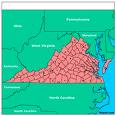 And let’s not forget the potential impact on winemaking in the Old Dominion. Our state is a bit south of center of where quality grapes can be grown. If our summers became much warmer than they are today, we just might find our future winemakers pulling up stakes and moving further north to create their tasty gems. Not a pleasant thought.
But, controversy swirls around whether all of these dire climate predictions will actually come to pass. Even some noted climate experts admit no significant overall warming trend has occurred in the last fifteen years.
One thing is fairly certain for most of today’s wine lovers, only modest, if any, changes will occur in our lifetimes. If there is an eventual geographical shift of the planet’s grape growing areas, it will doubtless present opportunities along with the inevitable losses.
Perhaps the one article of faith we can count on is that wine will still be produced and enjoyed as it has for the last 9,000 years. And the variety and quality could well be better than what we are currently imbibing.
Optimism is the hallmark of wine lovers. So no matter the reality of our future climate, tomorrow’s wine world looks as bright as a glass of Chardonnay.
Published in the March 19 weekend edition of the Fauquier-Times Democrat.
DELAPLANE CELLARS
2007
Shirland Syrah
$32
Owner & winegrower Jim Dolphin has a created a wine with origins from the Northern Rhone Valley in France. This 93% Syrah and 7% Viognier blend spent eighteen months in French oak and exhibits a rich, dark garnet color with a full-bodied palate of black fruit, spice, toasty notes and a silky finish. This rich tasting red will pair well with Tenderloin steak with Gorgonzola butter and rosemary potatoes. Drink now through 2014.
Delaplane Cellars is located at 2187 Winchester Road, Delaplane, VA. The winery sits on a ridge in far western Fauquier County with dramatic views of the rolling hills and mountains of the Virginia Piedmont. The tasting room is opened April to November, Friday through Sunday 11 AM till 5 PM; Monday through Thursday by appointment; and weekends only from December to March. (540) 592-7210. www.delaplanecellars.com
Highway Cleanup Effort Assures Winery Guests Beautiful Views To Match its Beautiful Wines
 On a bright, breezy day in late March, staff from Rappahannock Cellars donned work clothes and boots and hit Zachary Taylor Highway armed with orange trash bags and a can-do attitude. It was time to cleanup a two-mile section of its Adopt-A-Highway road.
The Virginia Department of Transportation created the program in 1988. The winery has been a participant in the statewide beautification effort for five years. The volunteer supported program sponsors 6,800 groups who keep 13,000 miles of road litter free across the State.
During the spring cleanup, the winery devoted nearly thirty man hours in gathering twenty-five bags of trash. Allan Delmare, Marketing Manger for the winery, said, “The removal of trash along the highway that borders our vineyards is just one example our commitment to a clean environment. And frankly, it’s a fun and satisfying way to help keep Rappahannock County the most beautiful spot in Virginia.”
For individuals and groups interested in adopting a section of the Old Dominion’s highways or byways contact the Virginia Department of Transportation.

All of my 2009 white wines are resting comfortably in the bottle now, to be enjoyed with the arrival of soft summer breezes.
Liar, liar pants on fire.
OK, I admit it. Jean and I have already pulled multiple corks on these wines. But, hey, that’s called quality control. One must monitor the wine to make certain it’s aging properly. Right?
I think you’re beginning to see through this deceptive logic.

Chardonnay Undergoing ML
The fact is, I was running low on white wine and hated to see last fall’s fruit languishing in those six-gallon glass carboys waiting to be consumed.
As mentioned in previous posts, home winemakers often do not bulk age their wines due to limited storage capacity. However, with my white wines, that’s really not an issue since I will not be using any of these vessels until this September.
So honestly, the real reason for early bottling is that I wanted to start drinking the young, fresh and exuberant wines. Generally, there is no winemaking reason to age whites for extended periods. This is true for both the amateur and the professional winemaker. Between now and June, the preponderance of commercial wineries in Virginia will have placed their whites in bottle.
This vintage I focused on three varietals; Seyval Blanc, Chardonnay and Viognier. My Seyval is a spot-on rendition of this French-American hybrid. The wine displays a pale straw color and is crisp and light with nuances of lemon and citrus notes on the palate. Stylistically think Sauvignon Blanc.
 I vinified my chardonnays in three different styles: unoaked with malolactic fermentation or ML; oaked with full ML; and a non-malolactic, unoaked version. The latter technique produces a light, crisp white unlike a typical chardonnay. The unoaked, malolactic rendition showcased apple and melon notes without the oak’s toasty influence. And the full ML and oaked treatment is typical of an oaky, buttery California Chardonnay. Together, the three styles offer a nice mélange of Chardonnay styles.
Any mistakes? Of course. I chose to put my Viognier through malolactic fermentation as opposed to the generally accepted approach used by professionals not to. But I was looking for a fuller, richer style of Viognier. Did it work? No. Instead of achieving my objective, I ended up with a wine that was a bit flabby; a trait that Viogner can express on its own even without inducing ML.
But, not to worry. I boosted the acidity of the finished wine through an addition of tartaric acid, a naturally occurring grape acid and widely used in the wine industry. While this did brighten the Viognier, it still has a bit heavier background component on the palate, uncharacteristic of the grape’s best expression.
So was my little experiment a failure? Not at all. I learned how not to treat this grape in future vintages. This is a tale all winemakers can tell; use each vintage to learn a bit more about your craft.
So here it is almost April, and I have all summer to enjoy—and share with my extended family—twenty-five cases of white wines.
Well, actually, twenty-four cases. I forgot about that quality control issue.

Does proposed Fauquier County ordinance threaten not only wineries but the county itself?
 Over the last year, Fauquier County has been wrestling with an issue of import to its twenty bonded wineries: should additional restrictions be placed on events and operating hours at these establishments.
Under the Code of Virginia, wineries are allowed to grow, harvest, vinify and offer on-premise wine tastings, sales, and consumption during regular business hours.
Virginia state law further provides wineries the right to operate such businesses without local regulation, unless there is a substantial impact on the health, safety, or welfare of the public. Therein lies the rub.
In some quarters, there is a belief that the county’s wine industry is, indeed, impinging on the welfare of the public, and these forces are pushing to increase local control over the industry. Why?
The trigger for much of the debate began a few years back when one county winery overstepped its bounds and began hosting outdoor events with loud amplified music attended by large crowds. The entrepreneurship displayed by this winery owner recently surfaced again when he and his wife made international headlines by showing up uninvited at a White House state dinner.
Since those early episodes of disregard for folks living near a winery, there have been only a small handful of complaints about such activities. And in virtually all cases, the wineries in question responded by eliminating functions that might upset the pastoral setting wherein they reside. Over the last year, there have been no formal complaints of winery misbehavior.
 Nonetheless, the county is proceeding to create additional regulatory control beyond what the current law provides for. The most onerous of the proposals are to limit the size and number of both day and evening group events. Actual restrictions would range from no daytime group events to a once a month limit of two hundred people for an evening affair. The acreage of the winery would dictate specific limitations.
These controls are being debated during the worst recession in decades—and absent any actual lifestyle disruptions to the community itself. Again, why?
For almost a century, Fauquier County was a rural locality with little or no change. In 1860, its population was around 24,000. A hundred years later, the 1960 census reflected an increase of only 2,000 residents. Today, there are some 70,000 citizens enjoying the beauty and lifestyle of the historic county, almost a tripling of the population.
Such rapid change has created alarm in some well-placed circles, and understandably a desire to control and guide future growth. Laudable objectives few would oppose.
But consider some of the contributions the wine industry provides Fauquier County:
· Attracts 300,000 visitors annually, some ninety percent from outside the county. That’s revenue pumped into the local economy for which no corresponding county costs are incurred.
· Employs over 250 full or part-time employees.
· Generates $500,000 in state sales taxes, expected to jump to $1.5 million over the next two years. Fauquier County will receive 20 percent, or at least $300,000 of those revenues.
· Drives additional money into the local community through use of vendors who provide food, music and event equipment rentals.
· Protects over 600 acres of farmland from subdivision sprawl, while using little water and minimal pesticides and fertilizers that foul creeks and rivers.
· Creates over $60 million in private investment in agricultural lands.
 Keeping these contributions in mind, reflect on the impact of reining in winery operations. Could it force some of these businesses to shutter their doors while discouraging others from opening new ventures? In an era of draconian budget cuts, the county cannot afford to slow job growth and reduce its tax base through these initiatives.
Notwithstanding the romance of owning a winery, the reality is it requires a large financial and labor-intensive commitment with a modest return on investment. Often what drives such investment is the desire for a lifestyle change as much as the creation of a business. Opening a typical winery requires an investment of several million dollars and up to ten years of labor before showing a profit. A line often heard in the industry is, “If you want to make a small fortune in Virginia wine, start with a large one.”
Proponents of more regulatory control claim one does not need to engage in events and extended hours to be successful. That’s likely true for a winery that has been in business for years. But debt is a looming shadow cast across most of the county’s newer vineyards, and retiring that obligation in a timely manner dictates maximizing business opportunities. It’s a simple matter of survival.
Further consideration of any change in county law should include the impact on the recreational enjoyment these establishments provide the public. Most wineries are situated in scenic settings with views of lakes, mountains and forest. Guests are often families seeking a day of respite from the hectic pace of their workaday world. Weddings, reunions, birthdays and anniversary celebrations are high on the list of events a winery hosts. To limit such activities would be to deprive the public of what is, in a real sense, a country club setting, albeit one with no membership restrictions, high initiation fees or annual dues. These are the people’s resorts.
Recently, a letter to the editor on the role of local wineries appeared in a county newspaper stating in part, “Where else can you take children, even pets, for a fun filled afternoon, at very modest prices? Only by going to one of the many wineries that offer music, food and, yes, wine, can one come to appreciate what a welcome relief this is. No video games, no large-screen TVs, no screaming crowds angry that a ref missed a call.” Where indeed?
In January, Fauquier County delayed taking any action on its proposed ordinance change for three months. Hopefully, the county will continue to work with the wine industry to assuage the concerns of those hoping to checkmate the important financial, agricultural and recreational contributions the industry has provided—and will continue to provide—our region.
Local wineries are a valued asset. They need our support not our control.

Published February 18, 2010 in the Culpeper Times.
HORTON VINEYARDS
2002
Tannat
$20
 The Tannat grape hails from southwest France and is not often seen in Virginia. And while it’s hard to find, winemaker Mike Heny produced a solid rendition in 2002 that’s worth tracking down. This full bodied and tannic red is almost black in color, exuding lots of robust smoke, tar, plum and raspberry on both the nose and palate, and closing with a lingering finish. A charcoal grilled filet mignon would be quite content nestled next to a glass of this hearty red. Drink now through 2013.
Horton Cellars is located at 6399 Spotswood Trail, Gordonsville, VA. Opened daily, year-round, from 10 am to 5 pm. (540) 832-7449. www.hv.com.
 White. The traditional color for love, purity, innocence, and of course, weddings. It reflects light and enhances all the other colors of the spectrum. Yet, mention it in the context of snow and the reaction is often, “Oh no.”
Here in Virginia, the 2009-10 winter has been the snowiest in several years. It’s mid-February and much of our state lies under a soft layer of white. Many parts of the Old Dominion have had over 50 inches of snow this winter. Reagan National Airport has recorded 54.9 inches, breaking a record for the Nation’s Capital set back in 1899.
And spring is still weeks away. By comparison, last year we had an average of less than ten inches statewide.
But as troublesome and aggravating as a heavy snowfall can be, its negative impact is eased by the beauty and serenity of snowflakes falling gently upon a dreary winter landscape. Gazing out the window of our home office, as snow slowly accumulates on lawn and forest, I undergo a transformation of mind and spirit. A sizeable snowfall on a cold wintry day comes close to being a magical thing, especially in light of today’s world of political discontent, economic hardship and security threats.
Snow transports us to another, more perfect world, if only for a short time.  Embracing its gentle softness can let our minds drift with each falling flake. Soon enough, like life itself, the beauty will fade.
The scenes of a snowfall panorama are varied. In our world of rural Virginia, it’s the finches scampering and fluttering on top of the fallen white crest, feeding on seed we have scattered on the surface. Later in the afternoon, a small herd of deer, led by a young buck with a perfect eight-point rack, nibble on birdseed the squirrels and birds missed earlier in the day.
As evening draws closer, our feral cat—dubbed “Boots” because of his four white paws—wanders out of the woods looking for his bowl of Friskies located under the porch. And we wonder, how does he survive these frigid nights and deep snows? And where does he meander off to as the sun settles behind the hills to our west? Nature. Survival. Amazing.
 Of course, there is work associated with this dreamscape. Shoveling walks, snow blowing driveways, cleaning vehicles laden with layers of white, and making runs to the grocery store between storms to maintain stocks of milk, bread and the important paper products.
But as the last light of day fades into soft purple hues, I start the fire in our wood burning stove and deal with the hard issues of life. “Viognier or Cabernet Franc tonight, hon?” Hmmmm…no immediate response. And then from upstairs, “Well, we’re having lamb stew, what do you think?”
Oh, that’s an easy one. I pour two small glasses of Viognier that will serve as an opening aperitif, and then decant a bottle of Cabernet Franc to be enjoyed later with Jean’s world-class stew.
The winter’s been harsh. The cold grows wearisome. But life is good.
Perhaps we owe it all to snow.

Freeloader. Hardly a term we think of when the grapevine comes to mind.
Sadly, it’s true. All th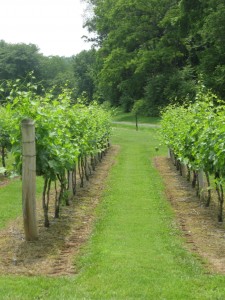 ose beautiful vineyards that inspire poets and artists and provide us the nectar of the gods are populated with a bunch of selfish little wannabes. It’s fortunate we’ve learned how to control the rascals.
The grapevine has evolved over time to take advantage of others. And we in turn have learned how to take advantage of it. What goes around comes around.
A vine really has only two desires in life: earth and sky. Long ago the vine looked around and was amazed how much time trees waste in growing huge trunks to support its life-giving canopy. Trees devote decades to bulking up so they can tower over other vegetative growth and bask in the life-giving rays of the sun. The grapevine ruminated on this waste of energy and thought, “I’ve got a better idea.”
And indeed it did. Rather than devote hard-earned resources in assembling a mechanical structure to touch the sky, the vine employed a quick and easy route to nirvana; climb on the backs of trees and race to the sun in record time.
Once the vine chose to pursue this survival strategy, it simply got better at it as time went by, perfecting its behavior over a 130 million year stretch. When the English colonists landed in Jamestown, they were astonished to encounter virgin forests draped with wild vines and grapes. Such heavy growth could even threaten the well being of the host tree. Although, it wouldn’t have been too smart to snap a trunk and end up lying on the forest floor looking for another victim to climb upon.

Kudzu Vines
An egregious example of a non-grape vine taking advantage of its host is the Kudzu vine. Originating in Japan, it was introduced in the United States in 1876 as a forage crop. Starting around 1935, it was given a new lease on life as a soil erosion agent. Over time, it rejoiced in the hot, humid summers of our southeastern states and the rest is history. The vine’s population exploded and today wide swaths of forests can be seen draped in green blankets of vines. Voodoo Kudzu.
The Greeks were the first culture to abandon the practice of allowing vines to do their tree climbing tricks. Instead, they developed a system of training vines to grow on trellises and stakes, a technique eventually adopted by all grape growers. It was at this point in history that man began to manipulate the vine and use its natural growing traits to advantage. It also was a bit safer than scampering up tall trees to harvest their wine.
Once the vine was placed in the harness of a trellis system, its urge to grow profusely needed manipulation. A variety of trellis and pruning techniques emerged to increase the quality and flavor of the grape crop. If vines aren’t shown “tough love”, they will grow profusely, the canopy overflowing and hiding the fruit and introducing the opportunity for fungus and mildew attacks. Vine growers have been managing these challenges for centuries and today’s vineyard managers are still vigilant in protecting and treating their disease-prone vines.
The stages of grape development begin after harvest when the vines fall into a winter dormant stage to protect themselves from the harsh climate. As solar energy increases in spring, the buds begin to swell, then break open with associated leaf unfolding and flowering, followed by fruit set and the formation of berry bunches, later to evolve into the iconic grape clusters.
As this stage of development progresses, the grape’s wildlife enemies slowly become aware that the vine is not growing up trees but offering easy pickings on low hanging trellises. Commercial vineyards protect their crop with nine-foot high fences to thwart deer and bear predation. The vine’s natural ability to grow away from such threats has been compromised by man’s intervention to keep it relatively close to the ground. Nonetheless, its ancient defensive mechanisms still provide some protection. The vine camouflages its grapes the same color as its leaf canopy and maintains high acid levels to make the fruit unappetizing to animals and birds. Not until the grapes near maturity will it drop its guard and let the fruit become more attractive to depredation.
After the threat of killing spring frosts, one of the most vulnerable times for wine growers occurs in late summer when the fruit begins to undergo veraison, or the changing of color. During this phase, grape sugars begin to increase and natural acids start receding. The vine has no clue that man has been working all year long to reach this important stage. This phenomenon is essentially a public announcement to wildlife to move in and have a bite of the tasty ripening fruit.
 The green fruit turns either a translucent golden color for white grapes or a purple-black for red grapes. In both cases, it’s a visual signal for our feathered friends and other wildlife to begin picnicking. The vine’s purpose for the color change is to lure the animal kingdom into eating, and then disseminating, digested grapes seeds over a wide area. It’s a pure and simple survival mechanism designed to propagate the species.
And it’s exactly what wine growers don’t want to happen. The vine’s natural impulse is to take advantage of hungry critter appetites for propagation purposes. But its urges must again be reigned in. During the months of August and September, you will often see vineyards swathed in diaphanous netting to block the dance of the vine and the fowl.
In addition to bird visitations, deer and bear focused on beefing up for the winter months cannot resist gormandizing on the fruit. A sow bear and her cubs roaming freely in a vineyard can wipe out a season’s worth of work in a few nights. Maintaining bear and deer proof fencing is high on a vineyard manager’s to-do list during this part of the growing season. Although, it’s mighty hard to stop a determined bear unless you unleash the hounds.
As harvest draws to close, the vines—sans their leaves—are allowed to acclimate to winter temperatures for a few months before pruning begins. If pruning intervention did not occur, spring would see an explosion of foliage as the vines drop to the ground and seek adjacent trellises. Picture the rampaging Kudzu vine. Left unpruned, grapevines would slowly spread across a vineyard smothering as much territory as possible.
So has man always been destined to control and reap the bounty of the grapevine? Perhaps. Even Genesis 1:26 states, “And God said…Let them make dominion over every creeping thing that creepth upon the earth.” And so it is.
Published in the February 4, 2009 edition of the Culpeper Times.

LINDEN VINEYARDS
2006
AVENIUS RED
$36
 Vine grower Jim Law’s winemaking philosophy is embedded in the “somewhereness” of where his grapes are grown. He embodies the old adage, “You don’t make great wine, you grow it,” and his ’06 Avenius showcases the land on which the fruit was harvested. A blend of 79% Petit Verdot and 21% Cabernet Sauvignon, this dark red opens with aromas of spice and black cherry that follow through on the palate with earthy notes and a bright cherry finish. Pair with a hearty Beef Bourgogne. Drink now through 2015.
Linden Vineyards is located at 3708 Harrels Corner Road, Linden, VA. The winery is cradled high on the slope of a small valley, offering guests sweeping views of the vineyards below. The tasting room is opened April to November, Wednesday through Sunday from 11 AM till 5 PM, and December to March, weekends only,5 11 AM to 5 PM. (540) 364-1997. www.lindenvineyards.com.

University of Virginia Darden School of Business
On January 29, the renown University of Virginia Darden School of Business hosted its first annual wine, beer and spirits MBA conference.
The event was sponsored by the school’s wine & cuisine club and featured an impressive array of speakers from the alcohol beverage industry.
The conference opened with a keynote presentation given by Robert Cavanaugh, a wine educator and marketing director and founder of Adventure Wine. Cavanaugh’s remarks centered on the burgeoning beverage industry and the growing career opportunities for graduating MBA students. He noted the expanding wine industry in the United States would soon result in the nation becoming the largest consumer of wine in the world.
One interesting insight was his take that the restaurant industry is broadly moving toward a reduction of its markups on dinner wines, stating, “Twice the markup is becoming the new three and half markup of the past.” Good news for consumers and creating an environment for accelerated growth of restaurants with reasonably priced wine lists.

Featured Speakers
Following his informative presentation, a panel of experts discussed today’s beverage industry. Representatives from Anheuser-Busch, E&J Gallo, Brown-Forman, Folio and Williamsburg Winery addressed a wide range of “hot topics”—as the panel was dubbed—including growth, marketing, and regulatory control.
One interesting insight was that most distributors today are not brand builders but simply delivery services, and wineries need to seek ways to create demand without relying on distributor relationships.
Following the opening session, held in the impressive Abbott Auditorium, attendees fanned out to breakout classrooms and played “MBA student” for a few hours. A choice of three sessions was offered: Entrepreneurship & Finance; Marketing; and Operations and Strategy.
I attended the marketing presentation and was rewarded with a fascinating glimpse of how major beverage firms identify and market their products. The presenters were from Gallo Winery, Anheuser-Busch and Guy Design and Illustration.
Lee Susen, Gallo’s Marketing Director, New Business Development, and a MBA grad from the University of Michigan, took our class though a fascinating power point presentation showcasing today’s wine market and how Gallo builds its brand. Two of his numerous observations were that Moscato, a sweet white with a gentle 9% alcohol level, was the fastest growing wine stateside with the potential to replace the entrenched white zinfandel.
Katherine Booker, Innovation Manager, Anheuser-Busch, and a recent graduate from Darden, gave an equally interesting presentation on the beer industry. Booker spent some time focusing on a new beer that Busch will soon market nationwide called Select 55. It is a 2.4 percent alcohol brew with only 55 calories.

Breakout Session
Closing out the session, Allan Guy, owner of Guy Design, shared with the “students” several of his label redesigns, including Barcardi Run, Mount Vernon whiskey and five Virginia wine label upgrades.
As the day wound down, the attendees were treated to variety of wines and food during the evening reception. My wife Jean and I poured the Rappahannock Cellars 2008 Chardonnay and 2007 Meritage, garnering a number of compliments from the guests.
Darden is to be commended for conceiving and executing an excellent eight-hour conference packed with perspective and facts on today’s beverage industry.

The grapes are now wine and the search begins for gold medals
Most Virginia winemakers live by the adage, “The whole is greater than the sum of its parts.” During the winter and early spring months, vintners across the Old Dominion are auditioning their individual wines to see which ones will star—and which ones will play supporting roles—in the production of their ultimate cuvees.
It’s a great time to hang around a winery. The test samples never stop emerging from the cellar.

Andy Reagan counsels neophytes
Recently, a group of a dozen wine and food professionals gathered at Jefferson Vineyards in Charlottesville to join winemaker Andy Reagan in the elusive hunt for the perfect wine. The event, billed as a Master Class in Wine Blending, is held annually for both consumers and trade folks and provides a unique opportunity to better understand the art and science of winemaking.
Blending wine has a long history. Legend claims it originated in France as a hedge against any one specific grape crop failure in a given year. If such an event occurred, blending enabled wines to be produced similar in style as previous vintages. Even then, consistency was viewed as an important goal. Chateau strove to produce a certain style and customers eagerly waited each new vintage in anticipation of their favorite wine’s release.
While blending seemingly implies two or more different varietal wines enjoying each other’s company in the same bottle, it’s not necessarily the case. Often, especially for white wine, it’s the same type wine, say Chardonnay, vinified in different styles. For example, an oak blended effort married with a stainless steel rendition, or a primary fermentation only wine integrated with both a primary and a secondary vinified wine. Complexity equals character.
At the session at Jefferson Vineyards, winemaker Reagan opened the seminar by discussing the purpose of blending: to create a balanced wine using various components. The word balanced was underscored.
He stressed the importance of understanding your own palate coupled with the chemistry makeup of the wines, such as its residual sugar, acidity, alcohol levels and tannin density. A particularly interesting observation was that higher alcohol wines convey a sense of sweetness on the palate, but by boosting acidity one can tame the sweet effect.
Since the blending exercise focused on white wines, a review of the basic three types of fermentation and aging was discussed—stainless steel, neutral oak and new oak. One might instinctively think steel-made wine would be of lesser quality, but it’s not the case.
Wine with no oak will showcase its fruit and citrus components, while neutral oak produces a creamier mouth feel with minimal toasty notes. And a new oak barrel will emphasize a host of flavors depending on how intense the oak staves have been toasted, or briefly heated at up to five hundred degrees. The level of toasting—light, medium, or heavy—produces a startlingly array of wine aromas and flavors, including almond, vanilla, cinnamon, bacon, coffee, walnut, pepper, chocolate, tobacco, clove and more.
 A new oak barrel will deliver fifty percent of its oak impact in the first year of its use. The second year it drops to twenty-five percent and by the fifth year the barrel will be considered neutral. Yet even then, a soft mouth feel is achieved with a wine aged in a neutral barrel. Oak is amazing wood and virtually the only one used to age wine.
One of the first observations made by the nascent vintners was the dramatic effect new oak has on a wine. The palate impression was intense, redolent of toasty vanilla and sweet notes. Initial blends using a heavy portion of new French oaked wine were subsequently toned down with the more judicious use of neutral or steel-made wines. Nevertheless, some bold, full-body oaked beauties survived the cut.
The personality of steel-aged wines did reveal their charms; displaying a clean, more focused fruit profile than their oak aged brothers. And then, a “eureka moment” began to descend on the room as blends of both styles created something greater than the individual wines. A wave of brain neurons began firing off left and right triggering knowing smiles around the cellar.
Hey, this winemaking thing is cool.

Alchemists at work
As the three-hour session drew to a close, “Professor” Reagan brought fourth his own preliminary 2009 white wine blends. The students struggled as they attempted to select their top choices. They were all delicious. But slowly, the future gold medal winners began to reveal themselves.
And as the attendees filed out of the cellar, they asked for assurances they’d get billing when their selected favorites starting pulling down medals at summer wine competitions.
Reagan murmured softly, “Yeah, right,” as he waved the group goodbye and closed the cellar door. It seems if you want get credit in the wine game, you need to spend more than one afternoon practicing the art.

