
Archive for WINE ARTICLES
Delaplane estate rising to new heights
 Even from a distance the edifice looks imposing. Understandably so. Its spacious tasting rooms and cellar clock in at over 20,000 square feet of spotless modernity.
As you wind gently up a country lane to the winery—perched on the highest point of the 63 acre property—its stature is fully revealed. But there’s a dilemma; gaze at the impressive two-story field stone winery or the 360 degree views of rolling countryside and Blue Ridge Mountains.
The solution? Head inside and taste the wines.
As one approaches the large arched front doors chances are you’ll be greeted by your first host, Jill, a ten-month-old beagle with a wagging tail. The signal is clear. This is an upscale establishment with a down home feel.
Children are also welcomed because “We have four grandchildren of our own,” co-owner Helen Zissios said.
Opened in April 2015, the multi-million dollar winery is gaining buzz as oenophiles visit and spread the word. And as impressive as the facility and grounds are, the project is not yet fully realized. Grassy picnic areas, waterfalls and a Koi pond are a few of the amenities still to come.
One guest remarked he had “visited some 200 Virginia wineries and Blue Valley has the best views of them all.”
Family affair

Stergio Zissios
The winery has evolved from dream to reality due to the passion of the Greek Zissios family. John and Helen Zissios and their three adult children have all played a role in its creation. Their oldest son Stergio is the key player in the winery.
The story began one Sunday 18 years ago when mom and dad were enjoying a Sunday drive in Fauquier County. “My husband saw a sign on the ground covered with leaves,” Helen Zissios said. Upon inspection it revealed the property was for sale.
Unfortunately, it was the John Marshall estate consisting of 400 acres, more land than the family wanted. They offered to buy a portion and were rejected. But two weeks later the sales agent called back and asked then to pick out the lot they wanted.
The vision of a winery had not yet materialized. John Zissios had been a home winemaker for decades and simply wanted to grow grapes and enjoy the country life. Years later his oldest son Stergio convinced the family to build a winery on the very location the family home was to be situated.
It’s been a labor of love since. Helen Zissios says some people think a wealthy and detached owner is behind Blue Valley “but it’s not true”. While a sizeable portion of the family’s money has been invested in the business, their son Stergio, 34, reminds visitors 85 percent of the winery construction was completed by him and his father.
Hands on personifies the establishment.
And where does such skill sets come from? His father founded Capitol Services Heating, AC, Plumbing and remodeling thirty-five years ago. His second son, Demos, 33, runs the Falls Church firm today. Daughter Katerina, 28, is a Physician Assistant.
The wines
As experienced as John Zissios is in making wine, he wisely employed consultant John Levenberg to oversee his work. Levenberg made wine in California, France and New Zealand.
Wine Spectator magazine rated one of his reds as among the three best wines of the 2002 Bordeaux vintage. He also produced 23 wines rated 90 points or higher by wine legend Robert Parker, including two 100-point wines he crafted while working at Paul Hobbs winery in Sonoma County, CA.
With the pressures of running a new winery, John Zissios hired a talented young winemaker, Tyler Henley, in 2014 to craft his future wines. A tour of the wine cellar reveals over 30 stainless steel tanks, numerous French and American oak barrels and a dramatic stone-lined banquet room available for private dinners.
Currently, there are seven varietals grown on 17 estate acres with plans to expand plantings in the future. Last year, 9,800 cases of wine were produced with a goal of 20,000 cases rolling off the bottling line by 2022.
In addition to Virginia grapes used to make wines, the family buys fruit from California to help meet its production goals. The Zissios family is currently harvesting their own grapes. As more estate fruit becomes available, out-of-state purchases will be phased out.
The deft touch of John Zissios and John Levenberg is evident in the 11 clean and flavorful wines currently being poured in the tasting room.
 “We are very particular about our wines and our service,” Helen Zissios said. The proof is in the bottle and the friendly staff. And the pièce de resistance? An expansive deck with umbrella tables off the side of the tasting room. A glass of wine can last a long time in such a setting as guests sip, gaze and unwind.
Blue Valley Vineyard and Winery is opened seven days a week. Visit http://www.bluevalleyvineyardandwinery.com/ for directions, operating hours and events.
John’s pick of the month
Blue Valley Vineyard and Winery
2013 Celebration
$38
A unique blend of Cabernet Franc, Merlot and Sangiovese. The full-bodied wine presents with delicate aromatics and a rich mouth feel. The palate is replete with blackberry, cocoa and toasted vanilla. Aged in new French and American oak for 14 months, the wine is elegant, fruit forward and suitable with a wide range of grilled meats.
Farming the land for over two centuries
In 1794, a tax protest erupted in Pennsylvania that became known at the Whiskey Rebellion. It’s also the year that a pioneer family established Sharp Rock farm in western Rappahannock County.
Perhaps it’s fitting the farm’s original founder and its current owner have a link to the production of each era’s popular libation; whiskey then wine today.
 Sharp Rock farm received its moniker from a well-known landmark that jutted out of the Hughes River that flows past the property. Decades ago the huge boulder was leveled off and a bridge built over it. Nonetheless, the original name of the property has prevailed for 221 years.
Jimm and Kathy East are the current proprietors of the farm, boutique winery and bed and breakfast. Unlike the farmers of the past, today the cash crop is wine grapes, a fruit seldom grown in Virginia in the 18th and 19th centuries.
The Easts purchased the property in 2004 having worked for the previous owner for a year. “I really did not have any training other than helping Dave a little. I never hired a consultant,” Jimm East said.
David and Marilyn Armor founded the winery in 1998 but work commitments led them to sell the property to the Easts. Jimm East worked for more than two decades in the outdoor recreation industry and was seeking to transition to a job requiring less travel. Sharp Rock fulfilled his needs.
It also met the needs of the wine drinking public who soon found the nascent winemaker producing clean, flavorful wines.
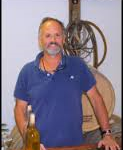
Jimm East
Today, East still maintains contact with outdoor enthusiasts but it comes in the form of chatting with visitors to his tasting room. Sharp Rock lies in the long shadows of Old Rag Mountain, one of the most popular hiking destinations in the mid-Atlantic region.
“On Saturday and Sunday afternoons we get a number of hikers” returning from an adventurous hike up Old Rag. Over 100,000 hikers summit the iconic mountain each year.
Small is beautiful
Sharp Rock Vineyards is emblematic of a small winery and lodging establishment. It is situated on 25 beautiful, rolling acres with the Blue Ridge Mountains serving as backdrop. Wine production tops out at around 700 cases annually; a fraction compared with many Old Dominion wineries.
But while production is small the lineup of wines offers considerable depth. East produces about a dozen wines each year from eight varietals grown on the farm. The eight-acre vineyard is home to three white and five red grape varieties.
East’s creative winemaking is showcased in the unique blends he crafts. Vidal Blanc, Chardonnay and Sauvignon Blanc are often melded together to create bright, crisp white wines.
Experience has taught the winemaker that red blends offer greater flavor options rather than bottling 100 percent varietals. It enables guests to experience new aromas and flavors “that isn’t the same old thing.”
The winery and tasting room reinforces the historic nature of the farm. It is housed in a 1860s era barn. The winery is located on the ground floor. Guests ascend a narrow set of stairs leading to the former loft to sample and buy wines. The atmosphere is simultaneously down-home and artisanal.
Visit and stay
If it sounds like a day spent at the winery would be time well-invested, you would have numerous like-minded folks in your camp. The ambiance of Sharp Rock is geared to reducing stress for overworked city denizens and locals alike. Proof? Both B&B cottages are booked solid on the weekends.
Each cottage comes with its historical bona fides. The “Cottage” was the original dwelling on the farm and dates to 1794. The “Carriage House” was built in 1850. Both buildings are nestled near the Hughes River.
East describes a typical guest experience. “Recently we had a couple spend a weekend at the Cottage. He fly fished in the Hughes while she read nearby. Later they did a wine tasting and received a bottle of wine as part of their stay. The next day they hiked Old Rag.”
Sounds suspiciously like a prescription from your doctor to unwind and relax, eh?
Sharp Rock Vineyards is opened Friday, Saturday and Sunday from 11 a.m. to 5 p.m. For information on wines, lodging and events visit http://sharprockvineyards.
John’s pick of the month
Sharp Rock Vineyards
Circa 1794
$30
This red Bordeaux wine pays tribute to the founding of Sharp Rock farm over two centuries ago. It is a blend of the five classic Bordeaux grapes and casts a deep garnet color in the glass.
The aromatic wine telegraphs mouth filling flavors of cocoa and blackberry framed by a subtle touch of cigar box and earth nuances. It is vinified in a style that is approachable now or capable of sleeping for a few years to further enhance its rich, black fruit flavors.
Published in the July 30, 2015 edition of the Culpeper Times.
Labels span the gamut from exclusive to inclusive
Fauquier County’s wineries cover 651 square miles. To visit them all would involve some serious road time.
But before backing out of the driveway, multiply the 26 wineries by an average of seven wines per tasting room and you’ll get a better idea of why it would take devotion and a couple tanks of gas to sip through them all.
No calculator handy? That’s 182 different wines.
Indeed, the depth and diversity of the county’s wine culture is remarkable. Here are three randomly selected wine names you’ll encounter on your odyssey.
Philip Carter Winery of Virginia: Corotoman. A red Bordeaux blend named in honor of the home of Robert “King” Carter. Over 250 years ago, the ancestors of the owner of Philip Carter Winery were recognized by the London society and Virginia’s Royal Governor Francis Fauquier as having made quality wine from the delicious, but notoriously difficult to grow, European grape.
It is the winery’s signature red wine with a silky mouthfeel and a full-bodied red stone fruit palate.
 Corotoman was a 17th century plantation on the Rappahannock River and the home of “King” Carter. The mansion rivaled the best of Colonial homes of the era and oversaw 48 plantations encompassing 300,000 acres. The residence affirmed the status of Carter as the most powerful planter in the Tidewater aristocracy. The wine scored a silver medal at the 2014 Virginia Governor’s Cup competition.
Desert Rose Ranch & Winery: Covert Cab. Perhaps the most whimsical wine name in the county. The moniker is driven by two dynamics. First, it is made from a new hybrid grape of Norton and Cabernet Sauvignon. No one in the county grows or produces the unique wine except Desert Rose. The resulting wine is deep-colored and full-bodied.
Secondly, the proprietor of Desert Rose served 31 action-packed years in the Nation’s clandestine service. Covert Cab blends the mystique of the grape’s heritage with the mystery of the owner’s cloak-and-dagger career. The undercover wine won best in show for reds at the 2015 Fauquier County wine competition held at Airlie Conference Center.
Granite Heights Winery: humility. That’s not a typo; in keeping with the spirit of the wine’s name it is always spelled in lower case. It is a red Bordeaux blend typically comprised of Merlot, Cabernet Sauvignon, Cabernet Franc and Petit Verdot. It produces a rich, full-bodied wine that can simply be described as delicious.
The owners chose the name because it embodies their belief that humility is a silent strength rather than an act of lowering oneself in relation to others. It is a character trait that speaks well of the person or wine displaying it. As winemakers they want the wine to do most of the “talking”. To reinforce the philosophy, their tasting notes have no descriptive language on the aromas or flavors found within the bottle; just a simple list of the blended composition.
Guests taste, discover and decide on their own what secrets are unlocked as they enjoy the gifts from the vineyard. The owners believe to do otherwise would be like leading the witness or being told the ending of a book before its read.
Past vintages of humility have been recognized by wine cognoscenti and prestigious competitions, including a gold medal for the 2010 vintage from the Atlantic Seaboard Wine Competition and a silver medal from the Virginia’s Governor Cup for the 2011 bottling.
Here are a few other wines with intriguing back stories waiting to be revealed. Enjoy your journey as you explore all the label tales behind Fauquier wine.
Boxwood Winery: Topiary and Trellis reds
Mediterranean Cellars: Bellview Blanc
Winding Road Cellars: Tribute red table wine
Pearmund Cellars: Ameritage
Three Fox Vineyards: Giacosa Chardonnay & Cano Passo Rose
Barrel Oak Winery: Bowhaus Red & Chocolate Lab dessert wine
Linden Vineyards: Hardscrabble Chardonnay & Boisseau Chardonnay
Fox Meadow Winery: LeRenard Rouge & Freezeland White
Morais Vineyards & Winery: Battlefield White & Sam’s Jeropiga dessert wine
Delaplane Cellars: Maggie’s Viognier & Williams Gap red
Labels—both human and vinous—can drive success
Names make a difference. Science says so.
Take human names. UCLA psychology professor, Albert Mehrabian, tested a slew of names to see how attractive people found them. Some equated to success; others to popularity or kindness.
Traditional names such as Rachel or Robert got a jump start in the “it’s a jungle out there” world.
But modern alternative names did not score nearly as well. Breeze for example rated 16 on a 100 point sale.
“A name is part of an impression package. If you want to give your child a name that connotes low status, then you need to be aware of the consequences,” Mehrabian cautioned.
Might the same be true for wine? Maybe.
But maybe not.
Critter wines
All of us need to be a tad skeptical when it comes pop psychology assessments. But back in the early 2000s, a phenomenon erupted in the wine world called Critter Wines. Now that moniker could not possibly sell wine, right? Think again.
The winery known worldwide for largely establishing the branding phenomenon was Yellow Tail. The company’s cute, colorful marsupial helped launch an ocean of inexpensive wine.
 Of course, Yellow Tail also perfected an easy drinking libation to match its label. They produced a wine with less tannin and acidity while simultaneously bumping up the residual sugar a tad.
The masses loved it. How much? Today, Yellow Tail has sold more than a billion bottles worldwide. That’s a lot of hopping kangaroos. It also spawned an avalanche of other critter wines.
As you negotiate the wine aisle in the local grocery store today you’ll see: Goats Do Roam, Dancing Bull, Rex Goliath, The Little Penguin, Four Emus, Three Blind Moose, Cardinal Point, Porcupine Ridge, Badger Mountain, Butterfly Creek; the list goes on but you get the idea.
All of this labeling is designed to demystify wine and make it more fun. One major target audience for such labeling is millennials; a cohort between the ages of 20 to the mid-30s and one of the fastest growing segments of wine drinkers.
It’s important for the wine industry to capture these folks today because “he who rocks the cradle rules the world.” In 20 years, ageing millennials will have a wallet full of cash to spend on wine.
So while fun wine labels can move the sales needle it might also telegraph a less prestigious wine in a buyer’s mind. But if the wine is tasty and the cash register keeps ringing, who cares?
Published in the Spring 2015 edition of inFauquier magazine.
Winery expands with opening of distillery
If you are looking for a unique gift for dad on Father’s Day, consider taking him out to Old House Vineyards for the launch of its new distillery. But first, stop by the winery and sample the wines then wrap up your visit with a brick oven pizza on the patio while listening to live music.
Of course lake fishing could also be on the agenda. They’ll even supply the worms.
Old House Vineyards and its new libation factory is synonymous with fun. On Sunday, June 21, after three years of hard work and an investment of over a quarter million dollars, the Kearney family will open its distillery for tastings and sales.
Pat and Allyson Kearney are the power couple behind the social lubricant adventure land. They also apparently never sleep given what they’ve created at Old House since opening in 2002. Wine production increased to 3,000 cases this year and some fifty weddings and numerous other events are held on the estate annually.
 Fortunately, the heavy workload at the vineyard will now be shared by Ryan Kearney, the couple’s 24-year-old son and newly minted crafted distiller. The University of Virginia graduate spent a year working for an IT firm in Washington, D.C. before being lured home by dad with an offer he couldn’t resist; creating distilled spirits.
“I can’t really complain much about what I do. I have a pretty awesome job. It definitely beats working in D.C.” said Ryan Kearney.
Indeed. An awesome job that makes not only the young man happy but the soon-to-be fans of Old House spirits as well.
Using the template that created their previous successes, the Kearneys will launch the distillery with two different bottlings and expand over time. A vodka produced from the winery’s Vidal Blanc grapes and a silver rum distilled from sugar cane and molasses will be available for tasting and sale on opening day.
In the near future, a specialty product made from Blue Agave nectar will grace the tasting notes. The libation is similar to a Tequila.
Distillery
Starting a distillery from scratch requires money, education and patience; jumping in without due diligence courts a quick stumble. All of the products at Old House have to be tested on small ten gallon stills before moving to full production.
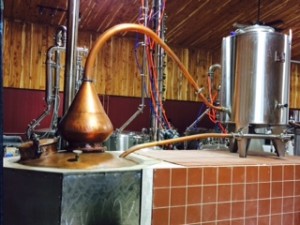 The equipment itself is pricey. The distillery has one 150 gallon copper Olympic pot still from South Africa costing $60,000. Three additional column stills cost $15,000 each. Quality spirits are not made on the cheap.
Additional equipment will be purchased as production increases. Future liquors will include grain- based whiskey and gin using rye, barley and wheat grown by Culpeper farmers.
To prepare for the new venture Pat and Ryan Kearney took a distilling course in Seattle. Then Ryan Kearney hit the books hard to perfect his skills. He also sought help from current Virginia distillers.
When Old House secured its permit to distill, it became the 21st distillery in the state. “All of the state’s distilleries are very open to sharing information. It’s one of the great things about craft distilling in Virginia,” Ryan Kearney said.
Licensing by the Virginia Department of Alcoholic Beverage Control added a another dimension to the endeavor; strict laws govern the production of distilled beverages.
Museum
An added attraction to the new stand-alone distillery is a World War II museum. Pat Kearney’s primary job is president of Kearney and Associates, a firm specializing in the design and construction of museum exhibits for government and private organizations.
“Dad has 30 years experience in museum design and World War II speaks to him a lot. Our neighbors are also veterans of the war,” Ryan Kearney said.
The museum provides a unique backdrop to the tasting room and reinforces the contributions the “Greatest Generation” made to the Nation.
“There’s nothing better than working with your family,” Ryan Kearney said. “It’s a neat experience. Hopefully, the distillery will bring more people to Old House and to Culpeper. We are excited about the next couple of years.”
The Kearney’s have two other children; Brittany, 26, is a registered nurse and Liam, 19, attends college and works at the winery during the summer months. “I could see him coming back after school,” said Ryan Kearney.
Old House Vineyards is located at 18351 Corkys Lane, Culpeper. It is opened six days a week year round; closed on Tuesdays. For additional information on hours and special events visit: http://www.oldhousevineyards.com/
Published in the June 18, 2015 edition of the Culpeper Times.
Recipes and pub location being finalized now
In 1979 there were just a handful of craft breweries in the United States. It was also the year President Jimmy Carter signed legislation allowing homebrewing. What started out as a few snow flakes of homebrewers turned into an avalanche of commercial artisan brewmasters.
An avalanche? Indeed. From a scattering of craft breweries in the early 1980s, the industry has burgeoned to nearly 3,600 today. It’s a classic example of free enterprise and entrepreneurial spirit being unleashed by market opportunity.
Moreover, it has catapulted the U.S. into the world’s leading craft beer producer. Today, some of the finest beer in the world is being produced in America.
Craft beer has joined forces with artisanal wine and distilled spirits as a growth industry. Across the spectrum of “social lubricants” quality is trumping quantity.
The phenomenon is evident in communities across the country and Culpeper is no exception. With the opening of Wicked Barn Brewery in September the town will be home to three craft breweries.
Homegrown
 The latest brewer to enter the local craft beer scene is a native of Culpeper. William Jones, 43, was born at Culpeper Regional Hospital and grew up on a nearby dairy farm. His family raised Holstein cattle and farmed hay, alfalfa and other grain crops.
Much of the farm was sold in 1985 but the 300 foot long dairy barn remained in the family. It will be repurposed from milk production to beer. “It’s in rough shape. It’s been sitting for 30 years but it still has some good bones to it,” Jones said.
Jones plans to make the barn his brewing location and eventually a brew pub. In the interim, he will establish retail presence in downtown Culpeper in September while his full business plan unfolds over the next three years.
Currently Jones is not selling beer. The basement of his home is his “pilot beer house” where he is perfecting his lineup of brews. Lovers of the hop will be rewarded for their patience when his beers start flowing from the taps.
The diversity of his selections is impressive and includes black Irish stout, Ruby-Brown ale, West Coast India Pale Ale, German wheat beer, American Brown ale and a German pilsner, among others. A total of eight beers will grace his menu when he opens.
In addition to brewing, the former farm boy will return to his roots by growing hops on the barn property. Hops are a key ingredient in beer providing flavoring and stability and imparting a bitter, tangy flavor to balance the malt flavor of the barley grain.
There are only a few hop farmers in the Old Dominion today. The plants are called bines and grow 25 feet in height on a network of poles and trellising. “I believe they will do well in Virginia. The plants take a lot of water.
“I will grow Columbus, Cascade, Centennial and other varieties. I will initially plant an acre but ultimately grow five acres,” Jones said. In addition to locally gown hops he will use barley also grown in Virginia.
“I want to use local products as much as I can. I want to engage local companies to help leverage their businesses. I want to give back to the community,” Jones said.
As his business grows, Jones will bring other employees on board. He will hire an assistant brewer and someone to run the pub plus employees to work there. “I will manage and operate it but there will be other employees that will help. I will continue to work my regular job.” said Jones.
That day job by the way is vice president of engineering and production at Euro-Composites at the Culpeper Airport Industrial Park.
The firm, headquartered in Luxembourg, invested $11 million in its Culpeper plant in 2011 and today employees 82 people. The company manufactures honeycomb composite material used in aerospace and other industry sectors.
Clearly this brewmaster has earned his business bona fides and will bring a wealth of expertise to his hobby turned second career.
Name that brewery
So how did Wicked Barn earn its moniker? Jones laughs and says, “It’s long story.”
It seems one of his favorite songs as a young man was called Wicked Ways by the heavy metal band Leatherwolf. At the time, he had rebuilt a 1994 Chevy pickup, dropped a racing motor in it and dubbed the truck Wicked Ways.
Subsequently, he took up motorcycle racing and called the bike Wicked II. “So the wicked thing has been in my family a long time.” It made sense to continue the theme with his brewery. Not to mention that the beer will likely taste “wicked good”.
In summing up his emerging role as a brewmaster, Jones said, “I am really looking forward to opening. I’m excited. I incorporated the business on April 4 and the closer I get to opening the more anxious I’m to get going.”
What a coincidence. Beer lovers throughout Virginia will also be eager to have Wicked Barn join the state’s brewery scene.
To track the progress of Wicked Barn’s opening visit its Facebook page: https://www.facebook.com/wickedbarnbrewery/info?tab=overview
Culpeper Brew Scene
When Wicked Barn Brewery opens in September, it will join two other current breweries in town. If you haven’t had a chance to check them out, grab your beer mug and head out to:
Beer Hound Brewery
Opened in 2014, Beer Hound Brewery is a nanobrewery and strives to keep beer local by brewing and serving beer direct to customers. All of the beers at Beer Hound are named after famous hounds in movies and history. Stop by and howl with the best of them.
201 Waters Place #2
Culpeper, VA 22701
http://www.beerhoundbrewery.com/
(540) 317.5327
Far Gohn Brewing Company
A “Tavern Brewery” that celebrates the German immigrant contributions to the America beer tradition and embraces a variety of beer worldwide. A fresh lineup of beers is rotated on the menu including British ales, Belgian styles, and American craft brews. Every weekend a cask of ale is tapped and served as it was centuries ago.
301 South East Street
Culpeper, VA 22701
(540) 555.1234
Louizos Papadopoulos began designing custom jewelry in Greece when he was 12 years old. By age 17, he joined a large design firm in Athens and continues to “work on the bench” today.
 He also handcrafts wine at his Opal winery. Creating beauty from jewels and grapes is his passion. But it doesn’t stop there. Visitors to Molon Lave Vineyards also experience the landscaped beauty of his winery. Papadopoulos is an artist and the world his palette.
If his life’s work appears to come naturally, there’s good reason. His father, Louis Papadopoulos, owner of Mediterranean Cellars in Warrenton, is a fourth generation jeweler and has been making wine since 1961.
Jewelry design and winemaking are part of his son’s DNA. “Winemaking is kind of inherited to us. In Greece everyone would make wine for the house,” Louizos Papadopoulos explains.
Father and son moved permanently to the United States in 1984 and built a successful jewelry design business in Northern Virginia. In 1989, the family purchased the property in Warrenton and planted their first vines.
But jewelry design and winemaking are time consuming and his father decided to retire in 2000 to devote full-time to building and operating Mediterranean Cellars. The winery opened in 2004.
A year prior to its launch, the Molon Lave property was purchased for the purpose of providing additional grape supply for his father’s winery. The original hobby had become a serious business and the decision was made to open a second winery.
Molon Lave opened its tasting room in 2009 and has replicated the family’s jewelry success in Virginia wine production. The 50 acre winery currently produces 4,000 cases a year with a production goal of 8,000 cases.
Currently there are 12 acres under vine with an additional six acres to be added this year. More than 10 varietals are planted including Pinot Gris, Chardonnay, Viognier, Cabernet Sauvignon, Cabernet Franc and Merlot.
 “Our motto and philosophy is to combine European style winemaking with grapes grown in Virginia. We are doing it in a way you can taste the fruit itself without having to guess real hard what you are drinking. We don’t standardize the wines the way they do on the West Coast.
“We try to enhance the existing fruit using Old World winemaking,” said Papadopoulos.
For some Old Dominion wineries building a business that will eventually be run by the owners’ children is a primary goal. Molon Lave embraces the strategy.
Papadopoulos’ three daughters play active roles in the business. Katherine is the tasting room manager, Evy the office manager and Leah studies at George Mason University while assisting at both wineries.
 “They are the third generation of our active winemaking family,” Papadopoulos said.
His wife, Alex, focuses on entertaining jewelry business customers who visit the winery; a considerable clientele since the firm has been in operation for 31 years.
The enjoyment of wine is enhanced by a graceful setting and Molon Lave delivers on the concept. The winery’s tasting room is framed by a 2,500 square foot patio and walkway that leads to an 8,300 square foot pavilion located on a knoll overlooking the winery, vineyards and a two and a half acre pond.
To sip wine and gaze upon the peaceful Virginia countryside defines relaxation; a goal most guests have in mind when arriving on the property.
The name of the winery reflects both the owners’ culture and life philosophy. Molon Lave is an ancient Greek phrase meaning “Come and get them”.
It was the response uttered by King Leonidas to a demand from an overwhelming large Persian army for his small Greek force to lay down their arms during the battle of Thermopylae in 480 BC.
The defiant military response embodies the dignity and pride of the Papadopoulos family.
It also sounds like a gracious offer to their guests to taste the wines and then “come and get them”. An offer responded to daily.
Molon Lave is opened seven days a week from 11 to 6 p.m. Visit them at http://www.molonlavevineyards.com/ for additional information on their wines and special events.
John’ Pick of the month 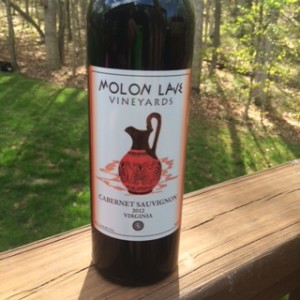
Molon Lave Vineyards
2012 Cabernet Sauvignon
$32
This award winning 100 percent cabernet sauvignon was aged for 14 months in French and American oak. The wine displays the depth of a well-crafted cab showcasing red and black fruit a silky mouth feel and a smooth dry finish.
The wine is also Kosher for Passover meaning it was kept free from contact with grain, bread and dough during production and aging.
Published May 14, 2015 in the Culpeper Times.
Fauquier County verus Napa Valley
 With Fauquier’s surge in wineries, does it have a shot at trumping the motherland of U.S. quality wine production? In a word: no.
Let’s not be negative here. There’s a multitude of reasons why our county’s wine industry will continue to flourish. But to contemplate beating Napa at its own game is a stretch.
Yes, Fauquier makes wine and Napa makes auto parts. But slick slogans won’t raise the quantity of grapes needed to become the Nation’s center of award-winning wines. Why?
Climate
At first glance, it seems Fauquier has a crack at a dramatic expansion of wineries. After all, Napa is home to some 400 wineries situated on 788 square miles.
Fauquier, on the other hand, has only 23 wineries resting on almost the same land mass; 651 square miles. In terms of potential growing area, Fauquier is clearly in the running.
But today, an acre of Virginia vineyard costs $20,000 to install, not including the cost of the land. And then the heartache of growing the delicate Vitis vinifera grape comes into play.
In our Continental climate of cold winters, humid summers, fungi and small and large game depredation, the challenge of successful grape growing is fierce. Yes, it really is a jungle out there.
In Napa, the climate is considered Mediterranean; mild winters with sufficient rains to carry its vines through a relatively dry and warm growing season. The only serious issue facing Napa today is a record-breaking drought. Stay tuned on the impact of that phenomenon if it doesn’t break in 2015.
Moreover, a vineyard in Napa might be sprayed three times a season to protect against fungi and insects. During a rainy, humid summer in Fauquier, vineyards might be sprayed 15 times or more.
Partly because of these problems, Virginia is currently experiencing a grape shortage. Experts counsel that 200 newly planted acres need to be installed each year for the next five years just to keep pace with the current wine demand.
So let’s forget pole vaulting over Napa and take pride in what Virginia has achieved today; the fifth largest wine producing state in the United States.
Published in the Spring 2015 edition of inFauquier magazine.
 Joe Morais, owner of Morais Vineyards and Winery in Bealeton, loves to ask the question “What’s the smallest room in the house?” Hmmm…let’s think.
“It’s the dining room,” he quickly replies. The dining room? Yep. And why? Because it’s not used that often. Morais (more ice) thinks that’s a shame. “The master bedroom is the largest room” but it’s used for sleeping.
He goes on to share his life philosophy driving the simple question. Family is everything. He has three daughters, six grandchildren and a large extended family.
“The dining room is where we talk with the family,” said Morais. So many families eat out today and often “you’ll see the kids playing with their iPhones or other devices. Are they talking with their parents? No. My dining room seats 40 people and provides space for our family to share their lives.”
Most of us could not afford a 40-person dining room but it’s emblematic of his belief the family is the center of life. His home is in Lake Manassas and was built with family in mind. His winery fosters the same atmosphere.
Morais and his five brothers are successful businessmen. He arrived in the United States 47 years ago and today his construction and concrete companies employ 400 people. Hard working and focused defines the man.
But work was also stressful so he opened his winery in 2011 to help slow down and enjoy life more. Nonetheless, even the grand opening was an earth shattering event—literally. It was August 23, 2011; the day the famous 5.8 magnitude earthquake struck Virginia.
“It was the first meeting of a local business association at the winery. They were meeting in our hall,” said Morais. While it was a “jolt” for the attendees all went well and the winery did not sustain damage. It’s been peaceful sailing ever since.
Dream winery
 As one drives up the curving lane to the winery and crests a small rise a dramatic building appears. It is the tasting room and event hall embodied in a replica castle from Portugal where his middle daughter was married. They commissioned an architect to eliminate the middle floor from the original castle; otherwise, it looks like a piece of history direct from the Old Country.
Morais owned the 178 acre site for 30 years before building the winery. During that period his children rarely visited the property. Today, the family frequently enjoys what he calls the “farm”.
“People will call me and I tell them I am with the other family”, he said. Taken aback, they say they didn’t realize he had two families. “Yes, I have a family at the farm too. When they see my car coming, they run up to the fence so I can feed them. I have goats, sheep, chickens, dogs and more and they have free run” in the woods and pastures of the fenced property.
Just as he enjoys the farm winery with both of his “families”, he encourages visitors to do the same. He wants families to come out, enjoy the Virginia countryside, bring picnic baskets, sip his wines and spend a day on the farm.
“They can bring all the food they want. I will even help them eat it too!” said Morais laughing.
 The winery also hosts some 30 weddings a year. ”I call this my dream place. But people come here to satisfy their dreams too.”
The wines
The winery has 14 acres under vine. The vineyard includes Albarino, Muscatel, Vidal Blanc, Touriga Nacional, Merlot, Cabernet Franc, and a few additional plantings. Annual production is 2,700 cases, or 32,000 bottles.
All of the wines are grown, produced and bottled on the estate. Morais is not seeking to increase production but to focus on quality not quantity.
To that end, he brought a young winemaker from Portugal, Vitor Guimarãis, to man his cellar. Guimarãis is a fourth generation winemaker and holds a Masters Degree in Viticulture and Enology from Lisbon’s Superior Institute of Agronomy, one of Europe’s leading colleges in the field. Many of his wines are award winners.
Joe Morais has an enduring message he shares with everyone. “Get away from the phones; get out to the Virginia countryside—not just to Morais Vineyards. America is beautiful; enjoy the views.
“Our lives pass on. We all should leave something behind before we go. Leave behind the good deeds not just the good times. That’s our point of view,” said Morais.
Sound advice. And no better place to start than by spending an afternoon at Morais Vineyards and Winery.
The winery is opened Saturdays and Sundays 12 noon to 6 p.m. year round. For more information on its wines and events visit http://www.moraisvineyards.com/
John’ Pick of the Month
Morais Vineyards and Winery
Red Select
$25
A multiple medal winner blend of Merlot and Cabernet Franc. Aged for two years in French oak barrels, the wine is fruit forward displaying cherry and raspberry notes on the palate and framed by a smooth mouthfeel. Pair with any beef entrée.
Published in the April 9, 2015 edition of the Culpeper Times.
Midland winery reflects owner-driven work ethic
Jay Fenske is everywhere present; at least on his 35-acre spread. From dawn to dusk, the lean, talented and youthful-looking retired Federal employee performs an endless array of tasks.
 Farmer, horseman, general contractor, vineyard manager, winemaker, hospitality host and businessman are some of the jobs he tackles daily, logging up to 90 work hours a week. The man is on the move, literally.
Does it wear him out? “I love being in the wine business. It’s a great job. Everybody who comes here is on a mini-vacation and predisposed to having a good time. They are wonderful people,” Fenske said.
A can-do attitude and propensity for hard work are a given in the Virginia wine industry. From the challenge of growing grapes in a demanding climate, to trying to cover expenses and achieve profitability, it’s hard work plain and simple.
Time and again one is struck that being an over-achiever is the defining characteristic of a state winery owner. Fenske is no exception.
Lifestyle driven
Fenske and his wife Kathy grew up in Cleveland, Ohio. His father owned a machine shop and he learned metal and woodworking as a boy. He built or acted as general contractor on three of his homes over the years.
The couple also loved the outdoor life. His government career took him on assignments around the country, including Virginia, where they enjoyed hiking, backpacking, rock climbing, and kayaking throughout the mid-Atlantic region.
Upon retirement, they were drawn back to the commonwealth. “We wanted to live out towards the Shenandoah Mountains,” Fenske said. They discovered the Midland property with a new home on it. Thirty-five acres was more land than they were looking for “but it was too good a deal to pass up.”
Embracing the country life, the couple cast about with what to do with their newly purchased spread. “My wife wanted horses but I knew nothing about them. I had only been on two trail rides in my life,” Fenske said.
Emblematic of his focused life view, he delayed buying stock before learning all he could about the animals. They took lessons and became accomplished riders. Their young daughter, Laura, accompanied them and began riding herself at the age of three.
They slowing began building a herd of seven horses; three of them greys. His daughter’s first horse was a Welsh Arabian named Grey Tara. “She was a sweetheart. We all loved her.” They obviously took well care of the mount since she lived to be 42 years old, a rare age for a horse.
 Two more grey horses were added to the herd that subsequently led to the name of the winery.
With horses now the focus of the farm, Fenske began clearing the heavily forested property for hay production. That led to the purchase of a modest goat herd to help keep the land cleared. Goats multiply and by the time they sold the herd it had grown to 160 animals.
Next, a young male pig took up residence under the family chicken coop. They were unsuccessful in trying to find its owner and decided to raise pigs. That effort grew exponentially and 120 pigs later he exited that business too. “I decided I didn’t want to be a pig farmer” when the original boar—now 900 pounds—attacked his tractor tire one day; better sausage than personal injury reasoned Fenske.
Enter grapes
During this period of their “Green Acres” lifestyle, they regularly visited Virginia wineries and fell in love with the state’s wines. As a home winemaker for 25 years, his thoughts of going commercial began to stir.
One day while visiting Molon Lave Vineyards in Warrenton, Fenske made the simple inquiry “Where do you buy your grapevines?” The answer resulted in a deep friendship forming with the owner, Louizos Papadopoulos. The successful vintner became his wine mentor.
The two men still maintain close contact. “I would not exist anywhere close to my current form if not for him. He continues to provide me advice to this day,” Fenske said.
Once committed to opening a winery himself, his winemaking education commenced in earnest. He enrolled in college courses, engaged the services of the cooperative extension office at Virginia Tech and joined the state’s winery and vineyard associations.
 He contracted to have the foundation and shell of a two-story 17,400 square foot production facility and tasting room built then completed the interior work himself, including the electrical, plumbing, HVAC, flooring, tasting bar and painting.
The winery opened in October 2014. The venture has grown faster than his business plan called for and includes a successful wine club; always a good indicator the wines are tasty.
Today, the winery has five and a half acres of grapes under vine with a total of 16 acres planned. Current varietals include Cabernet Sauvignon, Merlot, and Chardonnay. His current production is 1,000 cases annually with anticipated goal of 4,000.
The entrepreneur is also employing a farsighted strategy to assure future grape production. He has 11 rows of 25 vines each of several varieties. They are planted to determine which grapes will grow best on his land. Likely additional plantings from these test beds will be Petit Verdot, Chambourcin, Petit Manseng, Traminette, and Vidal Blanc.
When asked what he views as his best success, he quickly responds, “The staff I have chosen. We are in the hospitality business and my staff makes each visit a great experience. I’ve chosen well in my hiring decisions.”
Grey Horse Vineyards is located at 12285 Elk Run Church Road, Midland. It is opened daily from 11 a.m. to 6 p.m. For information on its wines, special events and more visit http://www.greyhorsevineyards.com/
Note: This article was published with the numerals superimposed over each piece of equipment shown in the photograph at the bottom of the story. Most of the equipment is self-evident but item #1 is the small instrument on top of the front right wine barrel. Item #2 is barely visible peeking out of the red-colored cylinder sitting on the small stainless steel tank to the right of the winemaker.
High & low tech gear employed in ancient art
 Rarely does a wine drinker reflect on how fresh grapes evolve into a pleasurable bottle of wine. Or, who the magician is that makes it happen. We are simply too focused on the wine itself.
But without skilled alchemists working in Fauquier County wine cellars, locally made wines would not grace our dining tables.
There are more than 30 winemakers in the county domiciled in 23 different wineries. Let’s sneak down in the cellar and see how they do it.
#1 Refractometer: $40
This instrument is used to measure the Brix—or percent of sugar—in a grape. One Brix equals about one percent sugar. In the vineyard, a few drops of squeezed grape juice are placed on its glass plate and then observed through the eyepiece to determine the amount of sugar therein. Harvest decisions are largely based on achieving a certain percentage of sugar in the fruit. In Virginia, it’s typically between 21 and 25 Brix.
#2 Hydrometer: $30
A simple but critical device that monitors the rate of fermentation and alcohol levels in wine. It allows winemakers to figure the specific gravity of wine (the relative “weight” of liquid compared to plain water). Most wines are vinified to dryness (no sugar) and the tool is used to determine when that goal is achieved.
#3 Wine thief: $70
A simple hand vacuum that is inserted into a barrel to exact a sample of wine. The thumb is placed on an opening at the top of the thief to create a vacuum and remove a few ounces of the nectar. The device has been in use for centuries.
#4 Oak Barrel: $500 to $1,200
A hollow, cylindrical vessel made of oak staves and bound by metal hoops. It is an integral part of the production of fine wine, both whites and reds. The inside of a barrel is “toasted” to enhance the wine with an array of subtle flavors and aromas. Barrels are from France (most expensive), Hungary and America (often using Virginia White Oak). The ideal size of a barrel is 60 gallons and holds 300 bottles of wine.
#5 Stainless steel tank: $4,000 to $60,000
An important innovation dating to the 1960s that permits the fermentation and aging of wine in a temperature controlled environment. The tanks are particularly useful in white wine production that benefit from fermentation in the 50 to 60 degree range to enhance aroma and flavor. Tanks used locally range in size from a few hundred gallons to over 1,000. By comparison, tanks used in large California wineries can exceed 200,000 gallons.
#6 Pump: $4,000
Pumps are the work horse of a wine cellar. They are used to transfer wines from and between barrels and tanks in a process called “racking”. The process draws off wine from its “lees” (sediment of spent yeast cells and other detritus) to clean, empty tanks or barrels. Racking is ongoing until the day of bottling.
#7 Hoses: $4 a foot
Used in concert with pumps, hoses are everywhere present on the floor of a winery. Large and a bit unwieldy, they are the arterial system through which flows all wine in a cellar.
#8 Wine glass: $5 and up
The ubiquitous wine glass is the vessel of choice for all wine evaluation. It is fitting that from birth to consumption the wine glass plays a pivotal role in the production of wine and its enjoyment.
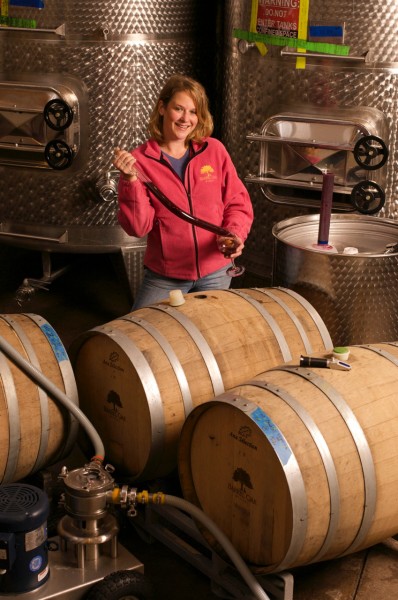
Sharon Roeder
Sharon Roeder is the winemaker at Barrel Oak Winery in Delaplane. Roeder shares winemaking responsibilities with Rick Tagg. Their collaborative efforts produce 9,000 cases of wine a year. Yep, that’s 108,000 bottles.
“We pour our heart and soul into every bottle and the reward is in the faces of the people who enjoy the fruit—literally—of our labor,” said Roeder.
Published in the 2015 Spring edition of inFauquier magazine.
One stop shopping for fine dining at home
 Characterizing the Croftburn Market as a butcher shop is like calling the Taj Mahal a building. Both are technically correct but belie the treasures held within.
The small Culpeper shop packs a big punch.
Quality locally raised and naturally fed beef, lamb and pork are available five days a week at the market. And if you leave without taking a tour of the rest of the store your dinner table will be disappointed.
The four-year-old business embodies farm-to-table freshness while supporting up a dozen local farms. The shop is a farmers market on steroids. It is opened 37 hours a week and features meats and a variety of other locally produced foodstuffs.
“We want to give people something different than what’s available in the grocery stores,” owner Andrew Campbell said. “It’s a store front for a number of local businesses instead of products just from our farm.”
Campbell conceived the idea for the market as an alternative to selling his farm beef exclusively to restaurants, farmers markets and other wholesale venues. The question was “how can we realize a little bit more from our animals” than simply selling wholesale.
The Campbell family operated a farm in the area for many years before opening the market. He realized there was a demand for naturally raised beef, chicken and pork that had not been raised on antibiotics, growth hormones, preservatives and other additives.
“The grocery stores sell meat that comes mostly from feedlots out west and fed all those additives because that’s what the U.S. system does to get weight on the animals quicker and keep them from getting sick. Our local meat is not raised in that manner.
“We grind fresh hamburger everyday and make a total of a dozen different sausages and also hot dogs; steaks and roasts are cut to order. The glass display cases are the first thing customers see when entering the shop. Proteins are our main focus.”
But not by protein alone does man survive so when your main entrée has been selected its time to swing to the right side of the store and select pastas, sauces or seasonally available fresh vegetables to accompany your repast.
And while animal protein takes center stage, fresh and fresh frozen fish is also available. And if hors d’oeuvres or snacks are on your grocery list, don’t forget to peruse the selection of cheeses, jerky, salamis, jams, jellies and more.
Local eggs, milk and other dairy products round out the food selections.
Libations
Most gourmands believe that good food should be accompanied by a good adult beverage. Such shoppers need to pivot left in the shop and head toward the wine and beer section.
“We try not to carry beer and wine that you can find elsewhere,” Campbell said. So while Bud Light is not on the shelves, a plethora of 75 different craft beers are. Virginia’s reputation for quality beer production has accelerated in the last decade and many of the best bottlings are sold at Croftburn; the rest of the selections are national and internationally known offerings.
 For lovers of the fermented grape, an estimated 75 different wines are for sale. Selections hail from Virginia, the U.S. and worldwide. Prices range from $9 to $30 a bottle but average in the $9 to $13 range. Campbell uses the quality-to-value ratio in selecting the wines.
Often on Fridays beer tastings are featured and on most Saturdays wine tastings help shoppers make that all important buying decision; “What are we drinking with dinner?”
Customer loyalty
Asked what skills he has acquired since opening the shop Campbell said, “It’s been a learning experience. I did not have any retail experience coming into this. It’s been interesting to develop a product mix and figuring out what people want and give them something they can’t find elsewhere.”
He goes on the say the business has been emotionally rewarding too. “I take a lot of satisfaction in repeat customers. When someone is willing to come back to a place—not once or twice but regularly—to spend their dollars and feed their family the products they buy at our store, it gives me the satisfaction we are doing something right.”
For shoppers who have not had a chance to taste Croftburn Market’s meats, Campbell invites them to the Gnarly Hops and Barley Fest in Culpeper on April 25. “We’ll be there grilling our sausages and brats.”
The shop is located at 16178 Rogers Rd, Culpeper. It is closed Mondays and Tuesdays. For complete information on their product line and operating hours visit: http://www.croftburnmarket.com/
John’s pick of the month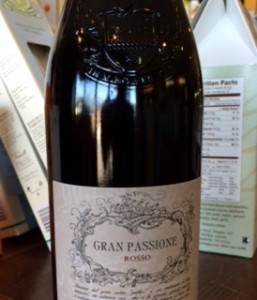
Gran Passione Rosso
$12.95
One of the more popular red wines at Croftburn Market is this Italian delight. It is a deeply-colored blend of Merlot and Corvina produced in the Veneto region. It is full-bodied, displaying a fine balance between silky tannins and structured acidity. On the palate, generous flavors of red and black fruit predominate.
The wine is created by drying a portion of the grapes in the sun and fermenting the raisins to release the wine’s unique flavors. It is a perfect accompaniment to the prime cuts of beef or pork that are available in the shop.
Published in the March 19, 2015 edition of the Culpeper Times.
Virginia vineyards struggle to meet growing demand
Reaching unanimity on any subject today is rare. We live in a world of diversity, nay controversy. But there is one fact that’s undisputed in the Virginia wine industry: There are not enough Virginia wine grapes to meet the rising tide of the Old Dominion’s vinous success.
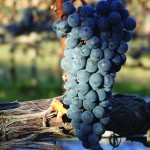 To be certain, it’s a good problem to have. But if not addressed, it could stymie the growth of the Nation’s fifth largest wine producing state. It may also create a dependence on out-of-state fruit.
In 1975, Farfelu Vinyards received the first winery license in the state. While it’s no longer in operation it started a floodtide of wineries. Today, 275 winery licensees dot the state’s landscape.
In the process of achieving such explosive growth, it catapulted the Commonwealth to the fifth largest wine producing state in the Nation.
Not bad for a state known more for battlefields than vineyards.
Let’s do the 2013 numbers:
Sold 6.25 million bottles of wine
Employed more than 4,700 people
Collected $1.8 million in wine litre taxes
Generated over 1.6 million tourist winery visits
Contributed almost $750 million to the Virginia economy
Harvested 6,862 tons of fruit from 3,088 acres of vineyards
By any measure, the industry is emblematic of the word success and demonstrates what science, talent, and passion can bring to bear on making quality wine.
Wine cognoscenti no less esteemed than Bartholomew Broadbent (listed as #48 in the 2013 Into Wine 100 Most Influential People in the U.S. Wine Industry) opined, “Virginia is capable of producing balanced, Old World-style wines—the types that made Napa what it was 25 years ago. Virginia’s reputation is ripening.”
It’s a commonly heard refrain from national and international wine critics and consumers alike. But as the industry is poised to rise to the next level, the engine driving its success could begin to stall.
Without an increase in Virginia grapes Virginia wine is threaten.
What is Virginia?
Federal and state law permits up to 25 percent of out-of state-fruit to be bottled and labeled Virginia wine. If the fruit comes from a specific Virginia American Vinicultural Area—such as Monticello—and is labeled as such, 85% of the fruit has to originate from that AVA. Virginia has seven designated AVAs.
In 2011, the state’s premier wine competition, the Virginia Governor’s Cup, revamped its rules requiring all entries be made from 100% Virginia fruit, further increasing the importance of the regional character of the competing wines.
Moreover, all entries require an affidavit with a certification of the 100% requirement, including the growers’ names, location, as well as information on alcohol, acidity and residual sugar.
The message was clear: Virginia wine counts.
Yet in 2013, grape production dropped 670 tons from 2012: 6,862 tons versus 7,532 tons, respectively. The loss was a combination of insufficient vineyard acreage growth and weather related pressures such as spring frosts, persistent rains and the ever present animal depredation.
Overall, 2013 was considered a fair vintage quality-wise, it was typical of the unplanned effects of Mother Nature combined with a paltry increase of only 114 new vineyard producing acres statewide.

Tom Kelly
“There is absolutely a grape shortage in Virginia. It’s moderately severe and likely to get more severe as time goes on if it’s not addressed,” said Tom Kelly. Kelly serves as President of the Virginia Vineyards Association and owns Kelly Vineyard Services, a consultant firm.
Kelly said farmers are planting more grapes but it takes time for those grapes to come into production. A new vineyard takes three to five years of growth before measurable fruit can be harvested.
Kelly goes on to explain that one reason for the supply shortage is that many wineries are coming on line and not planting vineyards at a rate that satisfies their share of wine production.
A winery producing 1,000 cases of wine a year but only growing enough fruit to produce 100 cases will contract for the additional grapes elsewhere; either in-state or out-of-state. The small amount of acreage such a winery might plant is referred to as a “billboard vineyard”; the vines signal it’s a winery but the fruit contributes little to its wine production.
The supply problem is well-acknowledged in the industry. “We have determined we need to grow grape acreage by 200 acres a year for the next five years in order to meet projected growth,” said Kelly.
Why not more grapes?
With the industry having met with success over the last 40 years, why isn’t the grape supply keeping pace with demand? The simple answer is the amount of money and labor required to plant and nurture the vines.
One of the major reasons Virginia wine has attracted wide attention is that beginning in the early 1980s, the growing of Vitis vinifera grapes accelerated dramatically; the species produces 99 percent of all wine worldwide. Prior to then, mostly hybrids and native grapes dominated the paltry number of tasting rooms.
Attempting to sell wine labeled Niagara, Delaware, Catawba, Baco Noir or even Vidal Blanc and Seyval Blanc was a challenge. Most wine drinkers had simply never heard of wine with such strange sounding names.
Then science was brought to bear to grow wine in the state that the world loved: Chardonnay, Viognier, Cabernet Sauvignon, Cabernet Franc, Merlot and Petit Verdot to name a few. All of these Vitis vinifera grapes put the Commonwealth on the wine map. But there was a price to pay.
“A vineyard costs in the neighborhood of $20,000 an acre to install. And that does not include the land,” said Kelly. “And it does not end up in the black until about year seven.” Even then, profitability is low.
Simply put, the delicious Eurasian grapes are more at home in climes less brutal than Virginia’s. As a result, it takes an enormous amount of farming to successfully bring in each year’s harvest.
Many a Virginia winegrower struggles to produce clean fruit in a frost inclined, rainy, fungi-laced, cold winter and humid summer environment. One could not be blamed if they viewed their hard earned fruit as grapes of wrath.

Tony Wolf, VA State Viniculturist
“Many would say it’s cheaper to buy grapes as to try to grow grapes, said Tony Wolf. Wolf is director and professor of viniculture at Virginia Tech and has been instrumental in advancing the state’s grape culture.
Last year’s winter “caused a dip in production and it has intensified into a more systemic problem. The capacity of wineries is out stripping the capacity of Virginia grape growing acreage, said Wolf.
“It’s a big enough problem that has made getting more vineyards into the ground one of their number one priorities.”
He goes on to state, “There is a lot of land that can be planted. We launched an online vineyard evaluation tool about a year ago. It allows the user to go in and look at a parcel of land and produce a report that gives the land a grade for the suitability for grape growing.”
A shortage of available land is not necessarily the problem. “As I look around, I see a lot of forested land. It isn’t going to be cheap but there is some good land that could be planted,” said Wolf.
The cost and difficulty of farming the fruit has also led to a growing phenomenon called “custom crush”. The concept permits new wineries to contract with larger ones to secure grapes and make wine that in turn is sold through the new winery’s tasting room.
The problem is obvious. As such operations proliferate, the shortage of grapes is exacerbated. It’s a legal and above board operation that simply diverts fruit that was previously available on the open market.

John Delmare
Other unforeseen market actions can also accelerate supply and demand problems. John Delmare, owner of Rappahannock Cellars in Huntly, offers one explanation.
“The problem was masked because 300 acres of Kluge grapes in Charlottesville were being sold into the marketplace each year. Then Trump took over and they started keeping a large portion of their fruit. The industry went, ‘Oh my gosh, not enough fruit here! People began losing contracts.”
A similar situation happened with the former Sweely Estate Winery. Steve Case, of AOL fame, purchased Sweely in 2011 and re-opened it as Early Mountain Vineyards, “and all of a sudden it put long term contracts on a couple of vineyards. Overnight some wineries lost big contracts,” said Delmare.
It’s a multitude of reasons contributing to the problem and people are starting to plant as a result of the pressure, “But it’s too little too late. I’ve heard we are 300 to 500 acres short of grapes statewide. I would argue that over the next 10 years we need to plant 1,500 acres to meet demand,” said Delmare.
His assessment is on point. Planting more vines is the only long term way to solve the problem. In the short run, the solution points to going out-of-state to meet the shortfall.
In-state versus out
With supplies getting tighter each year, the cost of grapes has begun to rise. “In the last three years, grape prices on average have gone up a total of about 35 percent. We’ve finally crossed that magic point where somebody can actually plant grapes and make money at it,” said Delmare.
Thirteen years ago, Delmare was paying $1,300 to $1,500 a ton for Cabernet Franc. Today, quality red fruit can command $2,200 to $2,400 a ton. Rising prices will help spur future plantings.
In the interim, fruit from California, Oregon and especially Washington State are legally ending up in bottles of Virginia wine. It’s a simple matter of financial survival for many wineries. With typical investments of $2 to $5 million for a new winery, owners cannot let production fall short of capacity without jeopardizing their businesses.
Fruit is the engine that drives profitability and it makes little difference to the bottom line if its grapes are from Virginia or elsewhere. Owners are in broad agreement that ideally only Virginia fruit will be used to make their wine but necessity demands importing fruit from elsewhere. Much of that fruit is from Washington State.

Chris Pearmund
Many wineries are loathe to admit they use grapes grown outside of the Old Dominion but it’s not an unheard of practice elsewhere. “In Maryland, there are more grapes grown out-of-state than in-state,” said Chris Pearmund, owner of Pearmund Cellars in Broad Run.
Last year, the Maryland Grape Growers Association reported only 40 percent of its grapes were used to produce the state’s wines; 60 percent of the remaining fruit came from across its borders.
“Seventy-five percent of foods in a grocery store won’t even tell you what country the food came from. Go to a restaurant and you would rarely know where that food came from either,” said Pearmund, explaining how many industries operate.
In Virginia, “We have taught the consumer to ask ‘Where do your grapes come from?’ Now we are getting bit by that.”
If one accepts that Virginia wine produces a particular style of wine that is directly attributed to grapes grown in Virginia, “and you cannot make that style of wine from grapes from other sources, it will affect the character and style. And yes, Virginia does have a distinctive terroir,” said Pearmund.
He goes on to say, “We’ve planted 38,000 grape vines on 28 acres this year at an out-of-pocket cost of well over a million dollars to purchase the land and plant the vines. Our needs are going to be met by planting this vineyard but it takes three to four years to get there.”
“The industry is a slow, slow turning boat. We need about 500 more acres to fulfill Virginia’s needs, said Pearmund. In the interim, an increasing number of wineries are seeking fruit elsewhere.
Westward Ho
 Lisa Kendall’s business, Kendall Farms, is a success story by any measure. Her father was a grape grower in Washington State and she took over his operation a decade ago. In 2005, she sold the vineyards and focused solely on selling grapes and juice. Today, Kendall has 30 Washington State growers selling her fruit.
“Virginia was my first customer. I thought, ‘Washington ships all kinds of produce why can’t we ship grapes?’ I connected with a winery in Virginia and shipped them fresh grapes,” said Kendall.
It was a nascent business that blossomed like a spring vineyard. “Virginia is one of our biggest customers today. We’ve had a huge increase in business from there since 2006. I worked hard to build awareness that Washington State fruit was for sale,” said Kendall.
Demand for her fruit from across the US today is dramatic. West Coast fruit is grown in what is often described as a Mediterranean climate. Conversely, Virginia and many other states host a Continental climate. The net effect is that grape growing on the West Coast is easier that on the East Coast.
Evidence of this is reflected in the numbers. California produces over 90 percent of American wine consumed in the states. Last year, the Golden State shipped 215 million cases of wine for distribution within the Unites States and 258 million cases for both domestic and international distribution.
By comparison, Virginia bottled 521,000 cases, almost all of which was consumed within its borders; a mere drop in the Nation’s wine bottle.
These figures, coupled with a growing demand for Virginia wine, set the stage for importing out-of-state fruit. “We serve 40 states and have 350 customers. Virginia is one of our biggest customers. I have a lot of connections in Virginia. We ship them red grapes and white juice.
“I have 27 customers in Virginia and sold them 500 tons of fruit and bulk wine this year. I believe Virginia will be dependent on out-of-state wine for the foreseeable future. Due to weather conditions it’s just not in the cards; the rain, the hurricanes, et cetera. We don’t have that in Washington. We are known for our consistency of weather here,” Kendall underscores.
She goes on to state that Virginia “will become more dependent on out-of-state fruit because there are wineries going in all the time. Things are looking great here. Hopefully, we meet the need that Virginia has. We’re glad we can help.”
Further south in California, a similar story is heard from Mike Colavita, owner of F. Colavita and Sons, another grape supplier. While smaller than Kendall’s business, he too sees “an increase in fruit headed towards Virginia.”
In 2014, he shipped 35 tons of fruit to six Virginia wineries, doubling sales within the last few years. He goes on to explain that the growth is driven to some degree because of “Mother Nature. Like last winter when a lot of vines got hurt. I was a supplement.”
He reinforces that wineries across the U.S. want to use their own state’s fruit. “But when their crops fail I can keep them in business, explains Colavita.
Most of his fruit comes from the Del Ray and Lodi areas. “I think a combination of western grapes and eastern grapes makes an excellent wine. Your lower sugar and higher acid wines and our higher sugar and lower acid ones makes a really balanced wine with good flavor,” said Colavita.
There is no definitive way to know how much fruit from outside Virginia is finding its way into the state’s wine cellars but it’s likely less than a 1,000 tons, but growing. By comparison, there was a total of 6,862 tons of fruit produced within state in 2013.
Honesty
With an apparent increasing dependency on fruit from elsewhere, the question arises as to how the phenomenon is marketed to the consumer. Since legally up to 25 percent of out-of-state wine can reside in a bottle of wine labeled and sold as Virginia, is there any need to enlighten the public of the blend?

Brian Roeder
“If we muddy the waters about the source of our fruit, we go right back to where we were seven, eight, nine years ago when critics said ‘this is mighty good wine but is it Virginia?’, said Brian Roeder, owner of Barrel Oak Winery in Delaplane.
Roeder is a straight-spoken winery owner who takes the subject head on.
“Everything we’ve done, especially the rules around the Governor’s Cup, has been designed to put that question to rest. I believe it’s going to damage, potentially, some or even a significant amount of the success we’ve had.
“At Barrel Oak we disclose the source of our fruit and customers don’t care because it’s about the experience at the winery. For wineries trying to position themselves for national and international distribution this could be a problem.
“We’ve never had to go out-of-state until this year. We’ll call our wine American or simply won’t say Virginia if the fruit is from elsewhere. Those are the two options. We will change our labels with wines made from out-of-state fruit,” emphasizes Roeder.
He goes on to say that a system should be developed that creates a marketplace for available Virginia grapes. “The process is still being done haphazardly, where somebody knows somebody who knows somebody, and through that network they try to find fruit.
“It’s been proposed, but not put in place, that an online marketplace be established where every farmer can post what they have available and that a winery owner can go and find and purchase it. That tool alone would probably provide at least one, two or three hundred additional tons into the marketplace,” said Roeder.
But he states it would still not be adequate to fulfill the industry’s needs. “The opportunity to expand is going to have to be tied to out-of-state fruit for quite sometime. Ultimately, it isn’t important to most consumers. But the issue of honesty is going to be very important to our reputation and to the critics who write about Virginia wine,” said Roeder.
Government support

Annette Boyd
Echoing the mantra heard around the state, Annette Boyd, director, Virginia Wine Board Marketing office, said, “Yes, there is a grape shortage. I think it’s predominately because we are selling everything we make. We need a couple of really nice years, nice harvests under our belt to see production to pop.”
No one would challenge that wish but Virginia is Virginia. “We are hopeful production numbers will increase this year. Everybody is really excited about the harvest,” said Boyd.
Indeed, word from around the state is that the quantity and quality of the 2014 harvest is very good. But what can be done at the state level to further assist the industry?
“Both the Virginia Wine Board and the Virginia Vineyards Association are evaluating what they can do to stimulate an interest in people growing grapes. But we can’t grow grapes directly. It’s a big investment and you need farmers who understand the risk and are willing to make the investment,” said Boyd.
The Board is funded through the General Assembly from excise taxes the wine industry pays to the state. One hundred percent of the tax revenues—$1.8 million—comes back to the Virginia Wine Board. One third of those funds go to research and two-thirds to support marketing efforts.
“I hear rumors of an increasing amount of out-of-state fruit all the time. The wineries that are choosing to bring in fruit are open about it. For everyone that chooses that path I know of five who say ‘I’m not. I want to use my estate fruit and I’m not choosing to do that even if that means capping production.’”
“Conversations are happening about incentivizing farmers. It’s something they want to do,” said Boyd.
“We are a product of our own success. We are in this predicament because sales are out pacing production. We are looking forward to getting more people interested in growing grapes. It’s happening. It takes time,” said Boyd.
The Future
No less a luminary than Winston Churchill once said, “Success is not final, failure is not fatal: it is the courage to continue that counts”. Clearly, the determination of Virginia winery owners, winegrowers, and winemakers to further grow the industry will dictate how the current grape supply issue is resolved.
But with 40 years of continual advancement, it’s a safe bet that Virginia wine will continue to see its industry prosper. For it’s often through adversity that success is achieved.

Nature’s Bounty
Published in the Winter 2015 edition of The Business Journal.
Orange Virginia inn pampers guests with a deft touch
 A unique Piedmont inn is attracting a growing clientele seeking a gracious lifestyle getaway.
And it’s obvious to many guests that reduced stress and declining blood pressures are collateral benefits that take effect shortly after checking in.
Could doctors soon be writing prescriptions for a two night day stay for their overworked patients? Let’s hope so.
If it all sounds a bit magical, perhaps it is.
The force behind The Inn at Willow Grove is the Scibal family. David and Charlene purchased the home in 2009. It was originally built in 1778 by Joseph Clark. Their son Matt is general manager.
The inn is a classic two-over-one Federal-style home and was in need of extensive repair when purchased. Following a multi-million dollar renovation it opened in 2010 as an upscale resort.
The 38 acre property showcases the manor house with four rooms and 10 separate cottages. Every room is beautifully appointed. The goal of the layout is to achieve a communal village effect. While the dwellings are clustered, a sense of privacy prevails as one walks the grounds.
To round out the entertainment offerings, two structures are devoted to weddings, fundraisers and musical events. One building is for small groups and the second is a rebuilt historic barn that seats 150.
Willow Grove has partnered with Comcast to produce a series of Xfinity concerts. Each intimate show focuses on music, food and wine discussions followed by a live show. Larger performances will be held this spring and fall.
Dining
 Dining at the inn’s restaurant is the highlight of a visit, but one doesn’t need to stay overnight to enjoy the unique experience. The restaurant is open to the public Wednesday through Sunday.
The restaurant, called Vintage, seats 65 guests and features contemporary American cuisine with a twist. “We try to do something different; a bit more whimsical and fun with our food rather than a normal eatery,” said Matt Scibal.
For lighter fare, the inn has a pub featuring local craft brews from award-winning Virginia microbreweries.
Last June, a new culinary team focused on creating a farm-to-table menu. “We try to produce dinners using products from local farms,” said Scibal. The menu changes four times a year.
Of particular interest to wine lovers is the impressive wine selection. The list features 120 different bottlings. Matt Scibal is the wine buyer. “I am the fortunate one who gets to taste a lot of wine. And like our food program, we’ve tried to draw from the wonderful Virginia wine region.”
Quality Old Dominion producers such as Linden, King Family, Barboursville, Jefferson Vineyards, Early Mountain and more are featured.
The list also includes wines from around the world but many of the offerings are California centric. Again, quality producers prevail such as Duckhorn, Cakebread, Caymus, Trefethen, Silver Oak and Opus One. A few 96 and 100 point wines are also represented.
The wine list received the coveted Wine Spectator Award of Excellence.
So what’s been the public’s reaction to the establishment? For starters, the web site Tripadvisor lists 227 “excellent” ratings out of a total of 245; and an additional 13 folks rated it “very good”.
To support those opinions, Culpeper County residents Betsy Walker and her husband Fred experienced the Inn’s magic. She came way with this observation, “It’s the place to go if you want the entire package. Good food, luxury accommodations and wonderful service…even your own butler.”
Inn philosophy
The Scibal family has traveled extensively. “We’ve always stayed in very nice accommodations. But we were often a little put off with the service. We don’t believe you have to be very wealthy to have a five star experience; it doesn’t have to be stuffy.
“We want our service to be genuine, considerate and comfortable. We feel we can pull that off and still have a five star experience. We are cutting edge. We like to meld the old and the new and create something interesting,” said Scibal.
And as sons might often be heard to say, “My mother is the creative genius behind the whole property.”
Thanks Mom.
For information on lodging, dining and more visit: http://innatwillowgrove.com/
John’ Pick of the month
2010 Opus One
96 points
$295
OK, few of us have the courage…or wallet to order a wine this expensive. But it’s emblematic of the depth of the wine list at Willow Grove. And if you were staying at the beautiful inn and enjoying quality food and service, might temptation overcome you? The wine is fairly priced for a restaurant selection; Total Wine sells it for $235.
Let’s listen in on what world famous wine critic Robert M. Parker Jr. had to say about the selection: “A glorious perfume of sweet charcoal, truffle, black currants and spice box soars from the glass of the saturated purple-colored 2010 Opus One. The gorgeous aromatics are followed by a beautifully knit, full-bodied red blend displaying lots of spicy black currant fruit, medium to full body, velvety tannins, and not a hard edge to be found. The texture, length and richness are all impressive.”

Published in the February 12, 2015 edition of the Culpeper Times.
Arterra Wines and Hawkmoth Arts launch unique Delaplane venture
Business alliances are increasingly seen as avenues to success. The power of two creates synergy and multiplies the entrepreneurial spirit needed to make a business go.
Sandy and Jason Murray
It’s even more forceful if the duo is a husband and wife team sharing the same vision. Jason Murray and Sandy Gray-Murray embody such a venture.
On February 7, the experienced and talented couple will open a winery and art gallery in northern Fauquier County. Local art and wine lovers will now have a venue to indulge both passions under one roof.
Jason Murray brings an in-depth vineyard and winemaking background to bear on the new business. Prior to his winemaking profession, he worked for Loudoun County in its cooperative extension office. In that capacity, he became familiar with dozens of Northern Virginia vineyards and the best practices they employed to produce quality fruit.
He then served as winemaker at Château O’Brien for 11 years before deciding to build his owner-driven career. His reputation for creating full-bodied red wines is well established.
“I developed a niche in the high-end red wine market in the Virginia wine industry,” said Murray. “I really like ripe fruit and do what I can to unlock and express that fruit.”
That isn’t hubris talking. After tasting Murray’s red wines at Chateau O’Brien’s a few years back, Bartholomew Broadbent—listed in the 2013 edition of IntoWine as #48 of the 100 Most Influential People in the U.S. wine industry—said, “I don’t believe these wines. Every one of the reds are to another level.”
Murray built that reputation on a background of education and hard work. He has a BA and Masters in Horticulture and has perfected the rarest of wine talents: native yeast fermentations combined with minimalist cellar practices.
The techniques increase the cost of a bottle of wine but produce rich, deep-bodied wines. Such fermentations must be closely monitored to prevent off-flavors. Most wineries use commercial yeasts to protect against serious problems in the cellar.
All of Arterra’s dry wines will be produced from native yeast; yeast that clings to the fruit when it is harvested. The process can take up to a year to complete. Murray is not a man in a hurry when it comes to making wine.
Enter art
Sandy Gray-Murray was an art teacher in Maryland where the couple lived while Jason Murray commuted to work at Château O’Brien. In 2009, she quit work to devote herself to raising their two sons. The couple then moved to Hume to be closer to Jason’s winemaker’s job.
During this period, Sandy Gray-Murray developed a business centered on winery influenced art. Her work encompasses paintings, mirrors, drawings, ceramics and oak barrel art. Having no retail space to sell her art, she worked the winery festival circuit.
The inherent shortcomings of selling delicate artwork in the robust atmosphere of wine festivals led to the idea of opening a gallery. Realizing the challenge of generating enough foot traffic to sustain a stand-alone gallery led to the concept of merging the age-old forces of wine and art.
Arterra Wines and Hawkmoth Arts were born.
The Hawkmoth is a small insect similar to a hummingbird. Its flight and feeding habits embody balance and precision; exactly the traits the Murrays’ art and wines strive for.
Securing a USDA farm loan, the couple purchased 75 acres off Route 17 in Delaplane. The former owners of Naked Mountain Winery, Bob and Phoebe Harper, owned the land for use as a future vineyard but it was never planted. They sold it to the Murrays based on its intended use.
“The property was larger than we were looking for but was perfect for growing grapes,” said Jason Murray. The site is heavily wooded but has nine acres of cleared land for a vineyard that will be planted this spring.
In the interim, wine grapes are sourced from two quality grape producing Virginia vineyards.
A combination art gallery and winery was built on the property. It is a custom crafted timber frame structure. The first floor features the art gallery and wine tasting bar. The lower level is a full-service wine production cellar. The cross-marketing opportunities of the dual businesses are self-evident.
 For the next few years, Jason Murray will produce 800 cases of wine annually with an ultimate production of 1,200 cases. These numbers are very much in the boutique winery category and reflect an emphasis on quality wine production. The wines will retail in the $29 to $49 range.
The featured wines are Chardonnay, Cabernet Franc, Malbec, Petit Verdot, Tannat and a Blueberry Apple dessert wine.
“We are excited to differentiate ourselves as not just another winery but one that comes from a depth of experience,” said Jason Murray. “This is a wine-focused business, not an events business or a gimmick. It’s strictly based on the idea of craftsmanship. Guests will interact with the owners and craftsmen.”
Arterra Wines and Hawkmoth Arts are located at 1808 Leeds Manor Road, Delaplane. They will be open Friday, Saturday and Sunday year-round. Visit them at http://www.arterrawines.com/ and http://hawkmotharts.com/ for more information on their wines and art.
Published in the Wednesday, January 21, 2015 edition of the Fauquier Times.
