
Archive for WINE ARTICLES
Local winery joins ranks of Virginia’s growing wine culture

Magnolia Vineyards
Six months ago the Old Dominion saw another winery open; this time near the village of Amissville. There are now 275 licensed wineries scattered across the state with more on the way.
It’s a remarkable story given that 50 years ago finding a vintner in Virginia was like seeing a rose blooming in the snow. Now an arboretum of wineries carpets the state reinforcing that Virginia is for lovers. Of wine, that is.
One marker for most of the establishments is the passion brought to bear before and after the winery sign goes up. After all, often there’s not big money in producing and selling wine.
There is, however, big gratification in transforming fruit from the vine into a glass of joy.
This preamble is by way of saying Glenn and Tina Marchione, owners of Magnolia Vineyards, are emblematic of the ardor seen throughout the industry. And their guests are thankful for it. They currently produce 500 cases a year with an ultimate goal of 2,500 cases, or 30,000 bottles.
The dream

Tina & Glenn Marchione
The Marchione’s are both of Italian decent. In 2006, they journeyed to Italy and visited Glenn’s relatives, toured a winery and became smitten with the idea of opening their own winery.
Fortunately, they are both fiscally conservative and in the ensuing years created a virtual blueprint on how to pursue such a dream. Being employed full-time in Northern Virginia as IT professionals helped bankroll their vision.
“We did everything in stages. We spent one and a half years looking for the property. If the winery didn’t work out, it would be our retirement property,” said Glenn Marchione. The step-by-step planning process is still the hallmark of their growth strategy.
In 2008, they purchased 25 acres on Viewtown Road followed by an additional contiguous 25 acre acquisition. The setting met the requirements of a winery while fulfilling their desires for the home they had built.
The couple planted the first vineyard block themselves with help from volunteers. Then an eight foot high deer fence encompassing 20 acres, including the seven acre vineyard, was installed.
Newbie winery owners are quick to learn only one audience loves wine grapes more than wine drinkers: wildlife. Fencing is mandatory for survival.
So how do two wannabe winemakers make the leap into the professional ranks? Surround yourself by people in the know and hit the books to gain the technical skills to change grapes into wine.
In the Marchiones’ case, it was Jim Law (Linden Vineyards) and Doug Fabbioli (Fabbioli Cellars) who helped set the stage for opening a winery. Both men are well known in the Virginia industry for producing quality wine and furthering the state’s vineyard and winemaking culture.
After studying under these two leaders, the couple used excess cellar capacity at Narmada Winery and Fabbioli Cellars to produce their own first wines.
The Future
Today, their tasting room is opened on weekends and features seven wines; all clean and flavorful. The tasting room is located in the basement of their home and the wines are made in the nearby three car garage. But given the systematic, goal oriented approach to building the business, all that will change in the years ahead.
“It’s likely I will start designing the winery and tasting room over the winter and open it in two years,” said Glenn Marchione. The site will be on a high piece of ground with views of the Blue Ridge Mountains.
The couple will also continue building their investment with the purchase of tanks, presses and other equipment integral to winemaking. “We don’t like carrying a lot of debt so we paid for as much as we could, including the land.
“But we want to make sure people like our wines before we build a separate structure. Then it’s the point of no return,” said Glenn Marchione.
So what has been the reaction to the wines? “It’s been very, very positive and quite satisfying for us. The positive response further drives the passion,” said Glenn Marchione. Nonetheless, it’s a pursuit that comes with some angst.
“At times it feels like everything is on the line financially. This is the most rewarding and scariest thing I’ve done in my entire life. People think it’s going to be romantic. But for anybody thinking about doing it, I would tell them to ‘Think again!’” said a laughing Glenn Marchione.
“We like the social aspect of it; sharing our passion, sharing our stories and sharing good wine,” said Tina Marchione.
In the not too distant future, if all goes well the wine-loving couple will devote full-time to making and selling their wines. Some might call that “retirement” unless they are aware of just how much work it will be. But fun too.
Magnolia Vineyards is opened Saturdays and Sundays, 11:30 a.m. to 5:30 p.m. Visit them at http://www.magnoliavineyards.com/
John’s Pick of the Month
Magnolia Vineyards
2012 Cabernet Franc Reserve 
$22
Cabernet Franc is Virginia’s red grape. It grows well in our climate and produces an excellent wine. Generally considered a blending grape elsewhere it has earned its right as a stand alone varietal in the Old Dominion (for a wine to be labeled by its grape name it must contain at least 75 percent of the specified fruit).
Aged for nine months in French and American oak, the wine is invitingly fruit forward with a dash of Cabernet Sauvignon and Merlot blended in. The result produces a soft aroma of allspice followed by berry and raspberry notes on the palate with a spicy pepper finish. The bottling would be a perfect mate for a hearty roasted chicken and vegetable dinner enjoyed on a cold winter’s night.
Published in the December 11, 2014 edition of the Culpeper Times.
Nestled might best describe Winding Road Cellars, located in Markham. Opened a little over a year ago, the small, picture perfect winery is situated behind a slight rise and—nestled—between two diminutive hills with a view of an expansive pond.
The setting engenders an immediate, “Oh, this should be fun,” reaction. And, of course, it is.
The dream come true winery is love’s labor’s found for Scott and Linda Culver. It began several years ago when Scott Culver decided to take up the hobby of home winemaking. He found a local winemaker who was willing to sell him juice.
“One day I left the house with an empty five-gallon carboy and returned home several hours later with an oak barrel and 60 gallons of juice,” said Culver. His first problem was the realization he had to remove a basement window to install the barrel in his nascent winery and then gravity siphon the juice into the barrel.
“The wine turned out so well one thing led to another and I got the bug,” said Culver.
Let that be a warning to those interested in pursuing winemaking. The hobby can pop from mild interest to passion faster than a cork flying from a champagne bottle.
But the hobby was a productive counterpoint to Culver’s career. He had spent 20 years with the Fairfax County Police Department and went on to second careers as director of security for a large Virginia bank and then a law enforcement position with the Federal government.
He is still employed full-time but anticipates “retiring” to work at the winery within three years. “I always knew I would never retire and do nothing at all. I’ve always had the bug to do something for myself,” explains Culver.
Since winemaking held its fascination, the idea of opening a commercial winery began to crystallize after working part-time for several years at a local winery. The winery owner became Culver’s mentor and “because of the enjoyment we had visiting other wineries, it triggered going commercial,” said Culver.
Today, the winery has evolved from a home basement operation to a stand-alone tasting room and cellar facility located behind the Culver’s residence.
The transition from his lengthy daily commute in Northern Virginia to a two-minute walk to the winery will further incentivize the vintner to move onto his next career.
Winery & vineyard
 The winery and tasting room is housed in a new attractive farmhouse styled building with an inviting front porch, emblematic of what might be found at the end of a winding road. The interior is all spacious polished pine that creates a relaxed feeling as one heads to the tasting bar in the back center of the room.
There are six wines on the tasting menu: Vidal Blanc, Chardonnay, Chambourcin, Cabernet Franc, Cabernet Sauvignon and a semi-sweet Chambourcin dessert wine.
On the back side of the property a five acre vineyard is planted in seven varietals including a small block of Pinot Noir, a grape that is notoriously hard to grow in Virginia. Culver will likely make wine from the temperamental berry only for his family’s personal use.
As is typical for a new winery, all the current wines have been produced off-site in the early going. The first estate bottling will be released soon. It’s an undisclosed blend of three reds and will be called Tribute.
Total annual production is around 700 cases a year and the Culvers do not see their dream growing exponentially. “I’m happy in trying to create a very small, intimate boutique winery. I don’t have any grandiose plans to compete with large wineries,” said Culver.
Linda Culver mans the tasting room during the week when her husband is at work. The winery embodies one of her life long dreams. “When we first got married I thought it would be a wonderful experience to work side by side with my husband. Now we are living that dream and it’s much better than I though it would be.”
Winding Road Cellars is located at 4280 Leeds Manor Road in Markham and is opened Thursday through Monday, 11 a.m. to 5 p.m. Visit them at http://windingroadcellars.com/.
John’s Pick of the Month
Winding Road Cellars
2010 Chardonnay
$27
Chardonnay is one of the most ubiquitous wines on the planet and for good reason. It tastes great. And so it is with Winding Road’s Chardonnay. This medium-to full- bodied white showcases nice tropical notes on the palate and is framed by a creamy mouth feel with a soft butter finish. Thanksgiving dinner offers an opportunity to enjoy a wide range of wines and this clean, bright Chardonnay would make a boom companion to the repast.
Published in the November 20, 2014 edition of the Culpeper Times.
It’s been said that experience trumps knowledge. But when a person possesses both, success typically follows.

Old House Vineyards
This summer, Andy Reagan joined Old House Vineyards as its full-time winemaker. And if past is prologue, look for the 14 year-old winery to further advance its reputation for quality wines.
Reagan’s 20 years of winemaking includes stints at both Old Dominion and out-of- state wineries. In the process, he has amassed a closet full of medals; over 300 alone during his seven years with Jefferson Vineyards in Charlottesville.
“Finding wine talent today is hard,” said Pat Kearney, owner of Old House. “When we heard Andy was available, he was what we were looking for.”
Kearney explains he had been using winemaker interns from France for years, assisted by a consultant, and was pleased with where they had taken his wines. “I had a connection with the French. My consultant was invaluable to our success.
“But when the opportunity to bring a dedicated, full-time winemaker on board, I made the decision to hire Andy.”
Reagan began his career working for his sister at an upstate New York winery as a teenager and subsequently made wine at several wineries, including one producing 30,000 cases a year. A typical Virginia winery produces 2,000 to 5,000 cases annually.
But Kearney’s goal is not about churning out mass-produced wines. His wants to slowly grow his small production of high-end bottlings. “Often guests say they have enjoyed every wine in our tasting line up, not just one or two. I want to further that reputation.”
In the beginning
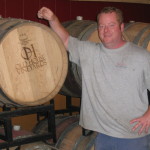
Andy Reagan
Reagan recalls his first year in the business was 1992 as a 17-year-old high school student working during his summer break. “I had a blast and wanted to keep doing it,” said Reagan.
One invaluable job experience unfolded while working at a large out-of-state winery. “They were making so many wines I had to fully learn the chemistry side of winemaking. I super honed my lab skills while working there,” he said.
Most wine lovers are not aware that producing wine is working with a living product. Unwanted organisms can create havoc during the process. Knowing how to quickly identify problems and make necessary corrections is integral to being a successful vintner.
Over time, the Norfolk native sought employment farther afield than Virginia to grow his experience. “But every time I tried to move out of Virginia I started to quickly miss the state and the people who work here. There is a certain type of special person who lives in Virginia,” states Reagan.
Asked if there is a secret to making award winning wines, Reagan said, “Paying attention to detail makes clean, balanced wines. But producing good fruit in the vineyard and using quality equipment is important.
“When I was interviewing for this job I was impressed with the quality and amount of French oak barrels Pat had. Oak ageing plays an important role in quality wine and costly barrels are critical to its success.”
So will more gold medals be raining down on Old House Vineyards in the future? “We’ll see,” says Reagan, “That’s up to the consumer. I hope so.”
Distillery
Pat Kearney and his wife Allyson make up the Kearney perpetual motion machine. Proof is in their next venture to be launched early next year. A distillery is sited next the winery and will produce brandy, grappa, vodka, gin and whiskey among other libations.
“We are just an adult Disneyland out here,” said Allyson laughing.

Old House still
John’s Pick of the month
Old House Vineyards
Bacchanalia
$23
The Bacchanalia were Roman festivals celebrating Bacchus, the Roman god of wine. And as one pours a glass of Old House Bacchanalia and takes in its dark ruby color and rich aromas, celebration is an appropriate thought. The wine is an eclectic blend of Chambourcin, Cabernet Franc, Petit Verdot and Tannat and is a perfect match for any beef entrée on a crisp fall evening.
Published in the October 23, 2014 edition of the Culpeper Times.
Unicorn Winery in Amissville is on the market for $1.8 million. The sale includes 18.8 acres, a five bedroom brick residence and a turnkey winery with all equipment needed to produce over 2,000 cases of wine annually.
A one acre pond is nestled next the winery with a pond-side deck. It was the 55th winery established in Virginia. Today, there are 275 wineries in the state.
Proprietors Richard and Sandy LePage are the second owners of the winery that originally opened in 2000; the couple purchased the property in 2008.
An on-site six and a half acre vineyard is planted in five varietals and produces 60 percent of the tasting room wines. The remaining fruit is purchased from other Virginia vineyards.
 The winery is located on Old Bridge Road just north of the Culpeper County line in the Clevengers Corner area. The LePages built a covered stage on the back of the property—bordered by 650 feet of Rappahannock River frontage—and host many events there.
“Last year, we sponsored a fundraiser for Hospice that generated $14,000 for the organization,” said Sandy LePage. The setting is ideal for outdoor performances utilizing a sweeping natural amphitheater overlooking the river.
“The property is phenomenal, Mother Nature’s natural landscaping,” said Richard LePage. “We have no plans to leave the Piedmont region. We love the Blue Ridge Mountains and the foothills. We’ll stay in the area.”
Not only will they remain in the Piedmont, the sale of the winery comes with an offer for the LePages to manage it and train new owners, with the couple living either onsite or off; preferably on the property.
The river setting is dramatic and the hard-working couple often relaxes by setting up plastic Adirondack chairs in the middle of the shallow river and “enjoying a bottle of wine” after a day of working in the tasting room.
Interestingly, years ago, well-known Old Dominion vintner Chris Pearmund bottled his first wine with his name on the label. Pearmund was consulting for the winery at the time.
Challenges
So what precipitated the sale of the winery? “Our financial and working partners unexpectedly retired to Wyoming last May,” said Sandy LePage. The couple was the “right arm” of the LePages, running the winery whenever they attended festivals or were otherwise away from the operation.
“We don’t have them available anymore” and it’s become more work than passion for the LePages whose adult children have not shown an interest in running the business.
Another challenge was the closing of the Waterloo Bridge last year for safety reasons. The bridge was used by over 800 cars daily and provided access to winery guests coming from Northern Virginia.
“We’ve seen a drop in foot traffic since the closing,” said, Sandy LePage. She is working with GPS firms to create new coordinates for travelers.
While the real estate listing is being marketed as a full winery, the LePages will consider offers for purchase of the residence, winery or winery equipment separately. “We are flexible” and would negotiate any portion of the property in part or whole. The equipment includes wines presses, tanks, tractors, trucks and inventory.
Interested buyers can contact Horizon Real Estate in Warrenton for further details.
Published in the September 26, 2014 edition of the Fauquier Times.
Specialty shops are a minority of the 23 million small businesses operating nationwide.
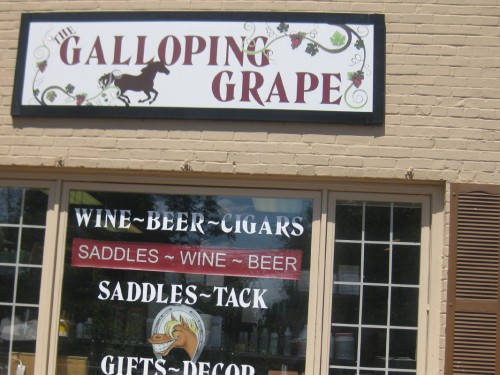
But one such shop opened eight years ago in Warrenton and is gaining popularity with each passing year. And why? Because the saddle and wine shop, Galloping Grape, attracts a loyal group familiar to the Piedmont region: Wine loving horse people.

Kim Pinello
“I have a fantastic wine crowd and equally great saddle customer base,” said owner Kim Pinello. “A lot of the business overlaps. They come in for fly sprays and bridles and will definitely pick up a few bottles of wine.”
Pinello explains that horse folks often enjoy a glass of vino so the shop’s target audience has produced growth every year since its opening in 2006.
But is it all Fauquier County fans? No way. “More than 30 percent of my business comes from Culpeper County. A large saddle shop in Culpeper closed a few years ago and since then my Culpeper customers have increased each year. When that shop closed, all of his traffic came our way,” said a smiling Pinello.
So how does one conjure up a business model rarely seen elsewhere? “I was an accountant working in DC and the commute was a nightmare. I couldn’t do it anymore,” said Pinello. So the entrepreneur began looking for an alternate lifestyle.
She and her husband own a ten acre farm in Fauquier County with a stable of five horses. As a professional accountant she had a head for numbers and knew an option to the grinding commute was only a good idea away. Oh, and she loved wine.
“I wanted to open a saddle store—our county needed another shop—particularly one that was consignment,” said Pinello. “But I knew I needed something else to sell. Saddles don’t walk out the door every day. I wanted something that brought in the every day traffic.”
Serendipitously, an old Southern States feed store came up for lease as she ruminated on how to build a business. “I found that crummy old building and saw how we could possibly renovate it. We came up with the concept and the store name in one weekend and signed the lease on Monday,” said Pinello.
A few years ago, the store relocated to an upscale setting at 143 E. Shirley Avenue across the street from the Fauquier Horse Show grounds. Location is everything, eh?
Inventory
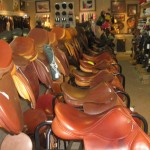 On the leather side of the house there is a wide selection of saddles covering the riding interests of any equestrian. English, western, endurance and dressage saddles are offered for sale; most are stocked on consignment from the local horse set and priced to sell.
All riding-related gear is also available: riding helmets, bridles, saddle pads, sprays, and shampoos, “everything you need for your horse.” Pinello assures that most of her leather inventory is made in America.
Along side the rows of burnished leather saddles, there are over 800 selections of wine. It’s an impressive collection of high quality bottlings sure to please discriminating palates. And while the wine is competitively priced, the store’s policy is to beat or match any bottle purchased elsewhere. “We want our customers to stay here and shop for their wine, not the local grocery store,” emphasizes Pinello.
Free wine tastings are held each Thursday from 5 p.m. to 7 p.m. and all day Saturday.
Over 75 craft beer selections round out the libation portfolio. Keg beer is also sold. “We sell tons of kegs” that are likely welcomed at many a horse event.
For the cowboys, there is a humidor with over 50 hand rolled cigar selections.
With an obvious streak for creativity, Pinello also features horse and wine related art that grace the walls of the shop. “We have a variety of artwork and iron work and strive to get anything created by local artists” that fits the shop’s theme.
“Business is fantastic. It grows every year. This is by far the happiest place I can be. I love my customers and I can’t brag enough about my little shop,” said Pinello.
Great affirmation from a former road warrior who got out of her car and on to a horse to make her dreams come true.
Galloping Grape is opened 11 a.m. to 7 p.m. weekdays and 10 a.m. to 5 p.m. on Saturdays and closed Sundays. Visit http://www.gallopinggrape.com/ for complete information on products and events.
John’s Pick of the month
Roederer Estate
Brut
$23.99
For the last several years, I have encouraged wine drinkers to break the mold and drink more sparkling wine. It’s not just for special occasions. It’s delicious anytime; especially in the summer months.
One can’t go wrong grabbing a bottle of this Brut (dry) sparkler at the Galloping Grape. It’s a French-owned winery located in California’s Anderson Valley.
Here’s Wine Spectator’s take on this tasty bubbly:
“Focused and vibrant, with aromas of creamy apple, cinnamon and hazelnut leading to complex, layered flavors of lemon custard, mineral and almond. The finish lingers.”
91 points.
Published in the October 2, 2014 edition of the Culpeper Times.
Virginia and Golden State vineyards share mutual problem: water
As one travels through California this summer, lush vineyards are ubiquitous. But if you glance beyond the undulating rows of manicured-like vines, it’s scorched hills that dominate the views.

Paso Robles countryside
Drought has struck—and struck hard—in the state that produces 90 percent of all wine made in the U.S. And the driest part of its growing season lies ahead.
This writer recently spent ten days on a 1,300 mile road trip visiting with numerous winery owners and staff. The picture that emerged is unsettling and causing serious concern in every wine growing region in the state, from Temecula in the south to the Anderson Valley in the north.
Conversely, Virginia’s landscape appears almost jungle-like as spring and summer rains have vineyards producing heavy vine canopy that will demand regular pruning and spraying to turn the BB size grapes into plump, juicy bottles of wine.
In May, John Delmare, owner of Rappahannock Cellars in Huntly said, “We had a lot of rain early here this year and bud break was so late our vines have barely been growing for six weeks now. Temperatures have been cool and with the late bud break we don’t have near the canopy growing we normally would.
“But with 15 years of growing here I won’t panic until September,” he said chuckling.
Nonetheless, excess water in the form of either rain or humidity is a problem California wineries don’t have to deal with. In fact, the daily summer mantra of the Virginia weatherman, “with a chance of showers and thunderstorms in the afternoon” is seldom heard in California.
One marker for meeting the moisture challenge is the scope of spraying programs employed in the Old Dominion compared to California. Typically out West, vineyards are sprayed two to three times a season. In Virginia, 12 to 14 applications are normal and can go over 20 during a wet and humid growing season; protecting vines from fungi and mildews is paramount.

Another rainy day in Virginia
In 2011, a dry summer foretold of a stellar harvest only to have it drowned out by heavy September rains and a cool October. One nine day period in September saw 12 inches of rain fall in the Charlottesville area resulting in waterlogged grapes.
To the north, the U.S. department of Agriculture has declared the Finger Lakes wine region a disaster area after wave after wave of “polar vortexs” damaged up to 100 percent of some vineyards.
Many grape farmers will need to replant vineyards damaged by the long deep freeze that saw sustained temperatures hover between -7 to -18 degrees Fahrenheit.
The heart of winemaking is farming. Lord Amherst, commander-in-chief of the British forces in the late 1700s said, “There are three easy ways of losing money; racing is the quickest, women the most pleasant and farming the most certain.”
And it is most certain that if significant rains do not fall in California in 2015, dry wine will have an entirely new meaning for American wine lovers.
The drought
California is historically a dry state so droughts are not a new experience. Water is supplied through a complex infrastructure developed over decades. Winter rains and mountain snows fill reservoirs and irrigation ditches that drive agricultural production in normal years. But for the last seven years normal has not been normal.
Today, the entire state is officially in drought, the worst since the mid-1850s. B. Lynn Ingram, a paleoclimatologist at the University of California at Berkeley, believes the state may be headed for a megadrought of 200 years or more. “During the medieval period there was over a century of drought in the Southwest and California. The past repeats itself.”
Indeed, a millennium ago native tribes waited for winter rains that never arrived. The following years the wait continued until the marshes of the San Francisco Bay turned from cattails to salt grass, resulting in the loss of rich fishing grounds. The Indians packed up and left the region in search of water. Might this be the fate of the state’s winemakers?
Most scientists are reserving judgment but agree the past century has been exceptionally moist and warm in California and an extended drought could be measured in decades, if not centuries.
Bright-eyed optimists are convinced that 2015 will see the return of an El Niño and heavy rains. In fact, warm water is being observed in the depths of the Pacific Ocean now, a precursor of a rainy season. If is rises to the surface in the next several months, it could trigger an intense El Niño effect. Keep your Farmers’ Almanac handy.
With this preamble on the California water issue, slide into the back seat of the rental car as this writer and his wife head out on a wine odyssey.
Santa Ynez
Located thirty minutes north of Santa Barbara, this area is home to the Neverland Ranch, the late Michael Jackson’s colorful 3,000 acre property. But there be will no swing by to gander at the edifice. The task at hand is wine.
At Firestone Vineyards the knowledgeable guide explains the challenge of growing grapes in a desert-like environment.
“We recently planted a block of 16,000 new vines to replace ones destroyed by root rot. At $20 per vine and four years before maturity with an additional few years more before a sufficient quantity can be harvested, a good bottle of wine is expensive to produce.” “We have four different reservoirs plus two wells, enough water for about a year. We have pruned from typical four shoots down to two, focusing on quality not quantity.The drought will likely dictate an early harvest.”
At Bridlewood Estate Winery, an employee said, “In the past, we’ve had a 10 year drought cycle and old timers don’t get nervous. But with three straight years of drought everybody is now getting nervous.” The winery has two years supply of water sourced from ground wells that produce 40,000 cases of wine annually.
Two terms you hear a lot of are “dry farming” and “drip irrigation”.The former involves no watering of the vines. This is “tough love” grape farming and forces the vines to seek cooler moist soil at depths of 15 to 30 feet. It is not employed without some risk and in extreme conditions some water would likely need to be applied. The latter produces a slow drip of water through polytubing suspended about a foot above the vine’s base and is used sparingly.
Bridlewood employs drip irrigation. The winery already sources some of its grapes from outside of California, mostly from Oregon and Washington. Federal law permits up to 25 percent of wine from another state to be bottled and still labeled with the receiving state’s name. If the drought worsens, it’s a strategy an increasing number of wineries could use.
Foxen Winery is located in the rural area of Santa Ynez near the eponymous Fess Parker Winery. The landscape is palpably dry with broad vistas of rolling brown hills and fields of straw colored grasses. Extended hikes in the region would demand a day pack full of bottled water.
“Next year we will be hugely affected by the drought,” explains the tasting room host. “Wine prices could get ridiculous.” The winery does both dry and drip irrigation. “In our drip vineyards our winemaker is seeing so much fruit he is having to drop 50 per cent of it”, a strategy designed to conserve vine energy and produce deeply flavored wines. “We’ve also shorten the cordons” (the branches extending from the trunk that will produce the fruit).
The technique draws down energy demands of the vine. “Next year forecasters are predicting an El Niño that will turn everything around. We are staying as positive as we can” she said.
Before leaving Santa Ynez, a stop at the Roblar Winery elicits a telling comment from our host, “Lake Cuchuma is ridiculously dry. We’ve only had about five or six days of rain in the last year. The ocean fog does provide some moisture.” The nearby 3,100 surface acre lake is at thirty-nine percent of its capacity.
Paso Robles
Moving north and entering the county of San Luis Obispo—home to some 300 wineries—temperatures rise to the upper eighties with low humidity. It’s apparent the drought has applied brute force to the region.
An extended conversation with a long time grape grower and winemaker was as revealing as it was heartbreaking. “The big question I have this season is, ‘will my well run dry,’” said Jim Jacobsen, who along with his wife Mary Beth, have been farming fruit and grapes for over 40 years, the last 17 at his winery Doce Robles.

Jim Jacobsen
Doce Robles Winery & Vineyard
“My well is not dry yet but I’m hearing my neighbor’s went dry recently.” Jacobsen farms mostly red grapes such as Cabernet Sauvignon, Merlot, Syrah, Barbera, Malbec and Petit Syrah. White wines don’t thrive well in the hot countryside but his Viognier was tasty.
“In 17 years, I’ve only flushed my well filters four or five times. I have really clear water. But at the end of last season, I was flushing daily because of dirt starting to come up from the bottom. I’m just hoping we make it another year,” said Jacobsen.
It’s the same story heard from wine farmers throughout the region. Vine growers on the east side of town are hurting a bit more than those on the west side nearer to the ocean, but “the long term prognosis is not good for them either.” Jacobsen’s well is 300 feet deep and he opines that some of the other wineries have deeper and larger wells to help survive the summer.
He currently is drip irrigating his 36 acres of vines over an 11 day cycle. “I can survive one year without a crop. I can’t survive four,” referring to the length of time it takes for a new vineyard to start producing some fruit to make wine. “I have never been in a situation when I didn’t have rain to grow fruit.”
Jacobson thinks the problem isn’t ultimately the lack of rain but the failure of the state to conserve its precious water sources. “If we get a wet winter, nobody worries about it. We need to build more dams,” he states.
As the visit draws to a close, his wife Mary Beth echoes the soon-to-be commonly heard refrain, “They are predicting an El Niño next year.”
As one proceeds up Highway 101, with Paso Robles fading in the rearview mirror, the landscape turns as flat as the Bonneville Salt Flats. But instead of a barren white landscape, miles of irrigated fruits and vegetables are on display. The Central Valley stretches some 450 miles long but it’s the southern half that will feel the first impact of the drought.
It is estimated the state’s agricultural economy will lose $1.7 billion this year, leaving some 14,500 farm workers without jobs all because farmers will receive one-third less irrigation water. Not only are wine drinkers nationwide going to be feel the drought’s impact, so will anyone who enjoys fruits, vegetables and nuts. Everyone will likely have to dig deeper in their wallets to enjoy this region’s normally bountiful agricultural products.
Napa and Sonoma
Moving still further north, one enters the Valhalla of wine growing in the U.S., Napa and Sonoma County. Legendary wineries abound here as do enormous amounts of money and prestige. An acre of prime Napa vineyard can exceed $300,000. Given what is at stake if the motherland were to go dry, wineries here monitor water supplies and vineyard stresses closely to assure the vines remain viable.
Ground water can be accurately measured and a vine leaf can be placed in a pressure chamber to extract stem water and determine the specific level of stress the plant is encountering. Seemingly no technical tool available is left unused to coddle the vines. At Martin Ray Winery in Sonoma, Greg Ray (no relation), is the wine club and e-commerce manager.
“The drought has not affected us too drastically. We’ll start seeing more prominent effects as get we further into the summer,” he said. The majority of the winery’s grapes are dry farmed and rely on drip irrigation only when plant stress rises. “Droughts are fantastic for the vines. They love it.” It’s true. The harder a vine struggles the higher the quality of fruit that is forthcoming. But if the stress becomes cataclysmic an entire vineyard can go down.
After a fascinating two hour tour of Jack London’s early 1900s Beauty Ranch in southern Sonoma, a visit to nearby Benzinger Family Winery was in order. The hospitality host was again knowledgeable and friendly, an almost universal experience encountered at every winery.

Lake Sonoma dam
“There is voluntary rationing of water throughout the state. Our last two vintages have been great so the warehouse is well stocked to meet a shortfall, if it occurs this year. We have been dealing with the water issue for about seven years,” he explains. An early harvest is predicted because of early bud break and the vineyard is two weeks ahead of where it was last year.
The majority of water is currently retained in the soils “so we’ll let the vines go through that before adding additional water. We also do water reclamation. All the water used at the winery, such as rinsing barrels and on the crushpad, goes into a “gray” water system and from there into man-made wetlands we’ve created. We save a million gallons of water annually using these processes. We do our best to conserve, he said.”
Chateau Montelena in Napa earned its bona fides in 1976 when its 1973 Chardonnay beat the best of white French wines in the historical competition dubbed “Judgment of Paris”. Our host was Nick Rugen, a winery chef and tasting room employee.
“With our estate reds and Zinfandel we practice ‘deficient irrigation’ watering only when we have to. In January, we came close to having to do so but received rains in February and March that really saved us. Our lake was bone dry and we were expecting see a die off of some of the vines. We are now back to about 70 percent where we need to be. So it hit the reset button on the drought. In the middle of June, it will start to heat up and we typically won’t see rain again until the end of October.”
Rugen recalls back in 2008, dry weather caused brush fires further north in the state and the resulting wine was tainted by smoke that covered the vineyards. “They claimed it was from using toasted wine barrels,” he said smiling. The story points up another threat from arid conditions.
In extreme situations the winery would drop all the fruit to save the vines. With the dry farmed blocks—no polytube lines installed—truck water would be brought in to irrigate. He also emphasized if die off began they would pump all the water out their lake to save the plants. Once again, the frequently heard refrain closed out the informative visit, “Let’s hope for an El Niño next winter.”
Two other visits to highly regarded Napa wineries reinforced many of the lamentations previously heard. Mumm Napa and Frog’s Leap wineries produce acclaimed wines and are within a short distance of each other. But Mumm grows no fruit on its property and has no wells because the climate in Napa is too warm for its lineup of sparkling wines. “Grapes for our wines wouldn’t be happy in this environment. We grow our fruit a little closer to the Bay Area,” states the host.
At Frog’s Leap, a young native of Michigan, Megan Anderson, poured wine and provided knowledgeable commentary on the winery and the drought. “Our two hundred and fifty acres are dry farmed. No irrigation, no pesticides, no fertilizers. We believe in nature taking care of nature,” explains Anderson. “Our concern rises when temperatures are above 90 degrees. But the roots of our vines go 20 to 30 feet deep where the soil has more moisture and is cooler. We have no ground wells on the property.”
When really hot weather occurs, water is sprinkled on the leaves to protect the grapes and foliage from sunburn. The root stock comes from Missouri and Texas and has been acclimated to hot weather since birth. “Our grapes are use to being hot and thirsty.”
It also helps that the winery is near the Napa River. And while it is located where the river is more “Goose Creek” than “Potomac” is does provide for a higher ground water table than other locations in the valley.
When pressed about a doomsday scenario, Anderson said, “We’ve never had drought and climate change like this before. We have no idea what will happen. Yes, we would have to do something but we still would not want to irrigate,” she said.
The visit crystallized the passion and knowledge brought to bear in producing fine wine. But it also underscored the subliminal fear and concern that accompanies the possible destruction of a life’s work.
Rounding out the Napa tour was a visit to the iconic Joseph Phelps Winery. An interesting footnote is that Phelps brought the Viognier grape to California from France back in the early 1980s thinking it could become the new chardonnay. But the state’s terroir was not conducive to expressing the best the grape had to offer. In 1991, Dennis Horton, owner of Horton Vineyards in Gordonsville, planted the grape on Virginia soil. The rest is wine history as the berry fell in love with the Old Dominion—hey, Virginia is for lovers—and it became the state’s signature white varietal.
The host at Phelps said dry farming is employed but not exclusively. “”We make the right decision when we need to. We use drip during the bloom and flowering growing period and during veraison (when the fruit turns golden or purple in August). A major expansion of the winery’s hospitality rooms are in progress and for the next 10 months tastings are held on a patio and temporary buildings below the main facility.
But sitting on the patio and focusing on the nearby vines a quiet drip, drip, drip was observed as the vines received an H2O transfusion. It was 87 degrees without a breath of air under a cloudless sky. July and August awaits.
Anderson Valley
Swinging back onto Highway 101 and leaving the Napa Valley behind, the winemobile headed for the last of the regions to be explored, the Anderson Valley.

Anderson Valley
The level landscape slowly gave way to hill country and the feeling of dryness was tangible even from inside the air conditioned car. Brown and straw-colored hills with muted green trees predominate here. Leaving Highway 101 and heading west on a twisting two lane road, the stark beauty further reinforced the image of extreme dry country.
Our primary destination was Roederer Estate, owned by the French champagne producer Louis Roederer. Buzz Busse was the hospitably host, a quiet spoken and knowledge retiree with an air of professionalism. A former engineer perhaps?
“The late spring rains saved us but we are still way behind. For those who believe in climate change we are experiencing it. This is the first year we’ve had really bad conditions,” he said.
The winery has 612 acres under vine and produces 110,000 cases annually, predominately sparklers. “Traditionally we receive 40 inches of rain a year but 60 to 80 inches is not unusual. But in the last five years if we got 30 inches we are jumping for joy. It’s expected to be closer to 20 this year.” And some of that rain did not fall when needed.
“In the last couple of years we’ve had rains in early October which played havoc with the grape harvest. Most of the entrapped water in our ponds is needed for frost protection” so can’t be used for it for heavy irrigation. Only light sprinkle irrigation is used during hot weather to protect the vines and fruit from sunburn. The winery does have wells on the property and they haven’t gone dry yet.
“We are keeping our fingers crossed. We’re not sure what’s going to happen.” This year we did long pruning. Normally we prune to two shoots but we went to four. If we do get frost, it will affect the outer shoots so we build in a scenario that will provide for fresh, younger shoots that will produce fruit. But that also raises the cost of production to have to double prune such large acreage,” he said.
Busse’s fellow host opined that she has mixed feelings about several recently purchased wind fans used to augment water misting to protect from frost. “Which is the lesser of the two evils? Using the environmentally unfriendly propane-powered fans or the water? “We also need to save water for the valley people. The locals say ‘Well, you shouldn’t being doing the fruit protection. You are hurting people. You should be like other farmers and let the drought run it course and have a bad year.’ The vines don’t need water to survive. They need water to produce fruit,” she states.
The discussion points up an interesting dilemma. When a natural resource becomes scarce, who has more entitlement to dwindling supplies?
Leaving the winery in the early afternoon, the azure sky and still air sends the temperature to 97 degrees. The valley and its people have a long, hot summer ahead.
The Virginia wine industry has much to be thankful for, notwithstanding its often overly moist environment.
As the wine journey comes to a close, thoughts drift to car a rental return and boarding passes. But the predominate emotions are concern and melancholy. Nature is once again impacting humans and their productive lives.
May the California wine industry live long and prosper.
__________________________________________________________________________
Out of crisis opportunity?
If California wine production were to drop precipitously, would it create an opportunity for Virginia to become a major wine player?
In the short term, the limiting factor would be the amount of Virginia wine available for national distribution. The Old Dominion produces 511,000 cases annually. While it sounds substantial, it’s a mere drop in the wine glass of California’s production of 214 million cases.
But given the rising quality of Virginia wine, could the state attract investors to dramatically expand vineyard acreage if the Golden State’s wine bottle were to eventually run dry? The Nation’s annual vinous thirst—close to four billion bottles—is seemingly too great for investors not to jump in quickly to meet demand.
But think again.

Brian Roeder
Brian Roeder, owner of Barrel Oak Winery in Delaplane, said, “I don’t see a source of fruit coming out of Virginia to make something like that happen. Demand here is already outstripping supply.” Roeder thinks it is at least a decade-long problem that cannot be resolved quickly.
“I don’t see any conceivable way we could see the required dramatic investment. And on top of that, we still have our own problems with rain, with spraying, with bugs. We are going to see a whole series of environmental demands placed on us if California’s past experience is the rule.”
Roeder thinks it would be a formidable challenge for an investor to amass small vineyard parcels in Virginia and manage them for large scale wine production. “It would take a billionaire to do something like that,” he said.
What Roeder does think is feasible is the creation of wine factories that would aggregate finished wine and grapes from Europe, South America and the East Coast to produce a large-scale industry to meet demand from a multi-decade drought in California.
“We have the talent, the physical location and the access to European markets that California doesn’t have,” he said.
He also firmly believes the Commonwealth can become an agriculture-tourism wine destination. Virginia has it all with, “its beauty, its easy to reach location and the wealth of the region. We can become America’s Wine Country,” he said.
Published in the 2014 summer edition of the Piedmont Business Journal.

Chateau Montelena
Guests encouraged to relax and savor Virginia
Here’s an unlikely question: Have you ever relaxed in a 3,500 square foot living room?
If not, then head down to Early Mountain Vineyards in Madison. Its expansive tasting room is one of the largest—and most comfortable—in the Old Dominion.
Comfy couches, oversized chairs, a fireplace and artfully placed tables produce an atmosphere conducive to lingering over a wide selection of Virginia wines. Management won’t encourage you to drink up and move on. Your task here is to settle in and sip.
“We want you to come in and relax. Here you are able to truly taste through a variety of wines and contemplate the nuances that each presents,” said General Manger Dave Kostelnik. “So maybe it’s a two or three hour trip to Early Mountain rather than the traditional winery visit.”

Early Mountain Vineyards
The success of that goal is reflected in the numbers. “We’ve seen attendance increase 30 percent over last year. It’s a big, comfortable but very elegant tasting room,” said Kostelnik.
The overall winery itself is an expansive 19,000 square foot mansion-like home that sits on 300 acres dedicated to all things wine; 27 acres are under vine.
A separate production facility covers 28,000 square feet, producing 4,500 cases annually. It’s best to suspend any previous ideas of what a typical Virginia winery looks like when visiting Early Mountain. The place is huge.
What further separates the winery from the rest of the state’s industry is wines from across Virginia are served in addition to its own lineup. Swing by Early Mountain and they’ll include “visits” to other top producers. It’s more than just a twofer; up to a dozen other wines from top producers are available daily.
“Quality has increased in Virginia. It’s been dramatic. We wanted to find a way to make a contribution to Virginia wine,” said Kostelnik. “We are constantly scouring the state looking for wines we feel are the best representations of Virginia; unique wines, wines of place.
“That’s why we are serving wines in flights. A flight allows you to compare and contrast and integrate some cheese and charcuterie and see how they interact together,” explains Kostelnik.
Of course, if you already know what you want, it’s available by the glass or bottle.
The vision of an over-the-top winery showcasing the state’s industry belongs to Steve and Jean Case. Steve Case was founder of AOL and today is chairman and CEO of Revolution, a Washington, D.C. based investment firm.
His wife Jean has taken the lead in turning the winery vision into reality. The Cases were impressed with Virginia’s wine ascent and had an opportunity to purchase the former Sweeley Estate Winery in 2011. After a six month renovation, the facility opened as Early Mountain in 2012.
More than wine
In keeping with its theme to entertain, the winery hosts live music Fridays, Saturdays and Sundays. “Friday evenings the tasting room is absolutely full,” says Kostelnik, which speaks to the success of creating a club-like atmosphere for both locals and out-of-towners.

Tasting room nook
A consulting chef from DC, Jenn Crovato, oversees the kitchen menu that serves soups, sandwiches and similar light fare.
Other Virginia made products are also available including ham, charcuterie and artisan cheeses; products that go nicely with a glass of wine.
The facility includes a large main hall for special events and weddings. Over forty weddings a year are hosted at the winery and include the use of a cottage on the property, primarily for use by the bride in getting ready for the ceremony. It’s also where the Cases stay when visiting and is available for rental for romantic getaways.
With the summer months upon us, there is a patio that seats forty and a terrace area with picnic tables and picturesque views of the vineyards. “The goal is to allow you to come out, relax, enjoy the scenery, have something to eat, bring the kids and dog, and appreciate the wine,” says Kostelnik.
Early Mountain Vineyards is open six days a week and closed on Tuesdays. For information on upcoming events visit: http://earlymountain.com/
John’s Pick of the Month
“For The Love Of Whites” wine flight
$14
Rather than select a single bottling this month, you be the expert and evaluate the white flight selections and make the call yourself. The flight includes a sparkler, a Sauvignon Blanc, a Chardonnay and a white blend.
The flight concept allows you to engage in the “compare and contrast” fun of wine evaluation. After you’ve picked a favorite—and they’re all good—your purchase decision will have been made. Cheers!
Published in the July 24, 2014 edition of the Culpeper Times.

Experienced vintner returns to making magic with fermented grapes
Andy Reagan, multiple gold medal winner, is again crafting Virginia wines since his departure from Jefferson Vineyards in December 2012.
Reagan chose two avenues for his reappearance on the Old Dominion winemaking scene. First, he joined forces with Mike Shapiro, a budding venture capitalist, to produce a new line of wines. He’s also been given the keys to the cellar of a small but respected Virginia winery.
During his hiatus, Reagan collaborated with Mike Shapiro to create Roundabout Cellars. Given the entry level costs of a million dollars or more to start a winery, the two entrepreneurs took a “round about” way of producing quality wine at an affordable price without cashing in their 401(k)s.
“I always had a passion for wine and when I learned Andy was looking for opportunities, I thought it was a way to try a new approach to selling wine,” said Shapiro. The wines are only available online since there is no brick and mortar winery.
It’s reality wine retailed from a virtual tasting room.
Reagan, well connected in the industry, arranged for the purchase of finished wines from a few top Virginia wineries. He then utilized cellar space at an established winery and employed his blending skills to create five different cuveés.
Lest one thinks blending is a minor part of winemaking, Google Michel Rolland and learn how the French “Flying Winemaker” gained international fame by consulting to wineries worldwide. He achieved much of his success by employing his educated palate to taste and then blend wines of exceptional character.
Both Rolland and Reagan believe blending embodies the old chestnut that “the sum is greater than the individual parts”.
To confirm the quality of Reagan’s wines, the 2013 Governor’s Cup awarded three silvers to his first vintage and the Virginia Wine Of The Month Club snatched up 150 cases for its December 2013 selection.
 Oenophiles interested in tasting the product of a talented winemaker need only visit www.roundaboutcellars.com and keystroke their way to a purchase.
Cellar redux
With over twenty years experience as a winemaker—yes, he started in his teens—Reagan was soon off on another project. After working on his Roundabout Cellars brand, he found himself creating wines at a conventional winery.
Old House Vineyards in Culpeper is where Reagan is now nurturing some ten different varietals. The winery is sited on an old alfalfa farm and draws wine tasters to its bucolic setting graced by a small lake, pavilion and wood burning pizza oven situated on a large stone patio.
The winery’s newest claim will be wines crafted by a top vintner with his best years ahead of him.
The new owner of The Grapevine wine shop in Warrenton is Dan Kutruff, a wine professional who has turned a passion into a gift for Fauquier County wine lovers.

Dan Kutruff
The enthusiastic entrepreneur has pulled corks at a number of venues including Wegmans in Gainesville, accumulating a wealth of expertise that is satisfying lovers of the fermented grape.
Wine selections range from $6.99 for an everyday sipper to $250 for a world-class champagne. However, value wines are spotlighted. “Since taking over the shop, I’ve increased our selections of wines under $15 by forty percent,” says Kutruff.
A diverse selection of wines that’s easy on the wallet? Nice.
So does Fauquier County have a defined wine profile? Not at all says Kutruff, “Diversity is how I would describe our customers’ wine preferences. That’s what makes the job so much fun. I have a penchant for trying to cater to different palates. We don’t sell things just because. We want to make our customers happy.”
As proof that the shop supports the local wine culture, Kutruff says, “I’ve increase our Virginia wine business considerably since we’ve moved in.”
In addition to wines, the shop is also a cigar retailer. Its walk-in humidor with a wide selection of cigars is maintained at a steady 72 percent humidity. And it smells great in there too!

Walk-in humidor
Rounding out the shop’s inventory are ninety different craft beers, ciders and meads.
With summer fast approaching in the Piedmont, The Grapevine is focusing on the quintessential warm weather wine: Rosé.
“Our next big summer excitement is dry rosés. I’ve ordered rosés from all over the world…Spain, France, Washington State, California, South Africa, and Italy, just to name a few,” says Kutruff.
So what draws a person to open a wine shop? No complicated head game answer here: “This is what I was meant to do,” says a smiling Kutruff.
Wine lovers, man your corkscrews!
The Grapevine
389 W. Shirley Ave.
Warrenton, VA 20186
540.349.4443
New ownership with expanded selections
Lets’ do the numbers
575 wines…250 new picks since opening
120 cigar selections from the world’s top producers
90 different craft beers
Local cheeses and honey
Custom gift baskets
Free wine tastings on Saturdays
Monday – Thursday 11 a.m. – 7 p.m.
Friday – Saturday 10 a.m. – 7 p.m.

Published in the summer 2014 edition of inFauquier magazine.
Carter family produced first successful Vitis Vinifera wine in Virginia
Over 250 years ago, the ancestors of the owner of Philip Carter Winery of Virginia were recognized by both the London society and Virginia’s Royal Governor Francis Fauquier as having made quality wine from the tasty, but notoriously difficult to grow, European grape.
Charles and Landon Carter were awarded a gold medal and kudos for their “spirited attempt towards the accomplishment of their views, respecting wine in America.”
 Today, that legacy is being carried forward at the Fauquier County winery under the guidance of the proprietor and Richmond lawyer Philip Carter Strother.
“My family goes back to the formation of Fauquier County in the mid-1600s. Owning a winery was solidified in my mind when I was in law school. It was a way to ultimately preserve our family farm for generations into the future,” says Strother.
It’s also a way to provide wine lovers a beautiful setting in which to enjoy a selection of fine wines seven days a week; a win-win strategy for success.
Strother’s love of the land and his family’s history led to a successful legal practice in environmental law and land use development. As part of that practice, he has been representing farm wineries for almost fifteen years and was instrumental in passage of the Farm Wineries Zoning Act in 2007.
“The law deregulated the wine industry as it related to local government regulations and removed the ability of localities to regulate, to a large extent, the wine industry,” he says.
“I believe it’s the single most important piece of legislation passed since the original Farm Winery Act.” A supportive legal environment has been critical to the success of an industry that today boasts over 260 wineries in the Commonwealth.
Vines & wines
In 2006, an existing 26 acre Fauquier County winery came on the market and Strother quickly purchased it. His family had owned farming property in the county for over three hundred and sixty years and the barrister wanted to continue the agricultural tradition.

Philip Carter Winery of Virginia
The property had the added benefit of being “located one parcel over from the Strother family grave site” further tying the land to his family’s history. “I purchased the property because it was a turnkey operation that allowed me to continue practicing law,” says Strother.
Before taking possession of the property, Strother would travel almost daily from Richmond to the winery to learn first hand about vineyard and cellar production techniques. It was on-the-job training for the city lawyer that enhanced his understanding of where he wanted to take his new venture.
“The farm had eight acres of vineyards and today we have sixteen under vine. We produced 500 cases our first year and are now making about 4,000. Ninety-nine percent of our resources have gone into the wine production side of the business,” Strother emphasizes.
The key to creating fine wine is giving the keys to the cellar to a talented winemaker. “We believe Jeremy Ligon is a rising star in the Virginia wine industry. Jeremy is a native Virginian whose parents own a vineyard in southwest Virginia. He has been working in vineyards since he was a teenager.”
Ligon also has his wine bona fides, holding degrees in viniculture and enology from California State University, Fresno, one of the nation’s most prestigious wine programs.
“We are really trying to complement what others are doing in the industry. We want to elevate the quality of Virginia wine,” states Strother.
Typically, the winery features eight wines for tasting, including Chardonnay, Vidal Blanc, Cabernet Franc, Cabernet Sauvignon and a red blend. The tasting room sits on a slight rise overlooking rolling vineyards with mountains views framing the scene.
To sip wine in this bucolic setting is to appreciate Strother’s “passion and dedication to producing premium wines.”
For more information on the winery’s hours and events visit http://www.pcwinery.com/
John’s Pick of the Month
Philip Carter Winery
‘II Corotoman
$35
Fittingly, this Bordeaux-styled red blend was named after the 17th century plantation located on the Rappahannock River that was home to Robert Carter, a colonial Governor of Virginia and one of the wealthiest men in the British colonies in North America.
The wine is a blend of Cabernet Sauvignon, Cabernet Franc, Merlot and Petit Verdot. It has fruit forward aromas of black cherry and plum and coats the palate with a soft lingering richness typical of a left bank Bordeaux wine. Pair with any quality cut of filet mignon or prime rib.
Published in the June 5, 2014 edition of the Culpeper Times.
Big reds lead the way at Markham winery
When Howard O’Brien sees red he’s not angry. He’s simply looking at a glass of one of his red wines. And the more intense the color and flavor, the more relaxed the man becomes.
O’Brien is the loquacious proprietor of Chateau O’Brien at Northpoint. The man loves to chat; especially about his wines. And when you focus on the product in the glass you understand why his mantra is quality, quality, and quality.
Like numerous Virginia winery owners, O’Brien entered the wine industry after a successful but unrelated career. In his case, it was circling the globe building his international trade show business. “Because of my work, I traveled 200,000 miles a year for twenty years. My clients included the UN, NATO, NASA, and the Pentagon among other large organizations. Now I want to live a simpler life,” he says.
A simple life centered on complex wines. During his former whirling dervish career, O’Brien found ample opportunity to visit wineries worldwide and began collecting wine thirty years ago. Today, his personal wine cellar contains 3,000 bottles of some pricey wines. “I have no bottle less that $100 in my collection.”
Thirteen years ago he sold his trade show firm and opened Chateau O’Brien. While he has homes in Northern Virginia, the Outer Banks, and Florida, most weekends find him living and working at the winery.
To further his wine knowledge he is currently studying to become a Master of Wine. The Institute of Masters of Wine is headquartered in England and is regarded as one of the highest standards of professional wine knowledge. Certification requires passing multiple written and tasting exams and completion of a 10,000 word dissertation. To put the title in perspective there are only thirty-four Masters of Wine in the United States today.
“I anticipate in three months I’ll be done. I am a sponge for knowledge,” says O’Brien explaining why he chose to pursue the most rigorous wine accreditation in the world.
The winery & wines
O’Brien credits his staff with playing an important role in the success of his winery.
“Staff training is an ongoing thing. They are involved is all aspects of the operation from the vineyard to the bottling line. My tasting room staff are educated people; lawyers, doctors, school teachers. It’s not for the money. They enjoy it and I want to give kudos to them,” he says.
 His vineyard manager and winemaker is Jason Murray who has been with O’Brien from the beginning. “Before coming here Jason worked with the Virginia state extension office and Tony Wolf, who is Professor of viniculture with Virginia Tech. Jason has a Master in Horticulture and is certified in some forms of biodynamic and organic grape growing.
“You make ninety percent of your wine in the dirt,” says O’Brien underscoring the importance of having an experienced professional tending the vines. “A winemaker cannot create quality. If you are growing your own grapes, the fruit is the most important part of your operation.”
A somewhat controversial aspect of Chateau O’Brien is the signage you encounter as you approach the winery: “No person under twenty-one allowed on property.” The policy rankles some visitors.
“We want our guests to concentrate on the wines when they come here. I got tired of telling people not to let their kids run around and scream. I’m not their babysitter. My best customers don’t want to see kids in the winery. Ultimately, a winery really doesn’t have anything for kids to do,” explains O’Brien.
Today, the Chateau is in the process of converting more of its vineyards to the production of red wines. Chardonnay, Pinot Grigio and Viognier vines are being removed to provide more acreage for the classic red grapes such as Cabernet Sauvignon, Cabernet Franc, Malbec, Petit Verdot and Syrah.
Case production has also declined to 2,200 cases annually as O’Brien seeks to reorder his tasting lineup with more reds. During the growing season fruit is dropped from the vine to intensify flavor. The goal is to harvest only one to three tons per acre. Maximizing tonnage generates more fruit but can lead to weaker, less concentrated wines.
The strategy also increases the cost of a typical bottle. Wines range from $22 to $79. An additional cost factor is that all wines undergo wild yeast fermentation. Such fermentations must be closely monitored to prevent off flavors. Most wineries use commercial yeasts to protect against serious problems in the cellar.
“You are not going to get good in life unless you take a chance. Yes, you have to be on top of fermenting wines with wild yeasts. I don’t know of anybody in the mid-Atlantic region that is doing 100% wild yeast fermentations. It can take over a year to complete the full fermentation process,” states O’Brien.
Critical acclaim is the benchmark in judging fine wines. O’Brien underscores his success by saying Bartholomew Broadbent—who was listed in the 2013 edition of IntoWine as #48 of the 100 Most Influential People in the U.S. wine industry—stopped by the winery last year. After tasting the lineup Broadbent said, “I don’t believe these wines. Every one of the reds are to another level.”
Guests might keep that assessment in mind when ascending the steep driveway to Chateau O’Brien; both the winery and the wines may well lead to the next level of their wine enjoyment.
For information on hours of operation and special events visit http://www.chateauobrien.com/
John’s Pick of the Month
Chateau O’Brien
2009 Limited Reserve Tannat
$79
Virginia wines continue their inexorable climb in price and this month’s selection is no exception. But if you are looking for a dense, inky, full-bodied red, redolent of black fruit with a silky finish, this will be your choice. It is a special occasion wine that rivals a top end Napa red. It is simply delicious.
Published in the April 24, 2014 edition of the Culpeper Times.
Stylish tasting room pouring velvetly wines
 As you drive slowly up the steep entrance way—framed by vineyards—one is struck by the wall of glass windows at Delaplane Cellars.
Upon entering the sleek and tastefully decorated tasting room, a stunning artist-like mural of the Virginia countryside unfolds with waves of rolling hills stretching to the western horizon.
And you haven’t even tasted the wines yet. This is going to be fun.
Such are the impressions when visiting one of Virginia’s most respected wineries. Owners Jim and Betsy Dolphin opened their winery just five years ago, but accolades on what they’ve achieved are heard whenever quality Old Dominion wine is discussed.
“We want to be first class. We want to be at the ‘top of the mountain’…right up there with the big dogs,” says Jim Dolphin smiling. Whoof. Whoof. Goal achieved.
Passion is an overused word in the Virginia wine business but no term better describes what the Dolphins have brought to bear in creating their vision.
Jim Dolphin spent the better part of his career working for a real estate investment trust. When he joined the embryonic company in 1979, it had three employees. When he left nineteen years later, he was chief financial officer and the company had grown to 3,200 employees.
Betsy Dolphin was a portfolio manager at the same firm managing 12,000 apartment units. This couple knows from success.
Love of wine
As a young college student, Jim Dolphin fell in love with wine, especially Bordeaux from the Medoc region. “A fellow college student got me interested in quality French wine. Back then it cost four dollars a bottle,” he recalls fondly.
“By the time I opened the winery in 2009, I had a 1,500 bottle wine cellar. I know what good wine is and I don’t want to waste my time making plonk.”
So how did a man who carried one of the sharpest pencils in the financial trade become a vintner and winery proprietor? Enter passion, stage right.
After years of enjoying wine he asked himself “How’s this stuff made?” The question drew him to Jim Law, owner of Linden Vineyards. Law has a reputation for making some of the best wine on the East Coast. Several of the budding vintners who studied under him later went on to open their own wineries.
“I didn’t know anything about making wine. I took every winemaking and viticulture seminar Jim gave. Twice. In 2005, he let me help out with his harvest. I couldn’t get enough of it,” says Dolphin, while he continued to refine his home winemaking skills.
“I also enrolled in a UC Davis online winemaking course and began meeting many of the leading figures in Virginia wine.” The university has the most prestigious wine curriculum in the US and its graduates include some of the biggest names in American wine.
At the height of his home winemaking ventures, Dolphin had as many as 28 different wines in various stages of aging in the basement of his Maryland home. It became obvious turning professional was the next step and he launched his search for ideal winegrowing land, which is often steep and rocky to stress the vines and produced the highest quality fruit.
“In 2005, I started looking for land. I looked at more than a 100 properties finally settling on a 32-acre site in the northwestern part of Fauquier County, off Route 17. “I wished I had brought three times that amount of land so I could have put in more vineyards. I’m looking for more acreage now.”
In June 2009, he started construction on the winery and opened in November of that year; total investment in land and faculties ran to $2.5 million. He lives in a home nestled next to the winery and says, “I have a 150 yard commute.”
The wines
 Given the influence of French wines on his palate, it comes as no surprise his focus is on reds, although his white lineup is impressive, including a medium bodied, lightly oaked Chardonnay.
Dolphin’s red wines are often blends that typically emphasize a single vineyard where the grapes were sourced from. The emphasis on the French concept of terroir—the somewhereness of where the fruit is grown—dominates his offerings with names such as, “Spring Lot” and “Williams Gap”, referring to the name of the vineyards producing the grapes.
In reflecting on the state of Virginia wine, Dolphin says, “A lot of people in the business have no business in the business. But that’s not news to anybody.
“Some people have gotten into the business who realize pretty quickly ‘This is not the romance I thought it was.’ There are twenty or so wineries that are always seeking to improve and get better and wines from those places will continue to get better and better.”
For those interested in tasting one of those producers’ efforts, a visit to Delaplane Cellars will enlighten.
For hours of operation, special events and more, visit http://delaplanecellars.com/
John’s Pick of the Month
Delaplane Cellars
2010 Left Bank Reserve
$56
OK, we’ll all agree the price tag on this beauty is steep. So let’s have no less an expert than the wine director at The Inn at Little Washington, Jennifer Knowles, provide us her take on it. “More Merlot than Cabernet, it has a core of rich cassis and crushed blackberries tempered by cocoa powder tannins and balanced acidity. Meaty and powerful.”
Gotta love the way those folks talk…and the wine.
Published in the February 13, 2014 edition of the Culpeper Times.
Winery sales often lengthy and complex
There are 259 wineries in Virginia producing 511,000 cases of wine annually. The industry has achieved dramatic success in both growth and reputation since the first tasting room opened in 1975.
Today, the quality and repute of Old Dominion wine is recognized nationally and around the world. Last year, Steven Spurrier, a renowned international wine authority said, “Virginia is a solid competitor in the global wine industry.” Such high praise is a commonly heard refrain.
And yet, there is an anomaly to the sanguine picture of a robust and healthy wine culture: Few wineries are profitable and most are difficult to sell.
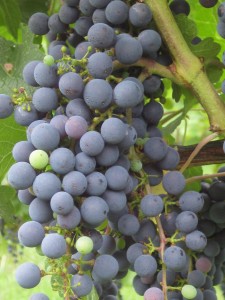
Cabernet Franc Grapes
Indeed, notwithstanding advances in vineyard plantings and winemaking skills resulting in a commensurate increase in the production of fine wine, it still remains a challenge to actually make money in the business. If a winery isn’t turning a profit, potential buyers can be hard to conjure up.
With many of the state’s winery owners entering their retirement years, it is expected an increase in properties will go up for sale, especially if adult children do not share mom & dad’s dream. But selling even a marginally profitable business is a challenge. Typically, it takes three years or more to find a qualified buyer.
Rick Walden, owner of Virginia Estates, a Charlottesville real estate firm that specializes in selling farms, estates, vineyards and wineries says, “I’m just about the only guy in the state handling winery sales. How many are making money? I’m gonna go for zero.” He bluntly points up the narrow margins earned in a difficult business.
“There are probably thirty wineries for sale in the state but a lot of people do not want it advertised. They think its hurts their business. Last year, I wrote every winery in Virginia asking them if they were interested in selling,” says Walden. “I got twenty-five responses and now have $100 million in winery listings. I expect to sell five wineries in the next few months.”
While that prognostication seemingly runs counter to Walden’s profitability assessment, it does speak to the romance and lifestyle attraction of the business.
Others well placed in the industry, however, would disagree with his assessment and even plain speaking Walden later acknowledges some wineries do turn a small profit. “I had one guy call me and wanted a 20% return on his investment but from what I’ve’ve seen it’s more like one percent.” Other knowledgeable sources put the figure in the 5% range.
But profitable ventures are in the minority, with most industry observers saying less than fifteen percent of state’s wineries are making money.
When asked about the difficulty of growing wine grapes in Virginia, Walden responds with a quick, “Do you have a few days?”
“First, owners are biting their nails that bud break happens before a late spring frost comes along, like this year (2013), and cuts them off at the knees. Then, the stuff that survives gets beat to death by endless rains, and whatever does survive is ravaged by raccoons, turkeys, bear and deer.
“This year all of those animals were hungry because their food got frozen by an early frost so they came in and ate every last thing. The crop last year was hardly anything.”
Indeed, it was a tough 2013 harvest with frost and animal depredation taking its toll. But wineries across the state are making wine and it promises to be a decent vintage.
Walden closes with, “I don’t want to be a doomsayer, but buyers need to be aware of the real situation or sell $100 bottles of high quality wine.”
Romance, lifestyle & hard work
For anyone visiting a winery, the lure of owning one is understandable. Verdant vineyards framed by mountain or lake views and decks on which to enjoy the serene settings. Such scenes are alluring to buyers who hail from congested urban areas.
In reality, potential buyers must pony up at least a million dollars—at a minimum—and then commit themselves to an inordinate amount of work to grow the fruit and make the wine. Perhaps the most demanding part of the business is hospitality. Weekends are spent greeting customers, pouring wines and extolling the virtuous aromas and flavors in the glass.
When reality clashes with the dream, the property goes up for sale.
Stephane Baldi, owner of Hume Vineyards in Hume, placed his winery on the market early last year after only three years in operation. His wine is produced off-site, a process known in the industry as “custom crush”.
He’s asking $2 million for his large home, a vineyard and a tasting room. It doesn’t include his small inventory or brand name which would need to be negotiated separately. At 44, Baldi is among the younger owners in the industry.
“I grew up in the Loire Valley in France surrounded by vineyards and wineries and I am a huge wine fan. I saw what was happening with Virginia wine and thought it was the right time to make a move and open a winery.

Stephane & Andrea Baldi
“But my wife and I still had full time jobs in DC. Then, two years ago, we had a child and the winery is now more of a constraint,” he says. “The challenge of living in Hume is difficult. I run two businesses—one based in DC—and need to drop off our child at daycare every day. It really doesn’t leave us time to do anything. We are still young enough and we’d like to have a life but it seems we spend our entire life in the car.
“This is something we wanted to do at a point in our lives. Now, it’s time to move on.” He admits he has not gotten much interest in the property, saying, “The bottom line is nobody knows how to sell a winery.”
Bob Schenkel, owner of Altillo Vineyards, runs a small operation in southwest Virginia, and is asking $1 million for his winery that opened in 2010 and produces about 700 cases a year. “I’ve invested about $1.4 million but I’m selling it for a million. We have never shown a profit. It’s an inordinate amount of work. I think there is going to be a lot of turnover in the industry. A lot people would like to sell.
“The profit seems to be in events and entertainment. Many of the wineries that seem to make a buck are doing events. There is an ocean of wine out there but down here the quality seems to be a race to the bottom,” he laments.
“South of Charlottesville, the wine is abysmal. It’s sweeter and cheaper. Wineries see that it sells at festivals and they cater to younger folks who simply want to get a buzz and listen to a rock band. I’d like to see a better effort to improve the quality and the reputation of Virginia wine. The state talks a good game but their actions are tearing down the long term reputation.”
Strong words from an owner who has been unable to make it in the industry.
Schenkel goes on to say, “Rick Walden is my agent but most of his buyers are interested in the Charlottesville or Northern Virginia area. I’ve had next to no selling activity. Only one person has looked at my property and it was not a serious inquiry. They knew nothing about winemaking.”
The market
Schenkel’s lack of enthusiasm that he will soon find a buyer is understandable. Mark Malick is a real estate agent in Leesburg that focus’ on winery sales and is co-owner of the winery, Maggie Malick Wine Caves, in Purcellville. His wife Maggie is the winemaker.
“Less than one percent of the population can afford a winery costing a million dollars or more. And what percentage of those people are actually looking for one? It’s a tough sell. Not many of these businesses are profitable.
“I try to talk people out of buying a winery before I talk them into it. I always try to get them to come out and see my winery and let them see everything that’s involved before we proceed. I basically try to pre-qualify them.”
Malick believes the number one factor in selling a winery is the owner’s age. The sellers “realize it’s time to move on, that it’s consuming them in both time and money.”
It’s common knowledge that virtually every new winery will labor for five to seven years before it begins to see a profit. But if committed and hard working owners stay the course, eventually some modest return on investment will likely emerge.
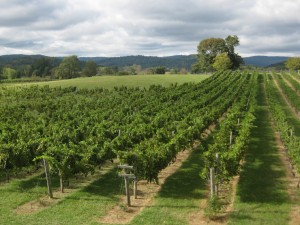
Parade Formation
The Virginia viticulture extension service states two people can operate a five acre vineyard on a part-time basis. “Technically that’s true,” explains Malick. “But they will have to work every weekend during the growing season.” And that does not include making or selling the wine.
Over time, the emotional glow of plump grapes hanging heavy in a vineyard can begin to fade.
One model that has a better than average chance for failure is a multi-million dollar operation that opens its doors and immediately begins making tens of thousands of cases of wine a year. Finding a home for such exuberant growth is not easy.
Two over-the-top examples of this wine hubris were the Kluge and Sweeley estates. Both ventures envisioned producing vast quantities of wine and selling it quickly. Both ended in foreclosures, costing the owners tens of millions of dollars.
But even businesses that have grown slowly and produce good quality wine are not ripe for a quick sale. Naked Mountain in Markham was on the market for over a decade. The owners eventually got $3 million—the original asking price—but patience played a role in finding a qualified buyer.
Malick explains successful people start small and grow slowly. “A lot of people bootstrap their winery, doing things as cheaply as possible and buying used equipment. They do all the work themselves in the early years,” he says.
Malick cites Fabbioli Cellars in Leesburg as a model for success. Doug Fabbioli is a respected vintner and consultant who built a small, thriving business producing quality wines. His success was the result of his winemaking skills and his understanding of the industry and sound business practices.
“If owners stick with the business and get above 3,000 cases a year, then they will begin to see profitability,” says Malick.
Seasoned professionals
Chris Pearmund and John Delmare have several decades of combined experience in the wine industry. Pearmund owns Pearmund Cellars in Broad Run and Delmare is the proprietor of Rappahannock Cellars in Huntly. Both wineries are profitable.
In trying to understand why a large percentage of the state’s wineries struggle to make money, Delmare’s analysis helps lift the veil of confusion. Start with the basics: 259 wineries statewide producing 511,000 cases.
“I estimate the top five producers together are making 200,000 cases. The next twenty wineries bottle an additional 150,000. That leaves 234 wineries generating some 160,000 cases, or an average of about 700 a year each,” says Delmare.
Conventional wisdom says it takes 3,000 to 5,000 cases to operate in the black. When you consider the financial investment, hard work and time the wine business consumes, those numbers are “frightening for the smaller producers” says Delmare.
If a small owner decides to back away from the business and sell out, he or she is faced with the hard reality of marketing a profitless business.
Last year, Pearmund tried unsuccessfully to sell his winery for $5 million but took it off the market. Today, it is back up for sale at for $4.5 million. Sotheby’s, a luxury real estate firm, is handling the sale. “The winery has been profitable every year it has been opened,” says Pearmund. Nonetheless, no buyer has yet come forward.
When asked how long it typically takes to sell a Virginia winery, Pearmund humorously replies, “It takes three bites to get to the center of a tootsie pop.” So how many bites does it take to get to the center of a cluster of grapes and see a buyer pop out?

Chris Pearmund
Even when a serious prospect does step forward, it doesn’t always go smoothly. A case in point is Pearmund’s sale of the Winery at La Grange in Haymarket to a Chinese corporation.
The sale was valued at $5.6 million but was a rocky real estate deal.
Shortly after the June 2012 transaction, Pearmund said, “My experience at La Grange has been the most difficult of my professional career. I devoted six years to its success and have little to show for it.”
He estimates that today, there are ten wineries for sale. “In Virginia, I would guess 95% or more of the wineries opened since 1980 are still opened, how fantastic! What other business category has that track record?”
But the statistic also points to a pending wave of winery sales as original owners approach their late retirement years and may have lost both the passion and energy to continue.

John Delmare
John Delmare believes the commonwealth’s industry is maturing beyond something more than a hobby. “As long as we are hobbyists, there are no sale opportunities per se. There is no business rationale for buying a winery,” he states.
He observes that many sold to date have been distress sales, sold for pennies on the dollar, such as Kluge and Sweeley. “It’s hard to point to sales that were true market transactions. Some sales are really real estate sales. The buyer simply wanted the property, not the winery.”
Delmare states his business is profitable but doesn’t believe a buyer would purchase it solely on its financial return. “There is a quantifiable return in buying a winery that is an emotional return on top of a modest financial one that makes such a deal worthwhile.”
He goes on to explain wineries have always been that way regardless of where they are located. He cites California as an example. For years that state’s wineries have had a 5 to 6% return on assets. “That’s a lot of risk for just 6% return. If you take fully loaded costs—not an owner working for free—I’ll take a stab and say maybe ten percent of Virginia wineries are legit businesses.”
In addressing the issue of Virginia wine being expensive, he says, “When someone comes out and buys a $30 bottle of wine you have sold them an experience. They are buying more than the wine. We are selling experiences in our tasting rooms. If we were just taking orders, we would all be in trouble.”
Moving on to the more controversial issue of hosting events, he says he doesn’t share the disdain some people voice over the practice even though he does not pursue that type of trade.

Wedding at Old House Vineyards
Often weddings, parties, fundraisers and the like are what enable heavily mortgaged wineries to make a profit. Some larger businesses have weddings booked three years in advance, ranging from twenty to over seventy a year. Given the significant capital investments in these wineries, entertainment and hospitality are important revenue streams.
Delmare thinks many of the larger operations think their wineries are worth $8 to $12 million but he doesn’t see buyers out there to command such prices. “We are just starting to scratch the surface on having a market that produces those kinds of sales.
He underscores that aging owners wanting to move on will be especially hard pressed to find takers. “True legitimate buyers are hard to find.”
Financing
Delmare thinks a bank would be skeptical fully financing a potential buyer of his own winery, even though he has not personally had a problem securing capital. A bank may look at the borrower’s capability to service and pay back a loan outside of the actual business itself.
Inventory and equipment loans are not that difficult to get, he states, with banks lending up to 80% of their value. For example, if he were to sell his winery, a borrower might be able to secure an 80% loan based on the underlying value of the land, wine inventory and equipment but may still have to come with a substantial amount of cash, upwards of 50% of the total purchase.
“If a winery is making a five percent return on assets, but the bank interest rate is six percent, you are losing money on your loan,” Delmare explains. “In addition, the higher the loan-to-value goes you get to the point there is not enough cash in the business to support the loan.
“In today’s market, a 6.5% loan is typical. A 75% loan-to-value will result in every penny the business is making going to service the loan. Banks won’t loan that way. Banks look at asset value—collateral that secures the loan. Then they want to know ‘Where is the cash coming from to pay us? If you are making $1 a year, we want your payments to be 75 cents so you have a little cushion if things don’t go well,’ ” says Delmare, explaining how banks think.
He goes on to say, “Any business is similar, and in some ways a winery may be easier to finance because it is so asset driven. We have a lot of real estate, a lot of inventory and a lot of equipment; all things a bank can use to secure their loan.” 
The banking discussion brings into relief that in addition to growing grapes, making wine and entertaining guests, potential buyers should have a custom fitted green eye shade hanging in the winery office. Sharp pencils are as important as sharp palates in this business.
The future
With the current growth rate of wineries, it is projected within five years there could be more than 400 tasting rooms dotting the Virginia landscape. While such proliferation seems questionable given the challenges of opening one, it also speaks to the intense romance and lifestyle involved.
Creating flavorful wines and earning accolades from guests while living in picturesque rural areas is a powerful draw to pursuing a less than viable business. But romance is not a bedmate to logic and numerous winery owners would not trade their chosen endeavor for a conventional business.
More future owners will likely follow their lead. Delmare underscores the increasing challenges ahead. “When I started my winery in the late nineties, it was the sixty-second one in the state. I paid $2,000 an acre for land that today is going for $10,000 to $20,000.
“My business grew twenty to twenty-five percent a year initially. Today, it’s about seven percent. It’s only gotten harder. Everything is more expensive and the barrier to entry is harder.
“There is both a looming grape and labor shortage. All of these things will make entry a little higher. Small operators will be scared out of it so growth will maybe slow in the next five years,” he says.
One path to sustainability for his winery is securing permanent control over his grape supply. To that end, he is working toward purchasing and planting additional vineyard acreage. “I’m not doing it to grow but to secure the future of my winery.”
“Construction costs and getting wine into a bottle are fifty percent higher today than when I started. I hit it at the right time when I got in.”
Perhaps the legendary Dale Carnegie unknowingly summarized the pursuit of the Virginia wine business when he said, “When dealing with people remember you are not dealing with creatures of logic but creatures of emotion.”
And a cadre of emotional winery owners may be in Virginia’s best long term interests.
Published in the Winter 2014 edition of the Piedmont Business Journal.
Hume bed & breakfast brings 227 years of history back to life
In 1787, James Madison wrote the Virginia Plan, a document that outlined what would ultimately become the basis for the U. S. Constitution. It was also the year that Barbee’s Tavern—located at Barbee’s Crossroads but today known as the village of Hume— opened its doors to weary and thirsty travelers.
The tavern, with its wide pine flooring, American chestnut interior logs and three stone fireplaces, is once again providing shelter and relaxation for the weary. But overworked excursionists are guests rather than farmers and tradesmen.
And libations of hard cider, whiskey and rum have been replaced with Virginia wine, a beverage largely unavailable to the colonials.
 The Inn at Vineyards Crossing is a diamond centered on a necklace of local wineries. It opened just five months ago but guest reviews can be characterized as “raves”.
The world’s largest travel advisory website, Trip Advisor, already has posted twelve guest comments, all of them bestowing an “excellent” rating on the establishment. No small achievement in the demanding world of hospitality.
Typical comments from the website include, “Absolutely outstanding”; “Wonderful weekend with great food; “Best B&B I’ve been to”, and “Excellent on all fronts.” It’s impressive how social media can catapult a new establishment to success with minimal advertising. Resultant bookings have been good with occupancy rates building faster than anticipated.
The inn was also recently accepted into the Bed & Breakfast Association of Virginia. The Association’s quantifying criteria involves an onsite property inspection before an establishment can be listed on its website.
The forces behind the newest Fauquier County bed & breakfast are Philip Carter Strother and Steve Mills. Strother is a Richmond attorney and owner of Philip Carter Winery. Mills is an executive with a Washingto DC firm and co-owner of the B&B and an investor in the winery.
The day-to-day operation of the inn is in the capable hands of General Manager, Joshua Haugh, who is also the chef. Haugh has twenty-five years experience in the hospitality and culinary field and has seen duty at resorts in Hawaii, Canada, DC, New Jersey and Virginia. When asked why he accepted the position he says, “It looked like a great opportunity.” Indeed, for him and his guests.
Wine centric concept
Virginia is home to over 260 wineries, twenty-six in Fauquier County alone. The idea to open an inn centered on showcasing local wineries made for a sound business plan. Vineyards Crossing has partnered with five locals wineries, creating the necklace of establishments with the inn at its center.
The wineries are Rappahannock Cellars, Desert Rose, Philip Carter, Barrel Oak and Naked Mountain. It is anticipated additional wineries will be added in the future.
When guests arrive at the inn, they are greeted by Haugh and given a unique check-in experience. Luggage is conveyed to the guests’ room and then a wine tasting is conducted in the reception area. The inn has a license to pour and sell wines and features its five partner wineries on a rotating schedule.
Lodgers can pre-book a VIP tour at nearby Phillip Carter Winery. The tour is an educational and pleasure filled excursion of the winery’s vineyard, where the challenges and rewards of growing wine grapes in Virginia are discussed, followed by an in-depth presentation in the cellar on winemaking and bottling.
Guests then adjourn to a private tasting room to sample the full lineup of Philip Carter wines. The tour concludes with a picnic basket containing locally sourced meats and cheeses to be enjoyed in the winery or on its grounds in seasonable weather.
 The inn has five rooms for lodgers: The Commonwealth Suite, The Virginia Viognier room, The Grand Cru room, Barbee’s Crossroads room and The Cobbler Hunt Loft. The Commonwealth Suite offers a cozy bedroom with fireplace and separate sitting room. It also comes with a unique attraction; sleep here and your dreams will unfold in an original room of the National Historic Trust tavern.
All rooms have king size beds and private baths. Rates range from $189 a night to $269 for the historic Commonwealth Suite. There is no two night minimum stay except on Christmas, New Year’s and Valentine Day.
Dining
Typically, a B&B provides only breakfast, often simply continental in style. Not so at Vineyards Crossing. Not only is a full fare breakfast served but the rare treat of dining in the evening at an historic venue is available when prearranged.
There are two dining options. Guests can join their fellow travelers for dinner in the inn’s main dining room. Up to ten diners can be accommodated for a three course repast prepared with local fare and wines.
“When guests make reservations, I ask them to let me know if they would like to join us for dinner. I prepare all of the dinners using locally available produce and meats. A typical selection might be pork chops from Dark Hollow Farm in Markham with apple stuffing,” says Haugh. The dinners run $40 per person.

Joshua Haugh
For the more romantic souls, a four-course private wine dinner for two can be arranged and served in a smaller dining room. The couple creates the menu along with Haugh and are assured the ingredients will be “farm to table” fresh. “It’s a intimate wine dinner and a special experience that guests can take advantage of, if so desired,” says Haugh. The cost ranges from $70 to $90 per person.
In seasonable weather, visitors can enjoy drinks or simply relax on a quiet patio located off the dining room or take a dip in the pool located behind the inn.
Excursions
In addition to the VIP winery tour, Marriott Ranch offers trail rides with lunch and a bottle of wine for equestrian fans. And wine tastings at the numerous local wineries provide freestyle afternoon outings reinforcing the name of the inn.

Philip Carter Winery Vineyards
A unique tour is being offered the weekend of February 29 – March 2 that has not heretofore been available in Virginia. “We are hosting a ‘Wine Camp’ for registered guests limited to five couples,” says Haugh.
The camp will involve visits and presentations at the five partner wineries. Guests will arrive Friday and after check-in there will be a reception and an hour discussion on Virginia wine history led by a winery owner. The next morning after breakfast, the tour continues at Philip Carter Winery for a vineyard discussion on trellising, grape growing, and grape varietals that thrive in Virginia, followed by lunch.
Next, the group will visit Rappahannock Cellars and meet with the winemaker and “learn how wine is made and participate in a wine blending exercise to understand first hand how the final product is created,” explains Haugh.
Later, a visit to Desert Rose Winery will offer an opportunity to meet with the owner and talk about owning a boutique winery and its operation. The day ends back at the inn with a five course wine dinner.
Following Sunday morning breakfast, the group will visit Barrel Oak and Naked Mountain wineries for more wine related seminars. The camp provides a weekend graduate course in culinary and wine related subjects coupled with the opportunity to meet and talk with winery owners and winemakers. “It’s an experience you really can’t find elsewhere.” says Haugh.
The “Wine Camp” cost $1,200 per couple and includes all lodging, tours, meals and, of course, wine, says a smiling Haugh.
The Inn at Vineyards Crossing anticipates expanding its excursion offerings in the future. Additional information on rooms, dining and tour packages are available by visiting http://www.vineyardscrossing.com/.
Published in the January 22, 2014 edition of the Fauquier Times.
East Davis Street shop serves the everyday gourmet
Experience counts. The more one gains the greater chance of success. Perhaps that explains why the Culpeper Cheese Company is a favorite haunt of folks who love quality cheese, wine, craft beer, soups and sandwiches.

Jeffery Mitchell
“I became a wine buyer when I was twelve years old,” says owner Jeffery Mitchell chuckling. “My mother was a hard working single Mom and loved her Chardonnay. When she broke her hip I was tasked to buy wine during her recovery.”
Mitchell remembers the corner shop owner cooperating with his mother during her convalesce by selling wine to the young lad. “One day her favorite chardonnay was out of stock and I made a buying decision on my own. It was a bottle of Verdicchio with a neat looking fish scale pattern. Unfortunately, the high acidity Italian white wine did not agree with Mom’s palate.
“When I bought that wine home it was not a good evening. I learned there had to be radical differences in wine tastes. And that a bottle’s shape did not make the wine,” he says smiling.
It was a lesson learned at a young age and provided the base for Mitchell’s ever evolving knowledge of gourmet foods.
After graduating from college, he took a course on serving wine in restaurants. “It was my first wine class but by far the best I’ve ever taken. The instructor served ten wines. The first nine were purposefully hideous; over-oaked, high alcohol, too much sugar, and every other flaw you could think of. Then the tenth wine was poured and it remains in my memory to this day.
“It was balanced, in harmony and flavorful. The experience was an eye opener for me and led to a greater understanding of wine,” recalls Mitchell.
Going independent
So how did his career as the proprietor of a fine food and drink shop unfold? After twenty years in the photography business, including time at Eastman Kodak, he found himself unemployed. “Our division at Kodak saw that film was dead and digital would prevail but nothing in the corporate strategy was going to change. Our entire division was let go.
“I realized there is no future but your own. I worked as a newspaper writer, at Foti’s restaurant and then at the Frenchman’s Corner where I began learning more about cheeses. Seven years ago I opened my own shop called the Frenchman’s Cellar and renamed it the Culpeper Cheese Company two years ago.
 “Today wine and cheese hold equal attractions for me with cheese sneaking ahead. I’m especially excited about Virginia cheese production. There are some astonishing producers here. Virginia is just a spark in the dark right now with about a dozen high quality producers. By comparison, Wisconsin has hundreds of cheesemakers,” says Mitchell.
His cheese inventory centers on what he calls “natural cheese”; products that contain only salt, rennet, and curds. Like wine, cheese has terroir characteristics based on the breed of cows, sheep and goats’ milk used and the grasses they feed on.
So what can a customer expect when they visit the Culpeper Cheese Company? “First, I hope you are greeted with a friendly welcome and that it smells good when you come in. We make homemade soups and Panini sandwiches daily.
“I am fortunate to have an experienced staff that can help in selecting products based on individual tastes. This is not a one person show. I am blessed to have knowledgeable personnel that make my success possible.
“Our shop carries over sixty selections of cheeses from around the world and about 400 different wines. We have a wine station where you can taste featured wines before buying a bottle or ordering a glass with a cheese plate or sandwich. One popular offering is our 6 for $60 program—a 22% discount over individual purchases. We call it ‘wines that are right for tonight’,” he says.
For beer lovers there are 300 bottlings of craft brews and eight draft lines to choose from. One popular offering is the “trio of taste” that lets a buyer sample three different four-ounce pours for $6. Recently the shop held a beer dinner with more to follow.
 Asked why Culpeper is a good location for a gourmet shop Mitchell replies, “Davis Street is a pretty special place. A lot of ‘Main Streets’ are gone. If you drive elsewhere, there are beautiful turn-of-the-century buildings that are vacant.
“In Culpeper there is a sense of the old and the new and the camaraderie among shop owners is great. Hourly we refer people to other businesses and they do the same for us,” says Mitchell.
The Culpeper Cheese Company is opened six days a week, closed Mondays. Visit http://www.thefrenchmanscellar.com for hours of operation or call 540.827.4757.
John’s pick of the month
Shropshire Blue Cheese
$24.25/lb.
Rather than go with a wine recommendation this month, let’s celebrate the bounty of cheeses available at the Culpeper Cheese Company.
One of our favorites is the delicious Shropshire Blue Cheese. This cow cheese hails from the United Kingdom & Ireland and was first created in the 1970s at Castle Stuart Dairy in Scotland. The cheese is semisoft with a sharp, strong flavor and a slightly tangy aroma. Pair with a Pinot Noir wine or a porter or stout beer. Cheers.
Published in the December 19, 2013 edition of the Culpeper Times.
- End of Harvest
